

E-Financial
Authorities Helpless as Crypto-Currency Scams Rock Nigeria

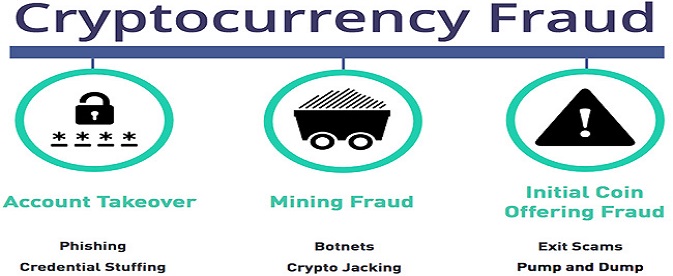
Large scale crypto-currency scams are rocking Nigeria as fraudulent firms claiming to offer digital currencies buffet on Nigerians while monetary authorities and law enforcement agencies appear helpless.

These firms claim they speculate on crypto-currency price movements via a CFD trading account, or buy and sell the underlying coins via exchanges.
In reality, they are pyramid schemes or Ponzi schemes whose activities span various illegal activities, such as money laundering and terrorism, illegal drug trafficking, human trafficking, and support for radical movements.
Losses to the scheme are estimated in hundreds of millions of Naira as Nigerians eager to escape hitting economic hardship are lured with mouth watering offers.
Anthony Ogbo, a cyber security expert, warned, that unless financial regulatory authorities develop a robust financial system and regulation that will accommodate crypto-currency, losses will continue to mount.
“Unfortunately, we lack the ability to keep up with the fast changing digital space. And the authorities are not helping matters, they are so lethargic” he said.
Capitalizing on weak regulations and the inability to keep up with the sometimes misleading promise of technology, the firms dangle offers too hard to resist.
Chuks Arubaleze, a lawyer, said, that crypto-currency scams are clear and present danger which may get out of hand if something urgent is done to stem them.
“These new scams have all the attributes of wire fraud, bank fraud and operation of unlicensed money transfer and conspiracy. If the authorities are serious, those are enough to begin to crack down on the operators” Arubaleze said.
Binus Yaro, a victim of one of the schemes said he could not get justice even after making formal complaints to the Nigerian Police.
According Yaro, the police did not even invite the promoter of the scheme.
“I lost my hard earned money like that” he said.
Like many victims of the scam, Yaro was invited by a fraudulent firm through telegram chat group, to pay money into an account after being promised that once the payment was effected, he will get return 100 per cent interest within an hour.
According to Yaro, the firm, added him in their telegram chat group and proceeded to make offers to over 3,000 people in the group.
“And some people were testifying they got paid and when the firm sent me a private chat asking me to take advantage of a promo, I did”. He said
Yaro, proceeded to make the payment and alerted the firm, which turned around to demand additional money to redouble his initial investment.
“When I insisted i only demanded one off investment, the firm could not provide any answer till today and has even removed me from the group. The only thing I have now is the name I paid money to and the account number” Yaro added.
The legal status of crypto-currency in Nigeria remains ambiguous, though Central Bank of Nigeria (CBN) and the Securities and Exchange Commission (SEC), have issued strong notices about the pitfalls of investing in the crypto currency markets.
The regulators have also added the risk resulting from the high volatility associated with crypto currencies and the fact that many of the organizations that facilitate such transactions are unregulated.



In a bid to foster accurate public discourse as well as protect the stability of the financial sector, the Association of Corporate and Marketing Professionals in Banks (ACAMB) has stepped in to educate renowned content creator, Unofficial Osas, following his misrepresentation of facts concerning the Central Bank of Nigeria’s (CBN) recapitalisation drive, and subsequent invitation by the Nigerian Police Force.

ACAMB
The intervention by ACAMB led to the successful retraction of a misleading video regarding the CBN recapitalisation policy, demonstrating the Association’s commitment to its core mandate of public enlightenment.
In his official apology video, the content creator stated, “I was invited by the Nigerian police force national cyber crime centre in Abuja over the video I posted on the 15th of December, where i spoke about 12 banks that were shut down in relation to the CBN recapitalisation policy. I would like to offer an official retraction of that video and want to reiterate that no bank is shutting down.
“As a matter of fact, most of the banks have now met the ₦500 billion minimum capital base for banks with international and the N200bn for national banks recapitalisation requirements, so no bank is shutting down.
“I want to specifically appreciate ACAMB. They were very professional in handling this case and did well to educate and enlighten me on the recapitalisation process. I am now better informed and know better”
Commenting on the resolution, President of ACAMB, Jide Sipe, reinforced the Association’s dedication to protecting the integrity of the banking sector. “ACAMB stands for the restoration of professional banking ethics and public confidence through seamless information management and public enlightenment.
“We believe that an informed public is an empowered public. By engaging Unofficial Osas, we ensured that accurate information regarding the resilience and strength of our banks was disseminated to the millions of Nigerians who follow him.”
The Intervention shows ACAMB is dedicated to evolving strategies that enhance and sustain a good image for the nation’s banking sector as well as assist in fostering better banking habits among Nigerians.
E-Financial
FirstCap MD says Payment Security Remains Biggest Barrier to Bankable Gas and Power Projects


Ukandu E. Ukandu, Managing Director/CEO of FirstCap Limited, a leading investment banking firm and subsidiary of First HoldCo Plc., has reaffirmed that payment security remains the most decisive factor in determining whether gas and power projects in Nigeria secure financing.

He shared this perspective during a panel discussion on project bankability at the 2026 SPE Lagos Energy Week.
Ukandu noted that although several risks influence financing decisions, payment risk consistently emerges as the key barrier to financial close.
“Every major risk matter, but payment risk is the ultimate deal‑breaker. Without strong payment security and disciplined collections, no project can attract sustainable financing,” he said.
He explained that lenders typically evaluate three core risk pillars, payment reliability, foreign‑exchange exposure, and contract enforceability, with payment reliability presenting the greatest challenge across Nigeria’s energy value chain. Persistent collection inefficiencies, rising arrears, and liquidity pressures continue to weaken investor confidence.
To enhance payment security, Ukandu highlighted mechanisms widely used by financiers, including letters of credit, bank guarantees, escrow accounts with payment‑waterfall structures, reserve and sinking funds, sovereign or sub‑sovereign support, and take‑or‑pay offtake agreements.
Addressing foreign exchange risk, he noted that volatility remains difficult to manage, especially for projects with dollar‑denominated costs but naira‑denominated revenues. Lenders typically mitigate this through foreign exchange ‑linked tariff indexation, partial dollarisation for credible industrial offtakers, escrow protections, selective hedging, and foreign exchange reserve buffers.
However, he cautioned that indexation alone seldom eliminates exposure due to regulatory limits and timing delays.
On legal and regulatory certainty, Ukandu stressed the need for contracts that are enforceable and clearly structured, particularly around take‑or‑pay obligations, termination payments, step‑in rights, and dispute‑resolution frameworks. He added that factors such as tariff adjustments, licence changes, and price controls can significantly affect project viability if they are not fully addressed at the contracting stage.
While fiscal incentives such as tax holidays and accelerated depreciation can strengthen project economics, Ukandu emphasised that they cannot compensate for weak fundamentals.
“Incentives make a good project better, but they do not make a weak project bankable. Cash‑flow reliability and disciplined foreign exchange management must come first,” he said. He also noted that naira‑based incentives may lose value if project revenues are not indexed.
He concluded by urging industry players to prioritise revenue security from the earliest stages of project structuring: “Protect returns at the source. Build strong offtake arrangements with solid credit support and currency alignment to ensure cash is received in full and on time.”
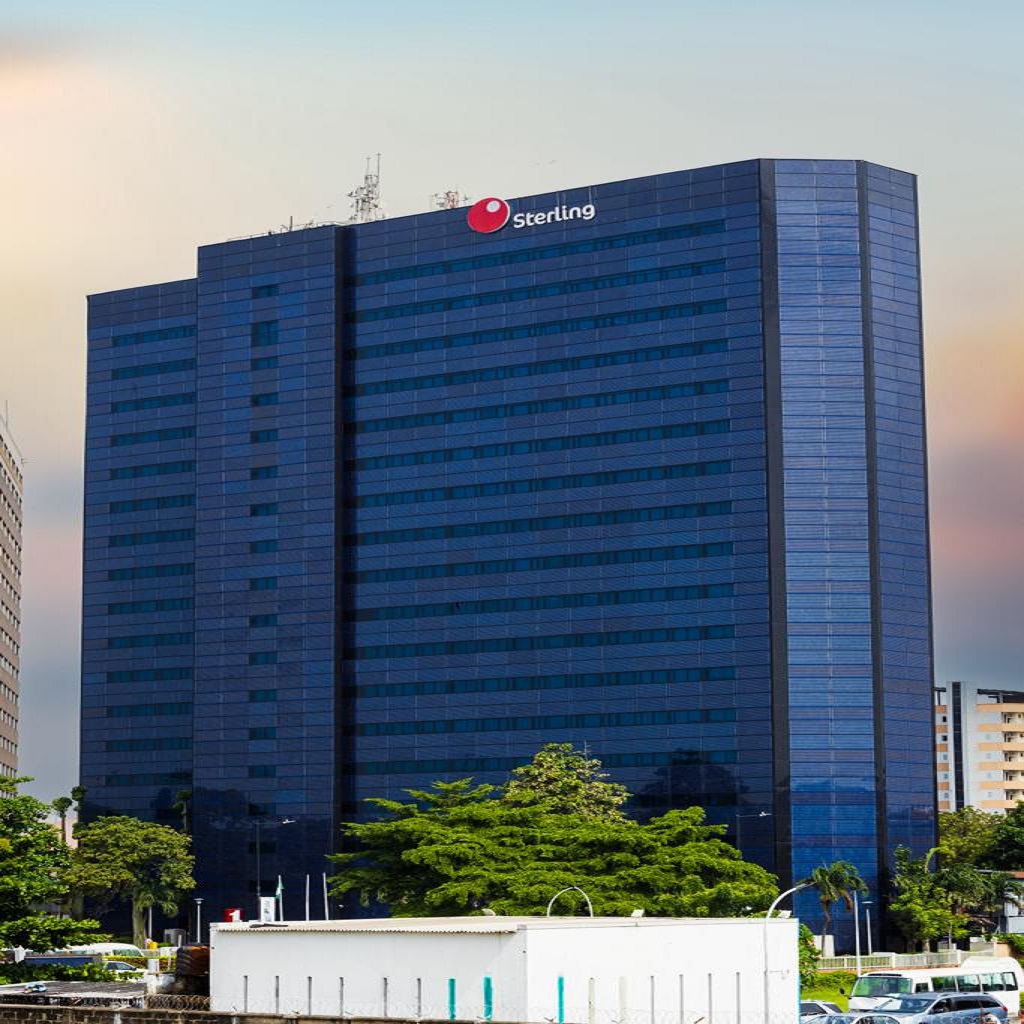
Sterling Financial Holdings Company Plc (Sterling HoldCo) has begun allotting 12,581,000,000 ordinary shares of 50 kobo each at ₦7.00 per share from its 2025 Public Offer.

Sterling HoldCo
The process follows Central Bank of Nigeria (CBN) and Securities & Exchange Commission (SEC) approvals.
The offer, opened September 15, 2025, drew 18,280 applications for 16.84 billion shares worth ₦117.88 billion—109.79 per cent oversubscribed.
Valid applications from 18,276 shareholders totalled 13.81 billion shares; all compliant applicants receive full allotments.
Refunds for rejects/excess, plus interest, process via RTGS/NIBSS by February 17, 2026, handled by Pace Registrars Limited.
Shares credit to CSCS accounts by the same date; new accounts held in pool pending documentation.
The raise bolsters capital for banking subsidiaries, injects ₦10 billion into SterlingFI Wealth Management to meet SEC rules, and funds credit expansion, innovation, and support for businesses/households.
Strong Financials, Diversified Growth
FY25 interim results show 99 per cent profit before tax growth; gross earnings up 46 per cent to ₦476.5 billion; assets at ₦3.92 trillion; deposits up 18 per cent to ₦2.98 trillion; shareholders’ funds up 39 per cent to ₦424 billion.
Cost-to-income ratio improved to 63 per cent from 72 per cent.
Subsidiaries—Sterling Bank Limited (conventional), The Alternative Bank Limited (non-interest, 150+ branches)—comply with CBN capital rules.
Initiatives include Mata Zalla (women tricycle training) and Plateau agriculture programme.
The offer attracted first-time retail investors, broadening ownership.
Sterling HoldCo welcomes new shareholders, poised for sustained growth and economic impact.

ACAMB Educates Content Creator to Curb Misinformation on Bank Recapitalisation

Banks, Telcos Settle Four-Year Dispute over N300Bn USSD Debt

NITDA Warns Nigerians of Actively Exploited Microsoft Office Vulnerability

INTERPOL Arrests 651, Recovers $4.3m from Cybercrime in Nigeria, Others

NDPC Investigates over 1,000 Schools over Data Privacy Compliance
Nigeria’s 9 Top FinTech Firms Valued at $10.6Bn in January 2026

DG NCC Tasks University Dons on Research Commercialization, IP Management to Build Global Competitive Ecosystems

Firm Detected a Fivefold Surge in QR Code Phishing Attacks in the Second Half of 2025

Kaspersky Launches OT Calculator to Align Cybersecurity Investments with Business Goals

Firm Detected a Scam Exploiting OpenAI’s Teamwork Features




 Telecom3 days ago
Terra Moves to Expand in African Drone Sector, Secures $22m Funding

 Telecom3 days ago
Temu Assures Compliance Amid Nigeria Data Privacy Probe

 E-Financial3 days ago
DMO Offers ₦800bn FGN Bonds in February Auction Surge

 E-Financial3 days ago
Danjuma, Taj Bank Staff Jailed for 5 Years over N22m Fraud

 E-Financial3 days ago
KPMG Outlook Reveals Financial Services CEOs Double down on AI, Resilience and Growth in 2026

 E-Financial2 days ago
Ecobank Nigeria Fully Repays $300m Eurobond Notes

 News3 days ago
Chianugo, Nigerian $150m suit Against Google, GoDaddy.com Stalled due Judge’s Absence

 Telecom3 days ago
MTN Group Announces Proposed Full Acquisition of IHS Towers