

Broadcasting
Big Brother Returns with ‘Stargame’

Africa’s largest reality show, Big Brother Africa by M-Net, is in its seventh season. The seventh edition to be known as ‘Stargame’ starts on Sunday, May 6 when M-Net opens the doors of Big Brother House to selected housemates from the different parts of the continent. This year, BBA will be live on DStv exclusively for 91 days and it will be 24/7. That is actually no news to ardent followers who have kept faith with the series for six seasons beginning from 2003, the edition won by Zambian Cherise Makubale. “One of the main reasons for the success of Big Brother, in Africa and beyond the continent, is that it creates its own stars from the minute housemates step into the spotlight,” says M-Net Africa Managing Director, Biola Alabi. “The show is built on the idea that, given the chance, anyone can be a star, anyone can find themselves shot to stardom. So this year, we’re honouring this essential element of the show directly in the title, putting the concept of rising stars and dreams of stardom right at the front of what is a challenging, fun, dramatic game.” Three major surprises await BBA followers this season. The first: each contestant must enter with a partner – your best friend, boyfriend, girlfriend, mom, dad, brother, sister, boss, husband, wife, neighbour, hairdresser, anybody! Whao! That, according to M-Net, is called “Double Up”. Mrs Alabi said: “The really big news this season is that entrants must enter as pairs. In the past we’ve seen a natural and continuous cross-over between individuals and their families, their friends. So this year, we decided to include that as part of the game. It will definitely make a dramatic addition to the series so we urge people to enter and experience what will be a uniquely different Big Brother Africa!” The second surprise: an addition of two new participating countries, which are Liberia and Sierra-Leone. M-Net announced that two previous participating countries, Ethiopia and Mozambique will play new part in this year’s edition. Ethiopia, M-Net said, opted out of the show. The reason is not stated. But it can be inferred from the performances of the two housemates – Yacob and Hanni – who represented the country in the previous three editions that Ethiopia featured in. Many analysts of the show felt these two didn’t put up strong performances to clinch the ultimate prize. For Mozambique, M-Net said, there will be a new role. What role this is, M-Net didn’t state yet. Big Brother is full of twists and turns, so viewers can only keep guessing at what awaits them. The third and the biggest surprise: M-Net has increased the prize money from $200,000 to $300,000. In Nigeria, if converted to Naira, this literally equals N50 million. And it is a winner-takes-all! M-Net auditions for BBA7 housemates have kicked off across the continent. Nigeria’s audition held in Lagos on Monday March 5, Tuesday March 6 and Wednesday March 7 at the Protea Leadway Hotel, Maryland. From across the federation, thousands of hopefuls gathered at the audition venue to try their luck. Then the drama this season portends started to play out. In the first instance, one would have concluded that the fact that Nigerian housemates, three times in a row, won the fourth, fifth and sixth editions, and therefore no contestant stands a chance in subsequent editions. But no; Nigerians, of course, older than 21 years, trooped to the venue in their thousands jostling for the slot to represent the country when the show starts in May. Beginning with Kevin Chuwang Pam in 2009; second-time lucky Uti Nwachukwu in 2010, and Karen Igho, a joint-winner in 2011, the show is gradually becoming a Nigeria affair. That was not the drama. The drama played out in the line-up of the people that showed up as partners to compete. Grandmothers came with their nephews, some ladies came with their mothers, boyfriends partnered girlfriends, and a popular act, Trybson (played Dagrin in Ghetto Dreams) came with his manager. There were cases of boyfriends or girlfriends who waited in vain for their partners to show up at the venue and while it was becoming clear their partners were not going to show up, hooked up with other jilted but available partners. One began to wonder how all these elements will play out when the show eventually starts. It was stated in M-Net’s advert for interested participants that entrants for this season, as with previous seasons, must be fun-loving, vocal, creative, original and articulate. In addition to those characteristics, entrants must demonstrate the social flexibility to live in close proximity with others and must be tolerant of views and lifestyle choices other than their own. The piece of information supplied above is vital in the view of previous episodes and encounters with housemates who showed strong objections to the views and behaviour of other housemates leading to altercations and violence, resulting in such housemates’ consequent disqualification; Ugandan Hannington and Tanzanian Lotus in Big Brother All Stars and Big Brother Amplified, respectively. BBA is one show that consciously puts to test housemates’ emotions, attitudes and actions. In playing the game as fairly as they could be, housemates set themselves up for series of intrigues, drama, controversies, conspiracy and the likes, having it at the back of their minds that it’s just a game. It is only when the show is taken seriously beyond the realm of a game that tension is created and clashes occur. In the new edition, viewers must look forward to how the different characters being assembled by M-Net across the continent will accept, tolerate, and cooperate with one another to create an exciting show to last the duration of 91 days. He claimed that skeletal services had “eventually led to the avoidable access of armed robbers to the banking premises through bank staff private entrance. “No bank in Ijebu land should render skeletal services to customers henceforth until the forum’s demands on security are fully met by the state government.” “Staff should move away from banks’ premises till further notice. No loading of ATM should be carried out by any bank. Any robbery attack arising as a result of culpability of any bank shall be viewed as connivance and collaboration with the robbers,” he warned. Olusoga warned that the forum would “not defend or issue any statement to absolve any bank official who out of his carelessness allows his bank to be robbed through skeletal services rendered.” On the assurances by the state government that five APCs would arrive the state by Friday, he said the bankers would call off the action once the armoured vehicles were physically on ground. Corroborating, Tunde Onadeko, chairman, Bankers’ Forum in Sagamu said all banks in the axis have also been directed to shut operations. “We are together in this agitation. Whatever you hear from the Ijebu Bankers’ Forum is our position,” Onadeko said. Meanwhile, Bola Onifade, state chairman of the forum said banks in Abeokuta would open for normal business and denied insinuations that the state government pressured him to back out of the action.


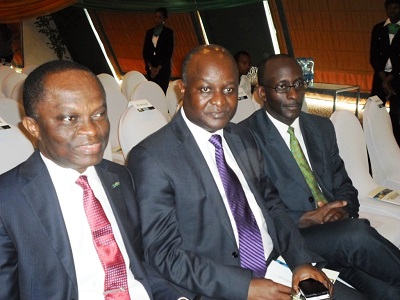
Mr. Charles Ebuebu, director General of the National Broadcasting Commission (NBC), has called on Nigerian content creators to actively participate in the country’s Digital Switchover (DSO), describing the transition as a major opportunity for visibility, revenue growth, and industry collaboration.

Mr. Charles Ebuebu, DG, NBC
Speaking as Special Guest of Honour at the induction ceremony of the Electronic Media Content Owners Association of Nigeria (EMCOAN) in Lagos, Ebuebu stressed that the success of the DSO depends on engaging content to populate the nation’s new digital channels.
“Without content, the DSO’s success would be incomplete. We are urging content owners to collaborate with the Commission to ensure Nigeria’s digital future is rich, diverse, and sustainable,” he said.
The NBC boss highlighted that the upcoming FreeTV Direct-to-Home (DTH) platform, along with its mobile applications, would provide content creators with nationwide reach, advanced analytics, and brand partnership opportunities.
Nigeria’s DSO, which marks the shift from analogue to digital broadcasting, is being implemented by the NBC using the Nigcomsat satellite infrastructure. The programme aims to deliver over 100 nationwide channels and expand access to Nigerians in remote areas via hybrid decoders, addressing long-standing infrastructure and funding challenges. The project, which has experienced delays since 2012, now has strong government backing and is scheduled for launch in April 2026.
Ebuebu commended EMCOAN members for their contributions to strengthening Nigeria’s creative economy and encouraged them to leverage the opportunities offered by the DSO to promote local stories, culture, and creativity on both national and global stages.
During the ceremony, EMCOAN honoured its distinguished members, naming Wale Adenuga, MFR, as Grand Patron and Mr. Yinka Adebayo as Patron.
Prominent figures in the broadcasting content industry, including Wale Adenuga, Opa Williams, Agatha Amata, Jibe Ologeh, High Chief Emeka Ossai, Debbie Odetayo, Amina Mohammed, and Frank Elaboya, attended the event.
Representing the NBC at the event was Mr. Ralph Akpan, director of the Lagos Zone, while EMCOAN president, Mr. Adeniji Omirin, MD of ADNOM Media, urged members to fully engage in the digital switchover.
Canal+ is to cut jobs at MultiChoice as part of a sweeping restructuring plan aimed at stabilising the African pay-TV operator, following years of operational and financial pressure.

The move comes alongside a planned $115 million capital injection, underscoring the urgency of efforts to revive the business after the French media group took control.
The planned layoffs are expected to form a core element of a broader cost-cutting and efficiency drive, as Canal+ seeks to streamline MultiChoice’s operations and improve profitability.
The restructuring signals a shift toward leaner operations, with a focus on eliminating redundancies and optimising the company’s cost base.
MultiChoice has struggled in recent years with declining subscriber numbers across key African markets, weighed down by macroeconomic pressures, currency volatility, and changing consumer behaviour.
The rise of global streaming platforms has intensified competition, chipping away at the company’s traditional pay-TV dominance.
Canal+’s intervention marks a pivotal moment for MultiChoice, reflecting a more aggressive approach to repositioning the business.
By combining fresh capital with structural reforms, the new owners are aiming to both stabilise short-term performance and lay the groundwork for longer-term growth.
The $115 million injection is expected to provide immediate financial relief, supporting operations and potential strategic initiatives.
However, the accompanying job cuts highlight the depth of the challenges facing the company and the scale of transformation required to restore competitiveness.

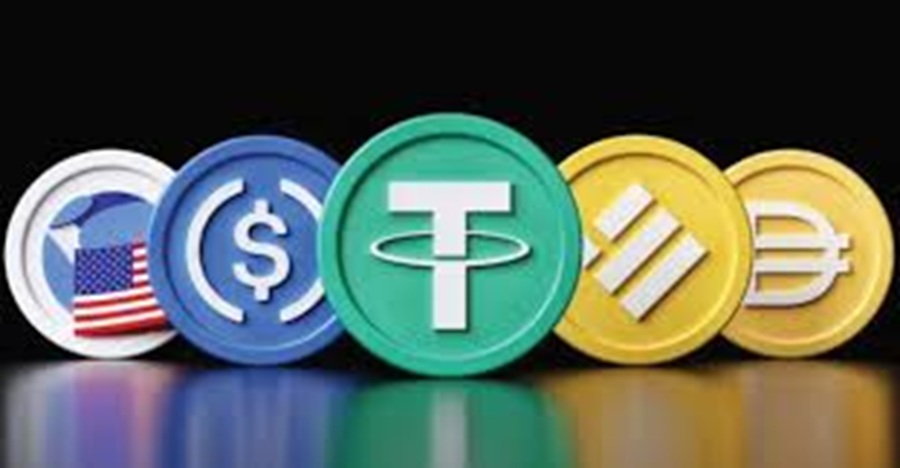
Nigeria has ranked first globally in the ownership of the two largest stablecoins, Tether (USDT) and USD Coin (USDC), reflecting the country’s growing reliance on dollar-linked digital assets.

USDT, USDC
Stablecoins such as USDT and USDC are designed to maintain a fixed value against the U.S. dollar, allowing users to store money digitally while avoiding the price volatility associated with cryptocurrencies like Bitcoin.
According to the 2026 Stablecoin Utility Report released by BVNK, about 59 percent of Nigerian crypto users hold USDT, while 48 percent own USDC, giving the country the highest combined ownership rate among all nations surveyed.
The report placed Nigeria ahead of several major economies, including Australia and India, highlighting the country’s strong adoption of dollar-denominated digital assets. Australia ranked second with 34 percent USDT ownership and 29 percent USDC, while India placed third with 30 percent USDT and 27 percent USDC holdings.
The study also examined adoption levels across other regions. Countries such as Colombia and Singapore showed strong usage of both stablecoins, while adoption levels were also notable in South Africa and the United States.
Other markets included in the analysis were Philippines, Thailand and Argentina, where stablecoin ownership has also increased significantly. Among European economies, the report said France and Germany showed moderate levels of adoption, while Latin American markets such as Mexico and Brazil recorded smaller but growing usage rates.
The United Kingdom also appeared in the ranking with modest levels of stablecoin ownership. The report noted that USDT ownership exceeds USDC in many countries, including Nigeria, Australia, India, Singapore, the Philippines, Thailand, Argentina and France.
However, USDC is often viewed as a more compliance-focused stablecoin because of its stronger transparency and regulatory alignment. In some markets, including South Africa, Colombia, Germany and Brazil, the report found that USDC adoption slightly exceeds USDT.
More broadly, the data suggests that stablecoin adoption is being driven largely by emerging economies rather than advanced financial markets. According to the report, countries such as Nigeria, Argentina and the Philippines are among the biggest users of stablecoins, where people increasingly rely on dollar-pegged digital assets to protect savings from currency volatility and facilitate cross-border payments.

NDIC Insures 99 Percent of Bank Customers

FG Shifting Focus to “Meaningful Connectivity” to Drive Inclusion – Minister

CBN Bars Chronic Loan Defaulters from Accessing Loans

Google Rolls Out Search Live AI to 200+ Countries, Including Nigeria

Breaking…..Kuda Lays Off Many Employees in Broad Restructuring

Kaspersky Discovers New Phishing Campaign Exploiting Google Tasks Notifications to Steal Corporate Credentials

Spotify’s Loud & Clear Report Reveals Over ₦60Bn Revenue for Nigerian Artists in 2025

China Threatens to Shut Nigeria’s Satellite Over $11.44m Unpaid Debt

MTN Nigeria Posts Record N1.70 Trillion Pre‑Tax Profit, Declares N20 Dividend for 2025

Madonna University Taps Tech Guru Adote for Strategic Board Role




 News2 days ago
EU Pumps €290m into Nigeria’s Digital, Health, Agri Sectors

 Telecom2 days ago
US Jury Finds Meta, Google Liable in Landmark Social Media Addiction Case

 E-Business2 days ago
5 Wealth-Building Strategies for Nigerian Women-led Businesses

 News2 days ago
Firm Shares Tips for Updating Your Digital Habits for an AI-driven World

 Telecom2 days ago
Mobile Money Transactions Accounted for $2 trillion in 2025

 E-Business2 days ago
Nigeria, Finland Sign Cybersecurity Pact

 E-Financial2 days ago
MoneyMaster Enhances App, Rewards Users with Data and Airtime Bonuses

 News1 day ago
Francis Okafor Stuns China, Emerges Second-Place Winner @ Tencent OpenClaw Hackathon