

E-Financial
Blockchain to Transform Anti-money Laundering Ecosystem – Report


Blockchain technology may be the answer to money laundering and fraud associated with payment processing services within financial institutions.
This is according to a Forrester report titled: “Examining Blockchain In Anti-Money Laundering and Fraud Management.” The report found that contrary to popular belief, the distributed ledger technology, when integrated into a company’s anti-fraud efforts, can radically transform and improve enterprise fraud management and anti-money laundering.
Blockchain, according to Forrester, is built on consensus algorithms that provide unique characteristics such as availability of tamper evidence; transaction monitoring; traceability and tamper-proof features – key requirements in effective anti-money laundering and fraud management investigation.
“Financial institutions globally find it increasingly difficult to meet tough anti-money laundering and enterprise fraud management requirements while also maintaining their edge to serve and retain customers. Blockchain will radically transform the anti-money laundering and the international financial management data provider ecosystem.
“The technology is secure and immutable, making it ideal for these processes which must rely on rich, secure, tamper-evident information for identity verification and transaction risk scoring.
Blockchain, by design, meets these requirements, making it a perfect way for financial information systems to store and use identity data to monitor financial transactions for identity verification,” explains the report.
Virtual currencies are notorious for being besieged by hackers and thieves and fraught with risk for consumers. Regulators globally have raised the alarm on the blockchain, saying the technology may aid money laundering and terrorist financing, hurting consumers and undermining trust in the global financial system.
However, Forrester says because blockchain is a distributed, highly available, consensus-driven, and secure technology, this makes it the suitable choice for financial organisations – it has all the security features which include extensibility, encryption, authentication, authorisation, auditing, and logging – to make it a suitable choice for representing data, lists, and investigated cases in anti-money laundering and enterprise fraud management solutions.
“Blockchain’s inherent design ensures that subsequent transaction records contain artifacts and identifiers of previous transactions. This allows authorised investigators to backtrack transactions on the blockchain more easily than with current anti-money laundering and financial management systems,” according to the report.
Forrester predicts that blockchain will augment and transform the anti-money laundering ecosystem at financial institutions in many areas, including: watch list management; transaction monitoring and case management, among others.
Blockchain regulations
Globally blockchain is largely unregulated and some countries are reacting either by seeking to find the right legislative approach, e.g. Switzerland, Hong Kong, Singapore, Mauritius; while others are more concerned about all the implications and have intervened actively, such as the US and China.
US lawmakers are also moving to consider new rules that could impose stricter federal oversight on cryptocurrency, Reuters reports.
Last month many South Africans reportedly fell prey to a Bitcoin scam which resulted in losses of over $50 million (R593 million).
According to a Times Live report, more than 27 500 people, including South Africans, Americans and Australians, were duped in one of the biggest Bitcoin scams to hit SA, after binary trading platform BTC Global promised to give investors “unmatched returns” and easy profits. It transferred Bitcoins into an online wallet address.
The Chinese government on 4 September banned ICOs and ordered some crypto-currency exchanges to shut. Over 15 exchanges, including the country’s three largest players OkCoin, Huobi and BTCChina, closed their mainland businesses.


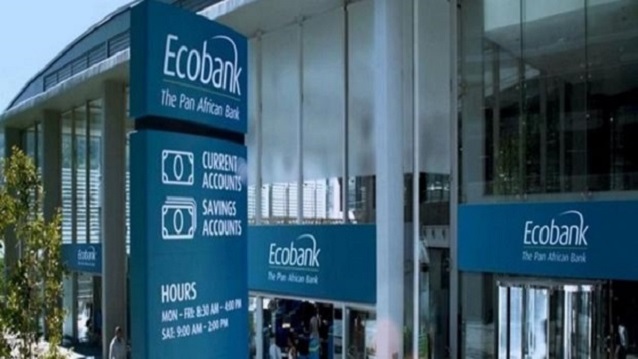
Ecobank Nigeria has announced the successful repayment of the outstanding principal and accrued interest on its original $300 million Eurobond due February 16, 2026, marking a significant milestone in its liability management strategy and overall balance sheet strengthening efforts.

Following the full repayment of the Eurobond obligations, the Bank stated that it will now focus its funding initiatives primarily on the domestic capital markets. T
his strategic shift reflects growing confidence in Nigeria’s local debt market and aligns with Ecobank Nigeria’s long-term objective of optimising funding costs while deepening its participation in the domestic financial ecosystem.
“Going forward, Ecobank Nigeria will prioritise domestic credit ratings and local debt issuance to achieve its funding objectives,” stated Ogorchukwu Okwechime, Financial Controller, Ecobank Nigeria, in Lagos.
He added that the successful repayment reinforces the Bank’s commitment to maintaining a resilient balance sheet and sustaining investor confidence.
The tender offer was conducted with Renaissance Capital Africa (Renaissance Securities Nigeria Limited) acting as financial adviser and dealer manager, while Sodali & Co Limited served as tender agent.
The notes were originally issued by EBN Finance Company B.V., with limited recourse to the issuer, for the sole purpose of financing the purchase of the US$300 million 7.125 per cent Senior Note due 2026 issued by Ecobank Nigeria.
The transaction underscores Ecobank Nigeria’s proactive approach to liability management, prudent capital planning, and strategic alignment with evolving market conditions.
It further positions the Bank to leverage domestic funding opportunities while maintaining financial flexibility and operational stability.

Bank of Industry (BOI) has received approval from the Central Bank of Nigeria (CBN) to operate a Non-Interest Banking (NIB) Window.

Theodora Amechi, bank’s divisional head, Public Relations, said the regulatory nod allows BOI to launch non-interest banking operations, targeting underserved business segments with tailored financial solutions to support Nigeria’s industrial development.
BOI stated that NIB operations will promote inclusive growth, attract ethical funding, bolster the real economy, and finance customer assets and raw materials using approved non-interest products.
“This approval authorises BOI to commence Non-Interest Banking operations, positioning the bank to further advance Nigeria’s sustainable and inclusive industrial development through tailored financial solutions for underserved and high-impact business segments.
“The Non-interest Banking operations will enable BOI to drive inclusive growth, mobilise new ethical funding, expand support for the real economy, and align its financing activities with social and developmental objectives.
According to the bank, under this framework, BOI will be able to finance customers’ assets and raw materials using approved Non-Interest Banking products.
Announcing this milestone, Dr Olasupo Olusi, MD/CEO, Bank of Industry, said, “This licence marks a pivotal moment in the Bank’s journey of transforming Nigeria’s industrial sector. With this licence, we can reach a new category of borrowers who, before now, could not be served.”
He said the approval underscores the CBN’s confidence in the Bank’s commitment to responsible financing, adding that it will allow the bank to scale its operations, introduce innovative financing solutions, and deepen support for Micro, Small and Medium Enterprises (MSMEs), as well as other underserved segments critical to Nigeria’s sustainable economic growth.
“BOI’s decision to commence Non-Interest Banking operations is aimed at expanding access to ethical funding for businesses—particularly those that have traditionally avoided conventional interest-based financing.
This initiative opens new opportunities for ethically motivated and faith-sensitive enterprises, as well as segments of the economy that face challenges accessing traditional credit.
It enables such businesses to access much-needed financing and participate confidently in the formal financial system in a manner consistent with their values and business realities.
Bank of Industry (BOI) is Nigeria’s foremost Development Finance Institution, committed to driving industrial growth and inclusive economic development,” Olusi said.
Established in 1959 as the Investment Company of Nigeria (ICON) and reconstituted as Nigerian Industrial Development Bank (NIDB) under World Bank guidance in 1964.
The Bank assumed its current form in 2001 following the merger of the Nigerian Bank for Commerce and Industry (NBCI) and the National Economic Reconstruction Fund (NERFUND).
The Bank’s primary mandate is to provide financial assistance for the establishment and expansion of large, medium, small-scale, and micro projects.


Zenith Bank Plc has cautioned the public against fraudulent videos circulating online falsely claiming that Group Chairman Dr. Jim Ovia endorses an investment scheme called “Wealth Bridge.”

Jim Ovia
In a disclaimer issued Tuesday by its management, the bank described the videos—circulated via the “Greece Island” Facebook handle—as entirely fake, doctored content bearing no connection to Dr. Ovia, the bank, or its affiliates.
The materials falsely promise up to N2 million in weekly returns for a N380,000 investment, while baselessly alleging Central Bank of Nigeria (CBN) endorsement and redirecting viewers to a sham “Arise News” webpage with a signup portal.
“Our attention has been drawn to a doctored video and still pictures currently circulating on social media, purporting to depict the Group Chairman of Zenith Bank Plc (‘the Bank’) as endorsing an investment scheme called ‘Wealth Bridge’ on the ‘Greece Island’ Facebook handle and soliciting members of the public to engage in a business relationship with the so-called entity,” the statement read.
“This claim is entirely false and has no connection whatsoever to the Group Chairman, the Bank or any of its affiliate companies.”
Zenith Bank stressed that Dr. Ovia and the institution have no knowledge of or partnership with “Wealth Bridge,” “delicious sitee,” “AfriQuantumX,” “Stock market analyst 1,” or related entities. The public was warned that dealing with these schemes carries full personal risk.
Ravenewsonline urges vigilance against rising impersonation scams targeting financial institutions.

Ecobank Nigeria Fully Repays $300m Eurobond Notes

Chams Carves Out Subsidiary to Support Africa’s Digital Transformation

BoI Secures CBN’s Approval for Non-interest Banking Operation

Nigeria, South Africa Drive Stablecoin Spending in Africa

Africa’s Active Data Centres’ Capacity on Back Foot, Despite Investment Push
Nigeria’s 9 Top FinTech Firms Valued at $10.6Bn in January 2026

Firm Detected a Fivefold Surge in QR Code Phishing Attacks in the Second Half of 2025

DG NCC Tasks University Dons on Research Commercialization, IP Management to Build Global Competitive Ecosystems

Kaspersky Launches OT Calculator to Align Cybersecurity Investments with Business Goals

Firm Detected a Scam Exploiting OpenAI’s Teamwork Features




 News2 days ago
African Leaders Highlight Africa’s AI Ambitions

 General News3 days ago
UBA Unveils Diaspora Platform to Connect Global Africans with Investment, Wealth Opportunities

 General News2 days ago
NDPC Orders Probe into Temu over Alleged Data Privacy Breaches

 Telecom2 days ago
MTN, BUA, Dangote & Other Industry Giants Triumph at NGX Made of Africa Awards

 Telecom2 days ago
X Suffers Global Outage, Millions Barred from Access

 News2 days ago
LG Nigeria Begins Nationwide Search for Oldest Working TV, Rewards Loyalty with AI QNED Upgrade

 Telecom2 days ago
MTN CIO Urges Africa to Lead Fourth Digital Revolution

 General News3 days ago
Leo Stan Ekeh Foundation, Zinox Group To Invest 10B on 1000 University Tech Scholarships for Indigent Nigeria Wiz-kids