

News
Buy Naija Lauds Zinox for Faith in Nigeria

Executive management of Buy Naija, a private sector – driven local patronage initiative of the federal ministry of Industry, Trade and Investment has congratulated Zinox Technologies Limited, manufacturers of Nigeria’s first internationally certified branded computers for sustaining its pioneer role in ICT and showing faith and love in the nation.
William Iheanacho Otabil, chairman, project management team who led Buy Naija executive on a visit to Zinox, expressed surprise at the quality of professionals; the digital factory; training facilities; and expansive layout of the robust investment at the Zinox headquarters.
Otabil said that before the visit he did not know that such an edifice existed in Nigeria and said that Zinox was yet to get its due in terms of recognition and patronage.
He said that the love of Nigeria, as shown by the dedication of the Zinox Group, is central to the realization of the Nigerian dream.
According to him, citizens must think and act in a manner that promotes Nigeria ahead of the individual and a key aspect of this emphasis is the deliberate patronage of Made in Nigeria products and services – a vision that has united Buy Naija and Zinox Technologies Limited, in a partnership that will use more creative methods to persuade Nigerians to buy Made in Nigeria products and services for job creation.
He also expressed surprise that even highly exposed and educated Nigerians were unable to make the link between patronage for Made in Nigeria products and national development.
Earlier, Otabil praised Leo Stan Ekeh, chairman of Zinox, for the single-minded efforts to make Nigeria a global force in Information and Communications Technology when he could easily have made money from oil.
He congratulated the Zinox Group for the longevity of the companies within the Group and in particular for the international standard of the Zinox brand of PCs.
Otabil referred to the Zinox PC as the flagship of Nigerian technology, a source of pride to modern Nigeria.
In his reply, Ekeh, congratulated Buy Naija for the bold initiative and urged the project team not to relent as the fight for Nigeria’s development must be fought from all fronts.
As a PC manufacturer and solutions provider, he said that Zinox was launched on the conviction that only high quality products and services would survive the onslaught of numerous global technology giants.
The Zinox chairman informed that from day one, Zinox PCs came standard with the Naira sign on its international keyboard and a surge arrest that defied the erratic nature of power supply in Nigeria.
Ekeh said that Zinox remains the strongest partner of Microsoft and Intel in sub-Saharan Africa, a relationship that helps sustain the world-class quality standards of the Zinox brand.
He revealed that the innovations at Zinox have continued to differentiate the Zinox brand in ways that address the problems of the nation.
For example, the PCs come standard with over 2 million e-books in a bid to reinvigorate the reading culture while improving the outcomes of teaching and learning in schools; the Zinox Legacy is embedded with a positive history of political events and personalities since independence in 1960.
In his words “when we say that Zinox is a Nigerian PC we mean that its design, attributes and content are determined by challenges in the Nigerian environment”.
In addition, Ekeh said, that Zinox has evolved into a domain for integrated ICT solutions – Integrated e-library solutions provider, certified e-education specialist, certified digital power provider, advanced systems integrator, biometric solutions specialist and many more.
The Zinox Boss said that unfortunately the preference for foreign products and services, right from the top continue to undermine the efforts of local manufacturers and service providers and remain the root cause of unemployment in the country.
“Innovations in Nigeria are stunted, not harnessed for national development because there are no funds from patronage to pursue research to its logical conclusion”.
Ekeh said that Zinox is in this partnership because of the urgent need for a new orientation towards Made in Nigeria products and services.
“We must love this country and be prepared to go the extra mile for her”.



EFCC


The African Development Bank Group last week approved an investment of €6.5 million in the Saviu II fund in order to support technology start-ups through their seed phase and first institutional fundraising, mainly in French-speaking Central and West Africa.

The Bank will invest €4.5 million as equity and €2 million as a first-loss hedging tranche on behalf of the European Commission, under the Boost Africa Programme.
This participation of the Bank Group will enable the Saviu II fund to give priority to companies with a strong technological or digital component.
Saviu II, the second investment vehicle of Saviu Partners, plans to invest between €500,000 and €3 million in about 20 technology or technology-oriented business-to-business start-ups in the seed phase or carrying out first institutional fundraising.
The Saviu II venture capital fund aims to make at least 60% of its commitments in the French-speaking countries of West and Central Africa: Côte d ‘Ivoire, Cameroon, Benin, Senegal, Togo, Burkina Faso and Mali.
The fund can also co-invest in promising technology companies in East Africa that have a strong team and business model, and whose strategy includes entering the market in French-speaking West African countries and establishing a strong presence there.
In addition, the fund will devote a dedicated envelope to pre-seed investments, focusing on minority equity investments, usually in co-investment with studios, incubators or other ecosystem partners.
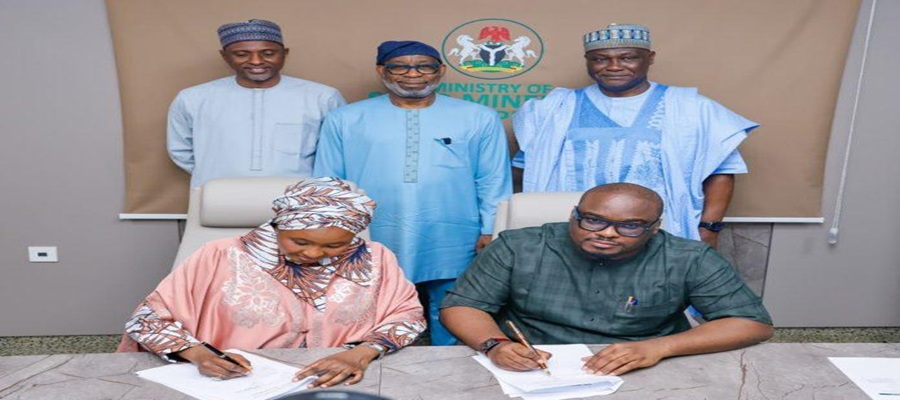
Nigerian Government has signed a $1.3 billion Memorandum of Understanding (MoU) with Africa Finance Corporation (AFC) via the Solid Minerals Development Fund (SMDF) to fund an alumina refinery, national geoscience mapping, and a strategic investment vehicle for mining growth.

Special Assistant to the Minister of Solid Minerals Development, Segun Tomori, said the refinery will process one million tonnes of bauxite yearly using a modern Bayer process, powered by an on-site gas-fired cogeneration plant.
Minister Dele Alake called it a transformative milestone boosting GDP, aligning with reforms that improve investment climate, regulations, and licensing to attract private capital. He directed agencies to fast-track permits.
The 20-year project at 95% utilization eyes 19 million tonnes total output, $1.2 billion annual GDP addition, $25 billion economic impact, and $8 billion forex earnings, per feasibility studies.
SMDF Executive Secretary Fatima Shinkafi termed it the agency’s biggest funding deal, supporting value-addition policy.
The partnership extends to geoscience mapping for mineral data, de-risking exploration, and a joint vehicle for mining assets.
Permanent Secretary Engr. Farouk Yabo praised the reforms. Shinkafi signed for government; AFC’s Franklin Edochie for the corporation, witnessed by AFC CEO Samaila Zubairu.
Tomori positioned it as Nigeria’s largest private mining investment and FDI magnet.

MultiChoice to Discontinue Showmax Streaming Platform

GCR Affirms Afreximbank’s International Scale Ratings of A, A2

SmartCash Launches ‘No Be Cho Cho Cho’ Campaign to Boost Digital Banking in Nigeria

MTN Nigeria Non-Executive Director Mazen Mroue Quits to Focus on Group Role

Google Adds Yorùbá, Hausa to AI Search, Boosting Access for Millions of Nigerians

Dr. Cairo Ojougboh Foundation Bolsters Nigeria’s Education Drive with ₦2.7m Student Support

Kaspersky Brings more Transparency to Threat Detection with New Hunt Hub

NDPC Commits to Balancing Data Privacy, Protection Information

PwC Reveals AI Scaling Gap Slows Africa’s Digital Transformation

Firm Reviews the Evolution of Phishing Threats in 2025




 E-Financial2 days ago
NRS Targets N40trillion in Tax, Royalty Revenue in 2026

 E-Financial2 days ago
SEC Revokes Registration of Kensington Agro Trading Limited

 General News2 days ago
Purple Woman 3.0 Is Back, to Empower Women in Tech this IWD 2026

 News2 days ago
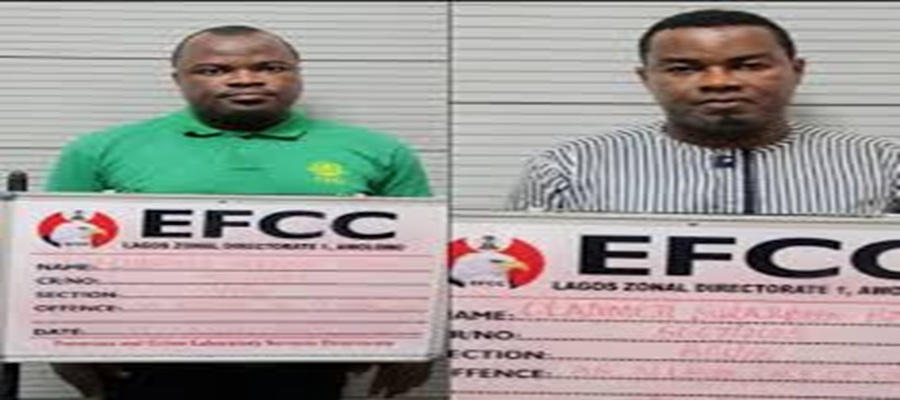
EFCC Arraigns Two FSDH Bank Officials Over $307k, €50k Fraud

 Telecom2 days ago
Konga Launches ‘Berekete Sales’ with Up to 50% Discounts Across Major Categories
 E-Business2 days ago
NDPC, 60 DPAs Collaborate on Enforcing Privacy Rights in the Use of Al

 General News2 days ago
NCDC Raises Alarm over Lassa Fever Ravaging 18 States in Nigeria

 E-Financial2 days ago
Nigeria’s Net Reserves Surge 50% to $34.8bn in 2025 – CBN Governor