

E-Financial
Cheque Truncation, NEFT Battle for Life

The cheque truncation system of the Central Bank of Nigeria (CBN) is threatening the life of Nigeria Electronic Funds Transfer (NEFT) system, an irrevocable fund transfer instruction because the former now offers faster cheque clearing cycle, Nigeria CommunicationsWeek can now report.
Unlike the drudgery associated with NEFT, cheque truncation now eliminates the need to move the physical instruments across branches, except in exceptional circumstances; making the realization of proceeds of cheque possible within the same day.
Investigations showed that this new instrument is in hot demand as customers seek to reduce the time taken to clear the cheques.
Mr. Oluwaseyi Agboola, ICT vendor at the popular computer village narrated how his customer who uses Ecobank Plc gave instruction for certain amount of money to be transferred to him on a Friday only for him to get value in his Sterling Bank account on Tuesday morning.
He said: “This is equivalent to old system of cheque clearing I will rather go back to cheque which has improved than wait forever for NEFT to come.”
Nigeria CommunicationsWeek gathered that NEFT passes through the same clearing circle like cheque.
The delays in NEFT are often caused by some banks that are reluctant to carry out instructions especially when it concerns paying out money to another bank.
Bindesh Pandey, regional manager, West Africa, Newgen Software Technologies, said that Nigerians trust cheque more than electronic transfer and thereby prefer the use of cheque especially now that the days of clearing has been reduced to one day.
But that is not to take the shine off NEFT, the good old instrument because the payer’s bank simply will not accept the order if there are insufficient funds to cover the payment instruction.
Tunde Lemo, Deputy Governor, Operations, CBN, disclosed last week that the Nigeria Interbank Settlement System (NIBSS) recorded over N20billion daily transaction by value, while the Nigeria Electronic Funds Transfer (NEFT) conducts about N60billion transactions daily.
NIBSS provides the infrastructure for automated processing, settlement of payments and fund transfer instructions between banks, discount houses and card companies in Nigeria.
Nigeria CommunicationsWeek gathered that some of the payments that can be effected with NEFT Credit Transfer service: individual (person-to-person) fund transfers; merchant payments that is payments for goods and services; payment of tuitions; individuals paying utility bodies (water, electricity, telephone bills, Multichoice, FSTV, etc.); revenue collections by government agencies e.g. Customs, FIRS; and distributor payments.
Others are; government taxes; subscription payments (magazines, clubs, associations, etc.); charity donations; and payment to religious bodies (churches, mosques).
The NEFT is quite similar to the GIRO payment method which has become popular in Europe and other parts of the world.
The NEFT payment system provides additional consumer payment option and allows for 24-Hour credit transfer system, with a nationwide coverage for transfer instructions cleared through the Lagos Clearing House.
Bank transfers are more secure for both the customer and the banks and there are no cheques that may be misplaced, lost or stolen. In addition, since the payment goes directly from the customer to the bank, there is no possibility of fraudulent alteration of the payment amount.
Cheque truncation system on the other hand is basically an online image-based cheque clearing system where cheque images and Magnetic Ink Character Recognition (MICR) data are captured at the collecting bank branch and transmitted electronically.
Truncation means, stopping the flow of the physical cheques issued by a drawer to the drawee branch.
The physical instrument is truncated at some point en route to the drawee branch and an electronic image of the cheque is sent to the drawee branch along with the relevant information like the MICR fields, date of presentation, presenting banks etc.
Cheque truncation substantially reduces the time taken to clear the cheques as well enables banks to offer better customer services and increases operational efficiency by cutting down on overheads involved in the physical cheque clearing process.



Abiodun Olokunjuwon, a retired civil servant based in Ibadan has instituted a N50 million lawsuit against Moniepoint Microfinance Bank at the Oyo State High Court, alleging that the fintech company opened unauthorized bank accounts in her name without her knowledge or consent.

Filed in February 2026, the suit is among the first significant cases testing the enforcement of the Nigeria Data Protection Act 2023 against a Nigerian fintech institution.
According to the statement of claim, the plaintiff became aware of the alleged unauthorized accounts only after her legitimate bank account was restricted pursuant to a garnishee order linked to a debt she denies incurring.
The restriction reportedly prevented her from accessing funds needed for essential transactions.
The claimant alleges that Moniepoint opened two separate accounts in her name using her National Identification Number (NIN) and Bank Verification Number (BVN) without proper authorization or verification.
Following the discovery, she submitted a Data Subject Access Request (DSAR) under the NDPA 2023. Documents allegedly provided by the bank, according to the suit, revealed significant verification lapses.
The plaintiff claims the accounts were opened using falsified documents, including what she describes as a fake NIN slip and contact information unrelated to her.
She further alleges that the accounts listed a Lagos residential address where she has never lived.
The suit contends that Moniepoint failed to implement adequate identity verification and address confirmation procedures before creating and operating the accounts. It further alleges breaches of statutory obligations under the NDPA 2023, including:
- Failure to ensure personal data processed was accurate and lawfully obtained
- Failure to implement appropriate technical and organizational security measures
- Failure to prevent unauthorized or fraudulent processing of personal data
The claimant maintains that these alleged lapses resulted in serious personal and financial harm.
The plaintiff is seeking N50 million in damages for emotional distress, health complications, and disruption to her financial life.
She is also asking the court to order the permanent closure of the allegedly unauthorized accounts.
No date has been fixed for hearing on the matter.

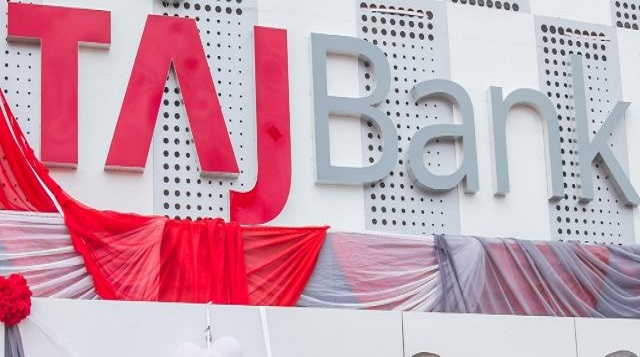
TAJBank Limited has received A1 credit ratings from Agusto & Co and Datapro, marking an upgrade from the Bbb+ rating assigned by Agusto about two years ago and placing the non-interest lender among the highest rated operators in Nigeria’s non-interest banking space.

The rating agencies attributed the improved score to the bank’s high quality balance sheet and strong earnings ratios in the 2025 financial year. The assessment also covered credit risk and operational resilience.
Despite the prevailing economic challenges, the bank was noted to have strengthened its position through operational efficiency and customer-focused services in line with ethical banking principles.
Speaking on the development during an interactive session with journalists on the sidelines of a banking stakeholders’ event in Abuja, the Founder and Chief Executive Officer, Hamid Joda, described the ratings as evidence of the bank’s focus on risk management and internal controls.
He said, “TAJBank Limited latest ratings by these reputable agencies have again validated the management’s commitment to world-class standardisation of the bank’s operations, especially in terms of innovative, real time, techno-powered services and risk management for our growing customers on a sustainable basis.”
Joda added that the bank’s priority remains the deployment of high operational standards to protect customers’ interests.
“As we have consistently maintained, our primary goal is to deploy world-class operational standards and services to protect the interest of our customers with a view to surpassing their expectations and retaining TAJBank at the leading edge of the NIB subsector on a sustainable basis.
“The message these latest best ratings by Agusto & Co and Datapro of our bank is sending to our customers, investors and stakeholders in the non-interest banking space is that with TAJBank, they can be rest assured of safety of their investments, transactions and readiness of the bank’s management to give all that it takes to grow their businesses and support their individual socio-economic wellbeing come rain or shine,” he said.
Also commenting on the ratings, the bank’s Executive Director, Sherif Idi, said the A1 scores reaffirmed management’s commitment to best practice standards.
“The A1 ratings by Agusto & Co and Datapro, the foremost ratings agencies in the country, have reaffirmed TAJBank’s management’s unwavering commitment to best practice standards through prioritisation of investment in human capital, innovative technologies and branch network expansion to consistently make our bank the preferred choice for customers in the NIB subsector of the banking sector,” he said.
E-Financial
Fidelity Bank Launches HerFidelity Apprenticeship Programme 2.0 to Boost Women Entrepreneurship


Fidelity Bank Plc, leading financial institution, has announced the launch of the second edition of its flagship women-empowerment initiative, the HerFidelity Apprenticeship Programme 2.0 (HAP 2.0).

Fidelity Bank
Designed to equip women with practical, income‑generating skills and structured pathways to entrepreneurship; HAP 2.0 will build on the success of its inaugural edition held in 2023.
Speaking with journalists at a media chat to herald the launch of HAP 2.0, the Divisional Head, Product Development, Fidelity Bank Plc, Osita Ede, explained that the initiative has been enhanced to deliver greater impact.
“HerFidelity Apprenticeship Programme 2.0 reflects our commitment to continuous improvement. Having evaluated feedback from the first edition, we have returned with stronger partnerships and deeper mentorship programmes to ensure that women acquire not just skills, but sustainable economic opportunities,” he said.
“At the heart of the programme is guided, real‑world learning. Participants will undergo intensive apprenticeship training under reputable institutions and industry experts across select fields such as hair styling, shoe making, auto mechatronics, and interior decoration,” Ede added.
He noted that HerFidelity Apprenticeship Programme 2.0 goes beyond skills acquisition by offering participants a wide range of business advisory services. These include business and financial literacy training, mentorship support throughout the apprenticeship journey, access to Fidelity Bank’s women‑focused and SME financial solutions, as well as guidance on business formalisation and growth strategies.
Further emphasising the bank’s vision, Ede said, “By integrating structured mentorship with entrepreneurial development, Fidelity Bank is positioning women not just as trainees, but as future employers, innovators, and economic contributors within their communities. This aligns with our mandate to help individuals grow, businesses thrive, and economies prosper.”
Interested participants are encouraged to indicate their interest by visiting https://bit.ly/Apprenticeshipbyherfidelity.
Ranked among the best banks in Nigeria, Fidelity Bank Plc is a full-fledged Commercial Deposit Money Bank serving over 10 million customers through digital banking channels, its 255 business offices in Nigeria and United Kingdom subsidiary, FidBank UK Limited.
The Bank is a recipient of multiple local and international Awards, including the 2024 Excellence in Digital Transformation & MSME Banking Award by BusinessDay Banks and Financial Institutions (BAFI) Awards; the 2024 Most Innovative Mobile Banking Application award for its Fidelity Mobile App by Global Business Outlook, and the 2024 Most Innovative Investment Banking Service Provider award by Global Brands Magazine. Additionally, the Bank was recognized as the Best Bank for SMEs in Nigeria by the Euromoney Awards for Excellence and as the Export Financing Bank of the Year by the BusinessDay Banks and Financial Institutions (BAFI) Awards.

Retiree Slams N50m Suit against over Alleged Privacy Breach, Unauthorized Accounts

Court Fines Lafarge Africa N2m for Using Ex-Employee’s Name, Details Online after Dismissal

GSMA Launches Innovation Fund to Accelerate Green Transition Through Mobile Technology

NITDA Urges Stronger State Partnerships as Key to Digital Economy Goals @ South-South Stakeholders Forum

TAJBank Secures A1 Ratings from Agusto, Datapro
Nigeria’s 9 Top FinTech Firms Valued at $10.6Bn in January 2026

CBN Upgrades Licences of Opay, Moniepoint, Kuda, Palmpay, Paga to National Status

Kaspersky Launches OT Calculator to Align Cybersecurity Investments with Business Goals

NITDA, NBC Explore Strategic Collaboration on Digital Transformation, Media Regulation

Accidental Billionaire Opts for Jail Instead of Returning Money Credited Him by Mistake




 News2 days ago
ABoICT Lecture 2026 to Focus on Impact of AI, IoT on Business Operational Efficiency

 General News2 days ago
Leo Stan @ 70: Blessed and Bruised by Country, Eyes Next Disruption

 General News2 days ago
Zinox Technologies and TD Africa Forge Strategic Partnership to Revolutionize African Tech Ecosystem

 Telecom2 days ago
Uwaje Pays Tribute to Leo Stan Ekeh @70

 E-Financial1 day ago
$214Bn Missing, Institutions Silent: Is Accountability Dead in Nigeria?

 General News1 day ago
NITDA, Abia Partner on Enterprise Architecture Reform

 Telecom1 day ago
Cyber Immunity Emerges as Shield for Nigerians Amid Rising Scams

 E-Business1 day ago
Interswitch Partners Abia to Digitise Public Hospitals