

News
CMC Connect Becomes Burson-Marsteller Nigeria’s Affiliate

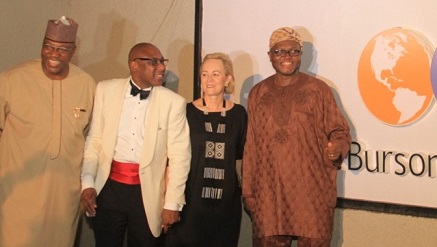
Burson-Marsteller, a leading global public relations and communications firm, on Monday announced the launch of CMC Connect Burson-Marsteller in Lagos and Abuja, Nigeria.
The announcement marks the further strengthening of the long-standing relationship between the two companies, and brings the total number of Burson-Marsteller branded operations across the continent to 29.
This follows the simultaneous announcement in February 2014 of 27 branded operations and the subsequent launch of Brainchild Burson-Marsteller in Uganda in November 2014.
The full Burson-Marsteller Africa network covers 53 of the 55 countries on the continent.
In addition, after building a very strong partnership on a non-exclusive basis over a number of years, Burson-Marsteller today announced the signature of an exclusive affiliate agreement with Blast Communications covering the Indian Ocean Islands including Mauritius, where the company has its hub office, Madagascar, the Seychelles, the Comoros Islands and Reunion.
The announcement of Back Communications in Angola joining the Burson-Marsteller Africa network on an exclusive affiliate basis, rounded off the announcement.
“For 26 years our commitment to growing partnerships has underpinned Burson-Marsteller’s activities across Africa. Today this sees us very strongly positioned with a pan-African, Burson-Marsteller branded network of communications consultancies, individually respected in their own countries and collectively recognised as the pre-eminent African communications network. We are delighted to launch CMC Connect Burson-Marsteller and to bring Blast Communications and Back Communications even closer into our fold,” said Robyn de Villiers, Burson-Marsteller chairman and CEO, Africa.
“We are thrilled to be responsible for flying the Burson-Marsteller flag in the Nigerian market. This is a significant honour and we will ensure that this leads to a significant growth of equity for the brand in our market. At the same time, we will bring the strength of the affiliation to bear on the service offering we are able to provide to clients in Nigeria through closer alignment with the global organization. We will grow the brand and strengthen its position in our market. The launch could not have come at a better time for us and for Burson-Marsteller given Nigeria’s position as one of the strongest economies on the African continent,” added Yomi Badejo-Okusanya, CEO of CMC Connect Burson-Marsteller.
Jeremy Galbraith, CEO Burson-Marsteller Europe, Middle East & Africa and Global Chief Strategy Officer concluded this way, “A key component of many of our clients’ global business strategies is growing their businesses across the rapidly emerging continent of Africa. Today’s announcements are testament to our commitment to being where our clients need us to be – notably in 53 of the 55 markets on the continent, offering world-class strategic communications services that will contribute to their overall business success.”
Burson-Marsteller, established in 1953, is a leading global public relations and communications firm.
It provides clients with strategic thinking and program execution across a full range of public relations, public affairs, reputation and crisis management, advertising and digital strategies.
The firm’s seamless worldwide network consists of 72 offices and 85 affiliate offices, together operating in 110 countries across six continents. Burson-Marsteller is a unit of WPP, the world’s leading communications services network.
And with its 20+ years of client service experience and 500+ strong team serving clients on the ground across Africa, Burson-Marsteller Africa is the pre-eminent African public relations network.
Through its network of affiliates in 53 of the 55 African countries – the majority of them branded Burson-Marsteller – it offers an unequalled footprint and a tailored for Africa approach.
The Burson-Marsteller Africa network is headquartered in Johannesburg and continues to be run by Chairman and CEO for Africa, Robyn de Villiers, who has built the network over more than two decades.



More than a quarter of a million people worldwide die from meningitis a year, a large new study estimated at the weekend, following a recent outbreak of the disease in the UK.

Children accounted for a third of the deaths, many of which were in Africa, according to research that described itself as the most comprehensive global assessment of meningitis yet.
The study, published in the journal Lancet Neurology, comes after meningitis made headlines when two people died during an outbreak believed to have spread at a nightclub in southeast England earlier this month.
Meningitis is an inflammation of tissues around the brain and spinal cord caused by infection with a range of different viruses, bacteria, fungi, or parasites.
Bacterial infections are both rarer and more deadly than viral ones.
It was a bacterial infection outbreak in the English county of Kent that prompted more than 10,000 people to get vaccinated in the area over the last two weeks.
Since 2000, the widespread availability of vaccines has brought down the number of meningitis cases and deaths across the world.
However, 259,000 people were estimated to have died worldwide in 2023, according to the new research by the US-based Institute for Health Metrics and Evaluation (IHME).
The “African meningitis belt,” which stretches across the continent from Senegal to Ethiopia, had the highest rate of cases.
Nigeria, Chad, and Niger were particularly hard hit.
Low birthweight, premature birth, and air pollution were the biggest risk factors, the study found.
It also warned the World Health Organization was unlikely to reach its 2030 target for meningitis.
The WHO has a goal of slashing the global number of bacterial meningitis cases by 50%—and deaths by 70%—from 2015 levels by the end of this decade.
However, annual deaths and cases were only falling by half the rate needed to meet this target, the study found.
“Accelerated efforts—including expanding immunization, improving access to care, and strengthening diagnostics and surveillance—are essential to achieve these targets,” it said.
Many deaths from meningitis go unreported, particularly in developing countries, meaning that some figures could be underestimated, the researchers cautioned.
The study was based on figures from the Global Burden of Disease study from the IHME, which brings together thousands of researchers across the world and is funded by the Bill and Melinda Gates Foundation.


Ajibola Akindele, Country President, Schneider Electric Anglophone Africa, has identified artificial intelligence as a critical tool for maintaining data centres operations in the face of frequent power grid instability.

Akindele, while emphasising that the future of Nigerian data centre will be defined by how it contributes to the broader energy ecosystem, submitted that AI has capacity to optimise energy systems from microgrids to industrial processes, enabling smarter and faster decision-making.
He said: “Predictive algorithms now enable operators to forecast energy spikes, adjust dynamically, and smooth out load variability to protect grid stability. In the Nigerian context, smart scheduling allows energy-intensive training tasks to run when renewable supply is abundant or during off-peak hours, reducing operational costs.
“Flexible power management also lets workloads scale up or down according to computational needs. When guided by Artificial Intelligence, data centers can evolve from energy-hungry to energy-aware ecosystems.”
In a statement, the country director noted that the AI sector is placing unprecedented pressure on the country’s already strained power infrastructure, stressing the need for data centers to balance energy demand with sustainability.
He warned that the next wave of innovation driven by AI will significantly increase electricity consumption, with high-performance computing systems requiring far more power than traditional IT workloads.
He said: “In Nigeria, where the digital economy is a primary pillar of national development, Artificial Intelligence workloads are projected to consume a significant portion of all installed data centre capacity.”
According to him, Artificial Intelligence training racks can draw between 100 and 140 kilowatts each, creating unpredictable, high-density loads.
He, however, stressed that increasing power supply is not a viable solution in Nigeria, where grid constraints are common but to embrace energy management to address some of the inefficiencies.
Citing projections from Bloomberg and PwC, where AI is expected to reach USD 1.3 trillion by 2032 and contribute up to USD 15.7 trillion to the global economy by 2030, respectively, Akindele, further noted that this growth comes with steep energy demands, particularly for countries like Nigeria where grid capacity remains limited.
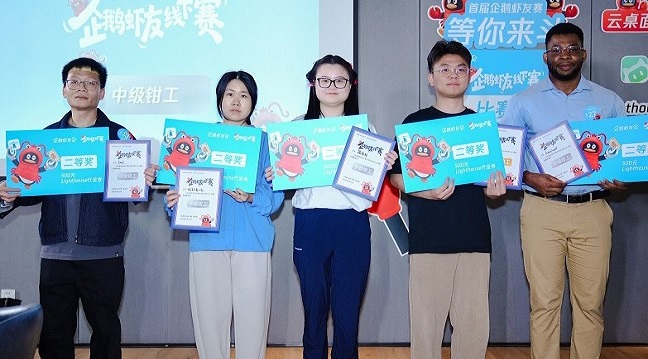
In a striking moment of global recognition for African talent in artificial intelligence, Shenzhen-based Nigerian technologist, Francis Okafor has emerged as the second-place winner at the 2026 Tencent OpenClaw Hackathon, a fiercely contested competition hosted by Chinese tech giant Tencent.

The achievement places the Nigerian engineer among the top innovators in one of the world’s most competitive technology hubs, Shenzhen, often described as China’s Silicon Valley.
Okafor’s journey to the podium was anything but scripted. Walking into Tencent’s facility on the day of the contest, he found a room already buzzing with elite programmers deep in preparation.
“Laptops open. Heads down. Some people setting up their system before the challenges even dropped,” he recalled, contrasting the scene with his own uncertainty at that moment. “And then there is me — a Nigerian looking around like, okay Francis, what exactly are you doing here?”
Rather than confidence, his first reaction was raw nerves. “I won’t lie, I had goose bumps. Not the inspirational kind,” he admitted, describing a quiet internal debate about whether he had wandered into territory far beyond his league. Yet that hesitation quickly gave way to experimentation, a hallmark of the hackathon spirit.
Earlier that same week, Tencent had rolled out OpenClaw integration into WeChat (known domestically as Weixin), exposing its massive user base to AI agent capabilities.
Okafor, a senior technology lead, artificial intelligence advocate, and global community organiser, had already been stress-testing the system and decided, on the spot, to build his entry around it. “I had been pushing it hard all week just to see what it could do… so when the challenges dropped I thought, you know what, let me use this thing as my weapon.”
That decision proved decisive. Competing against some of the most accomplished engineers in China’s hyper-competitive tech ecosystem, Okafor’s solution stood out for both ingenuity and execution. “It went far enough apparently,” he said with understated pride after securing second place.
Remarkably, he had entered without a grand plan. “I didn’t go in with a strategy. I went in for the thrill of it… Honestly I thought I would learn a few things and go home with a good story.” Instead, he left with a trophy, and a narrative that has resonated far beyond the competition hall.
Beyond personal triumph, Okafor emphasized the broader technological significance of the moment. Tencent released the WeChat OpenClaw plugin on the very morning of the event, effectively putting advanced AI agent tools into the hands of an estimated 1.4 billion users.
In his view, this signals a profound shift in how artificial intelligence will reach the public. The company, he observed, is “not just making AI accessible to developers… they are bridging it to everyone,” while using hackathons to identify innovators capable of pushing the technology forward, regardless of origin.
Okafor was acutely aware of his uniqueness in the room. “I was definitely the only African there and for sure stood out,” he noted. Yet what mattered was not nationality but capability. “Nobody cared about where I was from. They cared about what I built.”
His message to aspiring technologists, particularly those from underrepresented regions, is both simple and powerful: show up. “Enter things you think you have no business entering,” he urged. “The worst case is you learn something. The best case is you shock yourself.”
In an industry often defined by geography, capital, and institutional advantage, Okafor’s victory offers a compelling counter-narrative. Talent, preparation, and courage can still disrupt expectations, even in rooms that seem designed for someone else.
As he concluded in a line that has since captured widespread attention: Black excellence, he said, “doesn’t need a geography.”

ARN Rejects Medical Bill over Attempt to ‘Scrap’ Profession

Meningitis Kills a Quarter Million People a Year -Study

NIGCOMSAT Supports Startups Growth with the Launch of Accelerator 3.0

Stakeholder says AI is Crucial to Nigerian Data Centres Amid Persistent Grid Collapse

NFVCB Boss Urges Stronger Distribution Channels @ Coal City Film Festival 2026

Spotify’s Loud & Clear Report Reveals Over ₦60Bn Revenue for Nigerian Artists in 2025

Madonna University Taps Tech Guru Adote for Strategic Board Role

China Threatens to Shut Nigeria’s Satellite Over $11.44m Unpaid Debt

Jumia Tech Week 2026 Begins with Tech Deals on Smartphones, Electronics, and Everyday Technology

FCCPC Bans Lagos ‘No Refund’ Policy, Vows Fines and Shutdowns for Traders




 Telecom3 days ago
Google Rolls Out Search Live AI to 200+ Countries, Including Nigeria

 E-Financial3 days ago
CBN Bars Chronic Loan Defaulters from Accessing Loans

 E-Financial3 days ago
NDIC Insures 99 Percent of Bank Customers

 E-Business3 days ago
FG Shifting Focus to “Meaningful Connectivity” to Drive Inclusion – Minister

 General News2 days ago
Anti Graft Agencies Raise Alarm over Rising Crypto-Linked Financial Crimes

 E-Business2 days ago
NITDA Takes Over National Digital Architecture System

 E-Financial17 hours ago
CBN bars large‑ticket loan defaulters from banking services in tough new crackdown
 Telecom17 hours ago
NIGCOMSAT Supports Startups Growth with the Launch of Accelerator 3.0