

E-Financial
Commitment to Customer Service Translates to Financial Gains – UBA GMD

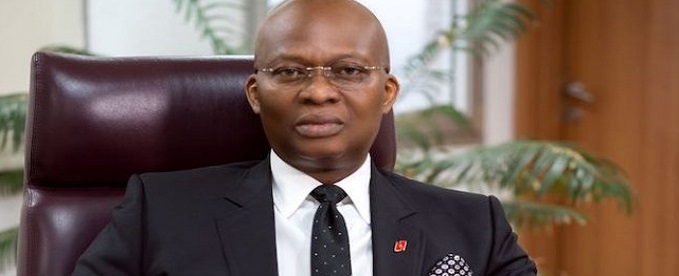
Kennedy Uzoka, group managing director/chief executive officer, United Bank for Africa (UBA) Plc, has said that the bank recorded significant improvement in its operational and financial performance as a result of its unending commitment towards delivering products and services aimed at meeting customers’ demands.

Kennedy Uzoka, GMD, UBA
Uzoka said this during the Investors/Analysts Conference Call at the bank’s head office in Lagos, Nigeria, following the release of its results for the half year ended June 30, 2021.
UBA delivered a 33.4% appreciation in its profit before tax which rose to N76.2bn as at June 2021, up from N57.1bn recorded in the same period of 2020, translating to an annualised Return on Average Equity of 17.5% as against 14.4% a year earlier.
Profit after tax grew to N60.6bn representing a significant rise by 36.3% compared to N44.4bn recorded in 2020, while gross earnings grew to N316bn from N300.6bn as at June 2020; a 5.1% growth
This feat was recorded despite the challenging business and economic environment that emerged from the slow pace of activities following the global lockdown occasioned by the Covid-19 pandemic.
The GMD expressed optimism that the bank is on the trajectory of achieving and even surpassing its targets for the financial year, adding that its focus on delighting its customers remains at the forefront of all its activities.
He said, “We are very committed to prudent and responsible growth of our risk assets, quality of our balance sheet and the overall health of the bank. We will continue to balance our growth appetite with the need to maintain very good healthy portfolio of our assets.
“Our customer first philosophy remains our guiding strategy. We want to assure you of positive customer experience for all our customers. In addition, we would like to deliver our banking services only from the standpoint of our customers. And indeed, as we say at UBA, our customers are our ultimate employers,” Uzoka explained.
Whilst expressing optimism that the Nigerian economy and the broader economy will continue to recover and rebound from the negative impact of the Covid-19 pandemic in the remaining quarter of 2021 and all the way into 2022, the GMD assured the investors and participants of the bank’s commitment to maintain professionalism and continue to ensure strict compliance with the rules and regulations guiding our operations in all our presence countries.
“With the trusted commitment of all our great and wonderful employees, board and management, we will continue to match towards actualising our enterprise goals,” he noted.
Ugo Nwaghodoh, chief financial officer, UBA, who spoke on the bank’s significant geographical diversification across key economies in Africa and beyond, noted that UBA recorded impressive growth in interest incomes and net incomes, with steady growth in funding and deposits from customers.
He pointed out that even as the operating environment remains largely uncertain and volatile, despite marked improvement from Covid-19 induced macroeconomic stress, UBA will continue to build resilience through its geographically diversified business model to support headline earnings growth for the Group.
“We remain committed to our 18% and 15% respective RoAE and deposit growth guidance for FY 2021, as we continue to invest in growth opportunities across our geographies of operation, whilst managing capital and balance sheet prudently,” Nwaghodoh said.
United Bank for Africa Plc is a leading Pan-African financial institution, offering banking services to more than twenty five million customers, across over 1,000 business offices and customer touch points, in 20 African countries.
With presence in the United States of America, the United Kingdom and France, UBA is connecting people and businesses across Africa through retail; commercial and corporate banking; innovative cross-border payments and remittances; trade finance and ancillary banking services.



Central Bank of Nigeria (CBN) has restricted banking services for large‑ticket loan defaulters as part of a broader push to enforce credit discipline and protect the stability of the financial system.

CBN
The directive, issued on Wednesday, March 26, 2026, follows public remarks by CBN Governor Olayemi Cardoso at the 4th Annual IMF/AFRITAC West High‑Level Executive Forum in Abuja, where he declared that the era of leniency toward delinquent borrowers is over.
Cardoso said the apex bank is tightening corporate governance measures to safeguard the N4.61 trillion recently injected into the Nigerian banking sector and warned that there would be zero tolerance for violations.
“Our stance on corporate governance is unequivocal: zero tolerance for violations. By ending years of regulatory forbearance, we have reinforced accountability, tightened supervision, and elevated compliance standards across the sector,” he stated.
The new directive targets “large‑ticket obligors,” defined as individuals or entities with significant outstanding debts classified as non‑performing in the Credit Risk Management System.
Under the rules, these defaulters will be barred from accessing fresh credit as well as essential contingent liabilities and trade instruments, effectively cutting off their ability to obtain new loans or trade‑related banking facilities.
The CBN said the restriction is aimed at curbing “credit jumping,” a practice where borrowers move from one financial institution to another to secure additional loans despite existing non‑performing debts.
“We have implemented a restriction of banking services to non‑performing large‑ticket obligors. This decisive step underscores our commitment to credit discipline, financial integrity, and accountability,” the regulator stated.
The policy is intended to instil a long‑absent “culture of repayment,” protect depositors’ funds and reinforce the overall stability of the financial system.
Cardoso added that the CBN remains committed to orthodox monetary policy, focused on restoring price stability, strengthening policy credibility and anchoring expectations through discipline and consistency.


Nigeria Deposit Insurance Corporation (NDIC) has reaffirmed its commitment to protecting depositors and sustaining confidence in the nation’s banking system, declaring that its insurance framework currently safeguards about 99 per cent of customers across Nigerian banks.

Speaking during the NDIC Special Day at the 37th Enugu International Trade Fair, Thompson Oludare, managing director and chief executive, highlighted the Corporation’s role as a critical stabiliser in the financial sector, particularly in times of economic uncertainty.
Addressing participants on the theme, “Empowering MSMEs for global competitiveness”, Oludare said the NDIC remains a dependable backbone for small businesses by protecting their funds against bank failures.
He disclosed that the Corporation reviewed and increased its insurance coverage in 2024 in line with prevailing economic realities. Under the revised structure, depositors in Deposit Money Banks (DMBs), Mobile Money Operators, and Non-Interest Banks are insured up to ₦5,000,000, while those in Microfinance Banks and Primary Mortgage Institutions are covered up to ₦2,000,000.
Explaining the operational mechanism behind depositor protection, Oludare noted that the NDIC does not depend on government funding to reimburse customers of failed banks.
Rather, it draws from the Deposit Insurance Fund (DIF), which is financed through premiums contributed by licensed financial institutions.
He described the process as efficient and sustainable, enabling the Corporation to meet its obligations promptly without placing pressure on public finances.
Highlighting recent technological advancements, the NDIC boss revealed that the use of the Bank Verification Number (BVN) has significantly improved the speed of payments to affected depositors.
According to him, the BVN system allows the Corporation to trace alternative bank accounts of customers and process reimbursements within days of a bank’s closure, eliminating the delays previously associated with manual claims.
For depositors with balances above the insured limits, Oludare reassured that recovery efforts remain ongoing through liquidation processes.
“This is a continuous process,” he stated. “Additional dividend payments are made in tranches as more funds are recovered. We have demonstrated this successfully with the liquidation of Union Homes, Aso Savings and Loans, and the more recent Heritage Bank Limited, where multiple tranches of dividends have already been disbursed.”
He also cautioned Nigerians against falling victim to fraudulent financial schemes, popularly known as “wonder banks”, urging them to verify the credibility of financial institutions before investing.
On his part, Nnanyelugo Onyemelukwe, president of the Enugu Chamber of Commerce, Industry, Mines and Agriculture (ECCIMA), described the Corporation as a dependable safeguard for depositors.
According to him, the NDIC remains “a beacon of hope for depositors”, providing a “great confidence backup” in situations where banks fail due to mismanagement or distress.
Onyemelukwe also called for stronger regulatory oversight by the Central Bank of Nigeria (CBN) to further reduce the risk of bank failures and sustain public trust in the financial system.

Central Bank of Nigeria (CBN) has officially restricted banking services for “chronic defaulters” and large-ticket obligors with non-performing loans.

In a sweeping move to enforce credit discipline and safeguard the nation’s financial system, the apex bank issued a policy statement on Wednesday following remarks by Olayemi Cardoso, governor, CBN, at the 4th Annual IMF/AFRITAC West 2 High-Level Executive Forum in Abuja.
The Governor made it clear that the era of regulatory forbearance for delinquent borrowers is over.
He emphasised that the bank is shifting toward a more aggressive stance on corporate governance to ensure that the N4.61tn in new capital recently attracted by the banking sector is protected from systemic abuse.
“Our stance on corporate governance is unequivocal: zero tolerance for violations. By ending years of regulatory forbearance, we have reinforced accountability, tightened supervision, and elevated compliance standards across the sector,” the Governor stated.
The new directive specifically targets “large-ticket obligors”, individuals or entities with significant outstanding debts classified as non-performing in the Credit Risk Management System. Under the new rules, these defaulters will be barred from accessing not only fresh credit but also essential contingent liabilities and trade instruments.
“We have implemented a restriction of banking services to non-performing large-ticket obligors. This decisive step underscores our commitment to credit discipline, financial integrity, and accountability,” the statement read.
According to the CBN, the move is designed to instil a “culture of repayment” that has historically been lacking among high-profile borrowers. By cutting off access to instruments such as letters of credit and performance bonds, the regulator aims to prevent “credit jumping”, a practice where defaulters migrate between banks to accumulate more debt.
“By curbing access to banking services for chronic defaulters, we are reinforcing the culture of repayment, protecting depositors, and safeguarding the stability of the financial system,” the apex bank added.
Beyond the crackdown on debtors, Cardoso reaffirmed that the CBN remains firmly committed to orthodox monetary policy. This approach prioritises price stability and the use of traditional tools to anchor inflation expectations, moving away from unconventional interventions to restore confidence in the naira.
“The CBN remains firmly anchored in orthodox monetary policy, focused on restoring price stability, strengthening policy credibility, and anchoring expectations through discipline and consistency,” the statement concluded.
For years, the Nigerian banking sector has struggled with “chronic defaulters”, wealthy individuals or massive corporations that borrow billions and fail to repay.
These are often referred to as “large-ticket obligors”. When these loans go bad, they threaten the liquidity of banks and the safety of ordinary citizens’ deposits.
Under the leadership of Cardoso, the CBN is pivoting toward “Orthodox Monetary Policy”. This means moving away from the era of massive development interventions and direct lending to sectors like agriculture and focusing instead on its core mandate: price stability and financial system regulation.

ARN Rejects Medical Bill over Attempt to ‘Scrap’ Profession

Meningitis Kills a Quarter Million People a Year -Study

NIGCOMSAT Supports Startups Growth with the Launch of Accelerator 3.0

Stakeholder says AI is Crucial to Nigerian Data Centres Amid Persistent Grid Collapse

NFVCB Boss Urges Stronger Distribution Channels @ Coal City Film Festival 2026

Spotify’s Loud & Clear Report Reveals Over ₦60Bn Revenue for Nigerian Artists in 2025

Madonna University Taps Tech Guru Adote for Strategic Board Role

China Threatens to Shut Nigeria’s Satellite Over $11.44m Unpaid Debt

Jumia Tech Week 2026 Begins with Tech Deals on Smartphones, Electronics, and Everyday Technology

FCCPC Bans Lagos ‘No Refund’ Policy, Vows Fines and Shutdowns for Traders




 Telecom3 days ago
Google Rolls Out Search Live AI to 200+ Countries, Including Nigeria

 E-Financial3 days ago
CBN Bars Chronic Loan Defaulters from Accessing Loans

 E-Financial3 days ago
NDIC Insures 99 Percent of Bank Customers

 E-Business3 days ago
FG Shifting Focus to “Meaningful Connectivity” to Drive Inclusion – Minister

 General News2 days ago
Anti Graft Agencies Raise Alarm over Rising Crypto-Linked Financial Crimes

 E-Business2 days ago
NITDA Takes Over National Digital Architecture System

 E-Financial19 hours ago
CBN bars large‑ticket loan defaulters from banking services in tough new crackdown
 Telecom19 hours ago
NIGCOMSAT Supports Startups Growth with the Launch of Accelerator 3.0