

News
Computer Village Market in Perspective

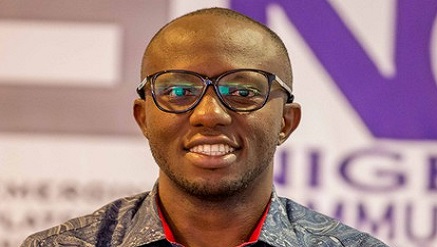
The Computer Village market located in the heart of Ikeja in Lagos State is, arguably, the largest Computer market in Africa today with daily patronage from all over the country.
The market is replete with a lot of computer products and accessories as well as carrying out a variety of computer repairs tech services. The market has, in fact, been taunted as the proposed Silicon Valley of Nigeria.
I recently had a chat with Adeniyi Ojikutu, the President, Computer Village/CAPDAN on issues relating to the market.
On how the Computer Village market started, Adeniyi said that the market, in fact, started in 1994 in a period of unemployment.
He stated that the present day Computer Village market was occupied by Clearing agents, Law chambers and medical equipment dealers because of the locations proximity to the Airport, High court and Ikeja General Hospital respectively.
He went on to say that many of the unemployed graduates from these Universities and Polytechnics used to gather in a Room at Otigba street in the market at Ikeja and soon, because computers were just being introduced into Nigeria then, they started receiving demands for computers and it gradually grew into a big market.
On the impact the market is making on the economy today, Adeniyi is of the view that it is making a very huge impact.
In the first instance, he noted that the market is contributing the economic development of Lagos State, its host, and secondly the GDP of Nigeria as a nation.
He predicted that by 2019, Agriculture will be the leading contributor to the economy while technology will follow. All the 36 states in Nigeria, he noted, source their technology requirements from the Computer Village market.
Reacting to the notion that eCommerce outfits are now displacing the Computer Village market, Adeniyi emphasized that eCommerce platforms source from the Computer Village market, but with his coming on board as President/CAPDAN, he has already set in motion, a process that will enable consumers to deal directly with the Computer Village market on its platform instead of going through the eCommerce platforms.
He stated that talks are already on-going with about 16 Courier companies that will take care of the logistics aspect for fast and easy delivery of products to the customers.
Asked if he is satisfied with the progress made so far by the Computer Village market, Adeniyi stated that the market has just tapped into about 35% of its potentials so far. What is done in the market currently is provision of solutions to problems on systems.
He stated that to get to the next level, the market needs to start producing its own motherboard and linking these to the computers instead of merely assembling.
On the issue of trust, Adeniyi maintained that customer service is key, so, there will be a customer service orientation with a complaint desk and committees to deal with resolving issues. When asked what support the Computer Village market requires from the government to sustain the market, he stated that since the ICT sector is still employing while many white collar establishments are retrenching, ICT should be seen by the government as an industry that is creating employment, hence, government really needs to invest in the Computer Village market in order to give the market better ambience to carry out its business.
CFA is the Founder, www.CFAtech.ng & Co-producer/Presenter, Tech Trends on Channels Television



LG Electronics has announced the launch of a nationwide campaign aimed at celebrating decades of customer loyalty and technological heritage by searching for the oldest still-functioning LG television sets across the country.

The initiative, themed “The Oldest LG TV”, seeks to honour long-time customers whose LG screens have stood the test of time, while introducing them to the future of home entertainment through LG’s advanced AI QNED TVs.
For generations, LG televisions have been more than an electronic device in Nigerian homes, they have been silent witnesses to family milestones, cultural moments and shared memories.
This campaign bridges nostalgia with innovation, acknowledging the emotional connection Nigerians have built with the brand while showcasing LG’s leadership in AI-powered display technology.
The campaign features a storytelling -driven narrative that highlights community, heritage and the evolution of viewing experiences. Participants are invited to share the stories behind their long-serving LG TVs, transforming everyday screens into symbols of trust, resilience and innovation.

In creative twist, the campaign also introduces LG’s AI-enabled televisions as responsive companions that understand viewer preferences, recommend content and enhance picture quality in real time. This shift from nostalgia to futuristic interactivity underscores LG’s continued commitment to delivering smarter, more personalized entertainment solutions.
To participate, simply visit https://lgsearchcampaign.vercel.app/, upload a photo or video of your old LG TV and share the story behind it – how long you’ve had it and the memories it holds.
The winner walks away with a brand-new LG AI QNED TV, effectively trading legacy for luxury.
At its core, this campaign reminds us that technology is not only about pixels and processors, but about people. It’s about the laughter in the living rooms, the silence during tense match moments and the comfort of family routines.
By celebrating the oldest TVs still standing strong, LG is celebrating the people who kept the on, families who trusted the brand through changing times and evolving technologies. In doing so, LG isn’t just upgrading television, it’s upgrading memories into the future.
According to Mr. Choongbae Seok, General Manager, Media Entertainment Solutions, LG Electronics Nigeria, “The journey from our classic CRT Televisions to today’s AI QNED technology reflects how far both our customers and our innovation have come. Those early sets were built to last, and many are still functioning today, a testament to durability and consumer trust. This initiative allows us to honour that legacy while introducing a new era of intelligent viewing, where the screen does more than show content; it adapts, learns and enhances every moment”.
LG Display 2026 TV Models at InnoFest
LG Electronics (LG), a leader in AI-powered solutions for the home, outlined plans to accelerate growth in emerging markets at LG InnoFest 2026 MEA. The event, held in Abu Dhabi, provided a forum to share LG’s strategic direction and market outlook with regional partners. At the exhibition, LG displayed its premium 2026 AI TV lineup focusing heavily on advanced processing power, smarter picture and sound technologies. The flagship OLED evo G6 and 100-inch Micro RGB evo TVs are powered by the new Alpha 11 AI processor Gen 3 enabling faster and more intelligent performance. The OLED evo W6 Wallpaper TV, an ultra-slim television designed to sit flush against the wall like artwork uses true wireless connectivity, reducing cable clutter and creating a cleaner, minimal setup.

African leaders used the AU Summit in Addis Ababa over the weekend to sharpen the continent’s technology agenda, with Ethiopia positioning artificial intelligence (AI), digital infrastructure and connectivity as pillars of Africa’s economic future.

Opening the 39th African Union Summit, Ethiopian prime minister Abiy Ahmed outlined an ambitious vision to place Africa at the forefront of the global AI race, anchored by Ethiopia’s plan to launch what he described as Africa’s first AI-focused university.
“In 2020, Ethiopia established Africa’s first Artificial Intelligence Institute. Building on this foundation, we are preparing to launch an AI university anchored in the philosophy of Medemer, purposeful collaboration, to unite human values with machine intelligence and position Africa as a global leader in the age of intelligence,” Abiy told delegates. “
He framed AI not as a standalone sector, but as a cross-cutting enabler for governance, industry and social development. “Every river we manage, every city we design, and every digital platform we deploy must generate resilience, opportunity and dignity,” Abiy said. He further linked digital transformation to Agenda 2063’s long-term prosperity goals.
Beyond AI, the high-powered AU summit discussions highlighted digital identity, cross-border connectivity and telecom expansion as critical building blocks for an integrated African market. Ethiopia’s Digital Ethiopia 2030 roadmap, including its Faida digital ID ecosystem, was cited as a model for secure, interconnected public services.
Abiy pointed to aviation and telecom infrastructure as key accelerators for economic development across the continent. “Through Ethiopian Airlines, we connect people and markets. Ethio Telecom is expanding partnerships across Africa to bridge the digital divide,” he said.
The Ethiopian leader added that large-scale infrastructure projects are designed to anchor Africa deeper into global value chains.
The broader summit tech agenda also touched on regulatory harmonisation, digital trade and data governance, with leaders emphasizing that continental cooperation is essential to avoid fragmented digital markets.
UN Secretary-General António Guterres underscored the need for inclusive innovation, telling delegates that Africa’s digital rise must be “people-centered and opportunity-driven,” while African Union Commission Chair Mahmoud Ali Youssouf stressed coordinated policy frameworks to accelerate adoption.
“AI capability, digital infrastructure and unified regulation are no longer optional ambitions, but strategic imperatives shaping the continent’s competitiveness in the intelligence era,” he said.
By Naeemah Junaid
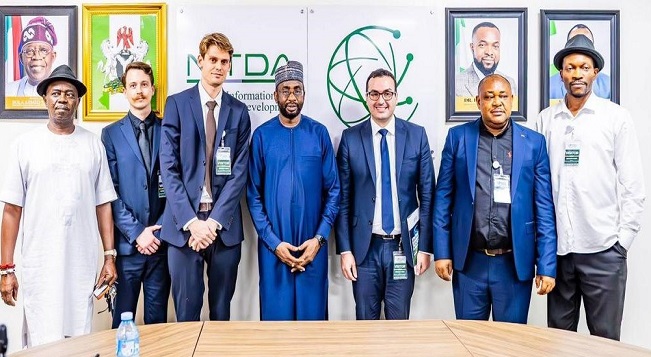
The National Information Technology Development Agency (NITDA) has held strategic discussions with representatives of Trust Stamp, a NASDAQ-listed global technology company, to explore potential areas of partnership aimed at strengthening Nigeria’s digital trust framework and advancing innovation within the digital economy.

The meeting, chaired by NITDA Director General, Kashifu Inuwa Abdullahi, focused on identifying collaborative opportunities aligned with Nigeria’s digital transformation agenda and the Agency’s strategic priorities for building a secure, inclusive, and innovation-driven digital ecosystem.
Inuwa emphasised that trust remains a critical foundation for the growth of the digital economy, noting that secure systems and strong cybersecurity frameworks are essential for driving innovation, economic growth, and national development. He stated that building trust in digital platforms and services is key to accelerating adoption and unlocking opportunities across sectors.
He reiterated NITDA’s mandate as a regulator to create an enabling environment through forward-looking policies and regulatory frameworks that support innovation rather than promote specific technologies. According to him, government interventions are designed to stimulate markets, create opportunities, and empower both businesses and citizens to participate fully in the digital economy.
The Director General further reaffirmed Nigeria’s openness to investments that strengthen digital infrastructure and enhance digital services, stressing that sustainable national development is best driven by private sector participation under supportive regulatory and policy frameworks. He called for continued engagement to ensure alignment with national priorities and effective integration into Nigeria’s digital ecosystem.
In his remarks, Trust Stamp Vice President, Jonathan Pasha, highlighted the company’s global experience in secure verification and trust technologies, describing its approach as partnership-oriented and focused on delivering long-term value within local ecosystems. He noted that the company prioritises collaboration with governments and private sector stakeholders to address local challenges and expand access to secure digital services.
Pasha referenced Trust Stamp’s ongoing operations in Nigeria, including its collaboration with a telecommunications provider to enhance SIM swap prevention and fraud detection capabilities. He also outlined the firm’s biometric tokenisation technology, which converts biometric data into secure, privacy-preserving representations, enabling verification processes without exposing sensitive information.
He explained that the technology supports secure verification, fraud prevention, financial inclusion initiatives, and the tokenisation of real-world assets, while being designed to function effectively in low-connectivity environments and on low-specification devices to expand access to digital services.
Both parties expressed interest in advancing technical-level discussions to identify specific areas of collaboration aligned with national priorities and Nigeria’s digital transformation objectives.
NITDA reaffirmed its commitment to fostering a secure and trusted digital economy through strategic partnerships, robust regulatory frameworks, and initiatives that promote innovation, inclusion, and sustainable growth.

LG Nigeria Begins Nationwide Search for Oldest Working TV, Rewards Loyalty with AI QNED Upgrade

AfCFTA, AGRA Collaborate to Reduce Non-tariff Barriers to Intra-African Food Trade

African Leaders Highlights Africa’s AI Ambitions

MTN, BUA, Dangote & Other Industry Giants Triumph at NGX Made of Africa Awards

MTN CIO Urges Africa to Lead Fourth Digital Revolution

Firm Detected a Fivefold Surge in QR Code Phishing Attacks in the Second Half of 2025
Nigeria’s 9 Top FinTech Firms Valued at $10.6Bn in January 2026

DG NCC Tasks University Dons on Research Commercialization, IP Management to Build Global Competitive Ecosystems

Firm Detected a Scam Exploiting OpenAI’s Teamwork Features

Kaspersky Launches OT Calculator to Align Cybersecurity Investments with Business Goals




 General News1 day ago
Nigeria’s Banks Race to Meet CBN Recapitalisation Deadline Amid Verification Push

 General News1 day ago
Jumia Targets Break-even in 2026 After Strong Q4 Surge

 General News1 day ago
BOI, MTN Foundation Unveil N1Bn Fund for Women Entrepreneurs

 General News19 hours ago
UBA Unveils Diaspora Platform to Connect Global Africans with Investment, Wealth Opportunities

 E-Financial1 day ago
No VAT on Land, Buildings and Rent Under New Tax Law — Oyedele

 E-Financial1 day ago
Is Nigeria Borrowing to Survive or to Build?

 E-Financial1 day ago
CBN Slams Up to N10m Fine on Banks and Cheque Printers for Security Breaches

 General News12 hours ago
Leo Stan Ekeh Foundation, Zinox Group To Invest 10B on 1000 University Tech Scholarships for Indigent Nigeria Wiz-kids