

Telecom
Consumer Advocacy in a Liberalized Telecom Sector

Consumer advocacy is a form of social network which protects the interests of consumers. For instance, consumers posting their reviews on consumer advocacy sites will stir companies’ behavior towards consumers. Consumer advocacy and consumer protection is linked to the idea of consumer rights (that consumers have various rights as consumers), and to the formation of consumer organizations which help consumers make better choices in the marketplace.
Telecommunications sector is the only sector of the country’s economy that consumer’s right are protected as well as give opportunity to interface with service providers. It stands on a tripod. This did not happen spontaneously. It is as a result of regulatory framework initiated by the Nigerian Communications Commission (NCC). The consumer wants the services to be of a good quality and affordable. The consumer wants the operator to respond at all times when he or she needs attention, and to provide explanations whenever anything goes wrong. The consumer wants to be protected at all times from being taken advantage of by service providers. Just like consumers of any services, the consumer of telecom services wants to be well treated. The commission has recognized all these and has put in place special structures to ensure that the needs and desires of the consumer are taken care of. For NCC, the consumer is the main object, the subject and the reason for their being.
Against this backdrop, that the sector has good number of consumer advocacy groups that are active in the industry which the commission is supporting to ensure that interest of consumers are taken care of, such groups include, National Association of Telecommunications Consumers Association (Natcomms), Consumer Right Project, among others.
Support for advocacy
The commission has many stakeholders in the regulatory process. These stakeholders include the government, consumers, the operators, the media, and the international community, among few others. The commission strives to meet the expectations of the many stakeholders.
The Commission is supportive of the activities of several Consumer Advocacy Groups. This is novel approach in the history of consumer care in Nigeria.
Collaboration with Consumer Protection Council (CPC): The Commission has signed an MOU with the CPC aimed at collaborating to further ensure protection of Consumers in relation to telecom service delivery.
Mr. Ken Ugbechie, executive secretary, Africa Telecom Development Initiative (ATDI), a Pan-African non Governmental Organization (NGO) committed to the development of telecom on the continent, said the telecom regulator’s revolutionary advocacy for the protection of telecom consumers in the country through the monthly telecom consumer parliament," is unequal.
According to him, upon the licensing of the Global System for Mobile communications (GSM) companies in 2001, NCC oriented itself to regulatory activism to protect the consumer, thereby raising the quality of service consciousness among operators and promotion of potentials in the nation’s ICT market.
Mr. Ugbechie also said such initiative speaks volume of a people-centric commission wholly committed to protecting the consumer in an increasingly capitalist investment environment.
He pointed out that through the Parliament, consumers have a voice and equally been heard. "More importantly, the consumer, the operator and the regulator now have a regular forum to rub minds for the overall development of the telecom sector," he declared. ATDI noted that by moving the event from one part of the country to another every month has assisted the operators to access and better appreciate their level of market penetration, quality of service delivery in addition to consumer behavior.
Government
Government is a very important stakeholder in the job of telecom regulation. The policy and the laws being implemented by the commission have been prepared and enacted by government for good of society. The government’s interest in the process also varies.
Government is interested that services are made available to the Nigerian people in a timely, qualitative and affordable manner and that activities in the sector are carried out in a legal and orderly manner. Government is also interested in creating an enabling environment that would continue to attract investment in the sector so that her desires for the people are substantially met.
The commission in all its actives is therefore mindful of the need to protect, preserve and implement actions and programmes that meet the expectations and objectives of government.
Service providers
The operators also belong to a class of stakeholders in the business of telecom regulation. Apart from obtaining their operational license, with certain obligations attached to them, the operators also expect certain obligations from government and the regulator. They expect a non partial regulator to protect their huge investment. They want the Commission to ensure that no other entity interferes with their network resources such as frequently spectrum. They expect a regulator that will not be arbitrary in decision making and one that will regulate by the rules as contained in the license agreement and provisions of the laws and regulations.
The Consumer
The commission does not just theorises about empowering the consumer in industry, it has given practical expressions to this phenomenon through actions, policies and programmes which have venerated, empowered, protected and uplifted him/her in the comity of stakeholder in the industry. Prior to the enactment of the Nigerian Communications Act, 2003, the commission had in September 2001 established a full fledged department called Consumer Affairs Bureau. The Bureau was charged with the mandate – to Protect, Inform and Educate the Nigerian telecoms consumers. This mandate has remained and irrevocable social contract between the commission and telecoms consumers in the country. At its maiden Consumer Forum at Flamingo Restaurant in Victoria Island in April 2002 and shortly after in August 2003, it launched the monthly Telecoms Consumer Parliament, a novel regulatory initiative that earned the commission, commendations not only in Nigeria, but from ITU, ICT professionals and groups across the globe. At the last count, 56 sessions of Telecoms Consumer Parliament has helped in no small measure in creating awareness of the rights of consumers and the obligations of the service providers in the resolution of their problems and concerns. It has enable operators to clarify issues pertaining to service delivery for the benefit of their subscribers and also to publicly give account of their stewardship to the people. Useful feedbacks have emanated from the programme which culminated in far-reaching regulatory interventions by the commission.
The commission has over the years proactively enunciated policies and programmes that served the interest of the consumers through promotion of competition in all segments of the telecom services portfolio to ensure that consumers have a wide range of products and services to choose from; and are not held to ransom by any service provider. Based on feedbacks received from consumers at the TCP, the commission intervened on the issue of tariff charged subscribers for calls made to customer care lines to lay consumers complaints.
In line with the commissions consumer-centric philosophy that it inaugurated a twelve-man Industry Consumer Advisory Forum, (ICAF), headed by Mrs. Ifeyinwa Umenyi the director general of the Consumer Protection Council to review the general consumer code of practice regulations by the Commission as well as facilitate consumer protection, information and educational programmes.
ICAF acts in advisory capacity, and will make recommendations to the commission regarding the interests and concerns of the consumer of ICT products and services, the interests and concerns of physically challenged and the elderly, ensure that consumers are protected from unfair practices and facilitate the review of the Consumer Code of Practice Regulations 2007 as well as make recommendations on all issues to the commission.
The commission has also defined acceptable quality of service thresholds which operators are expected to meet on the one hand, as well as sanctions in event of failure to meet those threshold. In order to ensure compliance by operators, regular monitoring by the commission of the operations of licenses across the length and breath of the country is undertaken.
Periodic reports on these monitoring activities are published on the website of the commission and in major national newspapers. To underscore the importance that the Board and management of the commission attach to improved QoS on the networks, an industry QoS Working Group was set up with members drawn from the public and private sectors of the economy.
In 2007, the commission caused to be gazetted Consumer Code of Practice Regulation which has become the reference document for both consumers and the operators. Each licensee is required to produce and submit a Code of Practice which has to be reviewed and approved by the Commission. The Code of Practice stipulates Services Level Agreements, the responsibilities and rights of each party, and procedure for resolving disagreements whenever they arise between parties.
Given the diversity of the country coupled with its geographical vastness, the commission has taken it upon itself to promote and nurture consumerism by identifying and collaborating with reputable Consumer Advocacy Groups to facilitate nation-wide consumer protection and empowerment as a precondition for orderly and sustainable growth and development for the telecoms industry in Nigeria.
Nigerians are craving for the replication of consumerism initiatives in telecommunications sector of the country’s economy in other sectors where consumers are badly treated without recourse to rules guiding service provision in those sectors. Among such sectors are energy, financial, healthy and housing.



Google has launched its Search Live feature globally to over 200 countries, including Nigeria, where AI Mode is available, enabling voice-and-camera conversations in users’ preferred languages.

Powered by the new multilingual Gemini 3.1 Flash Live model, it delivers natural, real-time interactions via the Google app on Android or iOS—tap the Live icon under the Search bar.
Ideal for hands-free help, users can speak queries for audio replies, follow-ups, or web links. Camera integration adds visual context, like troubleshooting a shelving unit, or pairs with Google Lens for real-world chats.
From the app or Lens, Nigerians can now explore, learn, or solve tasks instantly, boosting everyday productivity worldwide.

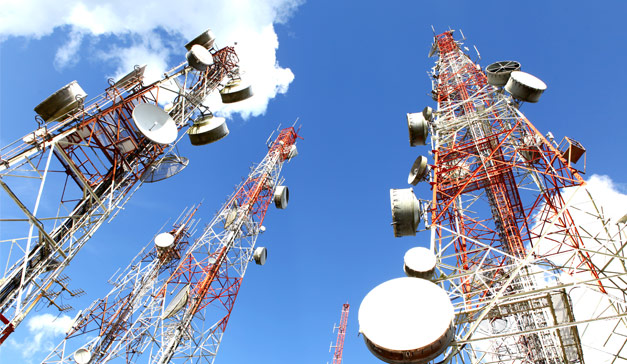
Clean and reliable power for telecom networks in Ethiopia, Liberia, and Sierra Leone will be expanded following a $45 million investment by the International Finance Corporation (IFC) in IPT PowerTech.

The investment targets countries where limited power supply continues to slow digital connectivity and broader economic participation, the institution stated earlier this week.
To enable this expansion, the IFC is providing a $45 million corporate financing package consisting of an A-loan of $27 million and $18 million in blended finance.
The blended portion is sourced from the Canada-IFC Blended Climate Finance Programme and the IDA20 Private Sector Window Blended Finance Facility.
The initiative marks the IFC’s first direct infrastructure engagement in Liberia in a decade and in Sierra Leone in six years.
It will help scale solar- and battery-based power systems that reduce reliance on diesel and support greener, more resilient telecom networks.
By improving the quality and stability of power to telecom towers, the initiative will strengthen mobile coverage and ensure that households, schools, health centres, and small businesses can depend on consistent digital services, said the IFC.
The funding supports the modernisation, operation, and maintenance of 2 235 telecom sites across the three nations. More than 90% of these are located in off-grid or weak-grid locations.
With new solar and battery systems powering these sites, mobile networks will experience fewer outages and improved service quality.
Optimising the energy mix is estimated to reduce power costs for operators by up to 30% in Liberia, 26% in Sierra Leone, and 52% in Ethiopia.
This transition is also expected to cut emissions by more than 10 624 tonnes of carbon dioxide annually. Furthermore, the partnership will promote gender inclusion by expanding opportunities for women in technical, operational, and leadership roles within the sector, says the IFC.
This agreement reflects a shared vision for a greener telecom industry and empowers the company to scale its innovative energy platforms, according to Nabil Haddad, CEO of IPT PowerTech Group.
Reliable and affordable power for telecom networks is a cornerstone of Africa’s digital transformation, said Nathalie Kouassi-Akon, IFC regional director for West Africa and the Gulf of Guinea.
Through this partnership, the institution is supporting a scalable, private sector-led solution that enables mobile operators to reach underserved and fragile communities more sustainably, added Kouassi-Akon.
The project advances the World Bank Group and African Development Bank’s Mission 300 initiative, which aims to provide electricity to 300 million Africans by 2030.

Expedier has unveiled “Expedier for Business,” an online pro-banking platform to simplify global payments, multi-currency transactions, and financial operations for expanding companies.

Kingsley Madu
The tool centralizes payments, invoicing, payroll, and treasury into one secure dashboard, tackling challenges like fragmented systems and poor visibility that hinder international scaling.
Kingsley Madu, Co-Founder and CEO of Expedier, said: “African businesses are increasingly global… Expedier for Business was built to simplify how companies manage money across borders while maintaining visibility, control, and compliance.”
Key features include customizable dashboards for payments, invoices, and workflows; support for USD, CAD, GBP, EUR, and more; virtual cards; automated payroll/invoicing; currency swaps; and real-time tracking.
Security measures cover two-factor authentication, KYC/KYB verification, and team access controls.
As cross-border trade and remote work boom in Africa, the platform aids firms dealing with international suppliers, teams, and customers. It is now available for organizations scaling globally.

Anti Graft Agencies Raise Alarm over Rising Crypto-Linked Financial Crimes

NITDA Takes Over National Digital Architecture System

NDIC Insures 99 Percent of Bank Customers

FG Shifting Focus to “Meaningful Connectivity” to Drive Inclusion – Minister

CBN Bars Chronic Loan Defaulters from Accessing Loans

Spotify’s Loud & Clear Report Reveals Over ₦60Bn Revenue for Nigerian Artists in 2025

Madonna University Taps Tech Guru Adote for Strategic Board Role

China Threatens to Shut Nigeria’s Satellite Over $11.44m Unpaid Debt

MTN Nigeria Posts Record N1.70 Trillion Pre‑Tax Profit, Declares N20 Dividend for 2025

Jumia Tech Week 2026 Begins with Tech Deals on Smartphones, Electronics, and Everyday Technology




 General News3 days ago
NCC to Curb SIM Fraud, Strengthen Digital Security with New Platform

 Broadcasting3 days ago
NBC Boss Urges Content Ceators to Participate in DSO

 General News3 days ago
Kidnappers Now Use Banks to Collect Ransoms — Expert

 E-Financial2 days ago
Breaking…..Kuda Lays Off Many Employees in Broad Restructuring

 E-Financial3 days ago
CBN Says Bank Customers Won’t Lose Deposits because of Recapitalisation

 E-Business3 days ago
Jury Finds Meta, Google Liable for Woman’s Social Media Addiction

 News3 days ago
Francis Okafor Stuns China, Emerges Second-Place Winner @ Tencent OpenClaw Hackathon

 Telecom3 days ago
IFC Invests $45m to Green African Telecom Sites