

/home/kenneth/web/nigeriacommunicationsweek.com.ng/public_html/wp-content/themes/zox-news/parts/post-single.php on line 153
">
Warning: Undefined array key 0 in /home/kenneth/web/nigeriacommunicationsweek.com.ng/public_html/wp-content/themes/zox-news/parts/post-single.php on line 153
Warning: Attempt to read property "cat_name" on null in /home/kenneth/web/nigeriacommunicationsweek.com.ng/public_html/wp-content/themes/zox-news/parts/post-single.php on line 153
Courier Industry to Independent Regulator Soon

If there is any issue that operators in the Courier industry in Nigeria are very passionate about, it is the issue of having an independent regulatory authority to run the affairs of the industry.
They strongly believe that an independent regulatory authority is capable of turning the fortunes of the courier industry around just as it is being witnessed in the telecommunications or the pharmaceutical sectors of the economy.
These operators believe that the only reason why the growth in the courier sector is stunted is because it is still tied to the apron strings of the Nigerian Postal Service (NIPOST) better known for its moribund, bureaucratic and red tape nature.
They posit that as long as this continues the industry that has to do with speed and dynamism will remain in a docile condition for a very long time.
Some of them have often accused NIPOST of not wanting to let go because it is profiting from the status quo.
Though Dr Simon Emeje, senior assistant postmaster general in charge the Courier Regulatory Department (CRD) of NIPOST does not agree with all these, however he acknowledges the fact that it is a very serious problem in the industry which the government is looking at more seriously.
"The government is working on it. The draft postal bill and the draft National Postal Policy have been written and the government is fine-tuning some things in the documents. So, it is a development in the industry that both the operators and the general public are looking up to." He said
According to him, everyone wants to see the regulatory body established, because everybody has felt that having an independent body will do the industry a lot good, because so far, NIPOST is both a regulator and an operator. Globally, this is no longer, in practice.
Dr Emeje maintained that Courier operators still see them as a partial judge in the sense that they are a department in NIPOST.
He said that this is being addressed as the government is working on separating the regulatory body from NIPOST.
On why creating an independent regulator for the Courier industry had dragged on for so long? He had this to say: "the reason is because the issue met a misfortune along the way. At a time, they set up a ministerial committee on the Courier Regulatory Authority. When this was almost completed, and a stakeholders meeting was called, the week this was to take place, Alhaji Abubakar Argungu, former post master general died in October 2005 in a plane crash. This finally brought gown the tempo.
"April last year, the stakeholder’s forum was finally held. The draft postal bill and the draft national Postal Policy is now ready. The postal policy has been okayed but the government is fine-tuning the postal bill It had drafted because of one problem or the other. The postal policy is a document from which the bill is drawn.
"It is at a stage of fine-tuning for it to be submitted to the minister of information and communication. When that is done the minister will present it to the federal executive council from where it will go to the national Assembly to be passed into law.


Warning: Undefined array key 0 in /home/kenneth/web/nigeriacommunicationsweek.com.ng/public_html/wp-content/themes/zox-news/parts/post-single.php on line 493
Warning: Attempt to read property "cat_ID" on null in /home/kenneth/web/nigeriacommunicationsweek.com.ng/public_html/wp-content/themes/zox-news/parts/post-single.php on line 493


The recent escalation in the US-Israel conflict with Iran has delivered a sharp reminder of Nigeria’s economic vulnerability. As oil prices surged past $100 per barrel and fuel costs climbed by 35% at Nigerian pumps, a troubling paradox emerged: Nigeria, a major crude oil producer with Africa’s largest privately-owned refinery now operational, still found itself buffeted by global energy shocks originating thousands of miles away.

Zinox
The closure of the Strait of Hormuz and resulting disruptions to global energy markets exposed the deeper structural challenge facing Nigeria’s economy. Despite domestic crude production and the operational Dangote Refinery, Nigeria has struggled with rising inflation, which reached approximately 27% in 2025. The crisis illuminated an uncomfortable truth: decades of import dependency have left Nigeria’s economy precariously exposed to external shocks, even in sectors where the country possesses natural advantages.
This vulnerability extends beyond energy. Nigeria’s technology sector offers a particularly instructive case study in the costs of import reliance, and the transformative potential of local capacity as the pathway to economic stability and technological sovereignty.
Against this backdrop, Zinox Technologies stands as a compelling counternarrative. Founded in 2001 by technology entrepreneur Leo Stan Ekeh, Zinox operates West Africa’s only computerized digital assembly plant. As Nigeria’s first indigenous computer manufacturer, Zinox demonstrates what becomes possible when vision, investment, and commitment to local capacity converge.
The company’s reach extends beyond traditional computing. Zinox’s innovation spans renewable energy through iPower and home electronics with iTEC, addressing Nigeria’s chronic power challenges with locally-assembled solar solutions and backup systems designed for Nigerian conditions. This diversification reflects sophisticated understanding: true technological sovereignty requires integrated capabilities.
Zinox’s journey offers a clear case study in how indigenous companies can drive transformation. By focusing on local assembly and manufacturing of computer hardware and digital devices, the company has contributed to building a domestic technology ecosystem that supports government institutions, educational systems, and private enterprises. This approach not only reduces reliance on foreign imports but also creates jobs, transfers knowledge, and strengthens national capacity.
The implications are significant. Every locally assembled device represents a step away from foreign exchange exposure. It also signals a shift in mindset — from consumption to production. In a country where demand for technology continues to rise, especially with the acceleration of digital adoption, the importance of local manufacturing cannot be overstated.
Beyond economics, there is also a strategic dimension. Technology is no longer just a commercial tool; it is a defense tool and a national asset. Countries that control their technology supply chains are better positioned to innovate, secure their data, and compete globally. In this context, companies like Zinox are not merely businesses; they are enablers of national development.
Furthermore, local capacity development has a multiplier effect. It stimulates ancillary industries such as logistics, retail, maintenance, and technical services. It also fosters entrepreneurship, as more Nigerians gain access to affordable and reliable technology tools needed to participate in the digital economy.
Yet, while progress has been made, there is still work to be done. Scaling local manufacturing requires sustained policy support, infrastructure investment, and a deliberate focus on skills development. It also calls for stronger collaboration between the public and private sectors to create an environment where indigenous innovation can thrive.
Encouragingly, the momentum is building. There is a growing recognition that Nigeria must move beyond being a consumer market to becoming a production hub. This shift is not only necessary, it is urgent. Global uncertainties will continue to test economies, and only those with strong internal capabilities will remain resilient.
The current global crisis offers clarity. If the Strait of Hormuz is not reopened or supply chains to imports are fractured, only countries with strong domestic manufacturing capacity will weather the storm. Those dependent on imports suffer disproportionately.
The story of Zinox Technologies underscores what is possible. It shows that with the right mix of vision and execution, Nigeria can chart a new course, one defined by self-reliance, innovation, and sustainable growth. As the country navigates an increasingly complex global landscape, the message is clear: the future belongs to economies that build, not just buy.


Latest data report from the Nigeria Inter-Bank Settlement System (NIBSS) has pegged Nigeria’s Bank Verification Number (BVN) Database at 67.8 million registrations (27.97% of the country’s population) following a steady growth streak over the last five years.

NIBBS, which manages the BVN infrastructure for Nigeria’s financial ecosystem, revealed that BVN registrations jumped from 63.5 million in 2024 to 67.8 million by the end of 2025, representing a 4.3 million increase in a year.
The latest NIBBS data reveals a consistent upward trend across the last five years, supporting the rhetoric that the Bank Verification Number has become a major protocol for accessing financial services in the country. The enrollment figures over the last five years, according to NIBBS, are as follows.
The increase represents an estimated 6.8 per cent year-on-year growth between 2024 and 2025, one of the highest leaps over the last 5 years.
The Driving Force Behind the Increased BVN Enrollment
Analysts pinpoint the Central Bank of Nigeria’s policies and enforcement procedures as the primary driver of the five-year upward trend in BVN enrollment.
Some of the most efficient CBN policies behind the surge include the directive to restrict or freeze bank accounts lacking both a BVN and a National Identification Number (NIN), effective from April 2024.
The directive caused a stir, prompting many Nigerians to register for BVN to maintain uninterrupted financial services.
The introduction of the Non-Resident Bank Verification Number (NRBVN) initiative enabled Nigerians living abroad to obtain a BVN remotely, eliminating the need to be physically present in Nigeria.
The NRBVN programme was a game-changer, bringing the weight of the Nigerian diaspora to the fore. Its successful integration served as a significant milestone in efforts to deepen financial inclusion and formally integrate the Nigerian diaspora into the country’s financial ecosystem.

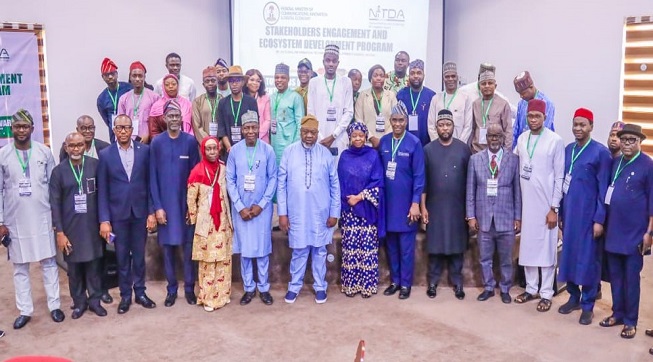
The Director General of the National Information Technology Development Agency (NITDA), Kashifu Inuwa, has called for stronger collaboration among stakeholders to unlock opportunities in Nigeria’s digital economy and accelerate national development.

Inuwa made the call at a NITDA-States IT Stakeholders’ Engagement and Ecosystem Development programme themed “Creating Opportunities, Breaking Boundaries: Towards Digitalization and Entrepreneurial Evolution.” in Abuja
Speaking at the event, the NITDA boss, represented by Mr Ajayi Babajide, Director Zonal Office Coordination, said Nigeria’s economy Africa’s largest by Gross Domestic Product (GDP) is at a critical juncture that requires urgent diversification, noting that the digital economy presents a strategic pathway to sustainable growth, job creation, and inclusive development.
He explained that in today’s interconnected world, digitalisation has become a key driver of economic transformation, offering unprecedented access to knowledge and creating opportunities for developing nations to compete globally.
According to him, the technology sector remains one of the fastest growing and most impactful segments of the global economy, stressing the need for Nigeria to position itself to fully harness its potential.
Inuwa reaffirmed NITDA’s mandate to drive and coordinate digital innovation across the country, adding that the agency is focused on creating an enabling environment that empowers all sectors, including underserved communities, to contribute meaningfully to the economy.
He highlighted the implementation of the agency’s Strategic Roadmap and Action Plan (SRAP 2.0), designed to deliver life-transforming opportunities and strengthen Nigeria’s digital ecosystem. He also pointed to the National Digital Literacy Framework (NDLF), which aims to equip citizens across various sectors with the digital skills required to thrive in a rapidly evolving economy.
The DG disclosed that NITDA has established over 100 IT centres nationwide and provided infrastructure to support digital learning and skills acquisition. However, he emphasised that sustaining and expanding these initiatives would require deeper collaboration with stakeholders.
He called for stronger partnerships among government at all levels, the private sector, academia, and civil society, noting that innovation thrives in an ecosystem supported by effective policies, access to funding, and enabling regulations.
Inuwa also stressed the importance of investing in innovation hubs and incubators to nurture startups from ideation to market readiness, enabling them to compete favourably on the global stage.
On entrepreneurship, he noted that NITDA has continued to support innovation through its special purpose vehicles, including the Office for Nigerian Digital Innovation (ONDI) and the National Centre for Artificial Intelligence and Robotics (NCAIR), which provide incubation, acceleration, and training programmes for startups and young innovators.
He observed that Nigeria’s innovation ecosystem has attracted significant investments and produced globally recognised startups, including unicorns, but said more efforts are needed to sustain the momentum.
Inuwa further noted that digitalisation holds immense potential for economic diversification, job creation, and inclusive growth, but warned that these opportunities must be deliberately harnessed through robust policies, legal frameworks, and strong institutional support.
He said the engagement provided a platform for stakeholders to exchange ideas, co-create solutions, and align strategies for the effective rollout of digital initiatives across states in line with SRAP 2.0.
The NITDA boss reiterated the agency’s commitment to fostering partnerships and providing the necessary support to drive Nigeria’s digital transformation, expressing confidence that collective efforts would deliver lasting impact.
He urged participants to remain committed to building a future where innovation thrives, opportunities are accessible, and Nigeria’s digital economy reaches its full potential.
In his earlier keynote address, the Permanent Secretary, Ministry of Innovation, Science and Technology Kogi State, Pharm. Eric Monday, explained that the state’s digital strategy is focused on applying technology to critical sectors, particularly healthcare, where efforts are underway to improve data management and expand service coverage. He added that similar interventions are being extended to works and environmental management.
He noted that outcomes from previous stakeholder engagements had helped shape actionable plans, stressing the importance of collaboration in achieving sustainable progress.
“Our goal is to learn from others while also sharing our experiences. The knowledge gained from engagements like this will help us strengthen our systems, create opportunities for our youth, and support skills development,” he said.
Highlighting ongoing projects, he disclosed that a skills acquisition centre, supported by development partners, is nearing completion and will soon be equipped to train young people in relevant digital skills.
Monday further revealed that the state is expanding its partnerships beyond Nigeria, including collaborations with Chinese organisations, to build a robust innovation ecosystem and open up new economic opportunities.
Describing Kogi as a “land of opportunity,” the official said the government is committed to leveraging its strategic position as the Confluence State to attract investment and promote growth.
Other dignitaries who delivered remarks at the event included the Permanent Secretary, Ministry of Science and Technology, Nasarawa State, Mr. Damina John, as well as the Executive Director, Commercial and Industry Development at the North Central Development Commission (NCDC), Mrs. Aisha Rufai.

From Import Dependency to Local Capacity: Nigeria’s Tech Manufacturing Journey

NIBSS Says 28 Percent of Nigerians have Registered for BVN

NITDA DG Urges Stronger Collaboration to Drive Nigeria’s Digital Economy

Ogun Set for Direct London Flights as Gateway Airport Gains Momentum

Airtel Becomes World’s Second Largest Telco as Global Customer Base Surpasses 650 Million

Spotify’s Loud & Clear Report Reveals Over ₦60Bn Revenue for Nigerian Artists in 2025

Madonna University Taps Tech Guru Adote for Strategic Board Role

China Threatens to Shut Nigeria’s Satellite Over $11.44m Unpaid Debt

Healthcare Under Attack: Why Cybersecurity is Now Critical Care

Why JustMarkets Is a Strong Choice for Gold Trading




 E-Business2 days ago
FG to Strengthen Cybersecurity Coordination as NDPC Probes Alleged Data Breach

 Telecom2 days ago
Compensation for Poor Service Quality is Automatic- NCC

 E-Business2 days ago
Offset Communications Slams N50m Suit against Qore Technologies for Alleged Copyright Infringement

 General News2 days ago
Tinubu Approves N3.3 Trillion Payment Plan to Boost Power Supply

 Telecom2 days ago
FG Moves to Strengthen Cybersecurity Coordination as NDPC Probes Alleged Data Breach

 News2 days ago
Beware of Fake Cerelac Products – NAFDAC

 General News2 days ago
SERAP Sues CCB over Electoral Act, New Tax law

 E-Business17 hours ago
Nigeria Cyberattacks: Stronger Collaboration as a Panacea