

News
COVID – 19: TGI Group Donates Food Items to Lagos Food Bank


Tropical General Investments Group has donated food items including rice, soya oil and seasoning cubes, as part of its efforts to support the Lagos state government in the fight against the COVID-19 pandemic.
At the presentation, TGI Group provided 200 bags of 50kg Big Bull Rice produced by its subsidiary – WACOT Rice Limited in Argungu, Kebbi State, 2500 cartons of Golden Terra Oil and 3000 cartons of Terra Seasoning Cubes, produced by subsidiaries West African Soy Industries Limited (WASIL) and West African Cubes Limited (WACUB), both located in Sagamu.
Corporate Communications Manager, TGI Group, Rafiat Raji, in her address during the presentation of items, stated “in view of the stay-at-home directive, it is clear that many Lagosians are facing one level of hardship or the other.
“Therefore, we understand that it is a collective responsibility to provide support for the less privileged among us, hence our contribution to the Lagos State food bank which will provide succour to at least 20,000 families”.
Mr. Gbolahan Lawal, Commissioner for Agriculture – Lagos State, who received the items alongside the Special Adviser to the Lagos State Governor on Agriculture, Abisola Olusanya, on behalf of the state government noted that the donation was a welcome development.
He commended the efforts of TGI Group in its timely response to partner with the state government in its intervention to provide food for two hundred thousand households across three hundred and seventy-seven wards to cater for the most vulnerable and indigent within the state in this period.
“This will also add to what we have in mind in terms if supporting our people. Our target is to reach 200,000 homes across Lagos, and distribution is already ongoing in multiple locations” Lawal said.
The group reassured the state Government of their commitment to keep supporting the state and country on all fronts in order to flatten the curve of the Corona Virus pandemic.
Tropical General Investments (TGI) Group is an international investment and holding company with diversified interests. Its corporate identity is based on respect for people, its communities and the natural environment as it continuously seeks to support its communities during and beyond challenging times.


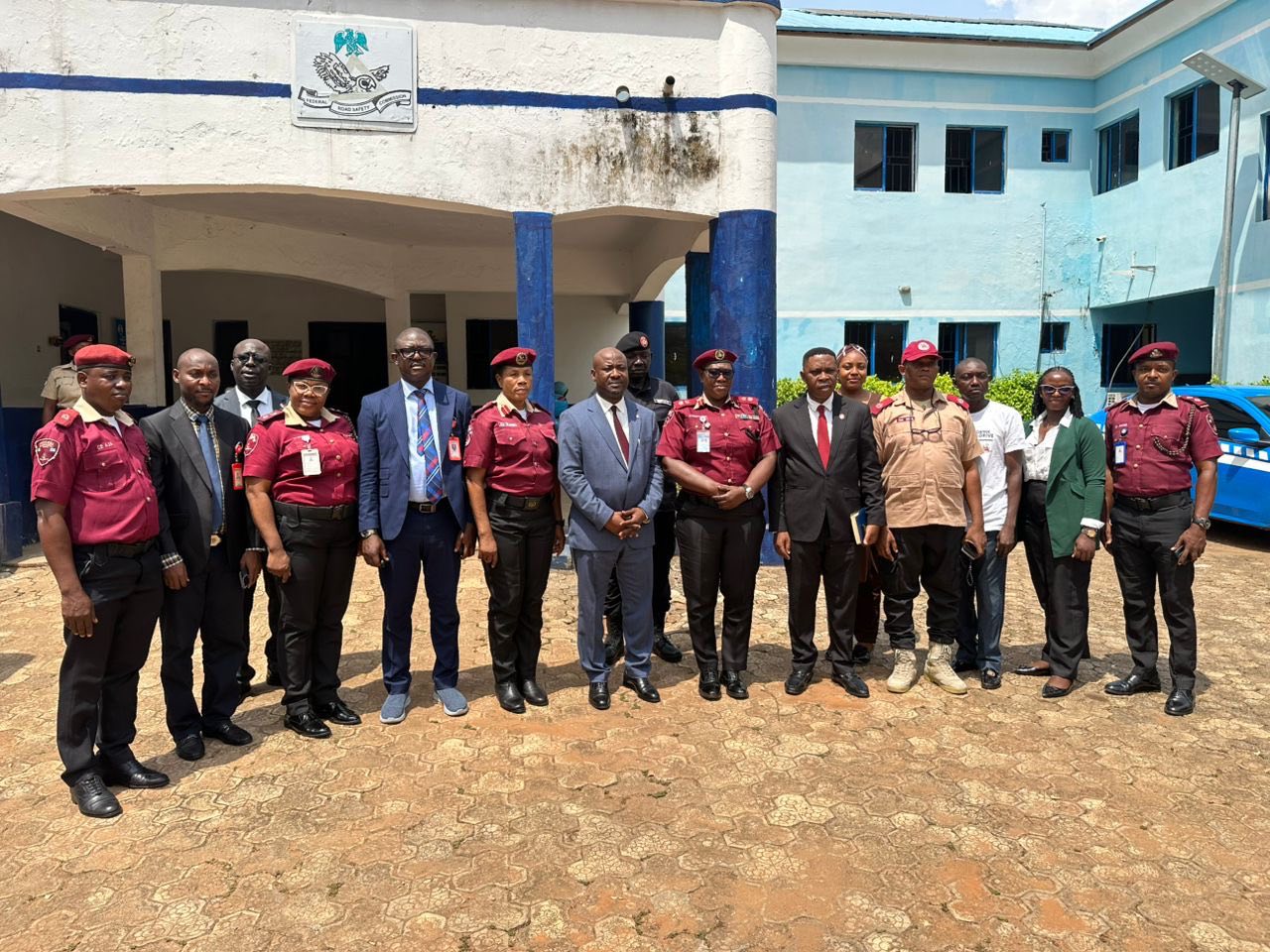
In a strategic drive to bolster inter-agency and institutional synergy against economic and financial crimes, the Anambra Zonal Directorate of the Economic and Financial Crimes Commission (EFCC) has launched courtesy visits and awareness campaigns targeting key law enforcement agencies, judicial bodies, and traditional institutions in Anambra State.

On March 5, 2026, Acting Zonal Director ACE I Ofen-Imu Atiba Sunday led a delegation to: State Director of the Department of State Services (DSS), C. Anukposi; State Commandant of the Nigeria Security and Civil Defence Corps (NSCDC), Akachia Godwin; State Comptroller of the Nigeria Immigration Service (NIS), Umerah Timothy Nwanegbo; State Sector Commander of the Federal Road Safety Corps (FRSC), Bridget Asekhauno; State Commandant of the National Drug Law Enforcement Agency (NDLEA), Onubogu Charles Orakwue; and His Majesty, Igwe Chidubem Iweka, Eze Iweka III (Eze Ogalagidi), Eze Obosi and Chairman of the Anambra State Traditional Council, along with his cabinet.
The Acting Zonal Director stressed that combating corruption demands sustained cooperation among institutions and community leaders to boost intelligence gathering, prevention strategies, and enforcement. “Collaborative efforts among stakeholders, including community leaders, are essential to safeguarding Nigeria’s economic stability and future,” he declared.
Highlighting crime trends in the Directorate’s jurisdiction—covering Anambra and Imo States—Sunday noted that public sector corruption, land and property fraud, tax fraud, advance fee fraud, cybercrime, bank fraud, and open market abuses dominate.
Responses were uniformly positive. DSS State Director Anukposi pledged robust support, underscoring intelligence sharing and joint operations to counter threats to national security and economic stability.
NSCDC Commandant Godwin lauded the EFCC’s proactive stance, citing ongoing collaboration on illegal bunkering, vandalism of public assets, and oil theft.
NIS Comptroller Nwanegbo affirmed readiness to partner on border control, migration monitoring, and intelligence against transnational financial crimes.
FRSC Sector Commander Asekhauno hailed the EFCC’s push for accountability, urging use of the Corps’ database and sustained rule-of-law partnerships for national development.
NDLEA Commandant Orakwue committed to tackling criminal networks linking drug trafficking, money laundering, and economic crimes.
At the Eze Obosi’s palace, the monarch welcomed the EFCC’s outreach, decried corruption’s toll on communities, and vowed Traditional Council backing to instill ethics and integrity. He promised to rally other leaders for grassroots anti-corruption sensitization.


Nigeria Centre for Disease Control and Prevention (NCDC) has issued a Public Health advisory on the spread of Cerebrospinal Meningitis (CSM).

It said that the caution is particularly for states within the African Meningitis belt.
In a statement by the Corporate Communications Division of NCDC urged all Nigerians to remain vigilant and adopt preventive measures.
The statement said: “As Nigeria continues through the peak dry season months, the Nigeria Centre for Disease Control and Prevention (NCDC) alerts the public to the ongoing risk of Cerebrospinal Meningitis (CSM), particularly in states within the African meningitis belt.
“Cerebrospinal meningitis occurs more frequently between December and April, when dry, dusty conditions, overcrowding, and poor ventilation increase the risk of transmission.
“The NCDC urges all Nigerians to remain vigilant and adopt preventive measures. Surveillance and response activities remain ongoing nationwide, and laboratory testing is being conducted at the state level while national laboratory capacity is being strengthened.
It explained that Cerebrospinal meningitis is a serious infection of the protective membranes covering the brain and spinal cord.
According to NCDC the affliction is most commonly caused by bacteria, particularly Neisseria meningitidis.
“Bacterial meningitis can progress rapidly and may be fatal within hours if untreated.
“However, early diagnosis and prompt antibiotic treatment significantly improve survival and reduce complications. CSM spreads through respiratory droplets during close contact, especially in overcrowded or poorly ventilated environments.”
It said that symptoms to watch out for include sudden high fever, severe headache, and neck stiffness.
It said other symptoms may include: nausea or vomiting, sensitivity to light, confusion or altered consciousness and seizures.
For In infants and young children, NCDC said the symptoms could bulging soft spot on the head.
The Centre said that early recognition and treatment can save lives.

According to a Kaspersky report “Mobile malware evolution,” the number of Trojan banker attacks on Android smartphones increased by 56% in 2025 compared to the previous year*.

This type of malware is designed to steal user credentials for online banking, e-payment services and credit card systems. Cybercriminals commonly distribute Trojan bankers through messaging apps, as well as through malicious webpages.
The number of new Trojan banker installation packages for Android (unique APK files) also increased sharply, reaching 255,090 packages – a 271% increase over 2024. This may indicate that these tools generate substantial profit for cybercriminals.
Kaspersky experts believe threat actors will continue both to expand delivery channels and develop new Trojan variants trying to evade detection by security solutions. Among all detected Trojan bankers, the leading families were Mamont and Creduz.
“Although Trojan bankers for smartphones are the fastest-growing type of malware, we also observed another important trend: preinstalled backdoors such as Triada and Keenadu appeared more frequently compared to previous years. People purchase completely new, but infected, Android devices and may be unaware of the threat.
Once integrated into the firmware fully functional preinstalled backdoors provide attackers with unlimited control over the victims’ smartphones and tablets. As a result, all information on infected devices can be compromised.
It’s quite difficult to remove such malware. If the device is infected, we recommend users check for firmware updates. After the update, run a scan of the device with a security solution again to make sure newly installed firmware is not infected,” comments Anton Kivva, malware analyst team lead at Kaspersky.

First Batch of Nigerian Undergraduates Emerged in Airtel Africa Foundation Scholarships Programme

Mojisola Sayo-Kazeem Reflects on Leadership, Opportunity, Women in Tech @ IWD

Experts Weigh Blockchain Option for Nigeria’s Elections Process

CBN Affirms Alpha Morgan Bank’s Capitalisation

Dimension Data Nigeria Seals N20bn Bond Deal to Bridge Digital Infrastructure Gap

Dr. Cairo Ojougboh Foundation Bolsters Nigeria’s Education Drive with ₦2.7m Student Support

Kaspersky Brings more Transparency to Threat Detection with New Hunt Hub

Kaspersky Discovers New Phishing Campaign Exploiting Google Tasks Notifications to Steal Corporate Credentials

esentry 2025 Report Shows Healthcare, Financial Services and Telecoms as Staging Grounds for Increased Cyberattacks in Africa

AfDB, UNDP Launch $10Bn AI Initiative for Africa




 E-Business2 days ago
Police Says Victims Enable Cyber Attacks Out of Ignorance

 E-Financial2 days ago
Quest Merchant Bank Achieves CBN Regulatory Recapitalisation Milestone

 Telecom2 days ago
Cassava Launches Sovereign Cloud for Africa’s Public Sector

 General News2 days ago
FG Launches NERD to Combat Certificate Fraud

 E-Financial2 days ago
Bank Accuses Magistrate, Lawyer of Using Fake Order to Steal N3.5m from Account

 General News2 days ago
Goodnews Naija Launches ‘Building in Nigeria’ Series on Entrepreneurs, Real Sector Builders

 News2 days ago
FG Can Now Track, Prosecute Visa Overstayers – Interior Minister

 Broadcasting2 days ago
South Africa’s Nomzamo Mbatha Appears on Glo-Sponsored African Voices