

News
Dangote, Others Raked in $237Bn in 2016


In a year when populist voters reshaped power and politics across Europe and the U.S., the world’s wealthiest people are ending 2016 with $237 billion more than they had at the start.
Triggered by disappointing economic data from China at the beginning, the U.K.’s vote to leave the European Union in the middle and the election of billionaire Donald Trump at the end, the biggest fortunes on the planet whipsawed through $4.8 trillion of daily net worth gains and losses during the year, rising 5.7 percent to $4.4 trillion by the close of trading Dec. 27, according to the Bloomberg Billionaires Index.
“In general, clients rode through the volatility,” said Simon Smiles, chief investment officer for ultra-high-net-worth clients at UBS Wealth Management. “2016 ended up being a spectacular year for risk assets. Pretty remarkable given the start of the year.”
The gains were led by Warren Buffett, who added $11.8 billion during the year as his investment firm Berkshire Hathaway Inc. saw its airline and banking holdings soar after Trump’s surprise victory on Nov. 8. Buffett, who’s pledged to give away most of his fortune to charity, donated Berkshire Hathaway stock valued at $2.6 billion in July.
The U.S. investor reclaimed his spot as the world’s second-richest person two days after Trump’s victory ignited a year-end rally that pushed Buffett’s wealth up 19 percent for the year to $74.1 billion.
“2016’s been event-driven with global news driving prices rather than fundamentals,” said Michael Cole, president of Ascent Private Capital Management, which has about $10 billion of assets under administration.
“The belief that Trump is going to come in and deregulate big parts of the economy is driving the markets right now.”
The individual gains for the year were dominated by Americans, who had four of the five biggest increases on the index, including Microsoft Corp. co-founder Bill Gates, the world’s richest person with $91.5 billion, and oilman Harold Hamm.
The country’s richest were largely opposed to a Trump presidency during the election, including Dallas Mavericks owner Mark Cuban, who told the media in May that stocks could fall as much as 20 percent if Trump were to win the election.
U.S. billionaires — including Buffett — favoured Trump’s rival Hillary Clinton. Still, they profited from his victory when they added $77 billion to their fortunes in the post-election rally fuelled by expectations that regulations would ease and American industry would benefit.
The New York real estate mogul is building a cabinet heavy on wealth and corporate connections, and light on government experience, a mix that hedge fund billionaire Ray Dalio said last week would unleash the “animal spirits” of capitalism and drive markets even higher.
Dalio is the world’s 63rd-richest person with $14.1 billion.
Investors and executives welcomed Trump’s picks, including billionaire Wilbur Ross to lead the Department of Commerce and former Goldman Sachs Group Inc. executive Steven Mnuchin as his Treasury secretary, who have a combined net worth of at least $5.6 billion, according to the index.
“You know, I was not opposing Trump as much as most people,” Saudi Arabian billionaire Mohamed Bin Issa Al Jaber said in a Dec. 11 interview. “He’s capable and — as a businessman — he’s shrewd about the bottom line. The people he’s surrounding himself with have baggage but they’re also successful and shrewd.”
France’s Bernard Arnault was the sole non-American representative among the five best performers, adding $7.1 billion to take his fortune to $38.9 billion. His LVMH Moet Hennessy Louis Vuitton SE said the Chinese luxury-goods market is improving.
Gates remained the world’s richest person throughout the year. Amancio Ortega, Europe’s richest person and founder of the Zara clothing chain, was in second place on the index for most of the year until he ceded it to Buffett in November. Ortega, who dropped $1.7 billion in 2016, is the world’s third-richest person with $71.2 billion.
Wildcatter Hamm’s fortune was propelled by a strengthening oil price and expectations a Trump administration will slash fossil-fuel regulations. Hamm added $8.4 billion to more than double his fortune to $15.3 billion. He led the 49 energy, metals and mining billionaires, who were the best-performing category on the ranking, adding $80 billion and reversing the $32 billion fall they had in 2015.
Billionaire brothers Charles and David Koch each dropped $2 billion after Koch Industries reported on its website that annual revenue is estimated to be “as high as $100 billion,” compared with the estimate of “as much as $115 billion” that the conglomerate published on the site previously. Company spokesman Rob Carlton stated in a Nov. 17 e-mail that Koch revenue fluctuates with the price of commodities.
Technology fortunes were the second-best performing on the ranking, with 55 billionaires adding $50 billion to their fortunes over the year, despite worries that a Trump presidency might introduce policies that could hurt their companies.
“I think we’ll have to see what the policies of the administration are,” Google co-founder Sergey Brin told the media gathered on the red carpet of the annual Breakthrough Prize gala in Silicon Valley in December. “I certainly hope they will be pro-science, pro-technology and all the things this world has really benefited from.”
Amazon.com Inc. founder Jeff Bezos, who doubled his fortune to $60 billion in 2015, led gains among technology executives again this year, rising $7.5 billion in 2016 on robust sales growth at the online retailer. He was followed by Facebook Inc. co-founder Mark Zuckerberg, who added $5.4 billion.
Some of the industry’s biggest relative gains went to the founders of the world’s leading startups, such as Uber Technologies Inc.’s Travis Kalanick and Snap Inc.’s Evan Spiegel. The so-called “unicorn” billionaires, which include Spotify Inc. co-founder Martin Lorentzon, who was identified as a billionaire for the first time in 2016, secured a series of mammoth funding rounds while moving closer to testing their fortunes on the public markets.
Other billionaires uncovered by the Bloomberg index in 2016 included the father and son behind Jose Cuervo tequila, New York real estate developer Axel Stawski and Kosovo construction tycoon Behgjet Pacolli.
The index also unveiled 11 surviving family members of reclusive Thai entrepreneur Chaleo Yoovidhya, the inventor of Red Bull, whose heirs share a combined $22 billion net worth, the world’s largest energy-drink fortune. Three billionaires emerged in Argentina, including the country’s first technology billionaire Marcos Galperin, as markets rose on enthusiasm for President Mauricio Macri’s finance-friendly economic policies.
Most fortunes outside of the U.S. didn’t get the same boost from Trump’s victory, and were hurt by fluctuating commodities prices and the rise of the dollar, the currency used for the Bloomberg ranking. Nine of the 10 biggest decliners in 2016 were from outside the U.S., led by China’s second-richest person, Wang Jianlin, who lost $5.8 billion. Wang ended the year as the world’s 21st-richest person with $30.6 billion.
Nigeria’s Aliko Dangote, the richest person in Africa, lost $4.9 billion or one-third of his wealth as the combined effect of falling oil prices and the June devaluation of the naira pushed him to No. 112 with $10.4 billion. Dangote was the world’s 46th-richest person in June.
Saudi Arabia’s Prince Alwaleed Bin Talal Al Saud fell $4.9 billion, a 20 percent drop. Alwaleed said in November that all of his stakes in public companies including Citigroup Inc. are potentially for sale, reversing a longstanding policy that some of his most prized shareholdings were “forever.”
Wealth creation in China turned negative for the first time since the inception of the Bloomberg index five years ago, with the country’s richest losing $11 billion in 2016 amid a slump in the Shanghai Shenzhen CSI 300 index and a 7 percent decline for the yuan against the dollar.
Alibaba Group Holding Ltd. founder Jack Ma closed the year with $33.3 billion, adding $3.6 billion in 2016. He dropped in and out of his place as Asia’s richest person for the first four months of the year before claiming it for good in May after Alibaba’s finance affiliate, which is laying the groundwork for an initial public offering expected as soon as next year, completed a record $4.5 billion equity fundraising round.
China has 31 billionaires on the index with $262 billion, trailing the U.S., which has 179 billionaires who control $1.9 trillion, and Germany, whose 39 individuals have $281 billion. Russian billionaires also began to put the negative effects of U.S. and European sanctions behind them, reversing the combined $63 billion declines for 2014 and 2015 and adding $49 billion in 2016.
Wealth managers for the world’s richest are girding themselves for similarly frenetic start to 2017 as the seismic changes voters demanded this year start to take shape.
“Expect the unexpected,” said Sabine Kaiser, founder of SKadvisory, which advises family offices on venture capital and private equity. “I don’t think family offices are overly concerned or getting too nervous but after Brexit and Trump they’ve resigned themselves to market volatility.”



According to the ‘Anatomy of a Cyber World: Global Report by Kaspersky Security Services’, there has been a noticeable decline in the percentage of high-severity incidents over the past few years.

While 2021 recorded the highest proportion at 14.3%, 2025 experienced the lowest in six years at just 3.8%. This trend indicates that many attack attempts were quickly detected and effectively mitigated by Kaspersky MDR experts, preventing their severity from escalating beyond medium levels.
High-severity incidents are defined as attacks involving direct human involvement that result in a significant impact on the customer’s IT infrastructure. In 2025, the number of such incidents detected by Kaspersky MDR decreased by 19% compared to 2024, highlighting improvements in early detection capabilities and more effective remediation efforts among Kaspersky MDR clients.
A detailed analysis of the root causes of these incidents in 2025 reveals the following insights:
Human-driven attacks accounted for approximately 23% of high-severity incidents. Although this represents a slight decrease from 2024, they continue to be the primary cause of serious breaches.
Kaspersky detected such attacks in nearly 21% of customers, demonstrating that motivated adversaries persist in bypassing automated defences. Despite advancements in automated detection tools, these highly skilled attackers still find ways to evade security measures.
Confirmed cyber exercises like Red Teaming made up over 23% of incidents. When activity is verified as part of security testing, it’s often classified as infrastructure false positives, though customers frequently report them as incidents.
Social engineering ranked third, responsible for over 15% of high-severity attacks and affecting nearly 18% of organisations. These are classified as high-severity when successful and not automatically remediated, often leading to security awareness recommendations.
Security policy violations constituted just under 14% of all cases, involving legitimate accounts performing suspicious actions like data exfiltration. Malware incidents represented less than 12%, while artifacts from past attacks, or APT traces, were found in over 7% of cases. Vulnerability detection, though not core focus for Kaspersky MDR, was reported in fewer than 5% of incidents.
“The decline in high-severity incidents highlights the critical importance of adopting a proactive cybersecurity strategy. Human-led solutions such as Managed Detection and Response (MDR) and Incident Response remain essential in combating sophisticated, human-driven threats.
To further enhance the effectiveness and efficiency of in-house security teams, organisations should incorporate advanced, automated solutions like Extended Detection and Response (XDR), which provide improved visibility and enable faster responses.
Additionally, leveraging SOC consulting services can assist in building a robust Security Operations Center from the ground up or optimising an existing one for maximum performance.
An integrated approach to hybrid security operations empowers organisations to detect threats early, contain them swiftly, and ultimately prevent severe breaches from occurring,” comments Sergey Soldatov, Head of Security Operations at Kaspersky.

Google and UpSkill Universe, Sub-Saharan Africa’s leading AI and business skills training partner, have announced a major redesign of the Google Hustle Academy programme.

For the first time, the free training initiative is open to everyone, not just business owners. The new curriculum is focused on equipping individuals and entrepreneurs with practical AI skills.
Small businesses are the engine of Africa’s economy, creating over 80% of jobs on the continent. To help them grow, the Hustle Academy was launched in 2022, providing bootcamp-style training on business strategy, digital skills, AI, and leadership. The program has since trained over 18,000 SMEs, with many reporting increased revenue and job creation.
Now, as AI reshapes the job market, the program is evolving. The 2026 edition is built for anyone in Sub-Saharan Africa, including employees, students, and jobseekers, who wants to use AI to advance their career.
To meet the needs of a diverse audience, the new format includes short, 60-minute webinars and more immersive, high-impact bootcamps. These sessions are laser-focused on putting AI to work immediately in areas like digital commerce, marketing, and growth strategy.
Speaking about the academy, Gori Yahaya, Founder & CEO UpSkill Universe said “The 2026 Hustle Academy is designed to close the AI Skills gap with hands-on training that is short, focused, and immediately useful. AI is reshaping how businesses win and how careers are built, right across this continent.
“We’re excited to renew our partnership, now in its fifth year with Google, combining their global AI leadership with our deep regional AI expertise. The next wave of AI leaders will come from this continent. We are making sure they are ready.”
The Hustle Academy initiative has strengthened digital competitiveness across emerging African economies by enabling SMEs to move beyond AI awareness to practical implementation, positioning them for sustained growth in an increasingly AI-driven business environment.
“We believe that the future of Africa’s digital economy lies in the hands of individuals and entrepreneurs alike. Our new strategy focuses on scaling reach by training individuals in the latest AI-centered tools and techniques,” said a Google representative.

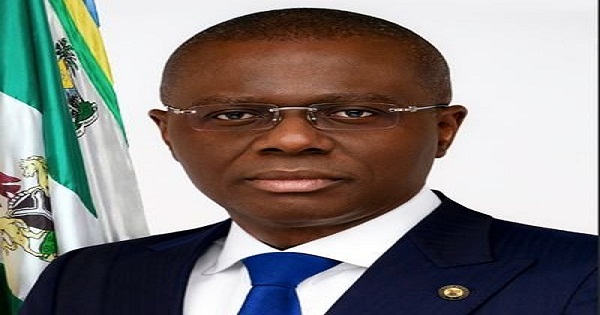
Lagos State has dragged 45 individuals and firms, including Bi-Courtney Aviation, DAAR Communications and Leaders & Company, to revenue court for tax debts running into billions of naira.

Lagos Govt
Bi-Courtney, operators of Murtala Muhammed Airport Terminal Two, faces N38.7 million claim; DAAR, behind Africa Independent Television, owes N22.4 million; ThisDay publishers Leaders & Company allegedly skip N67.1 million.
GMT Energy Resources tops corporates at N145.8 million, followed by Sheriff Deputies at N132.1 million; others like Heyden Petroleum, AA Rescue, BRT operator Primero also listed.
Individuals owe N13.5 million to N35 million each.
Attorney-General Lawal Pedro said suits followed ignored notices, aiming to enforce laws and fund infrastructure.
More defendants: IENG Nigeria, James Fisher, V Care Diagnostics, Venture Garden, Saro Africa, Barry Callebaut, Native Media, First Consulting, Eyowo Payments.
Compliant taxpayers post-notice escaped prosecution; defaulters risk penalties, interest, jail.
Pedro urged prompt filings and payments.

FG to Gift Nigerians over 100 Free TV Channels from May 15

FG New Approves Biometric Passenger Verification System for Airports Security

STBMAN, NBC Bicker over Alleged Due Process Breaches

CBN Dismisses Polaris Bank Liquidation Claim

AfDB Okays $200m for Nigeria’s Digital Backbone, Others

Spotify’s Loud & Clear Report Reveals Over ₦60Bn Revenue for Nigerian Artists in 2025

Kuda MFB Increases Kuda for Her Business Grants to ₦10 Million

Why JustMarkets Is a Strong Choice for Gold Trading

Canal+ to Cut Jobs as Part Sweeping Restructuring

Nigeria tops global rankings for USDT, USDC ownership




 E-Financial3 days ago
How Sterling Bank Is Empowering 1m Women with ₦500Bn

 E-Financial3 days ago
See Key Changes in BVN Rule from May 1 by CBN

 E-Financial3 days ago
Paga Group Rejigs Leadership as Oviosu, Founder Becomes Group CEO

 Broadcasting3 days ago
INEC Warns Broadcasters against Misinformation ahead of 2027 Polls

 E-Financial3 days ago
Reputation: The Real Currency Powering Fintechs

 News3 days ago
Google, UpSkill Universe Relaunch Hustle Academy to Bring Free AI Skills to Africans

 E-Business3 days ago
Jumia Expands Nationwide Footprint, Deepens Reach Across Underserved Nigerian Cities

 Telecom3 days ago
Meta Unveils Muse Spark: MSL’s Groundbreaking People-First AI Model