

Broadcasting
D’banj – ‘Why Kanye West Likes Me’

African pop star D’banj’s February 19 performance at the New York City’s Irving Plaza has kept on receiving rave reviews from local and more international media. As The Entertainer marked his formal US debut , MTV Iggy caught up with the Mo’Hits act as he talked about working with his G.O.O.D Music record label boss Kanye West, why he feels he’s already broken out and how he feels bringing Nigerian music to a more global audience.
How does it feel to be bringing Nigerian music to a more global audience? With the reception I’ve gotten, I’d like to say, not like I was nervous, I just hoped and prayed that people would come with an open mind, that they can listen. And I saw that today, they came with their hearts, they came with their minds. I’m only grateful to God that that’s the beginning. Seeing this, I’m now eager to move around and continue the gospel.
What is your next step toward world domination? To go on the road. America, for one. Even with this crowd, they’ve already shown us that there is massive audience for me here. I thought I was in New York City, but I’m seeing New Jersey, I’m seeing Maryland, I’m seeing Houston. I already have bookings in Houston. It’s just a big privilege and I’m so humbled. I can’t wait to just gladly take the music there to touch them. A lot of American artists and rappers are working specifically with Nigerian musicians.
What do you think it is that attracts them to that scene? I think it’s not just now, and it’s not just about one or two things. First, I give a lot of thanks to a lot of people who have come before me. For one, I would say it’s not just even rappers. If you look at what happened here in New York for the last twenty four months, with Fela Anikulapo Kuti on Broadway [the musical FELA!]. I was fortunate to be at Radio City Music Hall during the Tony Awards. It was nominated for eleven awards. Also, it’s our culture, It’s what we’re preaching, the music, for one, as you know, the sound. It’s not like I want to blow our trumpet, but I always say we came up and we already have sounds and melody and now we’re seeing the aggression.
If you had to describe the difference between performing in Lagos versus anywhere else in the world, what would you say? Wow. With today, I wouldn’t say it’s any different. Today my people showed me here, people appreciate good music. Good music is universal. Is there something in Lagos that sets the scene apart? It’s very real. It’s very real and very original. You know, people are asking me if I’m going to change and I say, ‘What Kanye likes about me is that I’m very original’. Even the way I call my name: ‘I’m D’Banj!” And I don’t want to change that. That’s what we all have in Africa. You know that we’re blessed with a lot of natural resources. We’re blessed with things like oil, and also we have talents. They say we’re a developing continent. Well, we have been developing. Now, we are developed. You are already recording with Kanye West. What is it like being in the studio with him? I came with a mind-set to learn. Also, to show my culture, but more importantly to learn. In the studio the chemistry was great. You know, music is universal. I’ve been in the studio with people who don’t speak English, but, at the end of the day, I love melody. I’ve gained a lot from him, that’s the main reason I’m here. Do you have a place here in New York? I do, but I’m not a New York fan. The weather is a bit crazy. I like ATL, it reminds me of Africa. Anytime I stop by the ATL, I like it. The roads are wider and I love the weather. Miami too.
Who is going to be the video for ‘Oliver Twist?’ I heard there would be some cameos. A lot of cameos. I’ll give you a hint: my new family members.
How did you choose the harmonica as your instrument? Oh, I didn’t choose the harmonica. My late brother chose the harmonica. And you play it because of him?
Did he teach you? No, no one taught me. Later, when I studied it, I learned that it’s such a spiritual instrument- coming from even way back, from the era of the slave trade. It was one of the very rare instruments that Africans, now African-Americans could play. It was one of the few things that they could do, people that were stuck over here. But even for people that were not African-Americans, it stood for something that was more natural. Like, if you listen to country music a lot of them play the mouth organ and the harmonica. Are you going to be doing something really different on the new album? I really don’t know. I’m exploring. I’m going to be doing rock now. I’m doing a rock song! Don’t you believe I can rock? Tell me about Kokomobile. You have a branded cell phone on the market in Nigeria? Yes, I do. Well, my brand is called ‘Koko’. It comes from the song on my first album. And people say, ‘Well, what is the koko?’ The Koko is whatever you do to derive pleasure. It is the bone of contention. So, people started calling me the Koko Master. Today, no one knows its specific definition. But now I have the Koko Lounge, my club in Lagos, Nigeria. And I have Koko Garri, my breakfast cereal. What will it take to bring Nigerian music to a mainstream audience in the US? I think it’s already happening. It’s happened. I walked around; I saw the pictures of the people that have performed here [at Irving Plaza], The Beastie Boys, The Red Hot Chili Peppers, on the same stage. So, it’s already started. The thing I love about Americans is they’re open to good music. If it sounds good to them and it looks good, they’ll buy it. If you could collaborate with anyone, who would it be? I like Rihanna.


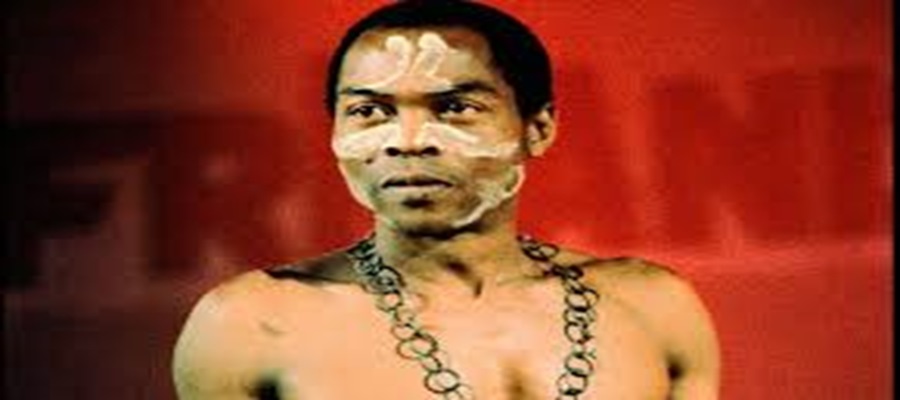
Fela Anikulapo-Kuti, simply known as Fela, legendary Nigerian musician, has made history as the first African artist to be inducted into the Rock & Roll Hall of Fame.

Fela
This is coming after he was posthumously honored with the 2026 Grammy Lifetime Achievement Award, becoming the first African artist to receive this prestigious special merit recognition.
Fela will be honoured in the early influence category this year, along with Queen Latifah, rapper MC Lyte, country rocker Gram Parsons, and Cuban singer Celia Cruz at this year’s Rock and Roll Hall of Fame event.
The honorees were revealed on Monday night in the US, during an airing of American Idol.
Sade Adu, Nigerian-born British singer, will be honoured in the performance category.
However, Shakira, Mariah Carey, Lauryn Hill, New Edition, and Pink, missed out on the final cut despite being nominated.
Over 1,200 artists, historians and music industry professionals voted to decide the honorees.
The induction ceremony will be held on 14 November at the Peacock Theatre in Los Angeles.

National Broadcasting Commission (NBC) is set to launch so-called FreeTV, with over 100 channels for news, sports, education, entertainment and children’s programming in multiple Nigerian languages.

The launch is scheduled for May 15.
Charles Ebuebu, director-general, NBC, who disclosed this, said the new platform will offer free-to-air access with no carriage fees, leveraging hybrid satellite and internet delivery via NigComSat-1R.
The new plan is not an upgrade, the NBC stressed. This is a rebuild, according to Ebuebu .
FreeTV will be true free-to-air – no encryption, no set-top box barrier.
Any DVB-T2/S2 television will work. A mobile app will extend reach to phones and tablets.
The platform will launch with over 100 national, regional and state channels across sports, news, children’s programming, education, entertainment and cultural content in Hausa, Yoruba, Igbo, Tiv, Ijaw, Edo, Fulfulde, Ibibio, Efik and Nupe – all in HD.
Crucially, the NBC has partnered with a Bulgarian firm, GARB (operating since 2006 and recognised by the European Broadcast Union), to deliver a 94 per cent-accurate audience measurement system using return-path data, app analytics, demographic panels, and Artificial Intelligence (AI).
To qualify broadcasters, must commit their channels, produce a minimum of 60 per cent local content, and promote FreeTV until January 2029.
After that, a regulated tiered rate card takes effect.
According to NBC, the strategic rationale is simple: build viewers first, monetise later.
The document further revealed that six regional production hubs in Lagos, Abuja, Port Harcourt, Enugu, Kano and Benin would function as local content factories, expected to generate 500 to 1,000 jobs per zone within two years.

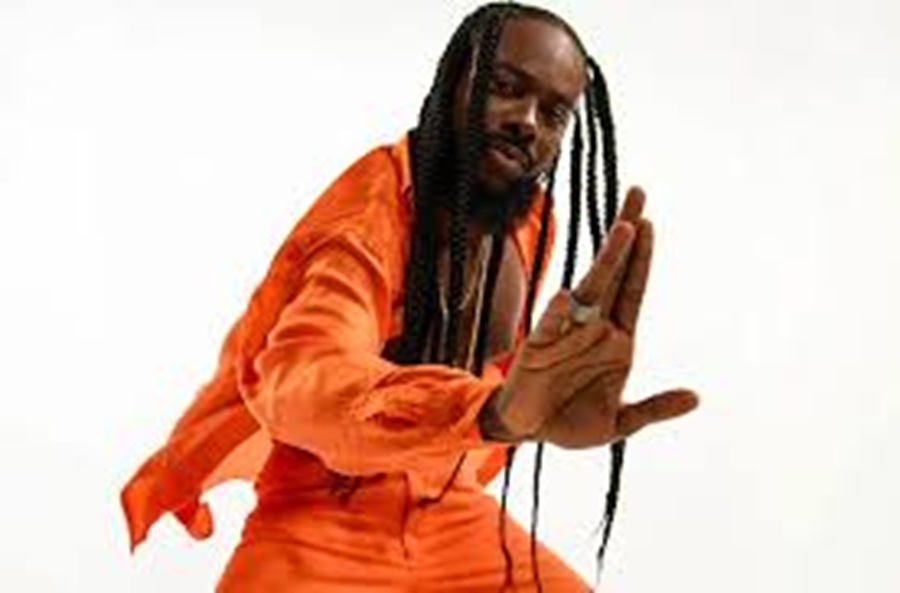
Popular Nigerian artist Adekunle Gold has lent his support to the growing youth-driven movement behind The Gathering on 100, further amplifying conversations around what is fast becoming one of the most talked-about upcoming experiences among young Nigerians.

Adekunle Gold
Known for his music and his strong connection with youth culture and evolving creative expression, Adekunle Gold’s involvement signals a deeper alignment between the event and the kind of audience it is attracting, a generation that is bold, expressive, and constantly redefining what community looks like.
While details of his involvement remain understated, his visible support adds a new layer of support and cultural relevance to the movement. In a landscape where attention is currency, endorsements from artists of his stature often act as a signal, drawing more eyes, more curiosity, and ultimately, more participation, but beyond visibility, the significance lies in what it represents.
The new father has, over the years, built a reputation for embracing creativity in its many forms, from music to visual storytelling, fashion, and digital engagement. His brand has consistently resonated with young Nigerians navigating similar spaces of self-expression and identity.
From interactive experiences like live music sessions and open performance moments to fashion runways and content creation spaces, the event is designed to blur the lines between audience and participant. It invites attendees to move beyond observation and become part of the moment.
This is a concept that closely mirrors the kind of cultural shift Adekunle Gold has been part of, one where boundaries between creator and consumer continue to dissolve.
His support also reflects a broader trend within Nigeria’s entertainment industry, where artists are increasingly engaging with youth-led initiatives that go beyond traditional performances. Rather than simply appearing on stage, they are aligning with movements that foster community, creativity, and shared experience.
For fans and attendees, this adds another dimension to what The Gathering on 100 represents.
As registrations increase and conversations expand across social platforms, the movement is gradually taking shape through the collective interest of those drawn to it.
Head to gathering.com to register.

FCCPC Denies Banning Airtime Borrowing, Blames Cartel for Misinformation

Court Suspends Enforcement of FCCPC’s Reform on Loan Apps

FG Rules Out Borrowing from IMF’s $50Bn Support Fund

CBN Introduces Overnight Financing Rate to Compete with US, EU

AfriStakes Unveils Platform to Connect SMEs with Investors

Canal+ to Cut Jobs as Part Sweeping Restructuring

NBC Boss Urges Content Ceators to Participate in DSO

NITDA Takes Over National Digital Architecture System

DLM SPV PLC Lists ₦9.00bn AAA-Rated Medium-Term Notes on FMDQ Exchange, Sets Benchmark in Corporate Bond Market

FG Shifting Focus to “Meaningful Connectivity” to Drive Inclusion – Minister




 News2 days ago
Lagos Targets Vulnerable Residents in Expanded Social Register

 E-Business2 days ago
CAC Urges Users to Secure Accounts after Cyberattack Scare

 E-Financial3 days ago
IMF Downgrades Nigeria’s GDP Outlook, Warns of Rising Risks
 Telecom1 day ago
MTN Suspends Data, Airtime Borrowing Service over New FCCPC Lending Rules

 E-Financial2 days ago
NDIC Seeks Court Nods to Liquidate 89 Failed Banks

 E-Financial2 days ago
CBN Proposes 30-Member Mediation Panel for Loan Disputes

 News3 days ago
Study Shows 38% of Northern Women Lack Access to Financial Services

 E-Financial3 days ago
SEC Sets N7.5Bn Capital Floor to Shield Investors in FTZE Public Offerings