

/home/kenneth/web/nigeriacommunicationsweek.com.ng/public_html/wp-content/themes/zox-news/parts/post-single.php on line 153
">
Warning: Undefined array key 0 in /home/kenneth/web/nigeriacommunicationsweek.com.ng/public_html/wp-content/themes/zox-news/parts/post-single.php on line 153
Warning: Attempt to read property "cat_name" on null in /home/kenneth/web/nigeriacommunicationsweek.com.ng/public_html/wp-content/themes/zox-news/parts/post-single.php on line 153
Debenhams Signs New £113 Million Logistics Contract with DHL

DHL Supply Chain, the world’s leading logistics services provider, has signed a new contract worth £113.2 million (approx. 123.3 million Euros) with Debenhams, extending its 12-year partnership with the famous department store until 2012.
The three-year agreement sees DHL’s specialist fashion unit continue to develop and provide all Debenhams’ warehouse and distribution services to 157 stores across UK and Ireland.
DHL operates all three of Debenhams’ UK distribution centers, providing a full array of transport and warehouse services; including supplier collections, store deliveries, outbase and cross dock operations.
In response to the challenges in the retail market, Debenhams, working with DHL, has undergone a two year cost improvement program delivered through internal process reviews, operational developments and streamlining including advancements in the warehouse picking operations that have provided business growth benefits.
The developments have delivered significant year-on-year cost reductions through which Debenhams has managed to cut the cost per unit by more than ten per cent since 2006/2007, whilst absorbing inflationary pressures in large spend areas such as fuel and energy.
In addition to the cost improvements, there have been significant environmental benefits for the department store. The introduction of super cube trailers and double deck trailers has reduced kilometers traveled in Debenhams’ supply chain by 792,000 kilometers and fuel burnt by 203,000 liters, all this despite delivering to an ever increasing store base.
Since 2006 DHL has introduced vehicles compliant with the Euro 5 standard and has reduced CO2 emissions by 517 tonnes year on year.
Paul Leggett, Head of Logistics for Debenhams, says, "One of the other key changes in recent years has been the evolution of an advanced warehouse solution that now better allows DHL to focus its resources on moving Debenhams high priority product lines more swiftly through the supply chain. This in turn has helped us become more agile with our promotional activity and supported the large transition to more own bought product that occurred this year."
DHL has also taken over the operation of three off-site stock rooms, allowing DHL to develop new services, demonstrating its effectiveness and added value in elements of the supply chain that are normally not considered part of traditional retail logistics.
Paul Richardson, Managing Director, DHL Supply Chain Fashion UK, adds, "Our partnership with Debenhams has a history spanning more than a decade and in this time we have worked together to provide the most efficient solution in a demanding and dynamic business. The achievements of this partnership contributed to Debenhams’ recent commitment, which reflects the strength of the solution and creates exciting opportunities for both companies."
DHL now manages over 120 million units annually which spans Debenhams’ diverse range of products across several market segments including fashion, beauty, home wares, linen and jewelry.


Warning: Undefined array key 0 in /home/kenneth/web/nigeriacommunicationsweek.com.ng/public_html/wp-content/themes/zox-news/parts/post-single.php on line 493
Warning: Attempt to read property "cat_ID" on null in /home/kenneth/web/nigeriacommunicationsweek.com.ng/public_html/wp-content/themes/zox-news/parts/post-single.php on line 493


Enhancing Financial Inclusion and Advancement (EFInA) has selected three fellows for its inaugural EFInA Research Fellowship Programme, an eight-month initiative aimed at strengthening evidence on how financial inclusion policies, products, and services translate into real improvements in people’s lives and livelihoods.

The Fellowship marks a strategic shift in Nigeria’s financial inclusion agenda—from a longstanding focus on access and uptake to a deeper examination of impact and outcomes, including financial health, household resilience, livelihood sustainability, and women’s economic empowerment.
While Nigeria has recorded steady gains in expanding access to formal financial services, EFInA said questions remain about whether this access is delivering tangible benefits for households, small businesses, and underserved populations.
Launched under the theme “Evaluating the Impact of Financial Services on the Lives and Livelihoods of Nigerians,” the programme is designed to support applied, policy-relevant research examining how financial services function in practice across formal, informal, and digital channels, and the conditions under which they generate meaningful economic and social outcomes.
Speaking at the launch, Foyinsolami Akinjayeju, EFInA’s chief executive officer, said Nigeria’s financial inclusion journey has reached a critical inflection point.
“Financial inclusion must deliver real outcomes—better financial health, resilience, livelihoods, and women’s economic empowerment—not just access,” she said. “The EFInA Research Fellowship will generate rigorous, Nigeria-specific evidence on what truly works, what needs to change, and what can be expanded to deliver outcomes at scale.”
She added that the programme is deliberately structured to bridge the persistent gap between research and decision-making in the financial sector.
“By examining how policies, programmes, and financial products work in practice, the fellowship will produce insights that directly inform better policy choices and product design,” Akinjayeju said.
Each Fellow will receive a N4 million research grant to support fieldwork, travel, and research tools, alongside structured monthly mentorship from senior researchers, policymakers, and industry professionals. Fellows will also gain access to EFInA’s data assets, including its Access to Finance (A2F) survey reports, one of Nigeria’s most comprehensive demand-side datasets on financial inclusion.
Beyond funding, the programme places strong emphasis on research quality, relevance, and uptake. Fellows will participate in monthly capacity-building workshops covering research design, impact evaluation, gender-responsive analysis, and policy engagement. These sessions will be delivered in collaboration with institutions including Innovations for Poverty Action (IPA), J-PAL, Lagos Business School, the Central Bank of Nigeria, and international development partners.
According to Oluwatomi Eromosele, EFInA’s research lead, the fellowship responds to a long-standing evidence gap in Nigeria’s financial inclusion ecosystem.
“Access alone is no longer sufficient,” she said. “The critical question is whether financial inclusion is translating into better financial health, greater resilience to shocks, improved livelihoods, and meaningful economic opportunities for women and underserved groups.”
She noted that EFInA is prioritising research that is both credible and usable. “We are investing in rigorous, Nigeria-specific evidence and translating findings into practical, decision-oriented outputs that directly inform policy, regulation, and product design,” Eromosele said.
The Fellows will explore research questions across priority themes, including financial health and household resilience amid economic and climate shocks; the role of financial tools in supporting MSME growth and informal livelihoods; women’s economic empowerment through digital and group-based savings mechanisms; and trust, service experience, and satisfaction across financial channels.
The 2025 EFInA Research Fellows are Sarah Edewor, an agricultural economist and development researcher; Abdulmumin Usman, a policy and political economy researcher; and Abdullahi Ibrahim, a measurement, evaluation, research, and learning practitioner.
A core objective of the Fellowship is to reduce Nigeria’s reliance on financial inclusion evidence drawn from other developing contexts such as India and Bangladesh, which EFInA says do not fully reflect Nigeria’s institutional, cultural, and market realities. By generating locally grounded evidence, the organisation aims to equip policymakers, regulators, financial service providers, and development partners with insights tailored to Nigeria’s context.
Fellows will present interim findings during the programme and showcase their final research outputs at EFInA’s Annual Research Symposium in May 2026. Final outputs will include peer-reviewed research papers, policy briefs, and practitioner-focused knowledge products disseminated to key stakeholders.
The EFInA Research Fellowship aligns with Nigeria’s National Financial Inclusion Strategy (NFIS) 2024–2027, which places renewed emphasis on trust, innovation, consumer outcomes, and inclusive growth, and reflects EFInA’s broader mandate to strengthen evidence and support decision-making across Nigeria’s financial ecosystem.
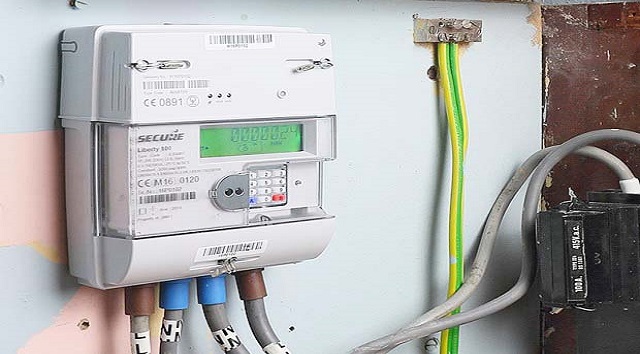
MOJEC International Limited has revealed that it deployed over 400,000 smart meters nationwide in 2025, representing a significant year-on-year growth for the indigenous smart meter manufacturer.

This performance reflected a 33.3 percent increase over the 300,000 meters deployed in 2024, highlighting the scale and acceleration of MOJEC’s metering operations.
Chantelle Abdul, group managing director, attributed the sustained impact to deliberate investments in infrastructure, people, and technology.
“MOJEC operates two state-of-the-art meter production facilities with a combined installed capacity of up to five million meters annually. This scale enables us not just to meet current demand, but to support Nigeria’s long-term metering and energy efficiency goals,” she said.
She further noted that MOJEC’s expansive installer ecosystem, comprising over 5,000 trained professionals nationwide, remains a critical enabler of its delivery advantage, ensuring speed, quality, and compliance across diverse terrains and markets.
The company stated that the deployment surge reflected growing confidence by Distribution Companies (DisCos) and sector stakeholders in MOJEC’s technical capacity, delivery speed, and end-to-end metering solutions.
According to Monday Ubogu, MOJEC’s head of installation, the scale and consistency of delivery set the company apart.
“Within the first three quarters of the year, MOJEC completed about 300,000 installations, accounting for roughly 40 percent of total installations nationwide during that period.
“The momentum continued into the final quarter with an additional 150,000 meters deployed, highlighting our operational depth and nationwide reach,” he said.
Ubogu added that MOJEC’s performance builds on decades of sector engagement, spanning key national metering initiatives including CAPMI, MAF, Vendor Financing, MAP Phases I & II, and NMMP 0, with the company having deployed nearly four million meters since the privatisation of NESI.
According to the company, a substantial portion of the deployment was driven by MOJEC Meter Asset Management Company (M3AC), the Group’s asset management subsidiary, which accounted for about 350,000 installations.

The Central Bank of Nigeria in its 2025 Fintech Policy Insight Report, has raised concern over Nigeria’s fintech sector heavily dependent on foreign investment, exposing it to swings in global markets.

The report said the sector has shown resilience despite global economic pressures, but warned that reliance on external capital leaves it vulnerable to market fluctuations.
It would be recalled that startups in the country raised $520m in equity funding in 2024, down from about $747m in 2019, when Nigeria captured roughly 37 per cent of all African startup investment.
This performance, amid significant global macroeconomic gyrations, underscores Nigeria’s position as a key hub for financial innovation. The sharp rise in interest rates in advanced economies during 2022 contributed to a slowdown in venture capital funding.
“These dynamics highlight the importance of developing domestic funding avenues, such as leveraging Nigeria’s capital markets, to reduce currency risk and sustain fintech growth,” the apex bank stated.
Olayemi Cardoso, CBN Governor, said Nigeria is undergoing a rapid and significant financial evolution. Over the past decade, the nation’s fintech landscape has grown from a handful of startups into one of Africa’s most vibrant innovation ecosystems.
“Even amid global economic headwinds, Nigerian fintech firms continued to attract investment and drive change. Today, with improved stability of our currency and domestic economy, it is clearer than ever that financial innovation can advance inclusion at scale,” the executive commented on the report.
In addition to funding, the central bank underscored Nigeria’s continued leadership in digital financial infrastructure. More than 25 per cent of all electronic transactions in Africa’s most populous nation are processed via real-time payment channels, with close to 11 billion transactions processed in 2024, up from five billion in 2022. The report described Nigeria’s instant payments platform, NIBSS NIP, as among the most mature and widely adopted globally.
The report also mentioned the need to strengthen system integrity and reputation, pointing to compliance reforms, anti-money laundering supervision, and consumer protection measures as key priorities for sustaining investor confidence.
By focusing on domestic funding, regulatory modernisation, and innovation infrastructure, the CBN aims to position Nigeria not only as a fintech front-runner but also as a rule-setter whose regulatory lessons are relevant to peer emerging and high-growth economies globally, the central bank said.
Stakeholders surveyed by the CBN also cited compliance costs as a significant challenge to innovation. According to the report, 87.5 per cent of respondents said that the cost of meeting regulatory and risk requirements significantly impacts their capacity to innovate, while delays in product approvals and regulatory timelines also remain major bottlenecks.
The report noted that 62.5 per cent of fintech firms plan to expand regionally, and there is strong support for regulatory pass-porting frameworks to enable compliant expansion into other African markets. However, the CBN warns that such cross-border growth requires a stable funding base and coordinated regulation.

EFInA Unveils Research Fellowship Programme to Deepen Financial Inclusion Impact

Indigenous Firm Deploys 400,000 Smart Electricity Meters in 2025

CBN Expresses Concern Over Foreign Investments in Nigeria Fintechs

UBA’s Easy and Instant Account Opening Thrills Returnee

NCC Committed to Regional Digital Integration – Maida

Firm Detected a Fivefold Surge in QR Code Phishing Attacks in the Second Half of 2025

US invests $115m in counter-drone tech for World Cup security

Nigerian Terra Industries Secures $11.8m for Expansion

Firm Detected a Scam Exploiting OpenAI’s Teamwork Features

Nigeria Targeted with 4,622 Cyber-attacks Per Week in December 2025




 General News3 days ago
Globacom Donates ₦1Bn to Lagos State Security Trust Fund

 Telecom3 days ago
Airtel Nigeria Commits to Upgrade of its Network Infrastructure for Improved Quality of Service

 E-Business3 days ago
PwC Reveals AI Scaling Gap Slows Africa’s Digital Transformation

 E-Financial3 days ago
Ecobank Profit Jumps 29 Percent to N950Bn

 News3 days ago
CIoD, NIPSS Partner to Deepen Governance, Leadership Standards

 News3 days ago
NRS Chairman Outlines Ways Nigeria can Move from Potential to Economic Prosperity

 General News3 days ago
WIEG to host Nigeria’s first International Investment Summit in Lagos

 News3 days ago
Orya, Ex-NEXIM MD Jailed 490 Years for N2.4Bn Fraud