

Telecom
Despite Note 7 Fiasco Samsung Ships Over 311m Smartphones Worldwide in 2016

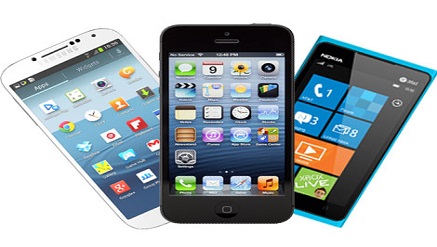
Despite Galaxy Note 7 debacle, and 5.2% decline in the global smarphone market share compared to year 2015, Samsung was able to ship 311.4 million smartphones in 2016.
Apple
Statistics released by the International Data Corporation (IDC) shows that Apple reclaimed the top spot thanks largely to the success of the new iPhone 7 and 7 Plus.
Despite a strong fourth quarter, 2016 marked the first full year of declining shipments for the iPhone with a 7% year-over-year drop.
Apple shipped a record 78.3 million units in the fourth quarter, up 4.7% from the same quarter one year ago.
Although the iPhone 7 did not feature a drastically different industrial design from its predecessor, it did bring yet another significantly improved processor, more robust camera, water resistance, and new color/finish options.
Much like Samsung, all eyes will be on Apple’s next flagship, and all signs point to something very special for the tenth anniversary of this iconic product.
Samsung
Samsung dropped to second in the worldwide smartphone market with shipments declining 5.2% compared to last year.
The Korean giant shipped 77.5 million units in 4Q16, down from the 81.7 million units shipped last holiday quarter.
On the year, Samsung shipped 311.4 million smartphones worldwide, which was down 3% from the 320.9 million shipments in 2015.
Despite the Note 7 debacle and growing pressure from Chinese vendors, Samsung still managed to find success with its S7 and popular J-series of devices in numerous markets.
The challenging holiday quarter, however, did bring its worldwide market share below 20% for the first time in over four years, leaving no better time for the pending arrival of its next flagship product, the Galaxy S8.
Huawei
Huawei retained the number three position while gaining worldwide market share in 4Q16. The quarter marked the first time the Chinese giant captured double-digit share with 10.6% of the total shipment volume.
Huawei shipped 45.4 million units in the quarter, up 38.6% from the 32.7 million shipped in the fourth quarter of 2015. For the year, Huawei shipped 139.3 million units, up 30.2% from the 107 million units shipped in 2015.
The P series and Honor sub-brand drove essential volume in China as well as other countries in Asia and beyond.
With proven success in China and many European countries, Huawei now has its sights set on the U.S. Whether or not the U.S. market becomes a serious playing field for Huawei is yet to be determined, but the recent release of the Mate 9 in the U.S. has surely caught the attention of both Apple and Samsung at the high end, while Honor brand devices will continue to drive the mid-tier.
OPPO
OPPO continued its push to reach the top of the market with its fourth straight quarter of greater than 100% year-over-year growth.
OPPO shipped 31.2 million smartphones in the holiday quarter, which was up 117% from the 14.4 million smartphones shipped in 4Q15.
The focus for OPPO over the past year has been international expansion outside of China and so far it has been successful at this.
Beyond China, Southeast Asia and India have been the focal points for OPPO’s growth in 2016 supported by intense marketing campaigns and new product launches. The company also began ramping up its presence in the Middle East and if momentum can pick up, a strong 2017 could be ahead.
Vivo
Vivo remained the number five vendor with 24.7 million smartphones shipped in the holiday quarter, which was up from the 12.1 million shipped last holiday season.
Over the year, vivo shipped a total of 77.3 million smartphones, up 103% from the 38 million last year.
The majority of the shipments continue to be in China, however, and much like OPPO, vivo has been extremely aggressive with its marketing in a number of countries in Asia as it looks to extend its global reach.



Mazen Mroue, a non-executive director at MTN Nigeria Communications Plc, has resigned effective February 27, 2026, to prioritise other responsibilities within the MTN Group, the company announced in a Nigerian Exchange Limited (NGX) filing.

MTN Nigeria
The notice, signed by company secretary Uto Ukpanah, stated: “This is to enable Mr. Mroue to focus on other priorities within MTN Group Limited. The Board wishes to express its appreciation to Mr. Mroue for his immense service to MTN Nigeria and wishes him success in his future endeavours.”
Mroue joined MTN Nigeria’s board on June 1, 2022, bringing over 28 years of telecom experience. A veteran MTN executive, he previously served as CEO of MTN Uganda and MTN Liberia, non-executive director at MTN Cyprus, and held leadership roles at MTN Ghana.
Since February 2022, he has been MTN Group’s Chief Technology and Information Officer, overseeing technology strategy and governance. Earlier, as MTN Nigeria’s COO from August 2018 to January 2022, he also sat on the MTN Nigeria Foundation board.
The exit follows MTN Nigeria’s stellar 2025 results, posting a ₦1.70 trillion profit before tax—reversing a ₦550.3 billion loss in 2024 driven by forex woes—marking one of the telco’s strongest rebounds.

Google has rolled out support for Yorùbá and Hausa languages in its AI-powered Search features—AI Overviews and AI Mode—enabling millions of Nigerians to get quick answers, summaries, and conversational web exploration in their mother tongues.

The update forms part of Google’s push to cover 13 African languages, including Afrikaans, Akan, Amharic, Kinyarwanda, Afaan Oromoo, Somali, Sesotho, Kiswahili, Setswana, Wolof, and isiZulu, selected based on high search activity across the continent.
Now, a Kano student can ask complex questions in Hausa, while an Ibadan trader seeks business tips in Yorùbá—both receiving culturally nuanced AI responses via text or voice on Android, iOS, or web.
Taiwo Kola-Ogunlade, Google’s West Africa Communications Manager, said: “Building truly global Search requires nuanced local understanding. With Gemini-powered AI, we’ve made advanced capabilities relevant in Yorùbá and Hausa, so Nigerians converse naturally with Search in their mother tongues.”
To use: Open the Google app, tap AI Mode, and query in Hausa or Yorùbá for personalised guidance—breaking language barriers and making technology reflect Nigeria’s diverse identity.
MultiChoice is closing its continental streaming platform Showmax after 11 years, notifying subscribers Thursday of the board’s decision to discontinue the service in the near future to refocus on sustainable digital offerings.

MultiChoice
The email assured no immediate disruption: “You can continue streaming as usual, and no action is required from you at this time.” Showmax, launched in South Africa in 2015 and expanded across Africa, offered movies, series, documentaries, and sports to rival Netflix and others amid rising online entertainment demand.
The shutdown follows Canal+’s approved takeover of MultiChoice last year, with the French giant offering ZAR 125 per share for remaining stakes.
The deal mandates HDP ownership boosts, local content investment, and splitting MultiChoice’s SA broadcasting arm into an independent entity to meet regulations.
MultiChoice prioritised subscribers during the transition, promising advance notice on timelines.
Showmax’s exit signals consolidation pressures in Africa’s cut-throat streaming market, where global players dominate despite local content strengths.

MultiChoice to Discontinue Showmax Streaming Platform

GCR Affirms Afreximbank’s International Scale Ratings of A, A2

SmartCash Launches ‘No Be Cho Cho Cho’ Campaign to Boost Digital Banking in Nigeria

MTN Nigeria Non-Executive Director Mazen Mroue Quits to Focus on Group Role

Google Adds Yorùbá, Hausa to AI Search, Boosting Access for Millions of Nigerians

Dr. Cairo Ojougboh Foundation Bolsters Nigeria’s Education Drive with ₦2.7m Student Support

Kaspersky Brings more Transparency to Threat Detection with New Hunt Hub

NDPC Commits to Balancing Data Privacy, Protection Information

PwC Reveals AI Scaling Gap Slows Africa’s Digital Transformation

Firm Reviews the Evolution of Phishing Threats in 2025




 E-Financial2 days ago
NRS Targets N40trillion in Tax, Royalty Revenue in 2026

 E-Financial2 days ago
SEC Revokes Registration of Kensington Agro Trading Limited

 General News2 days ago
Purple Woman 3.0 Is Back, to Empower Women in Tech this IWD 2026

 News2 days ago
EFCC Arraigns Two FSDH Bank Officials Over $307k, €50k Fraud

 Telecom2 days ago
Konga Launches ‘Berekete Sales’ with Up to 50% Discounts Across Major Categories
 E-Business2 days ago
NDPC, 60 DPAs Collaborate on Enforcing Privacy Rights in the Use of Al

 General News2 days ago
NCDC Raises Alarm over Lassa Fever Ravaging 18 States in Nigeria

 E-Financial2 days ago
Nigeria’s Net Reserves Surge 50% to $34.8bn in 2025 – CBN Governor