

Broadcasting
E-Commerce: How Konga Saved My Family During the Peak of COVID-19

Nigeria has fared fairly well with the COVID-19 pandemic, especially when compared with its counterparts in other parts of the world and against the backdrop of some worrisome predictions which pegged the country’s shabby public health care system as a potential source of concern.

India, for instance, is battling a terrible resurgence of the pandemic while the UK and others are only just lifting some severe restrictions.
Till date, Nigeria has recorded a little over 2,000 deaths, which for a country of an estimated 180 million people, represents a very good figure. For many, divine providence is one of the reasons that Nigeria has remained fairly immune from the sad tales being told by other countries who have racked up huge casualties since the pandemic began its rampaging run across the globe. This is so because the Nigerian primary, secondary and tertiary health care systems, as highlighted earlier, fall short of the standards that obtain globally. Moreso, the predilection of many to flout basic preventive measures, such as wearing of face masks, observing social distance and improvement of personal hygiene is well known in this part of the world; with many Nigerians attending parties and other gatherings even at the height of the pandemic and the social status of the majority meaning that public transportation systems are often crammed with passengers and open air markets filled to the brim, with scant regard for the principles of physical distancing.
The foregoing, however, does not mean that we did not suffer some of the ravaging effects of the pandemic. A number of prominent Nigerians, many of them with underlying ailments, lost their lives to the COVID-19 pandemic, despite the efforts of some of the best hospitals in Nigeria and beyond to save them.
Many families also lost loved ones, especially after one or two of their members had the misfortune of contracting the dreaded virus.
The above would have been the fate of my family but we have Konga to thank for seeing us through one of the darkest periods of our life. One Tuesday morning in June 2020, we had woken up to my husband coughing and sneezing heavily. This was in the middle of the government-imposed lockdown. My husband and I, both white-collar professionals, had been taking stringent measures to guard against being infected with COVID-19. At the first hint of trouble, all our kids had been withdrawn from schools and were being home-schooled by their teachers virtually.
Also, my husband and I had started alternating the days we went to the office. Both of us, by virtue of our positions at our respective places of work, could not work from home totally. Therefore, we selected the days on which we went to work, which did not exceed thrice in a week. In addition, we made sure we strictly observed all laid-down measures to prevent infection. We even stopped our official drivers at the time in order to reduce the possibility of contracting the virus from exposure to them. Our home was fumigated and all visitors were barred.
So, when my husband woke up with that recurring cough and sneezes, we dismissed it as a potential case of common cold. However, when it got worse upon his return from the office that day, we feared the worst. Our fears were confirmed after a couple of days when his test result came back positive for COVID-19. Before then, I had started isolating myself and the kids from him, solely as a preventive measure but that seemed like a measure too late.
After three days, I lost all sense of taste and smell, which had also been identified by the Nigeria Centre for Disease Control (NCDC) as a symptom of COVID. Consequently, I submitted myself as well as our kids for sampling. Of the family of seven, five of us tested positive to the virus, leaving only two of the kids negative at the time.
It was a shattering discovery and one of the most depressing periods of my life. But we could not keep wallowing in self-pity. We had to take action. Immediately, my husband and I took the decision to protect the two kids who had managed to evade contracting the virus. One of our relatives who resided close by in Lekki had come to pick up the two kids after another round of tests which confirmed their negative status.
The next couple of weeks proved to be arguably the hardest and most nerve-racking I have faced as a mother and care-giver. We had reached out to the NCDC hotline to notify them of our status but we were told at the time that bed spaces at the isolation centres were a bit limited. Consequently, we were given a list of medications to be taken on a daily basis, while being asked to hold on for an update on our evacuation to the isolation centre.
But that was the beginning of our worries.
Barely 24 hours after discovering our positive COVID-19 status, a power surge wreaked havoc in the house, damaging the large TV set in the living room and a few other appliances. Our depression levels went up a notch as the TV set was one of our major sources of keeping up with developments in the outside world.
In view of our status, we could not risk going out to the markets in order to limit the chances of infecting others. Our supplies were running dangerously low, however, and we needed to replenish them. We also needed to get the medications recommended by the NCDC. The youngest member of the family, my two-year-old toddler, also had some special dietary needs and other requirements which we urgently needed to source.
Having being exposed to e-Commerce, my husband and I had reached out to one of the players in the market and explained our plight.
It seemed, however, that informing them of our COVID-19 status was a mistake. We were told by the agent who picked up the call that they would get back to us shortly. It was after we had waited nearly 18 hours without a feedback and placed another call – which was dropped abruptly after we repeated our request – that we realized we were in trouble.
At this stage, our little baby was almost down to the last tin of food and his diapers were already exhausted. He had resorted to crying for long hours. For the rest of the family, we were also on the verge of starvation. We could not get a family member or friend to source the items as news of our COVID-19 status had spread and many were keeping their distance from us, as was expected.
My husband and I were confused and at our wit’s end.
Suddenly, my husband had a brain-wave and recalled seeing a Konga advert on TV, urging Nigerians to stay safe by observing all laid-down COVID-19 preventive measures. I must confess, at this juncture, that prior to that moment, we had never shopped with Konga, even though a couple of our relatives had often talked up the company and their services.
My husband decided to take a chance and placed a call through to the Konga call centre after checking up the number online. The soothing but professional voice of the call centre representative at the other end of the line was a relief. Shelistened to our story and proceeded to reassure us that our request would be given special attention. The agent took down our orders which was a fairly long list. There were food supplies, diapers, disinfectants, antibiotics and other items for the baby, while the rest of the family required groceries, a bag of rice, FMCG products, cooking oil, a laptop for one of our kids, the medications recommended for us, as well as a new TV set to replace the damaged one and a UPS. She also took down our address and contact details.
Barely a few minutes afterwards, my husband’s phone rang again.
On the line was a young man who introduced himself as Prince Nnamdi Ekeh, co-CEO of Konga. He had proceeded to empathise with my husband over our condition and promised to personally deliver the items. We were dumbfounded! Even when we pressed to pay online due to the fear of being disappointed a second time, he assured us not to worry, adding that we can pay on delivery.
True to his words, Prince Ekeh called up my husband in the evening at about 6pm, notifying him that he was at our Ajah residence. Could this be true? We almost fell over ourselves in the rush to get outside. Outside, we saw a young man, fully kitted in Personal Protective Equipment (PPE), complete with goggles and gloves, with a Konga-branded vehicle parked on our front porch. We were over the moon with delirium.
While keeping the recommended distance, he proceeded to drop all of the ordered items and handed over a delivery note which we cross-checked. All of the items we ordered were intact and Konga even added a free bottle of hand sanitizer to the items.
Never in my wildest imagination did I expect such quick, thoughtful and professional service from an e-Commerce company led by Nigerians. To cap it all, our needs were delivered by the CEO of the company! A lot of people are quick to write off Nigeria or Nigerians as good-for-nothing, but I am inspired to share this experience as a way of boldly declaring that right here in this country, there are people and corporate organizations delivering great service.
Before we allowed him leave, my husband, myself and the kids showered prayers on Prince Ekeh and Konga. It is hard for this business not to succeed as it is evident that Konga is blessed already.
Two weeks after that incident, my entire family started feeling better from the effects of the COVID-19. Two rounds of test afterwards, we were all certified negative and returned to our normal lives after welcoming back our two estranged kids.
I have followed the massive strides of Konga in the e-Commerce sector till date and I can see one of the best businesses to emerge out of Nigeria. Even with all that Konga is doing in the market today, I believe more is yet to come. Lest I forget, my entire family and I are loyal customers of Konga and I have also succeeded in converting most of my friends, colleagues and other relatives.
Without Konga, my family and I would have probably been victims of COVID-19. God will continue to lift this great company to bigger heights!
My very civilized man of God advised me to make this testimony public in appreciation of God’s favours and I am happy I have finally done this. I held back the family’s real name for privacy sake.
Mrs. X, a Chartered Accountant and mother of five, writes from Lagos


Broadcasting
Dr. Cairo Ojougboh Foundation Bolsters Nigeria’s Education Drive with ₦2.7m Student Support
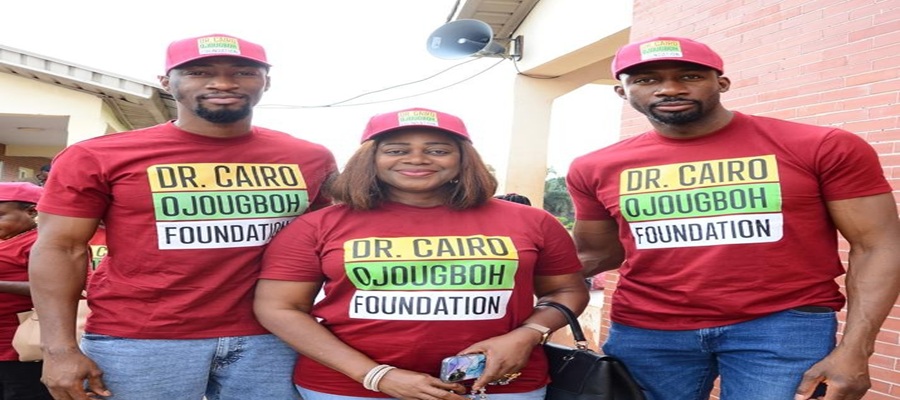
Dr. Cairo Ojougboh Foundation has reinforced government’s educational development efforts in Nigeria through a targeted initiative honouring the late medical doctor and House of Representatives member, Dr. Cairo Ojougboh.

L-R: Son of the late Dr, Cairo Ojougboh, Mr. Nkem Ojougboh; Chairperson, Dr. Cairo Ojougboh Foundation, Mrs. Bose Ojougboh and another son, Mr. Orieka Ojougboh, during the event in Agbor, Delta State recently.
The foundation recently hosted a programme themed “Your Future, Your Choice” at St. Columba’s Grammar School in Agbor, headquarters of Ika South Local Government Area, Delta State.
It presented a cheque of ₦2,700,000 to cover examination fees for students preparing for West African Examinations Council (WAEC), National Examinations Council (NECO), and Junior Secondary School (JSS) 3 exams.
Academic excellence received further boosts with cash rewards for top students across the school’s nine academic arms, alongside distributions of notebooks and writing materials to enhance learning.
Chairperson Mrs. Bose Ojougboh, joined by her sons Mr. Nkem and Mr. Orieka Ojougboh, urged students to view challenges as stepping stones, embrace discipline, consistency, and focus, and make intentional choices shaping their futures.
“The school that moulded Dr. Cairo’s values deserves our support,” she said, highlighting the foundation’s commitment to inspiring hard work and personal growth.
Old Boys of St. Columba’s Grammar School, led by Elder Ndudi Agholor, attended in force, sharing nostalgic reflections and praising the school’s sustained high standards under current leadership.
School Principal Rev. Fr. Joseph Ugboh and Ika South LGA Chairman Engr. Jerry Ehiwarior lauded the initiative as “commendable and impactful,” calling for its continuation to preserve Dr. Ojougboh’s legacy of discipline, excellence, and service.
They noted the support had motivated students to pursue their goals with renewed determination, ending the event on a hopeful note.

In a landmark educational innovation, New Horizons Nigeria has become the first institution to integrate the Chinese (Mandarin) language into its ICT curricular as an elective, thereby positioning Nigerian students for relevance in the rapidly changing world order.

Mr. Tim Akano, Managing Director and CEO of New Horizons Systems Solutions Limited
New Horizons Nigeria is a leading ICT training and solutions provider committed to provide individuals and institutions with future-ready skills. Through innovative program, global partnerships, and strategic foresight, the organization continues to redefine education, workforce development, and global competitiveness.
With over 80% of global consumer products manufactured in China and China’s growing dominance in global supply chains and labour markets, New Horizons Nigeria recognizes the urgent need for the current generation to understand, speak, and engage with the Chinese language and culture. As global economic power dynamics evolve, the labour market is increasingly tilting towards China, making Mandarin proficiency a critical competitive advantage.
According to Mr. Tim Akano, Managing Director and CEO of New Horizons Systems Solutions Limited, Nigeria, the program represents far more than a language course.
He asserted that very soon, the global labour market is likely to increasingly reflect China’s influence rather than the predominantly western orientation it currently exhibits. Language will be a major differentiator and the first Chinese-speaking technology experts in Nigeria will have a significant advantage, especially in integration into Chinese companies operating locally and globally.
Therefore, New Horizons Nigeria has officially launched a Mandarin Scholarship Program with China Advancement Opportunity, selecting 100 outstanding students from five prominent Nigerian secondary schools. This initiative marks a major milestone in Nigeria–China educational cooperation and reflects a forward-thinking response to shifting global economic realities.
Furthermore, the scholarship program has commenced with an intensive three-month online Mandarin training and at the end of the program, the top-performing students will be selected strictly on merit. 20 outstanding students will receive an additional scholarship valued at $2,500 per students to participate in a one-year pre-degree Mandarin and cultural immersion program in China. From this group, the best candidates will progress to fully funded admission scholarships into top universities in China. This initiative is designed not only to build language proficiency but also to enhance global competence, international exposure, and cultural intelligence among Nigerian students.
Also, to maintain international academic standards, participating schools are required to comply with strict guidelines. They will be obligated to join the online classes ten minutes earlier, they must have a minimum of 85% attendance throughout the program, and must ensure they have a stable internet connectivity, reliable power supply and a conducive learning environment.
Therefore, School owners and administrators have been formally congratulated and strongly encouraged to nominate their most disciplined, and committed students, as advancement to the China program will be strictly merit-based.
However, apart from students, internation business men are equally encouraged to attend New Horizon’s Mandarin executive lessons which will equip them with basic Chinese language to enhance their business communications.
Additionally, while the pilot phase begins with selected secondary schools which includes Startrite School, Lightway School, British Nigerian Academy School, Honeyland Schools and Great Heights School, the Mandarin program will be available as an elective ICT course at all New Horizons retail centers.
This is done to extend access to students and learners beyond its partner schools and within one year, committed learners will be able to communicate effectively in Mandarin, which will open doors to global employment, trade, and cultural exchange.
In conclusion, a Mandarin Cultural Fiesta will be hosted, bringing together educators, students, institutional partners, and distinguished guests from China and Nigeria. The event will celebrate outstanding performance, cross-cultural exchange, and the strengthening of bilateral educational ties.
For enquiries and participation details, interested individuals are encouraged to contact New Horizons Nigeria via 08125541750

By Moliehi Molekoa, Managing Director of Magna Carta Reputation Management Consultants and PRISA Board Member
The start of a new year often brings optimism, new strategies, and renewed ambition. However, for the public relations and reputation management industry, the past year ended not only with optimism but also with hard-earned clarity.

Moliehi Molekoa
2025 was more than a challenging year. It was a reckoning and a stress test for operating models, procurement practices, and, most importantly, the foundation of client–agency partnerships. For the C-suite, this is not solely an agency issue.
The year revealed a more fundamental challenge: a partnership problem that, if left unaddressed, can easily erode the very reputations, trust, and resilience agencies are hired to protect. What has emerged is not disillusionment, but the need for a clearer understanding of where established ways of working no longer reflect the reality they are meant to support.
The uncomfortable truth we keep avoiding
Public relations agencies are businesses, not cost centres or expandable resources. They are not informal extensions of internal teams, lacking the protection, stability, or benefits those teams receive. They are businesses.
Yet, across markets, agencies are often expected to operate under conditions that would raise immediate concerns in any boardroom:
Unclear and constantly shifting scope
Short-term contracts paired with long-term expectations
Sixty-, ninety-, even 120-day payment terms
Procurement-led pricing pressure divorced from delivery realities
Pitch processes that consume months of senior talent time, often with no feedback, timelines, or accountability
If these conditions would concern you within your own organisation, they should also concern you regarding the partner responsible for your reputation.
Growth on paper, pressure in practice
On the surface, the industry appears healthy. Global market valuations continue to rise. Demand for reputation management, stakeholder engagement, crisis preparedness, and strategic counsel has never been higher.
However, beneath this top-line growth lies the uncomfortable reality: fewer than half of agencies expect meaningful profit growth, even as workloads increase and expectations rise.
This disconnect is significant. It indicates an industry being asked to deliver more across additional platforms, at greater speed, with deeper insight, and with higher risk exposure, all while absorbing increased commercial uncertainty.
For African agencies in particular, this pressure is intensified by factors such as volatile currencies, rising talent costs, fragile data infrastructure, and procurement models adopted from economies with fundamentally different conditions. This is not a complaint. It is reality.
This pressure is not one-sided. Many clients face constraints ranging from procurement mandates and short-term cost controls to internal capacity gaps, which increasingly shift responsibility outward. But pressure transfer is not the same as partnership, and left unmanaged, it creates long-term risk for both parties.
The pitching problem no one wants to own
Agencies are not anti-competition. Pitches sharpen thinking and drive excellence. What agencies increasingly challenge is how pitching is done.
Across markets, agencies participate in dozens of pitches each year, with success rates well below 20%. Senior leaders frequently invest unpaid hours, often with limited information, tight timelines, and evaluation criteria that prioritise cost over value.
And then, too often, dead silence, no feedback, no communication about delays, and a lack of decency in providing detailed feedback on the decision drivers.
In any other supplier relationship, this would not meet basic governance standards. In a profession built on intellectual capital, it suggests that expertise is undervalued.
This is also where independent pitch consultants become increasingly important and valuable if clients choose this route to help facilitate their pitch process. Their role in the process is not to advocate for agencies but to act as neutral custodians of fairness, realism, and governance. When used well, they help clients align ambition with timelines, scope, and budget, and ensure transparency and feedback that ultimately lead to better decision-making.
“More for less” is not a strategy
A particularly damaging expectation is the belief that agencies can sustainably deliver enterprise-level outcomes on limited budgets, often while dedicating nearly full-time senior resources. This is not efficiency. It is misalignment.
No executive would expect a business unit to thrive while under-resourced, overexposed, and cash-constrained. Yet agencies are often required to operate under these conditions while remaining accountable for outcomes that affect market confidence, stakeholder trust, and brand equity.
Here is a friendly reminder: reputation management is not a commodity. It is risk management.
It is value creation. It also requires investment that matches its significance.
A necessary reset
As leadership teams plan for growth, resilience, and relevance, there is both an opportunity and a responsibility to reset how agency partnerships are structured.
That reset looks like:
Contracts that balance flexibility and sustainability
Payment terms that reflect mutual dependency
Pitch processes that respect time, talent, and transparency for all parties
Scopes that align ambition with available budgets
Relationships based on professional parity rather than power imbalance
This reset also requires discipline on the agency side – clearer articulation of value, sharper scoping, and greater transparency about how senior expertise is deployed. Partnership is not protectionism; it is mutual accountability.
The Leadership Question That Matters
The question for the C-suite is quite simple:
If your agency mirrored your internal standards of governance, fairness, and accountability, would you still be comfortable with how the relationship is structured?
If the answer is no, then change is not only necessary but also strategic. Because strong brands are built on strong partnerships. Strong partnerships endure only when both sides are recognised, respected, and resourced as businesses in their own right.
The agencies that succeed and the brands that truly thrive will be those that recognise this early and act deliberately.

LG Nigeria Begins Nationwide Search for Oldest Working TV, Rewards Loyalty with AI QNED Upgrade

AfCFTA, AGRA Collaborate to Reduce Non-tariff Barriers to Intra-African Food Trade

African Leaders Highlight Africa’s AI Ambitions

MTN, BUA, Dangote & Other Industry Giants Triumph at NGX Made of Africa Awards

4G Dominates Nigeria’s Broadband as 5G Lags Behind

Firm Detected a Fivefold Surge in QR Code Phishing Attacks in the Second Half of 2025
Nigeria’s 9 Top FinTech Firms Valued at $10.6Bn in January 2026

DG NCC Tasks University Dons on Research Commercialization, IP Management to Build Global Competitive Ecosystems

Firm Detected a Scam Exploiting OpenAI’s Teamwork Features

Kaspersky Launches OT Calculator to Align Cybersecurity Investments with Business Goals




 General News2 days ago
Nigeria’s Banks Race to Meet CBN Recapitalisation Deadline Amid Verification Push

 General News2 days ago
Jumia Targets Break-even in 2026 After Strong Q4 Surge

 General News2 days ago
BOI, MTN Foundation Unveil N1Bn Fund for Women Entrepreneurs

 General News1 day ago
UBA Unveils Diaspora Platform to Connect Global Africans with Investment, Wealth Opportunities

 E-Financial2 days ago
No VAT on Land, Buildings and Rent Under New Tax Law — Oyedele

 E-Financial2 days ago
Is Nigeria Borrowing to Survive or to Build?

 E-Financial2 days ago
CBN Slams Up to N10m Fine on Banks and Cheque Printers for Security Breaches

 General News22 hours ago
Leo Stan Ekeh Foundation, Zinox Group To Invest 10B on 1000 University Tech Scholarships for Indigent Nigeria Wiz-kids