

News
EFCC Publishes ‘Most Wanted List’, Tompolo Number 1

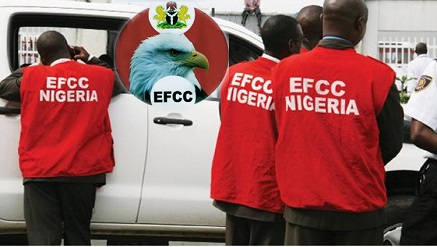
Economic and Financial Crimes Commission (EFCC) has released information of its 76 most wanted people.
They are being hunted in connection with a variety of various offences and among those wanted are few politicians and former public office holders, most of whom are high profile and well-known.
In compiling the list of the seven most wanted, EFCc said it has taken into cognizance the effects of their crimes on the country, the sheer size of their alleged loot and the profile of such persons.
The seven most wanted persons on EFCC’s watch list.
Government Ekpemupolo = Tompolo
Tompolo is a former militant leader of the Movement for the Emancipation of the Niger Delta (MEND).
He is wanted for conspiracy and illegal diversion of the sum of N34,000,000,000.
The former militant warlord is alleged to have mismanaged money from Nigerian Maritime Administration and Safety Agency (NIMASA).
Two bench warrants have been issued by a federal high court sitting in Lagos for Tompolo’s arrest but thus far, the security agencies have not been able to arrest him.
According to the EFCC, Tompolo’s last known address is No 1, Chief Agbanu Street, DDPA Extension, Warri, Delta State.
Mariano Albino
Mariano Albino is an Italian who was declared wanted in connection with a case of obtaining money under false pretence, stealing and money laundering.
According to information made available to the public by the EFCC, the amount involved in the alleged sharp practice amounts to the tune of N989, 288,400.
Fifty-three-year-old Albino speaks Italian and English languages fluently.
His last known address is No 9B, Ezekwuese close, Lekki Phase 1, Lagos.
Jerry Ogbonna Obike Phillip
Phillip is alleged to have withdrawn a sum of N45 million that was erroneously sent to his account.
Following the alleged act, EFCC notified the public that “Phillip withdrew the sum of N45,000,000.00 that was mistakenly credited into his account in a new generation bank”.
“However, it was learnt that, before the money could be reversed to its rightful owner, Phillip had allegedly withdrawn the said amount.”
The money was said to have been paid into his account by the Central Bank of Nigeria. Phillip hails from Ovim in Isuikwuato local government area of Abia state.
Fady El-Daher
Fady El-Daher was declared wanted by the EFCC in March 2015.
A staff of El-Alan Construction Company located at No. 9, Macgregor Road, Ikoyi, Lagos, El-Daher is wanted in connection with a case of conspiracy, obtaining money under false pretence and stealing.
Fady, a Lebanese, served as the project manager to the company’s construction site at Kofo Abayomi, Victoria Island, Lagos.
He allegedly colluded with some of the sub contractors employed by the company to inflate the cost of materials and measurement of work done on site.
Fady was last spotted at Murtala Mohammed International Airport Ikeja Lagos on July 27.
Abdulrasheed Maina
The former chairman of Pension Reform Task Team (PRTT) was declared wanted for his alleged role in the alleged pensions biometric contracts scam.
Maina, ex-head of service Steve Oronsaye, and two others allegedly mismanaged over N2 billion pension funds.
He was, on July 21, 2015, charged at a federal high court on a 24-count of procurement fraud and obtaining by false pretence.
While Oronsaye and two others were present in court during their arraingment, Maina was amiss and has since remained at large.
The INTERPOL has issued a worldwide red alert on Maina, based on a request from the EFCC.
Desmond Osawaru
Osawaru is wanted by EFCC for obtaining $200,000 from a client under false pretence.
His unsuspecting client fell victim to a phony boat transaction and parted with the aforementioned sum.
Osawaru’s last known address is No.8. Alaka Street, Benin City, Edo state.
Saminu Turaki
The former governor of Jigawa state is wanted in connection with a case of criminal conspiracy, stealing, money laundering and misappropriation of public funds to the tune of N36 billion.
Turaki has been on the run since his re-arraignment in 2011 on a 36-count charge at the federal high court Dutse, Jigawa state.
During the last sitting on November 13, 2014, 50year-old Turaki was absent despite a subsisting warrant for his arrest.
In May 2016, agents of the EFCC stormed the Abuja home of the former senator at 16 Dennis Osadebe Street, Aso Villa.
The team of operatives who carried out the raid were unsuccessful in their attempt to apprehend the former governor, as only members of his family were found at home


Lagos State has dragged 45 individuals and firms, including Bi-Courtney Aviation, DAAR Communications and Leaders & Company, to revenue court for tax debts running into billions of naira.

Lagos Govt
Bi-Courtney, operators of Murtala Muhammed Airport Terminal Two, faces N38.7 million claim; DAAR, behind Africa Independent Television, owes N22.4 million; ThisDay publishers Leaders & Company allegedly skip N67.1 million.
GMT Energy Resources tops corporates at N145.8 million, followed by Sheriff Deputies at N132.1 million; others like Heyden Petroleum, AA Rescue, BRT operator Primero also listed.
Individuals owe N13.5 million to N35 million each.
Attorney-General Lawal Pedro said suits followed ignored notices, aiming to enforce laws and fund infrastructure.
More defendants: IENG Nigeria, James Fisher, V Care Diagnostics, Venture Garden, Saro Africa, Barry Callebaut, Native Media, First Consulting, Eyowo Payments.
Compliant taxpayers post-notice escaped prosecution; defaulters risk penalties, interest, jail.
Pedro urged prompt filings and payments.


National Agency for Food and Drug Administration and Control (NAFDAC) has alerted Nigerians on counterfeit and unregistered Cerelac Mixed Fruits and Wheat products being sold in Lagos.

NAFDAC said Nestle Nigeria, the genuine Marketing Authorisation Holder of the product, received a complaint of suspected counterfeit purportedly manufactured by Nestlé Spain, bearing Batch Code 308002910.
It said that Nestle Nigeria reported that the complainant described that the counterfeit product emitted an odour suggestive of possible contact with fuel.
NAFDAC said that preliminary review of the product by Nestle Nigeria indicated that it had expired, in spite of the container displaying an expiry date of 10-2026, which suggested that the date coding had been tampered with (revalidated).
Nestle Cerelac Mixed Fruits and Wheat is a nutritious infant cereal, designed to be a delicious first food for infants.
NAFDAC said that its post-marketing surveillance’s directorate officers in Lagos conducted a surveillance visit to Maxland Shopping Centre, 193 Ago Palace, Okota, where the product was purchased by the complainant.
It added that the suspected counterfeit and unregistered Cerelac were found on sale at the premises and subsequently mopped up, while Nestle assisted in identifying the distinguishing features between registered and unregistered product.
According to the regulatory agency, Nestle revealed that the unregistered product used a hyphen (-) to separate the day from the year, while the registered product used a slash (/) to separate the day from the year.
“It is important to note that Nestle Nigeria is not aware of the channels through which the products are supplied into the country.
“Healthcare professionals and consumers are advised to report any suspicion of the sale of substandard and falsified regulated products to the nearest NAFDAC office, call 0800-162-3322, or send an email to [email protected],” NAFDAC said.
The agency warned that counterfeit formula often lacked essential nutrients, vitamins and minerals, leading to stunted growth or developmental issues.
It said that such formula might also contain contaminants that might lead to severe health consequences to infants or even death.
NAFDAC reiterated its commitment to safeguarding public health adding that it would continue surveillance activities to ensure the quality, safety, and efficacy of all NAFDAC-regulated products circulating in Nigeria.
It said that all zonal directors of the agency and state coordinators had been directed to carry out surveillance and mop up the revalidated product, if found within the zones and states.
The agency urged distributors, retailers, healthcare professionals, and caregivers to exercise caution and vigilance within the supply chain, to avoid the distribution, sale, and use of fake products.

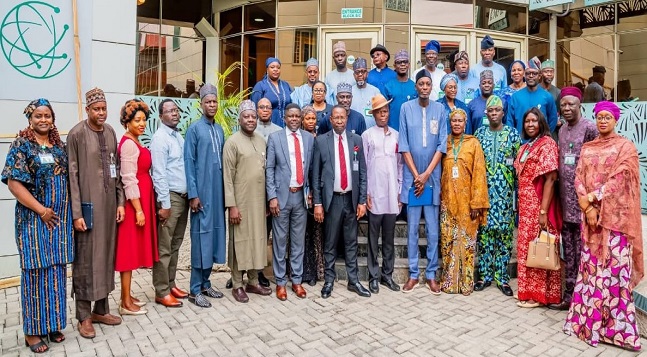
The National Information Technology Development Agency (NITDA) has reinforced its commitment to advancing Nigeria’s digital transformation agenda through strengthened collaboration with key strategic institutions, as it hosted the Director General of the National Institute for Policy and Strategic Studies (NIPSS), Professor Ayo Omotayo, alongside participants of the Senior Executive Course (SEC) 48, 2026.

The visit, which builds on an earlier strategic study tour, provided a platform for in-depth engagement on the role of digital innovation in driving sustainable economic growth, with particular focus on the Orange Economy.
Representing the Director General of NITDA, Kashifu Inuwa CCIE, the Director of Stakeholder Management and Partnerships, Dr Aristotle Onumo, highlighted the Agency’s commitment to fostering a vibrant digital ecosystem through inclusive policies, strategic partnerships, and capacity development initiatives.
“NITDA is committed to creating an enabling environment where innovation can thrive by bringing together government, private sector, academia, and creatives to drive Nigeria’s digital economy,” he stated.
Inuwa underscored the growing importance of the Orange Economy, describing it as a critical driver of innovation and economic value through intellectual property. He identified sectors such as digital content creation, film, animation, and digital art as key contributors to national development.
“The Orange Economy represents a powerful opportunity to transform our rich cultural heritage and creativity into sustainable economic growth,” he noted.
He further highlighted Nigeria’s unique advantage, particularly its youthful and creative population, while calling for stronger collaboration among stakeholders to fully harness the sector’s potential.
“With our youthful population and rich cultural assets, Nigeria is well-positioned to become a global leader in the Orange Economy if we deepen collaboration and investment across the ecosystem,” he added.
During the engagement, NITDA also presented its strategic initiatives aimed at supporting the digital and creative sectors, including digital infrastructure development, promotion of digital literacy, and implementation of policies that enable startups and innovators to scale.
Addressing challenges facing the sector, Inuwa pointed to issues such as limited access to funding, infrastructure gaps, weak intellectual property protection, and ecosystem fragmentation, while emphasising the need for coordinated action.
“Addressing challenges such as funding gaps, infrastructure deficits, and intellectual property protection is critical to unlocking the full potential of Nigeria’s creative economy,” he said.
The Agency reiterated its target of achieving 70 per cent digital literacy by 2027, noting that ongoing programmes are equipping millions of Nigerians with essential digital skills, including those in underserved and informal sectors.
In his remark, Professor Omotayo described the visit as an important opportunity to deepen understanding of how digital technologies are reshaping economic sectors, particularly the creative industry. He noted that the insights gathered would contribute significantly to policy recommendations aimed at strengthening Nigeria’s economic framework.
Participants of the SEC 48 programme engaged actively during the session, raising questions on capacity development, access to tools, and frameworks for protecting digital content. NITDA highlighted its ongoing collaborations with industry stakeholders to provide training, innovation hubs, and access to digital tools for young Nigerians.
The engagement concluded with a renewed commitment from both NITDA and NIPSS to strengthen collaboration in research, policy development, and capacity building, aimed at positioning Nigeria as a globally competitive force in the digital and creative economy.

NIBSS Says 28 Percent of Nigerians have Registered for BVN

NITDA DG Urges Stronger Collaboration to Drive Nigeria’s Digital Economy

Ogun Set for Direct London Flights as Gateway Airport Gains Momentum

Airtel Becomes World’s Second Largest Telco as Global Customer Base Surpasses 650 Million

Nigeria Cyberattacks: Stronger Collaboration as a Panacea

Spotify’s Loud & Clear Report Reveals Over ₦60Bn Revenue for Nigerian Artists in 2025

Madonna University Taps Tech Guru Adote for Strategic Board Role

China Threatens to Shut Nigeria’s Satellite Over $11.44m Unpaid Debt

Healthcare Under Attack: Why Cybersecurity is Now Critical Care

Why JustMarkets Is a Strong Choice for Gold Trading




 E-Financial3 days ago
N4.65 Trillion in the Vault, but is the Real Economy Locked Out?

 General News3 days ago
Union Bank Looted: How Former Directors Gambled with Billions and Nearly Destroyed a National Bank

 E-Business1 day ago
FG to Strengthen Cybersecurity Coordination as NDPC Probes Alleged Data Breach

 Telecom1 day ago
Compensation for Poor Service Quality is Automatic- NCC

 General News1 day ago
Tinubu Approves N3.3 Trillion Payment Plan to Boost Power Supply

 Telecom1 day ago
FG Moves to Strengthen Cybersecurity Coordination as NDPC Probes Alleged Data Breach

 E-Business1 day ago
Offset Communications Slams N50m Suit against Qore Technologies for Alleged Copyright Infringement

 General News1 day ago
SERAP Sues CCB over Electoral Act, New Tax law