

E-Business
Ekeh Urges FG to Grant Tax Concessions to Save Tech Sector

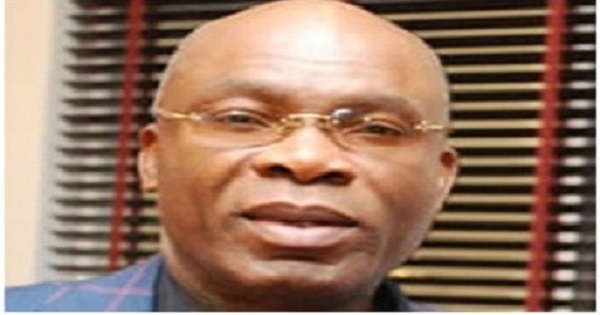
Leo Stan Ekeh, serial digital entrepreneur and chairman of Zinox Group has charged the Federal Government to seriously consider extending exceptional tax concessions to the technology sector as a means of encouraging the huge undoubted youthful potential in the sector to create a new economy.
According to Ekeh, the tech sector that is driving leading economies in the world, is struggling seriously in Nigeria.
And in spite of the great and sincere efforts of the present administration, the Nigerian economy is also fatigued as a result of its predominantly analogue nature.
In his opinion, millions of Nigerian youths nurse big dreams and have the capacity to thrive in a new and futuristic economy that is technology-driven, but urgently need government support in terms of structured capital and tax concession during their incubation period.
Ekeh affirmed that these young men and women have globally certified education and need the right environment to exhibit their capacity, noting that if the country cannot provide it, the situation will create unfortunate ones who would resort to scientific robbery, kidnapping and many other vices. He also warned that the nation may not experience all-inclusive peace until we provide for these brilliant kids.
The Zinox chairman made this call at the Silverbird Man of the Year Awards held at the prestigious Eko Hotel & Suites, Victoria Island, Lagos on Friday, February 23rd 2018.
In attendance at the event was a host of dignitaries from the public and private sectors including former Vice President, Atiku Abubakar; Deputy Senate President, Ike Ekweremadu, several serving Governors including Ekiti State Governor, Ayo Fayose; Rivers’ State Governor, Nyesom Wike; Governor of Kebbi state, Abubakar Bagudu and the Bayelsa State Governor, Seriake Dickson. Also present was the CBN Governor, Godwin Emefiele, Senators Dino Melaye and Ademola Adeleke as well as Hon. Femi Gbajabiamila. Others include Chief Abba Folawiyo, Senator Daisy Danjuma, Lady Maiden Ibru and Stella Chinyelu Okoli, among others.
Ekeh, who received the Extraordinary Business Achievement Award at the event, disclosed that globally, technology has become the driving force behind the fortunes of many nations.
According to him, the 10 richest men in the world and the biggest companies in the world today can all be found in the technology sector – a reality that shows how technology remains the only profession that can help Nigeria bridge the gap between it and other advanced countries in the world.
“Technology is the only profession in the world today that can make the son of the poorest man the richest man in the world. Though still struggling, I am a practical testimony of the possibilities in the sector, having led several technology teams that deployed in Iraq, Libya, Guinea Bissau, etc. However, I am still Nigeria-based. It is not just its lifestyle nature but technology is the only profession in world today in which you can experience miracle wealth. Our kids have read, seen and worked in tech companies or tech-driven companies in the world that became multi-billion dollar companies within five years and they are smarter than many of these foreign entrepreneurs but their only sin is that they are Nigerians and living in Nigeria.
“I have experienced this frustration for over 30 years and it is too late for me to complain. These kids are 21st Century youths and the majority of them are not interested in agriculture and will never be forced to adopt it because of its unstructured nature. Youths today are faith-driven and can anticipate the future better than their parents and leaders. My research shows that over 85% of them would rather prefer to make money only from tech-driven platforms which certifies them as global citizens or do nothing.”
Continuing, Ekeh disclosed that, “If the Federal Government of Nigeria can invest 20% of what she has invested in the Agricultural sector in the Tech sector, over 75% of present unemployed youths would become employed or self-employed in a profession that has a future. I am not against investment in the Agricultural sector, but it is a sector of extreme passion today due to its present analogue nature. Our leaders should ask their children who trained in quality institutions if any of them would want to do farming, for example. I’m sure the answer you will get is 100% NO. So, who do you expect his child to go into farming? Farming is good, but it is a profession of passion. You can’t force a young man or woman to farm,” he declared.
While commending the government and its agencies, especially the Federal Inland Revenue Service (FIRS) for improving the tax revenue base of the country, Ekeh pleaded with the Federal Government to encourage a new and prosperous economy by allowing entrepreneurs in the ICT sector a decent tax-free period of at least ten years – an incentive that will see Nigeria prosper immensely in the technology front.
“If this is granted, this country will experience, within the next five years, an army of tech billionaires whose one year tax payments shall significantly be more than our present ten years’ collections. We must see the bigger picture and prepare for tomorrow instead of frustrating people at incubation period. IT companies in today’s Nigeria are the poorest corporates and slowly disappearing – a situation which I find very unfortunate. Tech kids are restless and need time to develop, experiment and deliver products into the market successfully. Most times you succeed with one out of the thirty you invested money and time in. It takes time to stabilize in a country that is not digitally-driven. I am in a better position to tell this story because I have been in same sector for over 30 years. The sector is full of hype because it is a youth-dominated profession and when the FIRS personnel read, they come to the conclusion that you are a multi-billionaire and then go after your company.
“I plead with the Federal Government to grant tax concessions to the technology sector. Tech guys have the potential to create sustainable wealth and transform this country for good. I challenge the people in government, including the few present here such as the Deputy Senate President, distinguished senators and several Governors.”
Ekeh, who heaped praises on the Central Bank of Nigeria (CBN) Governor, Godwin Emefiele and his team for protecting the economy from failure during the recent economic recession, also called on him to intervene in the IT sector more than he has done in the Agricultural sector by extending support to millions of young Nigerians yearning for an opportunity to transform the fortunes of the country.
“I advise him to have a simple conversation with his kids during breakfast and see where their faith for decent future belongs.”
He rounded off by encouraging the younger generation to remain focused in a brighter future.
“Having done this for the past 35 years as a disruptive digital entrepreneur in Africa, I can only encourage the younger ones here. When I look at the global figures and the stock market, the biggest enterprises in the world are tech companies. It tells me there is a future for you, so do not be discouraged,” he concluded.
Arguably Africa’s biggest technology entrepreneur, Ekeh has built the Zinox Group into a foremost integrated ICT conglomerate with a 360-degree spectrum orientation and advanced competencies in manufacturing, software development, distribution, core and enterprise ICT solutions, retail and after-sales support, among others.
His recent acquisition of e-commerce giants, Konga – a development that is widely expected to raise the profile of e-commerce in the country – has further gone a long way to show the far-reaching ambitions of Ekeh who launched BuyRight Africa, Nigeria’s first e-commerce company about 10 years ago.



Corporate Affairs Commission (CAC) has raised alarm over a cybersecurity incident involving unauthorised access to parts of its information systems, urging users to update their login credentials as a precaution.

In a public notice yesterday, CAC, informed stakeholders that the Commission is currently reviewing the breach and assessing its potential impact.
According to the Commission, response protocols have been activated, with containment measures already in place to safeguard affected systems.
The CAC stated that it is working closely with the National Information Technology Development Agency (NITDA) and other relevant government agencies and partners to determine the scope of the incident and prevent further compromise.
“Appropriate containment measures have been implemented, and additional safeguards are in place,” the Commission stated, while advising users to monitor activities on the CAC portal and remain cautious of unsolicited communications that may arise from the breach.
Reports online claim that as many as 25 million documents may have been exfiltrated from the Commission’s infrastructure.
The claims, attributed to a cybercrime-tracking account, have not been independently verified, and the CAC has not confirmed the figures or identified any perpetrators.
The development has raised fresh concerns over the security of Nigeria’s corporate registry, particularly given the Commission’s increasing reliance on digital systems.
In February 2026, the CAC disclosed that it processes up to 10,000 business registration requests daily, following the deployment of artificial intelligence across its service delivery platforms.
It also handles an average of 5,000 customer enquiries each day via emails and call centres.
Despite the breach, the Commission reaffirmed its commitment to maintaining the integrity and security of its systems, assuring stakeholders that updates will be provided as investigations progress.


By Eric Gumbo, MBS
The writer is a partner at G&A Advocates LLP, a firm with two decades of experience advising on infrastructure, capital markets, and regulatory law across East Africa.

In 1961, John F. Kennedy promised the American people something that, by any rational measure, should have been impossible: that the United States would land a man on the moon and return him safely to earth before the decade was out.
The technology did not yet exist. What existed was the decision to begin. Six decades later, that decision is still paying forward.
On April 1, 2026, NASA’s Artemis II lifted off from Kennedy Space Center in Florida, carrying four astronauts on a ten-day journey around the moon, the first crewed lunar mission in over fifty years.
It was a test flight, one rung on a ladder that future missions will continue to climb. The greatest national achievements are rarely completed in a single term. They are built incrementally, passed from one generation to the next.
Kenya is at a similar moment today. Having spent two decades advising on infrastructure and regulatory frameworks across East Africa, I have seen the pattern repeat: the countries that succeed are not those with the most resources at the outset.
They are the ones that build the strongest legal and institutional foundations beneath their ambitions. The Sovereign Wealth Fund framework is Kenya beginning to do exactly that.
The Draft Sovereign Wealth Fund Bill proposes to gather revenues from oil, minerals, privatisations, and strategic investments into a single disciplined framework. Its three purposes are clear: stabilise revenues when commodity prices fall, finance critical infrastructure, and preserve savings for future generations.
With oil reserves estimated at 560 million barrels and resource revenues projected to exceed $1.5 billion annually, Kenya is not a poor country imagining wealth. It is a resourced country deciding whether to spend that wealth on today or invest it in tomorrow.
“A sovereign wealth fund is not a savings account. It is a declaration that we believe our country’s best days are ahead, and that we intend to fund them.”
The wise farmer does not eat all the seed after the harvest. She saves enough for the next planting season, because what she holds today is not just food. It is the future.
Those entrusted with managing this fund must act not as owners, but as caretakers. Nigeria’s oil revenues once promised national transformation; five decades later, the Niger Delta remains among the most underdeveloped regions on the continent, a cautionary tale written in squandered windfalls and weak institutions.
The Santiago Principles, which the draft bill aligns with, exist precisely to prevent that story from repeating. Auditors, parliament, civil society, and the media must be empowered to scrutinise this fund as its guardians, not as obstacles to it.
Kenya is not venturing into unknown territory. Botswana built the Pula Fund from diamond revenues and transformed one of Africa’s smallest economies into one of its most stable. Ghana’s Petroleum Funds have cushioned oil shocks and preserved a heritage for future generations.
Both succeeded not because they struck lucky, but because they built the governance architecture to protect what they found.
From M-Pesa to the 2010 Constitution, Kenya has a documented history of building things others eventually copy. The Sovereign Wealth Fund is the next chapter.
But it must be written with discipline and institutional independence that outlasts any single administration. Visible returns, better hospitals, more schools, jobs funded by resource revenues rather than donor goodwill, are what will determine whether ordinary Kenyans trust this fund across generations.
When we extract minerals from Kenyan soil today, coal from Kitui, rare earth elements from Kwale, gold from Migori, we are drawing down on a balance sheet that does not belong to us alone. It belongs to the Kenyan who will be born twenty years from now, who never had a vote in how we used her inheritance.
As Xi Jinping has put it: “We must act on the responsibility to our ancestors, our generation, and those yet to come.” The Sovereign Wealth Fund is how Kenya answers that responsibility. Not with words, but with architecture that lasts.

Nigeria needs some 480,000 data protection officers (DPOs), to develop, implement, and oversee organizations’ data privacy strategy to ensure compliance with laws like the GDPR and the Nigeria Data Protection Act (NDPA).

Currently only about 10,000 individuals possess the necessary certification highlighting a major skills gap, according Vincent Olatunji, national commissioner, Nigeria Data Protection Commission (NDPC).
Olatunji spoke on Monday at the second edition of its Data Protection Officers training and certification programme in Abuja and Lagos.
He said that the NDPC has domesticated the certification of data protection officers (DPOs) to address the widening gap in certified DPOs, despite steady growth in the number of trained professionals over the past three years.
“At the moment, we have about 10,000 certified DPOs to work in that space. The gap of about 480,000 still exists,” he said.
The shortfall reflects rising demand for data privacy skills as more businesses, government agencies and digital platforms process personal data under the Nigeria Data Protection Act.
Olatunji said the number of certified DPOs has grown from fewer than 1,000 three years ago to over 10,000, while more than 27,000 professionals now operate within Nigeria’s wider data protection ecosystem.
He said the commission is scaling up training and certification efforts to close the gap and position Nigeria as a leading source of data protection talent in Africa.
“Our goal is to make Nigeria the go-to country when it comes to sourcing qualified data protection officers in Africa,” he said, adding that the certification meets global standards.
The NDPC said expanding the talent pool could also support job creation and strengthen trust in Nigeria’s digital economy.
Tolu Fadipe, head of research and development at the commission, said data protection is becoming critical as the country moves deeper into digital systems and emerging technologies.
“As we move towards a digital economy, data becomes central and protecting that data is essential,” she said.
Adeola Sopade, lead trainer, said participants in the programme would be trained on global best practices, including data protection principles, compliance requirements and handling user data requests.
The training also includes practical exposure and internships with organisations to improve job readiness.
Participants said the programme offers opportunities for young Nigerians to build careers in technology and prepare for emerging fields such as artificial intelligence.

Lagos Targets Vulnerable Residents in Expanded Social Register

CBN Proposes 30-Member Mediation Panel for Loan Disputes

CAC Urges Users to Secure Accounts after Cyberattack Scare

NCDC Predicts Cholera Outbreak in 10 States as Heavy Rains Loom

NDIC Seeks Court Nods to Liquidate 89 Failed Banks

Kuda MFB Increases Kuda for Her Business Grants to ₦10 Million

Canal+ to Cut Jobs as Part Sweeping Restructuring

Nigeria tops global rankings for USDT, USDC ownership

NBC Boss Urges Content Ceators to Participate in DSO

NITDA Takes Over National Digital Architecture System




 E-Financial2 days ago
Fidelity Surges Ahead in Recapitalisation Drive with ₦564bn Capital

 General News1 day ago
Guinness Nigeria Surpasses ₦1Trillion Market Capitalisation, Signalling Strong Investor Confidence and Sustained Value Creation

 Telecom2 days ago
Qualcomm Unveils Startup Selection for Qualcomm Make in Africa 2026

 Telecom2 days ago
AfDB Grants Project BRIDGE $200m Facility for Nationwide Internet Access

 E-Financial2 days ago
Digital “Pickpockets” Compromise Over a Million Banking Accounts – Kaspersky

 Telecom2 days ago
Nigeria Seeks Stronger Digital Sovereignty, National Software Infrastructure

 E-Financial2 days ago
EFCC Warns Banks against Loans without Credible Collateral

 E-Business2 days ago
Nigeria Needs Some 480,000 Local DPOs for Data Protection