

General News
Elumelu Says Africa Open for Business, But not at Any Cost

Tony O. Elumelu, chairman, Heirs Holdings of one of the most diversified investment groups in Africa, has reiterated his message for the United States and international investors to engage proactively with Africa’s private sector to develop the continent.
He stated this on the eve of his departure to Dar es Salaam, Tanzania, as part of a delegation of high profile African business leaders handpicked by the White House to meet with President Obama.
Elumelu, economist, banker, investor and philanthropist in a wide ranging interview on AllAfrica.com, talked about the rules of engagement for Africa having changed and that those looking to invest on the continent should consider aligning with an economic philosophy he called Africapitalism.
The concept seems to be gaining momentum on the continent and beyond – the UK Guardian newspaper yesterday ran a feature suggesting it could be the new model for Africa’s development.
“Africa’s economic history has been characterised by extractive industries and rent seeking practices that have not created development in any meaningful way. Africapitalism is simply saying there is a better and more ethical way to invest in Africa for a sustainable future. I would like to see both African and international investors review their strategies for Africa. Yes, we are open for business but not at any cost. Our rules of engagement have changed,” said Elumelu.
It is anticipated Elumelu will be part of a major announcement the US government will make about the power sector.
Through Transcorp, one of Heirs Holdings investee companies, the group recently invested $300 million in Nigeria’s largest power plant, located in Ughelli, Delta State during the Nigerian government’s recent power privatization process.
Commenting on the motivation behind the power investment, he said, “Unlimited access to affordable power in any country is a game changer and will move the needle on the country’s development exponentially.”
Elumelu continued, “It’s not just the fact that children will be able to do their homework, or that computers and phones can be powered in rural villages; it is also the impact that access to affordable power will have on the economic ecosystem. Prices will come down, entrepreneurs will expand and innovate, and jobs will be created as a result. This is Africapitalism at work.”
Other investments aside, Elumelu has been vocal about power, which has led many to speculate that Elumelu is looking to make a significant impact in this sector, much as he did in banking during his time as the Group CEO of UBA.
“We played a transformative role in democratizing the banking sector at a time when no one was really paying much attention to Africa, Elumelu says. “We had a clear strategy, first mover advantage and an understanding of what the market needed and we are focused on doing the same for power. We are taking over an old government-run plant that desperately needs rehabilitation and doubling its output within our first two years of operations. By 2017, we will be generating 1000MW of electricity and Nigerians across the country will feel the impact of affordable and consistent power.”



Conoil Plc is spreading joy this Valentine season as the first group of winners in its Valentine Bonanza promotion have been announced and rewarded. Launched on February 14, the campaign continues to delight customers at participating retail outlets.

The initial raffle draw, conducted on February 21, saw fortunate customers receive ₦10,000 worth of free petrol each. The draw was carried out publicly, with media representatives present to ensure full transparency. With the promotion still ongoing, more customers have the opportunity to join in and potentially be among the next winners.
A Conoil Management spokesperson explained that the initiative is a way to show appreciation to loyal customers for their ongoing support. “Our customers have responded impressively to the bonanza, with strong participation recorded across our stations,” the spokesperson said.
The second and final phase of the promotion is now in motion. Customers who purchase at least 10 litres of petrol at any participating Conoil station remain eligible to win in the grand finale raffle.
The grand finale is set for February 28 at 12 noon. Motorists in Lagos and Ogun states are encouraged to visit Conoil outlets to collect their tickets and take part in the exciting conclusion of this Valentine celebration.

PalmPay users took to the #LoveWithPalmPay campaign to show how experiences are powered through seamless banking.

It’s the month of love and social media has been filled with couples showing affection with gifts. As digital payments become embedded in everyday life, the way relationships are planned, funded, and experienced is evolving.
Recent insights from SBM Intelligence 2025 ‘Love in the Air’ report show that despite economic pressures, most Nigerians still set aside dedicated budgets for Valentine’s Day, with the largest percentage planning to spend between N51,000 and N100,000, while less than 5% are willing to spend above N500,000.
This growing intentionality highlights the need for platforms that help people manage their money more effectively, offering features like free transfers and tools that make it easier to send, track, and preserve funds while still showing up for meaningful moments.
Through the #LoveWithPalmPay campaign, PalmPay set out to show how the platform is enabling users to plan, pay, and celebrate meaningful moments with greater ease.
During the Valentine’s season, PalmPay invited couples across Nigeria to share their stories through the #LoveWithPalmPay campaign, celebrating how digital banking supports their individual expressions of love.
The campaign saw strong participation, with many PalmPay couples submitting entries that showcased how they use the app to plan surprises, pay for outings, and stay connected through everyday transactions.
From these entries, four couples were selected, each showcasing how PalmPay has enabled fast and reliable transactions in key moments.
One video from @simply.omotoshan, one of the selected couples, captures the role of seamless payments in making their spontaneous moments possible.
She said in her entry video: “Our cutest money moment with PalmPay was when we planned our Valentine’s picnic and realized we had forgotten half of the things we needed; literally, half of everything. We rushed to the mall to get cakes, food, decorations, and all the essentials. When it was time to pay, we used PalmPay.
“The transaction was smooth, fast, and stress-free. In no time, we were done setting up our Valentine-themed picnic with everything perfectly ready. Honestly, all our experiences with PalmPay have been easy and satisfying, but this one is definitely our cutest money moment. Thank you, PalmPay.”
A testimonial from the fourth selected couple, Mohammed and his wife, reflects his excitement: “Hello PalmPay, thank you so much for selecting us as one of the winners of the #LoveWithPalmPay campaign. We truly appreciate this. My wife and I are very grateful. Thank you, PalmPay, for the love and support. We’re so happy and thankful for the N100,000 reward. We love you, PalmPay, and long live PalmPay. Thank you so much.”
Beyond the feel-good stories, the campaign reflects a broader shift: fintech is no longer just about transactions, it’s about enabling experiences. Reliable payments, fast transactions, and accessible financial tools reduce the friction that can disrupt important moments, allowing users to focus on connection rather than logistics.
From paying for dinner to managing other expenses, PalmPay continues to demonstrate how digital financial services support modern relationships, proving that in today’s economy, love is not only felt, it’s funded digitally.
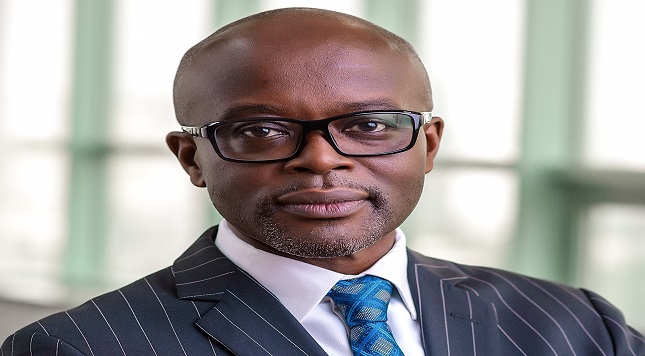
KPMG has appointed Tola Adeyemi as Chief Executive Officer for KPMG one Africa, alongside the addition of Professor Olayinka David‑West and Dr. George Njenga as independent members of the Africa Governance Council (AGC).

Effective from March 2026, the appointments reinforce the firm’s leadership expertise, underscore a long‑term commitment to Africa and highlight confidence in the continent’s growth potential.
“Africa is one of the most dynamic and promising regions in the global economy, and KPMG is committed to playing a meaningful role in its growth story,” said Tola Adeyemi, incoming CEO for KPMG One Africa.
He continued: “It is a privilege to step into this role at such a pivotal moment for both KPMG and the continent. I look forward to building on our strong, connected and high‑performing base to deepen collaboration and deliver consistent quality and impact across our markets.”
KPMG is recognised globally for its commitment to quality, integrity and professional excellence, supported by a strong global network of member firms. Trust remains the foundation of the audit and accounting profession, with high standards of governance, ethics and audit quality increasingly demanded across Africa’s public and private sectors.
KPMG One Africa’s approach brings the continent closer together with strong leadership to strengthen cross-border collaboration and offer shared expertise and consistency which is business‑critical to help clients navigate complex risks and unlock sustainable growth opportunities.
Commenting on the appointment, Professor Ben Marx, Chairman of the Africa Governance Council, said: “Tola Adeyemi is exceptionally well positioned to lead KPMG One Africa. In addition to his global perspective as a member of the KPMG Global Council, he brings significant influence and credibility as a respected business leader across the continent.”
The appointments of Professor David‑West and Dr Njenga to the Africa Governance Council, which provides board level governance, further strengthens independent oversight, bringing strong academic credentials alongside deep strategic and business expertise.
“These appointments reinforce KPMG’s commitment to strong governance, accountability and leadership depth,” Marx added. “They complement our established African leadership team, in‑country managing partners and regional senior partners, further enhancing our client‑centric approach across Africa.”

Kaspersky Discovers New Phishing Campaign Exploiting Google Tasks Notifications to Steal Corporate Credentials

NITDA Equips Federal Character Commission with Data Tools to Drive Public Sector Reform

Telecom Giant MTN Injects N1.0 Trillion CAPEX into Network Expansion

History is Watching: Tinubu’s Moment to Rescue Nigeria’s Stolen Future

Samsung Unveils Galaxy S26 Series, Powered by Smarter, Background AI

Kaspersky Launches OT Calculator to Align Cybersecurity Investments with Business Goals

Accidental Billionaire Opts for Jail Instead of Returning Money Credited Him by Mistake

Why the Future of PR Depends on Healthier Client–Agency Partnerships

New Horizons Nigeria Breaks Ground: First to Fuse Mandarin into ICT Curriculum

Kaspersky Brings more Transparency to Threat Detection with New Hunt Hub




 E-Business2 days ago
AfDB, UNDP Launch $10Bn AI Initiative for Africa

 Telecom2 days ago
Grey Expands Cross-Border Banking with USD Accounts, USDC Support

 News3 days ago
Obasanjo, Vanguard’s Amuka Lead Prayers for Zinox Chief Leo Stan Ekeh @70

 News2 days ago
Lotus Bank, REA Seal N100Bn Deal to Power Rural Nigeria

 General News1 day ago
KPMG Strengthens Africa Leadership to Support Long‑term Growth Across the Continent

 News2 days ago
DG NITDA Reaffirms FG Commitment to Responsible, Inclusive AI

 E-Financial2 days ago
CBN Cuts MPR by 50bps to 26.50% as Inflation Eases for 11th Month

 E-Financial2 days ago
Kuda Bank Teams Up with Lovers & Frnds for Inclusive Valentine’s R&B Bash