

News
Elumelu Urges US Congress to Pass the Electrify Africa Act

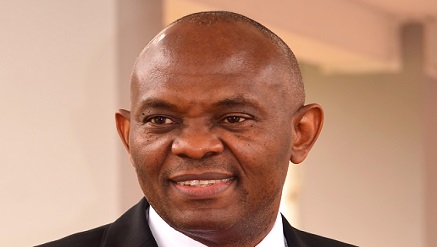
Tony Elumelu, chairman, Heirs Holdings and Founder Tony Elumelu Foundation has called on the United States Congress to pass the ‘Electrify Africa Act’ stating that the passage in to law would make a world of difference in Africa.
“When you leave this place call your Representatives and the leadership of the House and ask them to pass the bill” Elumelu urged members of the packed audience.
The bill which would preserve and expand President Barack Obama’s Power Africa Initiative by codifying access to electricity as a U.S. foreign policy priority for Africa has already been passed by the U.S. Senate and is expected be voted on by the U.S. House of Representatives next week.
Speaking at the Mariott Hotel in Washington D.C; venue of the “Power Africa Summit” on Thursday, January 28, 2016, Elumelu commended President Obama for working through the Power Africa Initiative to mobilize the private sector to invest $43 billion in the African power sector.
According to Mr. Elumelu, Africa must win the energy challenge if it seeks to become an industrial power in the 21st century, noting that “power outages on the continent must spark power outrages. The kind of outrage that ignites the activist in us”
Elumelu’s Heirs Holdings; a propriety Investment company, through Transcorp Power Limited has committed $2.5 billion to deliver 2,000 megawatts of electricity under the Power Africa Initiative. Already Transcorp Power is currently generating about 19% of Nigeria’s power needs with a target to increase capacity to 25% in the near future.
“Power cuts across and has impact on healthcare delivery, job creation, education, food security communications and all other sectors of the economy. It is unacceptable that 600 million Africans lack access to energy in the 21st century” Elumelu said.
The call in Washington DC, follows the joint letter to the U.S. Congress from Elumelu and President of Dangote Group, Mr. Aliko Dangote, on behalf of the African Energy Leaders Group (AELG), which they co-founded with other leaders in January 2015.
The letter, similarly urged members of the U.S. House of Representatives to act swiftly and pass this critical piece of legislation to scale up U.S. efforts to help provide Africans with access to electricity.
In continuation of his advocacy for Africa, Elumelu also testified before the U.S. International Trade Commission on ‘The Future of the U.S.-Africa Trade and Investment Relationship’ on the same day.
Chaired by Ambassador Michael Froman, the US Trade Representative, the Hearing is part of efforts by the U.S. government to put building blocks in place for the next phase in its economic relationship with Africa.
As a recognized African business and thought leader, Elumelu was invited to share ideas on how to enhance the U.S.-Africa trade and investment relationships beyond the preferential access to the U.S. market for Africa’s products under the African Growth and Opportunity Act (AGOA), to other tools like free trade agreements and investment treaties among others.
Speaking at the Hearing, Elumelu said Africa does not need another trade agreement or preferential program and called for a new trade paradigm in the trade and investment relationship with Africa. He said “It is time to move beyond the unequal exchange of cheap raw materials for expensive finished goods that disadvantages Africa, to one that ensures technology transfer and sustainable economic development, huge economic returns for investors and creates new jobs for both sides.”
He proposed three approaches to achieving this; applying the principles of Africapitalism; focus on identifying and enabling specific value chains and promoting entrepreneurship.
“Africapitalism can help shape the new trade paradigm because it requires governments, donors and the private sector to work together in “Shared Purpose” to ensure the creation of national plans and supporting policies around specific sectors and related targets, so the private sector can step in with capital and expertise geared to achieve those targets, be they tons of grain produced, megawatts of electricity generated or industrial parks created” he stated.
Apart from Elumelu, testimonies were also taken from Mr. Donald Kaberuka, Former President of the African Development Bank, Mr. Jim Kolbe, President JTK Consulting, Mr. Tom Hart, Executive Director, One Campaign and Mr. Scott Eisner, President U.S. Chamber of Commerce. Others included Senator Johnny Isakson, who said that AGOA has become a win-win for the U.S. and Africa, disclosing that a South African market for poultry products was opened from his home state of Georgia and Delaware on account of it.
Whilst stating that “Africa needs America, just as much America needs Africa” Froman in his remarks at the Hearing, said Africa’s next decades will be central to the global economy due to the rising number of African consumers. To shape the next American policy of engaging with Africa, he said the Office of the U.S. Trade Representative is talking with its African partners, with industry and civil society, with academia and the investor community, with foundations in the U.S. and Africa on the path forward.
“This input is critical as we prepare a public report for delivery to Congress in June this year that will layout a set of options and road maps for advancing the US-Africa trade and investment agenda” concluded Ambassador Froman.
Elumelu’s engagements in the U.S. comes after the recent visit by a delegation of members of Obama’s Presidential Advisory Council on Doing Business in Africa (PAC-DBIA), along with representatives of several U.S. government trade and investment-focused agencies.
Led by the Honourable Penny Pritzker – U.S. Secretary of Commerce, they were on a fact-finding mission to Africa to inform their report to the U.S. President on recommendations to strengthen commercial engagement between the U.S. and Africa, which will result in mutually beneficial growth.
Elumelu hosted the delegation in Lagos, provided them an opportunity to interact and hear directly from young aspiring entrepreneurs drawn from the Tony Elumelu Entrepreneurship Programme (TEEP); an audacious initiative that provides seed capital, training, mentorship and a networking platform for 10,000 African entrepreneurs over a 10 year period.
Endowed with $100million by the African Philanthropist, the programme, which commenced last year with 1000 beneficiaries, is currently in its second year with another 1000 beneficiaries from Africa, scheduled to participate and benefit from the novel entrepreneurship development program in 2016.



Nigeria Centre for Disease Control and Prevention (NCDC) has issued a Public Health advisory on the spread of Cerebrospinal Meningitis (CSM).

It said that the caution is particularly for states within the African Meningitis belt.
In a statement by the Corporate Communications Division of NCDC urged all Nigerians to remain vigilant and adopt preventive measures.
The statement said: “As Nigeria continues through the peak dry season months, the Nigeria Centre for Disease Control and Prevention (NCDC) alerts the public to the ongoing risk of Cerebrospinal Meningitis (CSM), particularly in states within the African meningitis belt.
“Cerebrospinal meningitis occurs more frequently between December and April, when dry, dusty conditions, overcrowding, and poor ventilation increase the risk of transmission.
“The NCDC urges all Nigerians to remain vigilant and adopt preventive measures. Surveillance and response activities remain ongoing nationwide, and laboratory testing is being conducted at the state level while national laboratory capacity is being strengthened.
It explained that Cerebrospinal meningitis is a serious infection of the protective membranes covering the brain and spinal cord.
According to NCDC the affliction is most commonly caused by bacteria, particularly Neisseria meningitidis.
“Bacterial meningitis can progress rapidly and may be fatal within hours if untreated.
“However, early diagnosis and prompt antibiotic treatment significantly improve survival and reduce complications. CSM spreads through respiratory droplets during close contact, especially in overcrowded or poorly ventilated environments.”
It said that symptoms to watch out for include sudden high fever, severe headache, and neck stiffness.
It said other symptoms may include: nausea or vomiting, sensitivity to light, confusion or altered consciousness and seizures.
For In infants and young children, NCDC said the symptoms could bulging soft spot on the head.
The Centre said that early recognition and treatment can save lives.


According to a Kaspersky report “Mobile malware evolution,” the number of Trojan banker attacks on Android smartphones increased by 56% in 2025 compared to the previous year*.

This type of malware is designed to steal user credentials for online banking, e-payment services and credit card systems. Cybercriminals commonly distribute Trojan bankers through messaging apps, as well as through malicious webpages.
The number of new Trojan banker installation packages for Android (unique APK files) also increased sharply, reaching 255,090 packages – a 271% increase over 2024. This may indicate that these tools generate substantial profit for cybercriminals.
Kaspersky experts believe threat actors will continue both to expand delivery channels and develop new Trojan variants trying to evade detection by security solutions. Among all detected Trojan bankers, the leading families were Mamont and Creduz.
“Although Trojan bankers for smartphones are the fastest-growing type of malware, we also observed another important trend: preinstalled backdoors such as Triada and Keenadu appeared more frequently compared to previous years. People purchase completely new, but infected, Android devices and may be unaware of the threat.
Once integrated into the firmware fully functional preinstalled backdoors provide attackers with unlimited control over the victims’ smartphones and tablets. As a result, all information on infected devices can be compromised.
It’s quite difficult to remove such malware. If the device is infected, we recommend users check for firmware updates. After the update, run a scan of the device with a security solution again to make sure newly installed firmware is not infected,” comments Anton Kivva, malware analyst team lead at Kaspersky.


Federal Government has said it now has the capacity to identify and apprehend foreigners who overstay their visas in the country.

Minister of Interior, Olubunmi Tunji-Ojo
The Minister of Interior, Olubunmi Tunji-Ojo, disclosed this on Thursday in Abuja during the 2026 Sectoral Performance Review Retreat of the Federal Ministry of Interior.
Tunji-Ojo said the government now possesses comprehensive data that enables authorities to track individuals who have entered the country over the past decade and determine those who have failed to comply with their visa conditions.
According to him, the development followed the establishment of an Integrated Operations Centre and a Network Operations Centre by the Nigeria Immigration Service.
The minister, however, said the FG will go after foreigners who have overstayed their visas, adding that outside of the country, Nigerians are not being spared.
He said, “In NIS, I know we are doing a lot already. As of today, we have been able to build our Integrated Operations Centre and the Network Operations Centre, which we never had before.
“With that, we can access, in the last 10 years, everybody who has entered, where you came from, everything, we have all your records, we have everything, we know the exact people who have overstayed in our country, and we will go after them, with due respect, because, outside of Nigeria, they go after the irregular immigrants and we think we have to protect the sanctity of our borders,” the minister stated.”
The minister also stressed the need for reforms across agencies under the ministry, including the Nigeria Security and Civil Defence Corps, to ensure services are delivered transparently and without corruption.
Tunji-Ojo said the goal of government institutions should be to protect citizens, particularly the most vulnerable in society.
NSCDC provides protection in an organised and corruption-free manner, where the son of a nobody will have the same opportunity as the son of anybody in government.
“If you are a businessman or there is a genuine threat to your life, you should be able to access protection without going through the minister, the Commandant General, or anyone else. It is only then that we can truly say we have a service that works for Nigerians.
“Nigeria should not be about selective service delivery. The essence of government is to protect everyone, with greater emphasis on protecting the weakest in society, ” he said.
Speaking on correctional reforms, he argued that a system where individuals repeatedly return to custody reflects a failure of rehabilitation.
“Anybody who goes in there must be reformed and transformed,” he said, adding that the objective was to reduce cases of repeat offences to the barest minimum.
In her remarks, the Permanent Secretary of the ministry, Magdalene Ajani, emphasised the importance of accountability in leadership.
She said leadership was about “devotion, promises, performance, and impact,” noting that the ministry’s agencies play critical roles that affect the daily lives of Nigerians and therefore require transparency and effective service delivery.
The move to go after foreigners who overstay their visas comes amid renewed efforts by the Federal Government to strengthen border management and enforce immigration regulations across the country.
This definitely would allow immigration authorities to track the movement of travellers and identify individuals who remain in Nigeria beyond the duration permitted by their visas.

Police Says Victims Enable Cyber Attacks Out of Ignorance

Bank Accuses Magistrate, Lawyer of Using Fake Order to Steal N3.5m from Account

FG Launches NERD to Combat Certificate Fraud

NCDC Issues Public Advisory on Cerebrospinal Meningitis

Goodnews Naija Launches ‘Building in Nigeria’ Series on Entrepreneurs, Real Sector Builders

Dr. Cairo Ojougboh Foundation Bolsters Nigeria’s Education Drive with ₦2.7m Student Support

Kaspersky Brings more Transparency to Threat Detection with New Hunt Hub

PwC Reveals AI Scaling Gap Slows Africa’s Digital Transformation

Kaspersky Discovers New Phishing Campaign Exploiting Google Tasks Notifications to Steal Corporate Credentials

esentry 2025 Report Shows Healthcare, Financial Services and Telecoms as Staging Grounds for Increased Cyberattacks in Africa




 E-Financial3 days ago
Nigeria’s VAT Jumps 34%, CIT Soars 48% to ₦14trn in 9M’25 – NBS

 Telecom3 days ago
FG Approves GIS-enabled Digital Postcode to Tackle Logistics Gaps, Boost E-commerce
 E-Business3 days ago
Firm Enhances its Security Awareness Platform with SCORM and PDF Support

 E-Financial3 days ago
Binance Cuts Illicit Activity Exposure by 96%, Leads Global Crypto Compliance Push

 E-Financial2 days ago
Senate Targets Fintech Overreach, Vows Ponzi Crackdown After ₦1.3trn CBEX Scam

 E-Financial3 days ago
NAICOM Signs MoU with BPP to Deepen Insurance Compliance in Public Procurement

 Telecom3 days ago
GSMA, African Operators, Others to Launch Low-cost 4G Devices

 General News2 days ago
FCCPC Bans Lagos ‘No Refund’ Policy, Vows Fines and Shutdowns for Traders