

E-Financial
Entrepreneurs Converge at Connect Nigeria e-Business Fair


Owners of Small and Medium-sized Enterprises (SMEs) seeking to exploit new business opportunities converged at 2013 e-Business Fair organised by Connect Nigeria.
Representatives of banking institutions and ICT firms were on hand at the event to educate members of the public on how best to maximise electronic technology to improve their business operations and service delivery.
In a keynote address titled “Importance of Cash-less Society to Economic Growth and Development,” Mallam Sanusi Lamido Sanusi, CBN Governor, highlighted the prospects of economic growth as a result of growing technology and its embrace by the business environment.
e-business in Nigeria has been identified as a significant factor that will contribute immensely to the growth of the economy and as such it formed the basis of the interactive session at the forum. SMEs cater to a large chunk of the national economy through provision of services and employment generation and if given leverage via electronic means, it is believed that it will spur economic growth exponentially.
Participants at the 2013 Connect Nigeria e-Business Fair were given the opportunity to develop websites that will promote their businesses electronically by NextDaySite, a business partner to Connect Nigeria with a 50 percent discount.
Mr. Emeka Okafor, managing director, Connect Nigeria, observed that new opportunities will be created for businesses in the form of new markets from far and wide places that were previously unreachable as a result of e-business growth in the country.
The services sector in Nigeria, which presently contributes about 34 percent to the economy, is projected to account for 45 to 75 percent of total economic output by 2020, according to the National Bureau of Statistics (NBS).
The International Monetary Fund (IMF) identifies Nigeria as one of the fastest growing economies in the world, and due to its economic development prospects and growth of internet technology; the CBN is currently implementing a cashless policy with the objective of reducing cash transactions and growing smaller businesses.


In a bid to foster accurate public discourse as well as protect the stability of the financial sector, the Association of Corporate and Marketing Professionals in Banks (ACAMB) has stepped in to educate renowned content creator, Unofficial Osas, following his misrepresentation of facts concerning the Central Bank of Nigeria’s (CBN) recapitalisation drive, and subsequent invitation by the Nigerian Police Force.

ACAMB
The intervention by ACAMB led to the successful retraction of a misleading video regarding the CBN recapitalisation policy, demonstrating the Association’s commitment to its core mandate of public enlightenment.
In his official apology video, the content creator stated, “I was invited by the Nigerian police force national cyber crime centre in Abuja over the video I posted on the 15th of December, where i spoke about 12 banks that were shut down in relation to the CBN recapitalisation policy. I would like to offer an official retraction of that video and want to reiterate that no bank is shutting down.
“As a matter of fact, most of the banks have now met the ₦500 billion minimum capital base for banks with international and the N200bn for national banks recapitalisation requirements, so no bank is shutting down.
“I want to specifically appreciate ACAMB. They were very professional in handling this case and did well to educate and enlighten me on the recapitalisation process. I am now better informed and know better”
Commenting on the resolution, President of ACAMB, Jide Sipe, reinforced the Association’s dedication to protecting the integrity of the banking sector. “ACAMB stands for the restoration of professional banking ethics and public confidence through seamless information management and public enlightenment.
“We believe that an informed public is an empowered public. By engaging Unofficial Osas, we ensured that accurate information regarding the resilience and strength of our banks was disseminated to the millions of Nigerians who follow him.”
The Intervention shows ACAMB is dedicated to evolving strategies that enhance and sustain a good image for the nation’s banking sector as well as assist in fostering better banking habits among Nigerians.
E-Financial
FirstCap MD says Payment Security Remains Biggest Barrier to Bankable Gas and Power Projects


Ukandu E. Ukandu, Managing Director/CEO of FirstCap Limited, a leading investment banking firm and subsidiary of First HoldCo Plc., has reaffirmed that payment security remains the most decisive factor in determining whether gas and power projects in Nigeria secure financing.

He shared this perspective during a panel discussion on project bankability at the 2026 SPE Lagos Energy Week.
Ukandu noted that although several risks influence financing decisions, payment risk consistently emerges as the key barrier to financial close.
“Every major risk matter, but payment risk is the ultimate deal‑breaker. Without strong payment security and disciplined collections, no project can attract sustainable financing,” he said.
He explained that lenders typically evaluate three core risk pillars, payment reliability, foreign‑exchange exposure, and contract enforceability, with payment reliability presenting the greatest challenge across Nigeria’s energy value chain. Persistent collection inefficiencies, rising arrears, and liquidity pressures continue to weaken investor confidence.
To enhance payment security, Ukandu highlighted mechanisms widely used by financiers, including letters of credit, bank guarantees, escrow accounts with payment‑waterfall structures, reserve and sinking funds, sovereign or sub‑sovereign support, and take‑or‑pay offtake agreements.
Addressing foreign exchange risk, he noted that volatility remains difficult to manage, especially for projects with dollar‑denominated costs but naira‑denominated revenues. Lenders typically mitigate this through foreign exchange ‑linked tariff indexation, partial dollarisation for credible industrial offtakers, escrow protections, selective hedging, and foreign exchange reserve buffers.
However, he cautioned that indexation alone seldom eliminates exposure due to regulatory limits and timing delays.
On legal and regulatory certainty, Ukandu stressed the need for contracts that are enforceable and clearly structured, particularly around take‑or‑pay obligations, termination payments, step‑in rights, and dispute‑resolution frameworks. He added that factors such as tariff adjustments, licence changes, and price controls can significantly affect project viability if they are not fully addressed at the contracting stage.
While fiscal incentives such as tax holidays and accelerated depreciation can strengthen project economics, Ukandu emphasised that they cannot compensate for weak fundamentals.
“Incentives make a good project better, but they do not make a weak project bankable. Cash‑flow reliability and disciplined foreign exchange management must come first,” he said. He also noted that naira‑based incentives may lose value if project revenues are not indexed.
He concluded by urging industry players to prioritise revenue security from the earliest stages of project structuring: “Protect returns at the source. Build strong offtake arrangements with solid credit support and currency alignment to ensure cash is received in full and on time.”
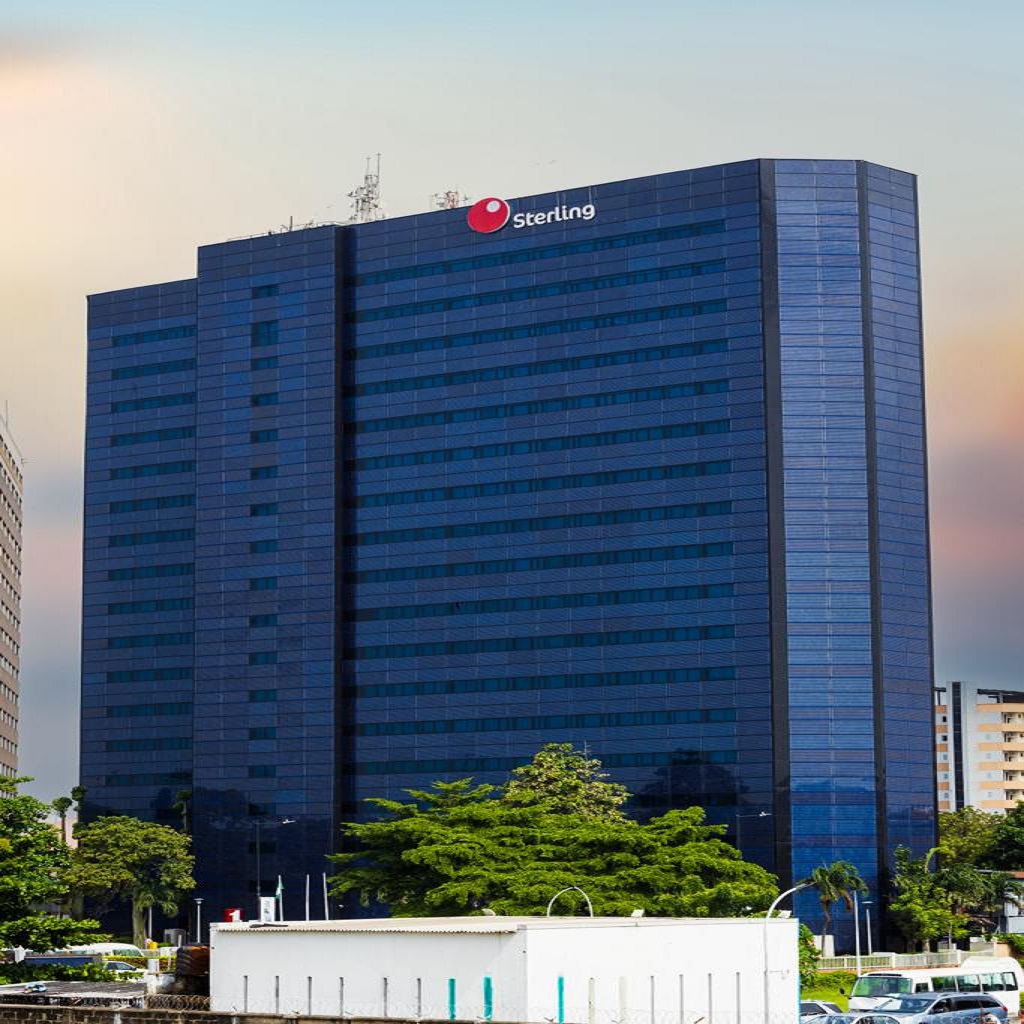
Sterling Financial Holdings Company Plc (Sterling HoldCo) has begun allotting 12,581,000,000 ordinary shares of 50 kobo each at ₦7.00 per share from its 2025 Public Offer.

Sterling HoldCo
The process follows Central Bank of Nigeria (CBN) and Securities & Exchange Commission (SEC) approvals.
The offer, opened September 15, 2025, drew 18,280 applications for 16.84 billion shares worth ₦117.88 billion—109.79 per cent oversubscribed.
Valid applications from 18,276 shareholders totalled 13.81 billion shares; all compliant applicants receive full allotments.
Refunds for rejects/excess, plus interest, process via RTGS/NIBSS by February 17, 2026, handled by Pace Registrars Limited.
Shares credit to CSCS accounts by the same date; new accounts held in pool pending documentation.
The raise bolsters capital for banking subsidiaries, injects ₦10 billion into SterlingFI Wealth Management to meet SEC rules, and funds credit expansion, innovation, and support for businesses/households.
Strong Financials, Diversified Growth
FY25 interim results show 99 per cent profit before tax growth; gross earnings up 46 per cent to ₦476.5 billion; assets at ₦3.92 trillion; deposits up 18 per cent to ₦2.98 trillion; shareholders’ funds up 39 per cent to ₦424 billion.
Cost-to-income ratio improved to 63 per cent from 72 per cent.
Subsidiaries—Sterling Bank Limited (conventional), The Alternative Bank Limited (non-interest, 150+ branches)—comply with CBN capital rules.
Initiatives include Mata Zalla (women tricycle training) and Plateau agriculture programme.
The offer attracted first-time retail investors, broadening ownership.
Sterling HoldCo welcomes new shareholders, poised for sustained growth and economic impact.

IXPN Positions as the Regional Internet Exchange Hub for West Africa

Pheelz Shares His Journey on Glo-Sponsored African Voices

AI-Driven Memory Chip Fuels Global Phone Price Surge

NITDA DG Reaffirms FG Commitment to Responsible and Inclusive AI

Menxtt NG Emerges as Nigeria’s Virtual IT Hub for Premium Devices, Solutions
Nigeria’s 9 Top FinTech Firms Valued at $10.6Bn in January 2026

Firm Detected a Fivefold Surge in QR Code Phishing Attacks in the Second Half of 2025

Kaspersky Launches OT Calculator to Align Cybersecurity Investments with Business Goals

CBN Upgrades Licences of Opay, Moniepoint, Kuda, Palmpay, Paga to National Status

NITDA, NBC Explore Strategic Collaboration on Digital Transformation, Media Regulation




 E-Financial3 days ago
Ecobank Nigeria Fully Repays $300m Eurobond Notes

 E-Financial3 days ago
Zenith Bank Warns Public Over Fake Jim Ovia Investment Videos

 E-Financial1 day ago
ACAMB Educates Content Creator to Curb Misinformation on Bank Recapitalisation

 General News2 days ago
PalmPay Unveils First Batch of Winners in #LoveWithPalmPay Campaign

 E-Business3 days ago
Chams Carves Out Subsidiary to Support Africa’s Digital Transformation

 Telecom2 days ago
Banks, Telcos Settle Four-Year Dispute over N300Bn USSD Debt

 E-Financial2 days ago
FirstCap MD says Payment Security Remains Biggest Barrier to Bankable Gas and Power Projects

 E-Financial3 days ago
BoI Secures CBN’s Approval for Non-interest Banking Operation