

E-Financial
Experts Call for ‘Umbrella Banking’ to Save Mobile Money

Experts from the financial and telecom sectors have recommended what they called “umbrella banking” approach to attract some 80 per cent of Nigerians currently financially excluded.
Pointing at poor merchant acceptability and general apathy, the experts said that the uptake of mobile money, which involves the transfer of money from one mobile phone to another without any need for a bank account, slower than expected.
They spoke at the just concluded AITEC Banking and Mobile Money West Africa Conference and Exhibition in Lagos and made strong case for “umbrella banking” to integrate 86 per cent of Nigeria in to the formal financial sector.
“Umbrella banking” flows from the need to design and simply mobile money services to be truly ubiquitous and affordable.
It is hinged on is the delivery of financial services, at affordable costs, to sections of disadvantaged and low income segments of society, compared to financial exclusion, where they are not.
Peter Asolo, chief executive officer, Petvini Global Concepts Limited told Nigeria CommunicationsWeek “From the definition of mobile paymemt and the scope you will find out that it is a business that is targeted at people who are not banked.
Everybody is talking about financial inclusion. Like I corrected during my presentation, people should stop saying unbanked rather people should concentrate more on financial inclusion.” He added.
Asolo also categorized the financially excluded Nigerians to include individuals not covered by any insurance, health or retirement policies.
According to him, these are the things that nobody is looking in Nigeria but globally, are the indices of financial inclusion.
Nodding in agreement, Onajite Regha, executive secretary and chief executive officer, e-Payment Providers Association of Nigeria (E-PPAN), highlighted that operators need to review their business model to achieve the objectives of the mobile money and mobile banking policies.
According to Regha, aside technology, the operators ought to synergize on how to deliver customer based advocacy message to the society and implement same to the fullest.
“Advocacy and people oriented business models are the major components of driving e-payment industry. People would want to understand the relevance of these policies to their daily living” she said.
Also, Juliet Nwanguma of Zenith Bank called for a paradigm shift arguing that Nigerian banks practicing mobile banking as against really mobile money provisioning.
Nwanguma called for an intervention fund to shore up awareness on the importance of mobile money in the rural area.


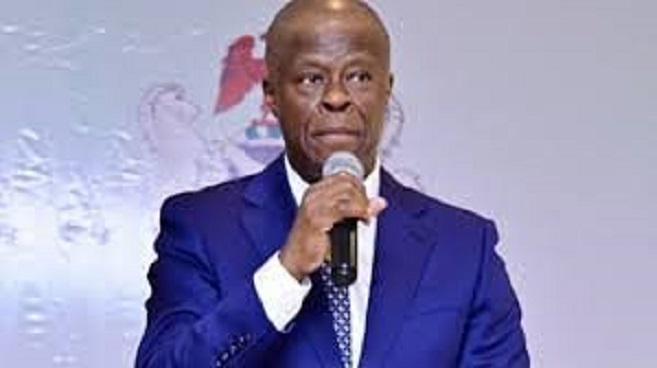
Federal Government has approved sweeping 2026 fiscal measures slashing import duties on vehicles, rice, palm oil, sugar, and other essentials while introducing new taxes and protections to bolster local industries and economic growth.

Wale Edun
Finance Minister and Economy Coordinating Minister Wale Edun signed the circular, effective April 1, 2026, replacing 2023 guidelines and aligning with ECOWAS Common External Tariff to stimulate key sectors.
Key tariff cuts cover 127 items: fully built passenger vehicles, including four-wheel drives and station wagons, drop to 40 per cent from 70 per cent; bulk rice to 47.5 per cent from 70 per cent; broken rice to 30 per cent; crude palm oil to 28.75 per cent; raw sugar to 55-57.5 per cent; envelopes to 40 per cent; notebooks to 30 per cent; unglazed ceramic tiles to 35 per cent; glazed tiles to 46.25 per cent; zinc-coated steel sheets, coils, and rods to 35 per cent; low-carbon cold-rolled steel to 15 per cent; automatic circuit breakers to 10 per cent; and modular surgical theatres to 5 per cent.
Zero duties apply to agricultural and manufacturing machinery, railway locomotives, cargo ships over 500 tonnes, and breathing equipment like gas masks.
New Supplementary Protection Measures include Import Adjustment Tax on 192 tariff lines and prohibitions on 17 items from non-ECOWAS countries, such as certain agricultural products and hazardous materials. Taxes phase out gradually from January 2027 to zero per cent by 2036, except AfCFTA items.
From July 1, 2026, excise duties hit non-alcoholic and alcoholic beverages, cigarettes, tobacco, and a green tax surcharge, exempting vehicles under 2000cc, mass transit buses, electric vehicles, and local auto parts.
A 90-day grace period allows pre-April 1 importers with Form ‘M’ and trade agreements to use old rates.
Waste polyethylene terephthalate joins the export prohibition list. Full details will appear in the Official Gazette, with Edun urging compliance.
The policy blends tariff relief with safeguards to drive industrialisation and meet trade commitments.


Incorporated Trustees of the Data Privacy Lawyers Association (DPLA), a group of legal experts and data privacy advocates and Etisang Solomon have filed a fundamental rights enforcement suit at the Federal High Court, Kaduna Judicial Division, against the Central Bank of Nigeria (CBN).

The suit, officially stamped by the court on April 8, 2026, seeks to nullify a CBN circular that restricts bank customers to a single lifetime amendment of phone numbers linked to their Bank Verification Numbers (BVN).
The circular titled “Addendum to the Revised Regulatory Framework for Bank Verification Number (BVN) Operations and Watchlist for the Nigerian Banking Industry,” was issued by the apex bank on March 12, 2026.
According to the provisions of clause (c) in that document, any amendment to phone numbers linked to a BVN shall be allowed only once, with the new provisions set to take effect from May 1, 2026.
Reacting to the CBN directive, legal experts and data privacy advocates argue that this timeline and the restriction itself violate multiple provisions of the 1999 constitution and the Nigeria Data Protection Act (NDPA).
They are seeking nine reliefs from the court, including declarations that the circular violates section 37 of the constitution regarding the right to privacy, Section 24(1)(e) and 34(1)(c) of the NDPA, along with orders nullifying the impugned clause, a perpetual injunction restraining the CBN from enforcing it, and a mandamus directing the CBN to review and amend the circular.
In an affidavit sworn on behalf of the applicants, Christopher Yange highlighted the practical dangers of the policy, noting that telecommunications providers frequently recycle, deactivate, or reassign numbers that have been lost or stolen.
He cited a report from the Foundation for Investigative Journalism (FIJ) to demonstrate that phone numbers are not static assets.
Furthermore, the legal experts and data privacy advocates also contend that if a customer’s number is compromised after their single permitted update, they would be permanently barred from correcting their financial records, leaving sensitive data such as transaction alerts and One-Time Passwords (OTPs) vulnerable to interception by third parties.
Olumide Babalola, Emmanuel Okpara, and Frank Ijege of Olumide Babalola LP, applicants’ counsel, in a detailed written address spanning over 12 pages, framed the case around three core legal issues.
They argued on the first issue that a phone number associated with a BVN transcends basic administrative data, serving instead as a vital conduit for financial security, including transaction notifications, OTPs, and authentication protocols.
To bolster this claim, they pointed to several legal precedents.
Among these was the 2021 Court of Appeal ruling in Digital Rights Lawyers Initiative v National Identity Management Commission (NIMC), which affirmed that constitutional privacy rights encompass the safeguarding of personal data.
Additionally, they referenced the 2025 decision in Omotayo versus Airtel Networks, where the Court of Appeal reiterated that the privacy of telecommunications and call records is protected under the constitution.
On the second issue,they argued that by permitting only a single update, the CBN essentially grants itself a permanent power of veto over a citizen’s right to correct their data, a move that directly contradicts the clear language of the law.
To support this claim, they referenced the 2024 High Court of Lagos ruling in Rebecca Temitope Bonje versus Guaranty Trust Bank Plc, which upheld the legal requirement for data precision and the right to rectification as mandated by the NDPA.
Concerning the third legal point, the applicants argued that the single-amendment restriction serves as a rigid, all-encompassing mandate.
They noted that it fails to consider valid circumstances like the loss or physical damage of a SIM card, switching service providers, the recycling of phone numbers, or moving to a new line for personal safety.
The legal team maintained that the apex bank could achieve its anti-fraud objectives through less restrictive measures, such as advanced identity checks, multi-factor authentication, or short-term account freezes for security verification, without compromising the fundamental rights of bank customers.
The affidavit further claims the CBN’s directive lacks good faith, citing a lack of public evidence or regulatory impact assessments.
It also highlights a failure to consult stakeholders across the banking, telecom, and data protection sectors, the absence of a structured appeal process for device loss or errors, and a general lack of alignment with the NDPA.
The lawsuit, pursues several key reliefs: a declaration that the circular is unconstitutional and breaches the NDPA; the nullification of clause (c) of the addendum; and a perpetual injunction against the phone number amendment limit.
Furthermore, it seeks a mandamus to compel the CBN to revise the circular in line with constitutional and data accuracy standards, alongside an order for the bank to implement a flexible and verifiable update framework.

Presidential Fiscal Policy and Tax Reforms Committee (PFPTRC) has dismissed reports claiming that Taiwo Oyedele, minister of State for Finance, admitted errors in Nigeria’s new tax laws.

Taiwo Oyedele, minister of State for Finance,
In a statement posted on Sunday via Oyedele’s X handle, the committee described the reports as “misleading” and a misrepresentation of the minister’s comments.
“Our attention has been drawn to misleading media reports claiming that the Honourable Minister of State for Finance, Mr. Taiwo Oyedele has ‘finally admitted errors in the new tax laws.’
“These publications misrepresent the Minister’s statements, falsely alleging that he urged Nigerians to await the outcome of a ‘legislative probe’, a process that has long been concluded and the gazetted copies certified by the National Assembly published since early January 2026,” the statement said.
It warned that such narratives could distort public understanding of the reforms.
The committee said the minister, while speaking at a fireside chat during the Nigerian Bar Association Section on Legal Practice conference in Lagos, highlighted early gains from the tax reforms.
According to the statement, these include an increase in the number of informal businesses seeking registration with the Corporate Affairs Commission, as well as a rise in the number of registered taxpayers from about 10 million to over 100 million nationwide.
It attributed the outcomes to provisions in the new tax laws, including exemptions for small companies and low-income earners, as well as tax relief on essential goods and services.
“These impressive results stem from the robust design and progressive nature of the new laws,” the committee said, listing measures such as exemptions on food, education, healthcare, transportation and rent, as well as the introduction of a Tax Ombud to protect taxpayers’ rights.
The committee noted that Oyedele also acknowledged that no law is perfect and emphasised the need for continuous stakeholder engagement to address any gaps through future amendments.
“He, however, emphasized that no law is perfect. Therefore, ongoing stakeholder engagement is essential to identify and address any errors or gaps for appropriate legislative updates through Finance Bills as part of a continuous improvement process,” the statement said.
It urged the public to disregard what it described as sensational reports and rely on official sources for accurate information.
“We urge members of the public to disregard sensational headlines and twisted narratives and rely exclusively on official sources and credible media organisations for accurate information regarding the tax reform and other government policies,” the committee added.

FG Slashes Import Duties on Cars, Rice, Palm Oil in 2026 Fiscal Policy

Meta Files Appeal over $25,000 Damages Awarded to Falana

Teenager Hacks Celebrities Whatsapps, Sells Adult Content in Delta

FG Unveils ePharmacy Platform to Regulate Digital Pharmaceutical Services

Elon Musk Accuses South Africa of Racism over Starlink Licence Block

Spotify’s Loud & Clear Report Reveals Over ₦60Bn Revenue for Nigerian Artists in 2025

Kuda MFB Increases Kuda for Her Business Grants to ₦10 Million

Canal+ to Cut Jobs as Part Sweeping Restructuring

Nigeria tops global rankings for USDT, USDC ownership

NBC Boss Urges Content Ceators to Participate in DSO




 Broadcasting2 days ago
FG to Gift Nigerians over 100 Free TV Channels from May 15

 E-Financial2 days ago
AfDB Okays $200m for Nigeria’s Digital Backbone, Others

 E-Financial2 days ago
CBN Dismisses Polaris Bank Liquidation Claim

 General News2 days ago
FG New Approves Biometric Passenger Verification System for Airports Security

 E-Financial2 days ago
Nigeria’s Growth under Threat as Poverty Deepens, World Bank Warns

 News2 days ago
Experts Reveal a Steady Decline of High-severity Incidents Over the Years

 E-Business2 days ago
NESREA, ACMTI, Others Launch Carbon Utilisation Initiative in Nigeria

 General News2 days ago
Breaking Barriers: Cassava Technologies Expands Digital Access Across Africa