

News
Facebook Launches Messenger Kids Across Sub-Saharan Africa

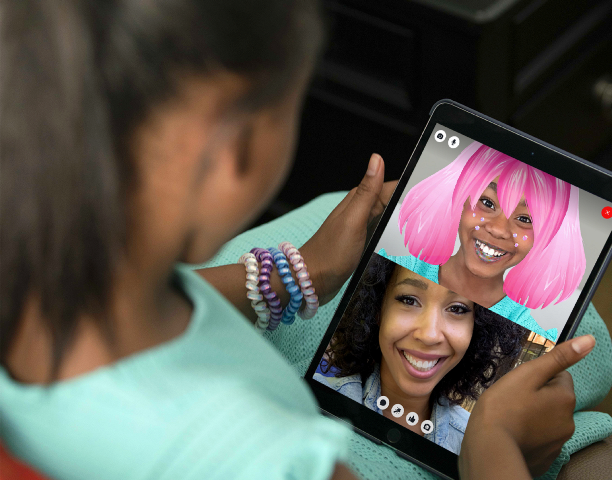
Facebook is rolling out Messenger Kids, a video chat and messaging app that helps children connect with friends and family in a fun, parent-controlled space.

Available to download from the Apple App and Google Play Stores, Messenger Kids has been designed for children between the ages of 6 to 12 years, with the app including two new features aimed at helping kids connect with their friends and family.
Helping to shape the Messenger Kids app, Facebook has worked closely with Youth Advisors over the years, made up of experts in online safety, child development and media. Ahead of its launch, Facebook also consulted with child safety advocates and educators across Africa to ensure that its providing a service that balances parental control with features that help kids learn how to connect responsibly online.
Messenger Kids is made for Kids but controlled by parents, the app is full of features for kids to connect with the people they love. Once their account is set up by a parent, kids can start a one-on-one or group video chat. The home screen shows them at a glance who they are connected to, and when those contacts are online. Some fun features available in the app, include:
- Playful masks, emojis and sound effects bring conversations to life.
- In addition to video chat, kids can send photos, videos or text messages to their parent-approved friends and adult relatives, who will receive the messages via their regular Messenger app.
- A library of kid-appropriate and specially chosen GIFs, frames, stickers, masks and drawing tools to let them decorate content and express their personalities.
Commenting on the launch, Kojo Boakye, Facebook Public Policy Director, Africa said: “We know that parents are turning to technology more than ever to help their kids connect with friends and family online. With privacy, security and parental control at the heart of the app, Messenger Kids provides a safe, fun space, controlled by parents to do exactly that.”
Safety expert Evelyn Kasina, Family IT Consultant, Eveminet, added: “It is our responsibility to ensure online safety for our children. The greatest sign of success is when our children display responsible independence during their online interaction. The launch of Facebook Messenger Kids is an amazing stride toward child online safety because our young children will enjoy and participate on social media on child developed platforms that have safety parameters to keep them safe.”
Through the Parent Dashboard, parents can control and monitor their child’s activity enabling them to:
- Monitor recent contacts, chat history, and reported and blocked contacts: including who your child is chatting with, whether they are video chatting or sending messages and how frequently those conversations happened over the past 30 days. You’ll also see a list of the contacts your child has blocked and/or unblocked, if they have reported any messages as well as any contacts they’ve reported and the reason for their action. Parents will continue to be notified via Messenger if their child blocks or reports someone.
- See a log of images and videos in chats: See the most recent photos and videos your child has sent and received in their inbox. If you believe an image or video is not appropriate for your child, you can remove it from your child’s message thread and report it.
- Enable Supervised Friending: This feature will enable parents to choose to allow their kids to also accept, reject, add or remove contacts, while maintaining the ability to override any new contact approvals from the Parent Dashboard. When a kid takes a friending action, parents will be notified through Messenger and can override any new connections made by going to the Parent Dashboard, where they will also be able to see a log of recent activities.
- Remote Device Logout: See all devices where your child is logged in to Messenger Kids and log out of the app on any device through the Parent Dashboard
- Download your child’s information: Request a copy of your child’s Messenger Kids information, similar to how you can download your own information within the Facebook app. The download will include a list of your child’s contacts as well as the messages, images and videos they have sent and received. Your child will be notified through the Messenger Kids app when you request this information.
More Information on Messenger Kids
- There are no ads in Messenger Kids and your child’s information isn’t used for ads.
- It is free to download and there are no in-app purchases.
- Messenger Kids is also designed to be compliant with the Children’s Online Privacy and Protection Act (COPPA).
- Facebook continues to work with parents, safety and security experts to improve Messenger Kids and have also announced new ways to help parents connect kids with their friends.


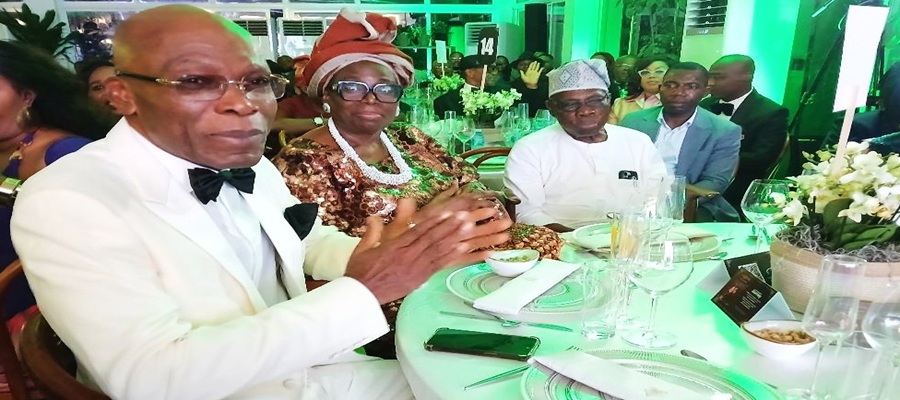
African statesman and former Nigeria President, Chief Olusegun Obasanjo, on Sunday night, joined several distinguished Nigerians including Mr Sam Amuka, media icon and Publisher of Vanguard newspaper, to pray for Leo Stan Ekeh, Chairman of Zinox Group, on his 70th birthday.

R-L President Olusegun Obasanjo, his wife Chief Mrs Bola Obasanjo and Mr. Leo Stan Ekeh at the event
Obasanjo who graced the thanksgiving meeting with his wife among other dignitaries prayed for more years on earth for Ekeh, whom he described as an “achiever and a very kind man who deserves to be celebrated.” The meeting which held in Ekeh’s residence was organised by his wife and children with opening prayer said by Reverend Father Francis Ike, of the Church of Assumption Falomo, Ikoyi.
Obasanjo who was President of Nigeria from 1999 to 2007 described Ekeh as “one of the people who made it possible for people to say the good things they say about me and about my period in government.”
President Obasanjo who never hid his admiration and love for Ekeh showered praises on the tech billionaire for taking advantage of the opportunities he created during his eight years as President.
He said: “Leo Stan Ekeh is a very kind man, an achiever. People have been celebrating you but I particularly have to celebrate you because of what you mean to me. Wherever I go in Nigeria and outside Nigeria, people say to me, you did this and that especially in enhancing both local and foreign investments. An African President, five months ago, even invited me to his country to show him how I was able to create many billionaires in Nigeria during my tenure.
“I celebrate Leo Stan because it is one thing to create an opportunity, it is another thing to find people who will even see that as opportunity and take advantage of it and achieve success with those opportunities. Leo Stan is one of the people who made it possible for people to say the good things they say about me and about my period in government.
“That’s why I have to join your family and every other person in identifying those qualities in you that made you a great achiever that you have been. The lesson for all of us is that in spite of the hardship, there are still opportunities. The challenge is how to identify those opportunities and take advantage of them and individually and collectively turn our poverty into prosperity just as Leo Stan has done.”
Obasanjo while thanking God for the gift of long life told Ekeh: “Today, you are celebrating 70 and I am here with you at your invitation. You will celebrate 80, whether you invite me or not, I will be there. You will celebrate 90, you will celebrate 100 and I don’t pray to be there,” he said wittily, eliciting laughter from guests.
Aside Obasanjo and Amuka, others who joined in honouring Ekeh were former Lagos state governor, Babatunde Raji Fashola and his wife, former INEC Chairman, Professor Maurice Iwu and his wife, Chairman of MTN, Dr. Ernest Ndukwe and his wife; Mr. Atedo Peterside, Founder of Stanbic IBTC Bank and his wife; Chairman of Fidelity Bank, Mrs Amaka Onwughalu; Managing Director Fidelity Bank, Dr. Nneka Onyeali-Ikpe; Mr. Udoma Udo-Udoma, Chairman Seplat Energy and his wife; secondary school mates of Ekeh including Charles Oputa (Charly Boy) who came with his wife; Leo Stan’s elder brother HRM Eze George Ekeh (aka Saint George), the traditional ruler Ishi Ubomiri Autonomous Community in Imo state who performed the traditional rites to usher Leo Stan into the traditional club of Elders of Ubomiri; representatives of multinationals with whom he has partnered all through the years; among other distinguished Nigerians and foreigners.
Ekeh in his response thanked Obasanjo for adopting him as his son and trusting him. He attributed his success to the prayers and blessings of Obasanjo, describing him as the President who made most of the billionaires in Nigeria.
The Zinox boss who recalled his little beginning as a mass servant and chorister, said he chose his path early in life, refusing to drink alcohol and smoke cigarette, and keeping to it till this day.
“I am a promoter of trust economy and I believe that trust must define everything you do if you want to succeed,” he said.
He recalled how he woke his parents one night to tell them he was going to start a tech business which sounded strange to them because technology was non-existent in his state at that time.
He acknowledged the role of his wife in his life. “My wife is my strength. I was very clear I was going to marry an intelligent woman. My wife ticked all the boxes for me,” he told the audience.
“I started my business with my school fees and I have been able to build myself and my companies as collateral. People trust me and trust my companies because I was intentional about building trust and integrity in all we do,” he said.
News
NITDA Urges Stronger State Partnerships as Key to Digital Economy Goals @ South-South Stakeholders Forum

Kashifu Inuwa, Director General of the National Information Technology Development Agency (NITDA), has underscored the importance of deeper collaboration with state governments, saying sub-national alignment is essential to achieving Nigeria’s digital economy objectives.

He spoke online at the South-South Regional ICT Stakeholders Forum, which brought together policymakers, technology leaders, civil society organisations and ecosystem players to chart a path for accelerated digital development across the region.
The NITDA boss noted that while the Agency has made notable progress at the federal level, the real measure of success lies in how effectively national policies are translated into actionable programmes within states. According to him, digital transformation can only be sustained when states domesticate policies and establish clear implementation structures.
He referenced key frameworks, including the Nigerian Startup Act and the National Digital Literacy Framework, observing that although several states have created ICT-focused ministries and agencies, some still lack comprehensive enabling laws and structured governance mechanisms. NITDA, he assured, remains ready to provide technical guidance to states seeking to strengthen their digital ecosystems.
Digital literacy, he stressed, remains central to inclusive growth. Under the National Digital Literacy Framework, NITDA aims to achieve 95 per cent digital literacy nationwide by 2030. Working with the Federal Ministry of Education, digital skills have been embedded in school curricula, with teachers across the country undergoing capacity-building programmes to support technology-driven learning. States in the South-South were encouraged to ensure that educators in both public and private schools fully participate in the initiative.
The DG also highlighted ongoing efforts to upskill public servants. In collaboration with the Office of the Head of the Civil Service of the Federation, more than 54,000 federal civil servants have enrolled in structured digital skills training. Similar programmes, he said, are being considered for rollout across South-South states to enhance governance efficiency and public service delivery.
On partnerships, Inuwa pointed to collaborations with Cisco, which provide access to self-paced digital courses, and the National Youth Service Corps (NYSC), whose digital champions conduct community-based sensitisation in markets, worship centres, motor parks and among senior citizens. He urged stakeholders in the zone to strengthen coordination and co-create practical initiatives to expand digital inclusion.
In his contribution, the Commissioner for Science, Technology and Innovation in Cross River State, Dr Justin Atiang Beshel, reaffirmed the state’s resolve to leverage technology for sustainable development.
He said Cross River is prioritising broadband expansion and digital infrastructure as the backbone of e-government services, skills development, innovation and job creation. Improved connectivity, he noted, would unlock economic opportunities and enhance service delivery statewide.
Despite challenges such as limited rural connectivity and funding constraints for large-scale ICT projects, the Commissioner expressed optimism about strategic partnerships. He described collaboration with NITDA and private sector players as critical to narrowing the digital divide, boosting cybersecurity resilience and ensuring inclusive participation in the digital economy.
Beshel maintained that sustained investment and coordinated action would position Cross River as a competitive digital hub within Nigeria’s growing technology landscape.

Board and management of Communication Week Media Limited, publishers of Nigeria CommunicationsWeek, at the weekend announced that this year’s Africa’s Beacon of ICT Merit and Leadership lecture will focus on Impact of AI and IoT on business operational efficiency.

Africa’s Beacon of ICT Merit and Leadership lecture, widely regarded as the most prestigious annual event available in the ICT industry in Nigeria is in its 17th year.
The lecture holds on May 30, 2026 at Oriental Hotel Lekki, Lagos, according Ken Nwogbo, editor-in-chief of
Nigeria CommunicationsWeek the organizers of the event.
He said that this year’s event “is digital transformation edition” to recognise and celebrate organizations and individuals in the ICT industry that have impacted in digital transformation of the economy.
“Most of these organizations and individuals have consistently being voted by our readers as leaders in their areas of operations and we have decided to reward them in this special edition, tag: ‘Digital Transformation Edition 2026’ he said,”.
He added that, Digital transformation, driven by AI and IoT, will fundamentally boosts business operational efficiency by automating complex tasks, enabling real-time data analysis, and reducing costs.
“IoT technology optimizes resources, predict maintenance needs, and enhance decision- making, allowing companies to streamline workflows and improve productivity across sectors like manufacturing and logistics.
“It is an emerging technology that has impacted lifestyles and has changed the way we think and act, and the way we interact with each other.
It has also changed the way we work as it enables very large-scale monitoring, control, and automation, and has impacted the digital transformation of organizations in different industries”, he said.
According to him, “the transformative power of Artificial Intelligence exists as a bringing force in organizational communication. AI tools perform repetitive jobs, deliver simultaneous translations, and register team communication patterns, which lead to better understanding of group interactions. AI chatbots help manage customer support inquiries thus enabling staff members to dedicate their efforts toward complex work activities”.
The Africa’s Beacon of ICT Merit and Leadership Distinguished (ABoICT Lecture 2026) is designed to explore efforts to put Nigeria on the global Information and Communications Technologies map.
The lecture series however is reserved for distinguished achievers in the ICT sector.
Past lecturers included Dr. Ernest Ndukwe, then executive vice chairman, Nigeria Communications Commission (NCC); Uche Orji, managing director/chief executive officer, Nigeria Sovereign Investment Authority (NSIA); Biodu Omoniyi, Managing Director/CEO, VDT Communications; Ayotunde Coker, former Managing Director, Rack Centre Limited; Prof. Adewale Obadare, chief visionary officer, Digital Encode; Dr. Oluseyi Akindeinde, founder,
Hyperspace & NeuraL AI and John Obaro, CEO and founder of Systemspecs; Prof. Isa Pantanmi, former minister of Communications and Digital Economy; among others.

Obasanjo, Vanguard’s Amuka Lead Prayers for Zinox Chief Leo Stan Ekeh @70

Retiree Slams N50m Suit against over Alleged Privacy Breach, Unauthorized Accounts

Court Fines Lafarge Africa N2m for Using Ex-Employee’s Name, Details Online after Dismissal

GSMA Launches Innovation Fund to Accelerate Green Transition Through Mobile Technology

NITDA Urges Stronger State Partnerships as Key to Digital Economy Goals @ South-South Stakeholders Forum
Nigeria’s 9 Top FinTech Firms Valued at $10.6Bn in January 2026

CBN Upgrades Licences of Opay, Moniepoint, Kuda, Palmpay, Paga to National Status

NITDA, NBC Explore Strategic Collaboration on Digital Transformation, Media Regulation

Kaspersky Launches OT Calculator to Align Cybersecurity Investments with Business Goals

Accidental Billionaire Opts for Jail Instead of Returning Money Credited Him by Mistake




 News3 days ago
ABoICT Lecture 2026 to Focus on Impact of AI, IoT on Business Operational Efficiency

 General News3 days ago
Leo Stan @ 70: Blessed and Bruised by Country, Eyes Next Disruption

 General News2 days ago
Zinox Technologies and TD Africa Forge Strategic Partnership to Revolutionize African Tech Ecosystem

 Telecom2 days ago
Uwaje Pays Tribute to Leo Stan Ekeh @70

 E-Financial2 days ago
$214Bn Missing, Institutions Silent: Is Accountability Dead in Nigeria?

 Telecom2 days ago
Cyber Immunity Emerges as Shield for Nigerians Amid Rising Scams

 General News2 days ago
NITDA, Abia Partner on Enterprise Architecture Reform

 E-Business2 days ago
Interswitch Partners Abia to Digitise Public Hospitals