

General News
FG Creates 1.6m Jobs in One Year

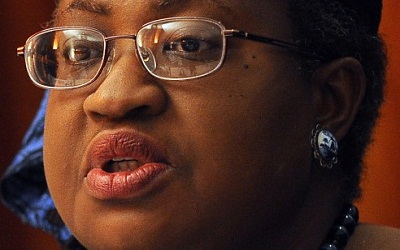
Dr. Ngozi Okonjo-Iweala, minister of Finance, has said that the Federal Government has created 1.6 million jobs in the past 12 months.
Okonjo-Iweala disclosed this during her presentation at an interactive session with the private sector, where she said that a total of 432,021 jobs were created during the first quarter of the year, adding that this figure represented about 11.69 per cent increase over the number of jobs created during the fourth quarter of 2012.
She stated, “We have created 1.6 million jobs in the past 12 months. 431,021 jobs were created in the first quarter of 2013, showing an upward trend in job creation and an increase of 11.69 per cent from the fourth quarter of 2012.”
Okonjo-Iweala said a key government programme focused on direct job creation was the Community Service Scheme, which aims to engage 320,000 youths in labour intensive work such as construction and rehabilitation of social and economic infrastructure.
According to her presentation, about 120,000 people have been employed so far under the scheme, which is being anchored by the Subsidy Re-Investment Programme.
She also listed the Graduate Internship Scheme, which aims to attach 50,000 graduates to competent firms to enhance skills development towards employability. She noted that 4,000 graduates had emerged so far under the scheme.
According to Okonjo-Iweala, who spoke on the “Economy’s macroeconomic performance for 2013 and the outlook for 2014,” the Gross Domestic Product growth is expected at 6.75 per cent at the end of 2013, up from 6.61 per cent in 2012.
She recalled that the GDP growth in the first three quarters of 2013 stood at 6.56 per cent, 6.18 per cent and 6.81 per cent respectively.
The minister noted that economic growth during the year had continued to be driven by the non-oil sector.
However, she lamented that the rate of economic growth as well as the quality of growth had been very slow, underscoring the need for improvement.
“Nigeria needs to grow faster in the job-creating sectors at between nine to10 per cent per annum to create the number of jobs needed to substantially reduce poverty,” she said, adding, “GDP rebasing, which is currently in progress, could increase GDP substantially but its impact on growth rates is not yet certain.”
She further noted, “Economic growth needs to be more inclusive as inequality is high and rising in Nigeria; this needs to be reversed.”
In order to achieve this, the minister said the Federal Government would in 2014 make efforts to ‘remove structural bottlenecks’ in sectors as power, ports, rail, roads, communication technology (broadband) and aviation.
Also, there will be an improvement in the business climate and efforts will be made to reduce bureaucracy and fight corruption.
She gave the assurance that the government would in 2014 enact supportive polices for sectoral growth in agriculture, housing, manufacturing, creative industries, solid minerals, oil and gas and petrochemicals, among others.
“We will also build social safety nets for vulnerable women, children, and the disabled to address regional disparities,” she added.



Federal government has taken a significant step to enhance the integrity of Nigeria’s education system by deploying the Nigeria Education Repository and Data Bank (NERD), a national digital platform that secures, digitizes, and authenticates academic records across all tertiary institutions.

Forgery
Maruf Tunji Alausa, minister of Education, unveiled the initiative during the National Capacity Building Programme for institutional representatives, underscoring NERD’s importance as a critical national infrastructure for safeguarding academic credentials and strengthening education data governance.
“NERD is essential to our reform agenda under the leadership of President Bola Ahmed Tinubu,” Alausa stated.
“It ensures reliable digital preservation and verification of academic records, which is vital for maintaining the credibility of our education system.”
According to Alausa, in the brief span of four months since its implementation, NERD has made remarkable progress, successfully preserving nearly 100,000 digital student submissions and integrating over 250 tertiary institutions.
The platform has also enrolled more than 133,000 students and 6,800 lecturers, significantly enhancing the academic record-keeping process.
Alausa highlighted that the initiative is a proactive measure against certificate fraud, noting recent investigations that revealed cases involving fraudulent foreign credentials procured from unaccredited institutions.
This underscores the urgency of protecting the integrity of academic qualifications in Nigeria.
Furthermore, the Ministry announced that participation in the NERD system will soon become a prerequisite for either participation in or exemption from the National Youth Service Corps scheme, reinforcing the initiative’s impact on the educational landscape.
The Federal Government remains committed to building a transparent, digitally verifiable, and globally respected education system, ensuring that the integrity of academic records is upheld across the nation.
General News
Goodnews Naija Launches ‘Building in Nigeria’ Series on Entrepreneurs, Real Sector Builders


Goodnews Naija Podcast, a digital platform dedicated to highlighting positive, uplifting stories and innovations from Nigeria, has launched Building in Nigeria, a documentary-style series aimed at spotlighting entrepreneurs and businesses contributing to economic activity and job creation across the country.

The series explores the realities of running and scaling businesses in Nigeria, featuring founders, operators, and innovators across sectors including manufacturing, services, agriculture, and sustainability.
Through interviews and on-ground visuals from workshops, markets, factories, and small offices, the programme examines the operational discipline, challenges, and execution processes required to build viable enterprises in a complex business environment.
Damilola Kehinde, host of the series, said the programme focuses on entrepreneurs whose contributions to economic progress often receive limited visibility.
According to the producer, Memunat Oladepo, the series seeks to move beyond surface narratives by providing practical insights into how Nigerian businesses are started, sustained, and grown despite infrastructure gaps, funding constraints, and market volatility.
The organisers said Building in Nigeria is targeted at entrepreneurs, investors, and policy-interested audiences seeking grounded perspectives on enterprise development in the country.
The first season is scheduled to premiere on March 11, 2026, across Goodnews Naija’s YouTube channel, social media platforms, and podcast platforms, where it recorded over 24 hours of viewership within the first day of release.


Federal Competition and Consumer Protection Commission (FCCPC) has warned Lagos traders against enforcing the unlawful “no return, no refund” policy, declaring it illegal under the Federal Competition and Consumer Protection Act (FCCPA) 2018.

FCCPC
Dr Olubunmi Otti, FCCPC Southwest Zonal Coordinator, issued the directive during the inauguration of new executives of the Phone and Allied Products Dealers Association (PAPDA) on Wednesday, stressing consumer education as the strongest defence against market exploitation.
“There is no such thing as ‘no return, no refund’. If a product does not fulfil its intended purpose, the consumer has the right to return it,” Otti declared, adding the commission mediates complaints for refunds, replacements, or exchanges.
Non-compliant businesses face fines, product withdrawals, seizures, prosecutions, or shutdowns. Otti noted thousands of monthly complaints via the FCCPC portal in the Southwest alone, with sensitisation expanding to Alaba Market and Trade Fair Complex.
She urged consumers: “When your rights are violated, do not just say, ‘You give it to God.’ Bring your complaints to the FCCPC. The law empowers us to protect you,” while calling for traders’ collective responsibility to ensure quality products and services.

Police Says Victims Enable Cyber Attacks Out of Ignorance

Bank Accuses Magistrate, Lawyer of Using Fake Order to Steal N3.5m from Account

FG Launches NERD to Combat Certificate Fraud

NCDC Issues Public Advisory on Cerebrospinal Meningitis

Goodnews Naija Launches ‘Building in Nigeria’ Series on Entrepreneurs, Real Sector Builders

Dr. Cairo Ojougboh Foundation Bolsters Nigeria’s Education Drive with ₦2.7m Student Support

Kaspersky Brings more Transparency to Threat Detection with New Hunt Hub

PwC Reveals AI Scaling Gap Slows Africa’s Digital Transformation

Kaspersky Discovers New Phishing Campaign Exploiting Google Tasks Notifications to Steal Corporate Credentials

esentry 2025 Report Shows Healthcare, Financial Services and Telecoms as Staging Grounds for Increased Cyberattacks in Africa




 E-Financial3 days ago
Nigeria’s VAT Jumps 34%, CIT Soars 48% to ₦14trn in 9M’25 – NBS

 Telecom3 days ago
FG Approves GIS-enabled Digital Postcode to Tackle Logistics Gaps, Boost E-commerce
 E-Business3 days ago
Firm Enhances its Security Awareness Platform with SCORM and PDF Support

 E-Financial3 days ago
Binance Cuts Illicit Activity Exposure by 96%, Leads Global Crypto Compliance Push

 E-Financial2 days ago
Senate Targets Fintech Overreach, Vows Ponzi Crackdown After ₦1.3trn CBEX Scam

 E-Financial3 days ago
NAICOM Signs MoU with BPP to Deepen Insurance Compliance in Public Procurement

 General News2 days ago
FCCPC Bans Lagos ‘No Refund’ Policy, Vows Fines and Shutdowns for Traders

 Telecom3 days ago
GSMA, African Operators, Others to Launch Low-cost 4G Devices