

Telecom
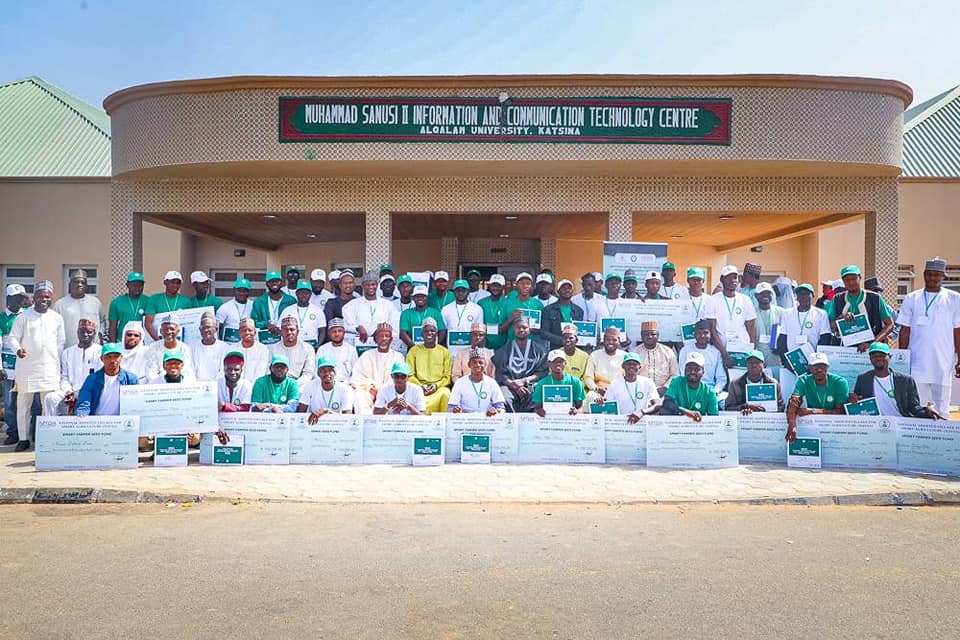
FG Empowers Smart Farmers in Katsina, Aims to Create 5 Million Job Opportunities




The recent escalation in the US-Israel conflict with Iran has delivered a sharp reminder of Nigeria’s economic vulnerability. As oil prices surged past $100 per barrel and fuel costs climbed by 35% at Nigerian pumps, a troubling paradox emerged: Nigeria, a major crude oil producer with Africa’s largest privately-owned refinery now operational, still found itself buffeted by global energy shocks originating thousands of miles away.

Zinox
The closure of the Strait of Hormuz and resulting disruptions to global energy markets exposed the deeper structural challenge facing Nigeria’s economy. Despite domestic crude production and the operational Dangote Refinery, Nigeria has struggled with rising inflation, which reached approximately 27% in 2025. The crisis illuminated an uncomfortable truth: decades of import dependency have left Nigeria’s economy precariously exposed to external shocks, even in sectors where the country possesses natural advantages.
This vulnerability extends beyond energy. Nigeria’s technology sector offers a particularly instructive case study in the costs of import reliance, and the transformative potential of local capacity as the pathway to economic stability and technological sovereignty.
Against this backdrop, Zinox Technologies stands as a compelling counternarrative. Founded in 2001 by technology entrepreneur Leo Stan Ekeh, Zinox operates West Africa’s only computerized digital assembly plant. As Nigeria’s first indigenous computer manufacturer, Zinox demonstrates what becomes possible when vision, investment, and commitment to local capacity converge.
The company’s reach extends beyond traditional computing. Zinox’s innovation spans renewable energy through iPower and home electronics with iTEC, addressing Nigeria’s chronic power challenges with locally-assembled solar solutions and backup systems designed for Nigerian conditions. This diversification reflects sophisticated understanding: true technological sovereignty requires integrated capabilities.
Zinox’s journey offers a clear case study in how indigenous companies can drive transformation. By focusing on local assembly and manufacturing of computer hardware and digital devices, the company has contributed to building a domestic technology ecosystem that supports government institutions, educational systems, and private enterprises. This approach not only reduces reliance on foreign imports but also creates jobs, transfers knowledge, and strengthens national capacity.
The implications are significant. Every locally assembled device represents a step away from foreign exchange exposure. It also signals a shift in mindset — from consumption to production. In a country where demand for technology continues to rise, especially with the acceleration of digital adoption, the importance of local manufacturing cannot be overstated.
Beyond economics, there is also a strategic dimension. Technology is no longer just a commercial tool; it is a defense tool and a national asset. Countries that control their technology supply chains are better positioned to innovate, secure their data, and compete globally. In this context, companies like Zinox are not merely businesses; they are enablers of national development.
Furthermore, local capacity development has a multiplier effect. It stimulates ancillary industries such as logistics, retail, maintenance, and technical services. It also fosters entrepreneurship, as more Nigerians gain access to affordable and reliable technology tools needed to participate in the digital economy.
Yet, while progress has been made, there is still work to be done. Scaling local manufacturing requires sustained policy support, infrastructure investment, and a deliberate focus on skills development. It also calls for stronger collaboration between the public and private sectors to create an environment where indigenous innovation can thrive.
Encouragingly, the momentum is building. There is a growing recognition that Nigeria must move beyond being a consumer market to becoming a production hub. This shift is not only necessary, it is urgent. Global uncertainties will continue to test economies, and only those with strong internal capabilities will remain resilient.
The current global crisis offers clarity. If the Strait of Hormuz is not reopened or supply chains to imports are fractured, only countries with strong domestic manufacturing capacity will weather the storm. Those dependent on imports suffer disproportionately.
The story of Zinox Technologies underscores what is possible. It shows that with the right mix of vision and execution, Nigeria can chart a new course, one defined by self-reliance, innovation, and sustainable growth. As the country navigates an increasingly complex global landscape, the message is clear: the future belongs to economies that build, not just buy.


Bharti Airtel has announced a major milestone in its global operations, crossing 650 million mobile subscribers worldwide, a scale that now positions the company as the second-largest telecommunications operator on the planet by customer base.

Crossing this threshold reflects a network of immense scale, the capacity to reach customers across diverse markets with consistent quality, and the ability to deliver experiences shaped by sustained innovation.
In Nigeria, Airtel has continued to scale infrastructure at a pace unmatched in its recent history. Over the past three years, the company has increased its national site count from just above 13,000 to nearly 17,200 sites, including more than 1,560 added in the last twelve months. This expansion deepens capacity in high-demand corridors and extends high-speed coverage to previously underserved regions.
The latest industry data from the Nigerian Communications Commission (NCC) underscores the significance of this growth. As of December 2025, Nigeria recorded 145,141 base stations across 2G, 3G, 4G and 5G layers. Of this national infrastructure, Airtel accounts for 46,918 base-station layers, reflecting its substantial contribution to the country’s radio access network and its push to absorb rising data consumption.
Nearly 99 percent of Airtel Nigeria’s sites are now 4G-enabled, positioning the operator as one of the few with a near-ubiquitous high-speed broadband footprint. Thousands of sites have been upgraded for capacity in the past year alone, enabling improved speeds and more stable performance during peak usage.
That expansion underpins Nigeria’s rising internet adoption. According to the latest regulator figures, Nigeria’s internet penetration recently climbed above 50%, with Airtel recording among the largest monthly increases in new internet subscribers, driven by network upgrades across states and rural corridors.
Strategic Connectivity and Redundancy
Airtel is also tackling a critical infrastructure challenge for the Nigerian digital economy: reliance on a single international internet gateway. The company is advancing plans for its second submarine cable internet breakout point at Kwa Ibo in Akwa Ibom State, early in the 2Africa cable system rollout, to provide faster and more resilient national connectivity across regions. This significant investment aligns with global best practices in network diversity and redundancy, ensuring a more stable digital experience for consumers and enterprises alike.
Digital Finance at Scale: SmartCash
Airtel’s digital finance arm, SmartCash, has gained traction in Nigeria’s competitive mobile money ecosystem, now serving over 3 million active users. The platform is supported by an expansive agent network and digital services that lower barriers for everyday financial transactions and savings.
Outstanding Human Touch: Retail Reach
Across Nigeria, Airtel’s retail distribution network stands as one of the sector’s most extensive, with approximately 4,000 exclusive outlets bringing services, support, and products closer to customers in small towns, communities, and high-traffic urban hubs. That footprint drives both access and engagement in a market where localized presence remains a competitive differentiator.
As Nigeria’s digital economy continues to evolve, Airtel is committed to sustained innovation — from expanded fibre backbones and advanced mobile broadband to future-ready services that include satellite-enabled solutions and enterprise-grade digital platforms. These efforts help ensure that connectivity, commerce, and creativity thrive across Nigeria and beyond.

Nigerian Communications Commission (NCC) has said that compensation of subscribers for poor service quality, such as persistent network outages or failed calls is automatic.

This initiative aims to ensure fairness by mandating that operators provide automatic compensation, such as airtime credits, for failing to meet regulatory Quality of Service Key Performance Indicators (KPIs).
According to the NCC, operators are required and mandated to identify affected subscribers and provide compensation directly.
In a framework for compensation of consumers published on its website, NCC said that it has directed Mobile Network Operators (MNOs) to compensate subscribers affected by prolonged or repeated poor quality of service experience within specific Local Government Areas where operators fail to meet regulatory Quality of Service Key Performance Indicators (KPIs).
The NCC also stated that the directive does not replace existing consumer protection mechanisms.
The NCC, said the directive adds a direct compensation mechanism for affected subscribers and aligns with measures set in existing legislations such as the Consumer Code of Practice Regulations 2024 and the Quality of Service Regulations 2024.
This directive applies to only Mobile Network Operators licensed and operating in Nigeria that have failed to meet their Key Performance Indicators on Quality of Service. For Internet Service Providers (ISPs) operating in Nigeria, a compensation framework is already in place.
To be eligible to receive compensation
. You experienced poor network service in an affected Local Government Area; and
- You made at least one outgoing revenue generating event (billed call, SMS, or data session) during the relevant period.
The compensation covers service failures affecting voice, data, or SMS services.
Operators are required and mandated by existing regulations to monitor their network performance across locations and service disruptions against Quality of Service KPIs.
This enables them to identify affected subscribers without the need for individual complaints.
Only service failures that fall below the defined thresholds set by the Quality of Service Regulations issued by the NCC will qualify for compensation.
Short, isolated interruptions and immediately remedied interruptions may not qualify
Compensation will be provided in the form of airtime credits.
This airtime credit will not have utilisation restrictions, and subscribers will be able to use it for voice calls, USSD sessions, data subscriptions, etc on the operators’ network.

From Import Dependency to Local Capacity: Nigeria’s Tech Manufacturing Journey

NIBSS Says 28 Percent of Nigerians have Registered for BVN

NITDA DG Urges Stronger Collaboration to Drive Nigeria’s Digital Economy

Ogun Set for Direct London Flights as Gateway Airport Gains Momentum

Airtel Becomes World’s Second Largest Telco as Global Customer Base Surpasses 650 Million

Spotify’s Loud & Clear Report Reveals Over ₦60Bn Revenue for Nigerian Artists in 2025

Madonna University Taps Tech Guru Adote for Strategic Board Role

China Threatens to Shut Nigeria’s Satellite Over $11.44m Unpaid Debt

Healthcare Under Attack: Why Cybersecurity is Now Critical Care

Why JustMarkets Is a Strong Choice for Gold Trading




 E-Business2 days ago
FG to Strengthen Cybersecurity Coordination as NDPC Probes Alleged Data Breach

 Telecom2 days ago
Compensation for Poor Service Quality is Automatic- NCC

 E-Business2 days ago
Offset Communications Slams N50m Suit against Qore Technologies for Alleged Copyright Infringement

 General News2 days ago
Tinubu Approves N3.3 Trillion Payment Plan to Boost Power Supply

 Telecom2 days ago
FG Moves to Strengthen Cybersecurity Coordination as NDPC Probes Alleged Data Breach

 News2 days ago
Beware of Fake Cerelac Products – NAFDAC

 General News2 days ago
SERAP Sues CCB over Electoral Act, New Tax law

 E-Business22 hours ago
Nigeria Cyberattacks: Stronger Collaboration as a Panacea