

News
FG May Slash Import Tariff on Cars


Reprieve appears underway for car dealers and buyers following plans by the Federal Government to review its import tariff on vehicles, according to Punch newspapers
This is expected to bring down the cost of new vehicles and increase the tempo of business in the nation’s automotive sector.
According to Punch, sources at the Federal Ministry of Industry, Trade and Investment gave the indication on Sunday that the current 70 per cent tariff on imported cars could get a downward review as a way to force down the prices of vehicles.
Although the National Automotive Design and Development Council, an agency under the ministry, said on Friday that 14 out of the 25 registered automakers had started assembling vehicles in the country, Nigerians have yet to enjoy the expected benefits of the new policy as the prices of vehicles are still high.
Even car dealers have had to adopt different strategies to encourage buyers and boost sales.
The sources, however, said the planned review, which is in tandem with the change mantra of the Muhammadu Buhari-led administration, should not be interpreted as an outright cancellation of the auto policy, which was announced in September 2013.
“It is likely to come in the form of a review of the import tariff on vehicles so as make it easy for people to buy new cars. The decision on the entire auto policy is expected to be part of the economic policy of the government, which will be unveiled as soon as the new ministers settle down,” one of the sources said.
Car prices were increased last year by about 60 per cent shortly after the import tariff went up from 22 per cent to 70 per cent, a situation, which made it difficult for many to buy new cars, just as fleet buyers such as corporate firms have had to cut down on the number of vehicles purchased.
The imposition of the new import tariff, which also affects imported used vehicles, according to the government, is to encourage local assembling/production of vehicles, with the attendant benefits of creating more jobs and boosting the nation’s economy.
A zero per cent was announced as tariff on imported vehicle components (Completely Knocked Down units) and auto assemblers are also allowed to bring in fully built vehicles at very low import tariff.
But some stakeholders, including major dealers such as Toyota Nigeria Limited, had complained about the timing of the policy and the seeming poor state of the needed infrastructural facilities for the sustenance of local assembly plants.
Mr. Oseme Oigiagbe, chairman of the automotive group, Lagos Chamber of Commerce and Industry, confirmed that the group had written to the Presidency and suggested a number of proposals on the implementation of the auto policy, and recently participated in some meeting sessions called by relevant government agencies/officials on the issue.
In an interview with our correspondent, he specifically called attention to the issue of unstable power supply and the commencement date for the new import tariff as contentious issues that needed to be urgently reviewed.
An auto expert and consultant, Dr. Oscar Odiboh, said the review of the tariff was expected, arguing that it was hurriedly put in place by the last regime and should, therefore, be suspended.
“The high tariff (on imported vehicles) should make itself necessary; it should not be forced down on the people. It should be suspended and introduced in phases – one to a five-year period,” he said.
Odiboh, who is the Managing Director, Newsletters Nigeria Limited, however, said the auto policy was a necessity for the development of the nation’s industry and the good of the economy.
“The project will take Nigeria from a lower stage to the next level and sit us among top economies of the world,” he stated.
But he warned that unless the implementation of the policy was made systemic and allowed to follow due process, it could derail the project.
He said, “Since this government says it has come to change things, it must change the policy. It is not a yam and beans policy. You must give people time.
“It requires certain basic things to be put in place. Power is necessary. There are other infrastructural facilities that will make the system run efficiently. Those things must be in place before enforcing the import tariff.”
Odiboh alleged that some firms had obtained the auto assembly plant licences to enable them to bring in fully built vehicles at low tariff and labelling those vehicles as being locally assembled.
But the Stallion Auto Group, currently assembling Nissan, Hyundai and Ashok Leyland brands of vehicles, and Dana Motors doing the Kia vehicles locally are optimistic that any review of the auto policy will not in any way affect their plants and business operations in Nigeria.
For instance, Mr. Parvir Sighn, managing director, Stallion NMN Limited, said, “As far as the group is concerned, we have no doubt that the government will sustain the policy. Anywhere in the world, the automobile industry is a high contributor to the Gross Domestic Product. It is also a significant employer of labour. The state of the auto development of a nation is a reflection of the development of that country.
“The policy will be sustained. There is no shortcut to it. You need a robust industry to support the high demand for vehicles in the country. The demand is there.”
Mr. Olawale Jimoh, spokesperson for Kia Motors Nigeria, said the company had in conjunction with its technical partners, Kia Motor Corporation, invested billions of naira in the local assembly plant and had in the process created jobs for Nigerians.
The government said the response of the automakers to the auto policy, particularly the call for the establishment of assembly plants in Nigeria, had been overwhelming.
Indeed, the NADDC said on Friday that the “response to the policy so far has exceeded our expectations.”
This must have prompted the Director-General of the NADDC, Mr. Aminu Jalal, to announce the suspension of licence issuance to new auto assembly plants.
He said the decision was taken to enable the council to set up some test centres that would “ensure that imported vehicles and components meet international safety and environmental standards.”
But the LCCI said the 70 per cent tariff on imported cars would bring about a higher transport cost.
The President, LCCI, Alhaji Remi Bello, said in a statement, “Vehicle ownership will be put further beyond the reach of the Nigerian middle class, especially in the face of poor credit access and high lending rates in the economy.”
He called for the development of ancillary industries for the production of batteries, glass, radiators, tyres and other vehicle components as well as affordable finance for the investors.
The LCCI president stated that the auto industry should be predicated on strong engineering infrastructure, including the production of flat sheets, foundries and fabrication of components needed in vehicle production.
When contacted, the Special Adviser to the President on Media, Mr. Femi Adesina, said he had no information on the auto policy, while the Special Assistant on Media to Vice President Yemi Osinbajo, Mr. Laolu Akande, promised to get back to our correspondent on the matter but never did up till the time of filing this report.



The National Information Technology Development Agency (NITDA) and the Corporate Affairs Commission (CAC) have initiated coordinated measures to strengthen cybersecurity following recent concerns affecting aspects of CAC’s digital systems.

Both agencies said they have activated response and assurance mechanisms in line with national cybersecurity frameworks to safeguard critical infrastructure and maintain service integrity.
NITDA reiterated that all Ministries, Departments, and Agencies (MDAs) must adopt proactive cybersecurity measures in compliance with the National Cybersecurity Policy and Strategy (NCPS) 2021.
The agency directed all MDAs to immediately review and reinforce their cybersecurity architecture to address emerging threats targeting government systems and sensitive data.
As part of the directive, MDAs are required to conduct comprehensive security assessments, remediate identified vulnerabilities, and strengthen access controls across critical platforms.
They are also expected to enhance data protection mechanisms, maintain effective backup and disaster recovery systems, and improve monitoring capabilities to detect and respond to suspicious activities.
In addition, there is the need for functional incident response frameworks, including prompt reporting of cybersecurity breaches for coordinated intervention.
Detailed cybersecurity guidelines have already been issued to MDAs for implementation as part of ongoing efforts to strengthen resilience across public sector digital infrastructure.
The measures are aimed at improving the overall security posture of government institutions and ensuring the continued protection of national digital assets.
NITDA reaffirmed its commitment to supporting government agencies in safeguarding digital systems and advancing cybersecurity best practices across the public sector.

The Nigeria Customs Service (NCS) has rolled out an artificial intelligence (AI) driven capacity-building programme to improve revenue generation and reconciliation across its operations.

The initiative, unveiled during a three-day training event in Abuja, aims to transition the agency toward data-driven administration as Nigeria seeks to boost non-oil revenue.
The adoption of AI will enable the service to better manage complex trade systems, detect anomalies and reduce revenue leakages, says Bashir Adewale Adeniyi, comptroller-general of the NCS.
AI-powered tools are already being integrated into risk management and cargo scanning systems to allow for real-time analysis of trade patterns.
The technology marks a transition from manual, reactive processes to predictive and automated decision-making, Adeniyi adds.
The programme also reflects a shift in the relationship between the NCS and the National Assembly toward a collaborative framework focused on transparency and efficiency.
The training is a strategic intervention to address persistent gaps in revenue management, says Kikelomo Adeola, deputy comptroller-general of the NCS.
AI applications, ranging from automated data analysis to predictive intelligence, will significantly enhance the integrity of public financial systems, she says.
The initiative aligns with broader efforts to modernise governance and improve compliance across revenue-generating agencies, says Bamidele Salam, chairman of the House Public Accounts Committee.
Lawmakers and fiscal authorities at the event underscored the urgency of adopting advanced technologies amid rising budgetary pressures.
This move comes as the federal government increases scrutiny over revenue leakages and audit discrepancies.
The partnership between the NCS and the legislature is critical to strengthening fiscal discipline and ensuring all revenue due to the federation is accurately captured, Adeniyi concludes.

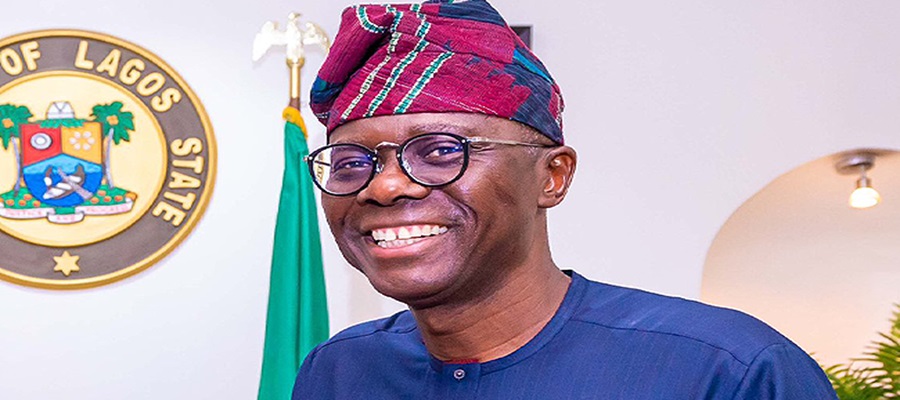
Lagos State Government has intensified efforts to strengthen its social protection framework with a fresh push to update the state’s Single Social Register.

Babajide Sanwo-Olu, Governor, Lagos
This was contained in a press statement on the government’s Facebook page on Wednesday.
The initiative, led by the Lagos State Ministry of Economic Planning and Budget, formed the focus of a strategic engagement held on Monday with Community-Based Targeting teams, local government coordinators and field enumerators across the state’s 57 Local Government Areas and Local Council Development Areas.
The meeting, themed “Closing the Gap: Accelerating Lagos State Single Social Register Update,” took place at the Radio Lagos Multipurpose Hall in Agidingbi, Ikeja.
Officials said the exercise is aimed at improving the accuracy and reach of the register, which serves as a critical tool for planning and delivering targeted social interventions, including financial support, healthcare and education services.
Speaking at the session, Ope George, commissioner for Economic Planning and Budget, commended field workers for their commitment while urging them to scale up their efforts.
He called on participants to be “more intentional by intensifying their commitment,” reaffirming the government’s resolve to “continuously strengthen and refine the Register to reflect evolving realities.”
Also speaking, Olayinka Ojo, permanent secretary in the ministry, described the register as central to effective governance and service delivery.
She said “it remains a cornerstone for effective planning and delivery of social intervention programmes,” adding that the ongoing update is designed to “further enhance data reliability, coordination, and service delivery outcomes.”
Ojo noted that sensitisation efforts would be expanded across all councils to ensure wider inclusion of residents, stating that “the advocacy and sensitisation will scale throughout the 57 LGAs and LCDA to give more to Lagos residents.”
According to the government, the updated register is expected to expand access to social protection programmes and improve the targeting of interventions for the most vulnerable populations.
The engagement also provided a platform for stakeholders to strengthen collaboration, improve data quality and reinforce transparency in grassroots data collection.
The state government reiterated its commitment to leveraging accurate data and partnerships to drive inclusive development, reduce vulnerability and improve living standards across Lagos.

FCCPC Denies Banning Airtime Borrowing, Blames Cartel for Misinformation

Court Suspends Enforcement of FCCPC’s Reform on Loan Apps

FG Rules Out Borrowing from IMF’s $50Bn Support Fund
CBN Introduces Overnight Financing Rate to Compete with US, EU

AfriStakes Unveils Platform to Connect SMEs with Investors

Canal+ to Cut Jobs as Part Sweeping Restructuring

NBC Boss Urges Content Ceators to Participate in DSO

NITDA Takes Over National Digital Architecture System

DLM SPV PLC Lists ₦9.00bn AAA-Rated Medium-Term Notes on FMDQ Exchange, Sets Benchmark in Corporate Bond Market

FG Shifting Focus to “Meaningful Connectivity” to Drive Inclusion – Minister




 News2 days ago
Lagos Targets Vulnerable Residents in Expanded Social Register

 E-Business2 days ago
CAC Urges Users to Secure Accounts after Cyberattack Scare

 E-Financial2 days ago
IMF Downgrades Nigeria’s GDP Outlook, Warns of Rising Risks

 E-Financial2 days ago
CBN Proposes 30-Member Mediation Panel for Loan Disputes

 E-Financial2 days ago
NDIC Seeks Court Nods to Liquidate 89 Failed Banks

 News2 days ago
Study Shows 38% of Northern Women Lack Access to Financial Services

 E-Financial2 days ago
SEC Sets N7.5Bn Capital Floor to Shield Investors in FTZE Public Offerings
 Telecom1 day ago
MTN Suspends Data, Airtime Borrowing Service over New FCCPC Lending Rules