

General News
FG Partners NASENI on Solar Panel Production


The Federal Government has expressed readiness to support the National Agency for Science Engineering Infrastructure (NASENI) in the production of solar panels for renewable energy.
Prof. Chinedu Nebo, Minister of Power, made this known when he inspected the NASENI solar panel manufacturing plant in Karshi, in Abuja.
Nebo said, “with the low level of electricity generation in the country which is mainly through gas fired turbines, the Federal Government is now focusing on solar to compliment it.
“We want to grow renewable energy resources utilization and deployment in Nigeria. With the low level of electricity generation and transmission in the country the only way to reach the rural communities is through renewable technology. This is one of the technologies that are far away from the national grid,’’ he said.
He said that with the launch of the Operation Light-up Rural Nigeria (OLRN), using renewable energy, it had become imperative to develop Nigerian solar manufacturing plants.
The minister said the Federal Government was ready to patronize products from the agency, especially for the OLRN.
“Patronising them will give them more encouragement to go into mass production and sales of the solar panels across the country. Solar is the only thing you can deploy to every part of Nigeria and get electricity. We have challenges with wind because the onshore wind velocity is not quite amenable with wind turbines and only select part of the country will use that,” he said.
He said that partnering with NASENI was part of government effort to ensure local content development in the power sector and the creation of jobs for Nigerian youths.
“I will say this is a learning visit and step to forge a relationship with NASENI solar company. It is also to ensure that we even train most of the technical people that will be going out there to deploy this technology in our rural communities. That is why the Ministry of Power will like to collaborate with NASENI in the deployment of solar power technology in the country,” he said.
The minister commended the professional and diligent methodology of quality control of the panels.
He stressed the need for NASENI to improve on its marketing and to always comply with international standard.
“We will be promoting NASENI; we will tell our partners that we prefer NASENI solar panels because Mr President is so concerned when it comes to local content development. Once the solar panels continue to be of international and best standard why go outside. We will patronise NASENI no doubt about that,’’ he said.
Earlier, Mr. Mohammed Haruna, NASENI executive vice chairman, said the 7.5mw pilot plant was already producing high quality solar panels that could be found in the market.
“The solar factory as you have seen is a demonstration plant and it was started as part of our research and development and we want to prove that it can work in Nigeria.
“So, it is a 7.5mw pilot plant and it is producing solar panels of high quality standard and the products are available in the market,’’ he said.
He said that the project started in May 2012 and became a Limited Liability Company in 2013 after surmounting so many challenges.
Nebo also visited a small hydropower installation at Gada village near Akwanga, Nasarawa State.
The small hydropower was built by NASENI engineers tapping into the River Mada.



Ola Olukoyede, chairman, Economic and Financial Crimes Commission (EFCC), has raised concerns over the growing threat of cryptocurrency-related crimes in the country.

Olukoyede made this known at the inauguration of the United Nations Office on Drugs and Crime (UNODC) Country Programme for Nigeria 2026–2030, on Friday in Abuja.
The EFCC boss revealed that the world lost more than 160 billion dollars to illicit transactions involving digital currencies in 2025.
Olukoyede highlighted the risks posed by cryptocurrencies such as Bitcoin.
He noted that criminal networks were increasingly exploiting technological advancements, global financial systems, and governance gaps to facilitate illicit activities.
“Last year, the world lost over 160 billion dollars to illicit transactions in cryptocurrencies.
”Tackling these challenges requires coordinated national responses, strong institutions and sustained intelligence-driven strategies,” he said.
He said that the UNODC programme came at a time when Nigeria and the global community were grappling with evolving threats from transnational organised crime, financial crimes, illicit financial flows, and cyber-enabled offences.
Olukoyede said the programme represented a strategic foundation for collective efforts to strengthen the rule of law.
This, he said, included enhancing the criminal justice system and protecting institutions and communities from violence, crime, and financial corruption.
He noted that the programme’s focus on combating corruption and illicit financial flows was particularly significant to the EFCC, given the enormous economic and social costs of such crimes on Nigeria.
“The imperative of sustained action to turn the tide cannot be overstated,” he said.
The EFCC chairman expressed pride in the commission’s longstanding partnership with UNODC, stating that the collaboration had strengthened institutional capacity and improved Nigeria’s response to economic and financial crimes.
He said the partnership had supported reforms and operational frameworks that enhanced the agency’s effectiveness in tackling corruption and related offences.
Olukoyede expressed optimism that the programme would further improve national security and safeguard the future of Nigerians through strengthened collaboration and shared operational experiences.
He stressed the need to continuously refine frameworks and ensure that Nigeria’s institutions and citizens remain at the centre of all collaborative efforts.
The EFCC boss commended UNODC for initiating the programme and reaffirmed the commission’s commitment to supporting its implementation to achieve measurable outcomes for Nigeria and the wider region.
Dr Musa Aliyu, SAN, chairman, Independent Corrupt Practices and Other Related Offences Commission (ICPC), in his remarks, called for stronger collaboration among institutions to address Nigeria’s growing security and corruption challenges.
Aliyu said Nigerian society was currently grappling with multiple social ills, stressing that no single agency could effectively tackle the challenges alone.
According to him, the country faces complex and interconnected threats, including violent extremism, organised crime, illicit financial flows, smuggling, and other serious offences.
“There is a common point of truth, Nigerian society is entangled with many ills, and no agency can fight them alone,” he said.
The ICPC boss noted that these challenges also posed significant threats to the nation’s criminal justice system, warning that no society could remain secure under such conditions.
He, however, expressed optimism that through strategic partnerships and collective efforts, Nigeria could overcome the challenges.
Aliyu described the UNODC Country Programme as timely and appropriate, given the scale and urgency of the issues confronting the nation.
He emphasised the importance of international support, noting that Nigeria’s progress in tackling crime and corruption had been strengthened by its collaboration with global partners, particularly the United Nations.
The ICPC chairman said the partnership between the commission and UNODC had been beneficial to Nigerian society, contributing to efforts aimed at strengthening institutions and improving governance.
He congratulated UNODC on what he described as a significant milestone and a “grand stride” in supporting Nigeria’s fight against crime and corruption.
Aliyu reaffirmed ICPC’s commitment to continued collaboration, assuring stakeholders of the commission’s readiness to work with UNODC and other partners toward national development.
“I assure you of our continued support and willingness to work together for the growth and betterment of Nigeria,” he said.
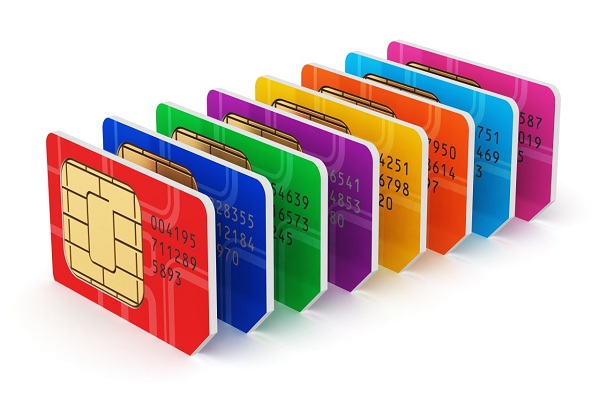
Nigerian Communications Commission (NCC) has unveiled plans to introduce a Telecoms Identity Risk Management System (TIRMS) platform to tackle SIM-related fraud, strengthen digital security and boost confidence in Nigeria’s digital economy.

Aminu Maida, executive vice chairman of the commission, disclosed this on Thursday in Abuja at a stakeholders’ consultative forum on the proposed platform and planned regulatory changes.
Maida, represented by Rimini Makama, executive commissioner, Stakeholder Management, said the Mobile Station International Subscriber Directory Number (MSISDN), commonly known as SIM or mobile phone number, had become central to financial transactions, digital identity and access to services, but warned that its widespread use had also created vulnerabilities.
He noted that fraudulent activities linked to recycled, swapped, churned and barred SIMs had emerged as a major channel for identity theft and financial crimes, weakening trust in digital platforms.
He said, “The Mobile Station International Subscriber Directory Number commonly known as the SIM or mobile phone number has evolved into a critical identifier underpinning financial transactions, digital authentication, and access to essential services across all sectors of our economy.
“This evolution, however, has created new and challenging vulnerabilities. The fraudulent use of churned, recycled, swapped, and barred MISISDN’s has become a significant vector for financial fraud and identity theft, eroding public trust in our digital platforms and undermining the identity of systems we have worked hard to build.
“It is in direct response to these challenges that the Commission has initiated the Telecoms Identity Risk Management System Platform.”
According to him, the platform will enable service providers to verify mobile numbers flagged for suspicious or fraudulent activities before granting access, a move expected to reduce exposure to fraud and improve accountability.
He added that the system would enhance coordination among regulators, financial institutions and security agencies to build a more resilient digital ecosystem.
To support the rollout, the commission has proposed amendments to its Quality of Service Business Rules and the Registration of Communications Subscribers framework.
The proposed changes will require telecom operators to notify subscribers at least 14 days before recycling their lines and to upload details of churned numbers to the platform within seven days.
The amendments also introduce stricter provisions for blocking fraudulently registered or misused SIMs, aimed at improving transparency and protecting consumers.
Maida said the initiative reflects the commission’s commitment to collaboration and a whole-of-government approach to addressing digital risks, urging stakeholders to actively contribute to shaping the framework.
Also speaking, Olatokunbo Oyeleye, director of Cybersecurity and Internet Governance at the commission, emphasised the importance of trust in the digital economy.
“As rightly noted, digital trust is the operating licence of modern economy. Without it, nothing scales and with it everything accelerates. For our sector, this trust must be embedded across the entire value chain,” she said.
It was reported earlier that the NCC proposed that telecom operators must give subscribers a minimum of 14 days’ notice before deactivating their SIM cards over inactivity or post-paid churn.
The proposal was contained in a consultation paper titled Stakeholders Consultation Process for the Telecoms Identity Risks Management Platform, dated February 2026 and published on the Commission’s website.
Under the proposed amendments to the Quality-of-Service Business Rules, the NCC stated that “prior to churning of a post-paid line, the Operator shall send a notification to the affected subscriber through an alternative line or an email on the pending churning of his line.”
It added, “This notification shall be sent at least 14 days before the final date for the churn of the number.”
A similar provision was proposed for prepaid subscribers. The commission said, “prior to churning of a pre-paid line, the Operator shall send a notification to the affected subscriber through an alternative line or an email on the pending churning of his line,” stressing again that the notice “shall be sent at least 14 days before the final date for the churn of the number.”
Dr. Kabir Adamu, a security expert, has raised concern that kidnappers in Nigeria are now using banks to collect ransom payments.

Pix… CNBC
Adamu explained that in the past, kidnappers typically demanded cash payments for ransom.
However, there has been a noticeable shift to using mainstream banks for transactions.
Speaking on Arise News, Adamu, who is the CEO of Beacon Security and Intelligence Ltd, said this trend is worrying. In the past, kidnappers usually demanded cash, but now they are asking victims’ families to pay money through bank accounts.
He revealed that his team has tracked cases where ransom money was paid into bank accounts and successfully withdrawn.
Although he did not mention the banks involved, he said some progress is being made to address the issue.
Adamu explained that criminals previously used fintech platforms, but have now moved to traditional banks. This shift raises serious concerns about how well banks are monitoring transactions and following regulations.
He said Nigeria has improved its financial intelligence systems, especially after being removed from the Financial Action Task Force (FATF) gray list.
However, he noted that there are still weaknesses in how rules are enforced.
According to him, “A lot has been done in terms of policy, but there are still major gaps in operations and compliance.”
“We’ve monitored kidnapping for ransom cases where the ransom is being collected by formal banks,” Adamu said.
“My team and I were shocked when the ransom demand was made in a formal bank. It was paid and collected. I don’t want to mention the names of the two banks that were extremely guilty, but even for those two, progress is being made,” he said.
The security expert noted that although fintech platforms had previously been linked to ransom payments, criminals have now shifted their operations to traditional banking channels, raising significant concerns about compliance and oversight in the banking industry.
Adamu emphasized that this shift in tactics underscores the urgent need for stronger accountability measures and compliance standards within Nigeria’s financial institutions.
He also pointed out the challenges faced by regulatory bodies in fully addressing the issue, despite recent advancements in financial intelligence efforts.
“From the point of view of policy, a lot has been done, but from the point of view of operations, there is still a lot that remains to be done,” Adamu stated.
According to a report by SBM Intelligence, Nigeria’s kidnap-for-ransom crisis generated at least N2.57 billion for criminal groups between July 2024 and June 2025.
The report, titled “The Year Ahead at an Inflexion Point,” highlighted that despite kidnappers’ demands totaling N48 billion during the year, they only received N2.57 billion in actual payments.

Anti Graft Agencies Raise Alarm over Rising Crypto-Linked Financial Crimes

NITDA Takes Over National Digital Architecture System

NDIC Insures 99 Percent of Bank Customers

FG Shifting Focus to “Meaningful Connectivity” to Drive Inclusion – Minister

CBN Bars Chronic Loan Defaulters from Accessing Loans

Kaspersky Discovers New Phishing Campaign Exploiting Google Tasks Notifications to Steal Corporate Credentials

Spotify’s Loud & Clear Report Reveals Over ₦60Bn Revenue for Nigerian Artists in 2025

Madonna University Taps Tech Guru Adote for Strategic Board Role

China Threatens to Shut Nigeria’s Satellite Over $11.44m Unpaid Debt

MTN Nigeria Posts Record N1.70 Trillion Pre‑Tax Profit, Declares N20 Dividend for 2025




 News3 days ago
EU Pumps €290m into Nigeria’s Digital, Health, Agri Sectors

 Telecom3 days ago
US Jury Finds Meta, Google Liable in Landmark Social Media Addiction Case

 News3 days ago
Firm Shares Tips for Updating Your Digital Habits for an AI-driven World

 E-Business3 days ago
5 Wealth-Building Strategies for Nigerian Women-led Businesses

 Telecom3 days ago
Mobile Money Transactions Accounted for $2 trillion in 2025

 E-Business3 days ago
Nigeria, Finland Sign Cybersecurity Pact

 General News2 days ago
NCC to Curb SIM Fraud, Strengthen Digital Security with New Platform

 General News2 days ago
Kidnappers Now Use Banks to Collect Ransoms — Expert