

E-Business
FG Rewards 12 Winners of 60-Day App Challenge


Federal government has rewarded 12 youths who won the Federal Ministry of Youth and Sports Development 60-day App Challenge.

Sunday Dare, minister of Youth and Sports Development
10 of the youths received one million Naira each, while five got #500,000 each.
The disbursement held on Sunday during an event to celebrate the maiden National Youth Day observed on November 1.
The Day which was being marked nationally for the first time coincided with the African Youth Day celebration.
The event has as its theme: “Invest in the Youth, Secure Our Future”.
President Muhammadu Buhari used the occasion to appeal to the youth to end the protests and participate in meaningful discussions with the government aimed at comprehensive reforms to end all forms of police brutality against Nigerians.
Buhari, represented by Mohammad Bello, minister, Federal Capital Territory (FCT), said that the protests had led to the disbandment of the Special Anti-Robbery Squad (SARS).
According to him, the demands of the youths have been heard by the Federal Government.
Buhari said that the federal government “now wants to hear concrete and practical ideas,” from the youths while acknowledging their constitutional rights to peaceful protests.
”You must realise that protests cannot last indefinitely. My government will not lift a hand to stop or suppress you.
“However, the fact of the matter is that other forces and actors will seek to take over your protests that they may redirect them in ways you did not intend and perhaps do not agree with.
“Every successful protest worldwide has understood that there comes a time when activities must move from the streets to the negotiation table.
“That time for you has come. Do not be afraid of this reality. You should welcome it,” he said.
According to him, it is important that we all strive to use this moment constructively. Too many people have already sacrificed too dearly. It is our duty to use this fateful situation to move ourselves to a more just and caring society.
“As youths, you have a nation and a future to build. My government will always be your faithful partner in this essential and patriotic endeavour,” Buhari said.
“The president, however, expressed concern for the use of force against innocent, law-abiding persons, particularly young people.
“No one who is obeying the law, whether they are in line waiting for a taxi or in a peaceful protest line, should be harassed or brutalised by law enforcement agencies.
“It is because of my abiding belief in the people’s constitutional rights that we moved with dispatch to abolish SARS.
“We are also considering other reforms that will enhance the quality of law enforcement and improve the relationship between the police and public which is a pre-requisite in a just society.
“To allow protests is not a sign of weakness. It is a sign of strength and belief in democracy and faith in the innate goodness of our people.
“This also shows confidence in the ability of our government to work with the people toward a reasonable and practical resolution to any challenge,” he said.
Describing Nigerian youths as agents for social change, economic growth and sustainable development, Buhari said his administration had established no fewer than 25 initiatives aimed at empowering youths across the country.
The president noted that these noble initiatives, ongoing in the last five years, were aimed at placing Nigerian youths on the path of career development, entrepreneurship, skills development and direct employment.
“Today, we will unveil the official logo of the N75 billion Nigeria Youth Investment Fund for the period of 2020 – 2023.
“This novel fund is dedicated to investing in the innovative ideas, skills and talents of the youth and to provide our youth with a special window to access much-needed financing, business management skills and other inputs critical for sustainable enterprise,” he said.
Buhari announced that more than one million applications had already been received since the Youth Investment Fund Portal became functional on October, 12.
He listed other youth-based initiatives consistent with his administration’s policy of positioning the youth for strategic leadership in different fields of endeavour.
They include the birth of the Nigerian Youth Policy in 2019, the Nigeria Youth Investment Fund in July 2020, Young Farmers Initiative, and Digital Skills.
He listed others to be Entrepreneurship, Employability and Leadership/Mentoring (DEEL) programme, which recently received an approval of N4 billion for implementation, and the Not Too Young to Run Act.”
Other initiatives, he said were the Presidential Youth Empowerment Scheme (P-YES), the N-Power, SI and Disaster Management, the Youth Entrepreneurship Support Programme, Graduate Internship Scheme (GIS) and the Youth Enterprise with Innovation In Nigeria (YouWIN).
The president also mentioned the 20 million dollars Technology Fund for Young Innovators as some of the major initiatives empowering youths across the country.
Restating his call for national unity, Buhari said that the youth were better positioned to drive the indivisibility of Nigeria and collectively overcome whatever challenges bedevilling the nation.
“On this special occasion, we affirm our faith and confidence in the indivisible entity called Nigeria and its future.
“We face many challenges but in you, this nation has the collective ability and drive to overcome that which confronts us,’’ he said.


Kaspersky’s latest research reveals that the majority of compromised passwords not only violate password-safety guidelines but also remain unchanged for extended periods, which drastically reduces their security.

To provide users with access to more sophisticated and modern ways to log in, Kaspersky’s Password Manager has been enhanced with Passkey technology, enabling users to securely access their accounts while enjoying seamless cross-device synchronisation.
Although passwords still remain one of the major authentication methods, they no longer top the security charts. Often crafted by users themselves, passwords are heavily influenced by human factors, which makes them potentially vulnerable. Kaspersky experts analysed major password leaks from 2023 to 2025 and identified several recurring patterns:
- Users frequently append predictable elements like numbers, dates, and personal identifiers to their passwords. For example, 10% of passwords in datasets analysed contain a number resembling a date (from 1990 to 2025), 0.5% of all leaked passwords end with the number 2024, which is every 200th password!
- The most commonly occurring password combination is ‘12345’, which drastically reduces cryptographic strength and shortens the time required for brute-force attacks to succeed. Among other popular password components are the word ‘love’ and users’ names, as well as countries’ names which are also often included in passwords.
- Moreover, the majority of leaked passwords remain unchanged for years. In 2025, 54% of leaked passwords had already been part of prior data breaches, underscoring widespread reuse of outdated passwords. According to data analysis the average lifetime of the password found in these leaks is 3.5-4 years.
What makes Passkeys more secure?
All these findings highlight the critical vulnerability of password-based authentication when protocols for creation, management, and storage are not rigorously followed. In response to the growing need for robust security, the industry is increasingly shifting its focus toward next-generation solutions like Passkeys, which offer stronger protection against evolving threats.
Passkey technology is based on cryptographic keys and biometrics and is not subjected to threats like phishing or data leaks. A passkey is created for a particular account on a particular platform and is stored directly on the user’s device or in a password manager.
New Passkey feature in Kaspersky Password Manager
When a user registers on a platform that supports Passkey, the device creates a private key and shares a public key with the service. The private key is stored directly on the device, which is good from a security point of view, but complicates authorisation from other devices.
Now Passkeys can be created and stored directly in Kaspersky Password Manager, which allows users to not only sign in to supported services with a single tap, but also access Passkeys on all their devices owing to secure synchronisation.
“From our own experience, we’ve seen how constantly juggling logins and passwords for work, study and even leisure can erode both time and security. Kaspersky Password Manager has long streamlined this process with tools like our secure password generator and auto-fill functionality – ensuring users never sacrifice safety for speed.
In addition to that, we are happy to offer to our customers a new Passkey feature – an enhanced level of accounts protection which makes authentication even simpler and, most importantly, more secure,” comments Marina Titova, Vice President for Consumer Business at Kaspersky.
Passkey functionality is now available on all platforms in the latest version of Kaspersky Password Manager. To create a passkey in Kaspersky Password Manager, first update the app to the latest version and grant it all necessary permissions. Then, open the website where you want to create the passkey and simply follow the in-app guidance to register and save it.

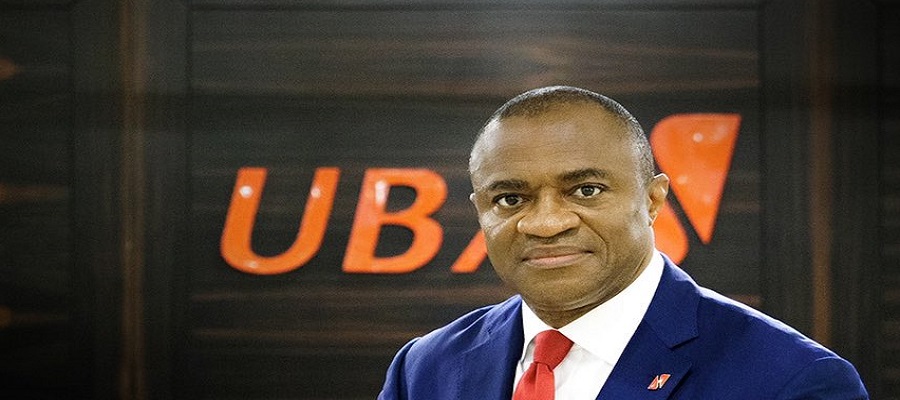
Africa’s Global Bank, United Bank for Africa (UBA) Plc, has once again, reaffirmed its leadership as one of the continent’s most innovative and resilient financial institutions, as the bank has, for the third time in five years, been named the African Bank of the year 2025 by the Banker.com.

UBA
UBA also won the Best Bank of the Year awards in nine of its 20 African subsidiaries, bringing its total awards this year to ten as UBA Benin, UBA Chad, UBA Republic of Congo (Congo-Brazzaville), UBA Liberia, UBA Mali, UBA Mozambique, UBA Senegal, UBA Sierra Leone, and UBA Zambia, all came out tops as the best banks in their respective countries, underscoring the bank’s strength across West, Central and Southern Africa and highlighting the depth of its Pan-African franchise.
The Banker.com, a leading global finance news publication published by the Financial Times of London, organises the annual Bank of the Year Awards, and this year’s edition was held at a grand ceremony at the Peninsula, London, on Wednesday.
The Chief Executive Officer, UBA UK, Deji Adeyelure, received the awards on behalf of the bank, representing the Group Managing Director/CEO, Oliver Alawuba, and was accompanied by the bank’s Head Business Development, Mark Ifashe, and Head, Financial Institutions, Shilpam Jha.
The Banker’s awards are widely regarded as the most respected and rigorous in the global banking industry, celebrating institutions that demonstrate outstanding performance, innovation and strategic execution.
In its remarks on UBA’s winnings, the banker.com said, “For the third time in five years, UBA Group has won the coveted Bank of the Year award for Africa. UBA Group time after time punches above its weight against its larger African rivals. The bank this year also takes home nine separate country awards (one more than it gained for its last continental win in 2024), equivalent to around a quarter of the awards for the continent, and more than any of its continent-wide rivals.”
Continuing, it said, “Perhaps even more impressive is the fact that the awards were won across a broad geographic spread, going to lenders based in the Economic Community of West African States (Benin, Liberia, Senegal, Sierra Leone, and former member Mali), the Central African Economic and Monetary Community (Chad, Republic of Congo) and the Southern African Development Community (Mozambique, Zambia). Its award wins were particularly notable in the highly competitive categories for Benin and Mozambique.”
The Banker also highlighted UBA’s strong financial performance and commitment to future growth. In 2024, the Group recorded a 46.8 per cent increase in assets and a 6.1 per cent rise in pre-tax profits in local currency terms, while continuing to invest significantly in talent and technology. West Africa remains UBA’s heartland, with operating revenue and profit increasing by 87 per cent and 89 per cent respectively in H1 2025.
The bank’s digital and innovation leadership was equally recognised. During the year under review, and launched its Advance Top-Up buy-now-pay-later feature on the *919# USSD platform, expanding financial access for customers, while the bank’s chatbot Leo continued its strong growth trajectory, with transaction volumes rising by 29 per cent year-on-year in H1 2025. Notably, in August, Leo became the first African banking chatbot to enable cross-border payments via the Pan-African Payment and Settlement System (PAPSS).
UBA’s Group Managing Director/Chief Executive Officer, Oliver Alawuba, while reacting to the achievement, said the recognition affirms the bank’s long-term strategy and customer-first philosophy.
“This honour reflects the strength of our Pan-African network, the trust of our customers, and the dedication of our people. Winning Africa’s Bank of the Year for the third time in five years is not by chance; it is a testament to disciplined execution, innovation, and a deep understanding of the markets we serve,” Alawuba said.
“Our nine country awards across diverse regions of Africa show that UBA is not just growing, but growing with impact. We remain committed to driving financial inclusion, supporting economic development, and deploying technology that makes banking simpler, faster, and more accessible to Africans everywhere,” he added.
United Bank for Africa is one of the largest employers in the financial sector on the African continent, with 25,000 employees group-wide and serving over 45 million customers globally. Operating in twenty African countries, the United Kingdom, the United States of America, France and the United Arab Emirates, UBA provides retail, commercial and institutional banking services, leading financial inclusion and implementing cutting-edge technology.

Africa’s workforce is embracing artificial intelligence (AI) at a faster pace than global peers, but pressure is mounting for organisations to ramp up digital skills development as generative AI (GenAI) begins reshaping roles across industries.

This is according to PwC’s Global Workforce Hopes and Fears Survey 2025, which shows a continent ready for AI-enabled transformation, but facing a narrowing window to prepare, through skills development initiatives.
The survey, covering nearly 50 000 workers worldwide and 1 753 across South Africa, Algeria, Kenya, Morocco and Nigeria, finds that African employees are already integrating AI into daily operations.
Sixty-four percent of respondents in Africa used AI tools in the past year, compared to 54% globally, and the sentiment is overwhelmingly positive. While only 17% report using GenAI every day, confidence in its benefits is high: 76% believe GenAI improves work quality, and 72% expect AI-driven productivity gains within three years.
In SA, executives are even more bullish, as 91% say AI has already lifted both productivity and work quality — a signal that leadership is pushing harder toward AI-enabled ways of working, notes the survey.
However, this optimism is coupled with rising concern about future readiness. Only 35% of African workers believe their skills will still be relevant three years from now. With GenAI expected to affect nearly half of all job roles, PwC warns that the continent’s workforce risks falling behind unless organisations accelerate large-scale reskilling.
Despite the pressures, employees are not standing still. PwC notes that African workers outperform their global peers in proactive learning, recording 15% higher participation in skills-building and receiving 6% more support from managers. This indicates that both workers and immediate supervisors recognise the pace of AI adoption and are pushing to adapt.
PwC Africa people and organisation leader, Dr Dayalan Govender, says the moment calls for decisive leadership. Organisations, he argues, must integrate AI into workforce strategies, accelerate digital adoption, and expand upskilling programmes at scale.
“Africa’s workforce is optimistic and ready for change, but leaders must accelerate digital adoption and invest in future-ready skills to convert this optimism into sustainable growth,” he says.
Beyond the technology shift, the survey captures a workforce hungry for growth but constrained by financial pressure. Many employees are preparing to make career moves: 45% plan to request a raise, and another 45% aim for a promotion in the next year. Yet household financial stability remains strained, with only a third of respondents reporting any money left over for savings.
Still, Africa’s workplaces continue to show strong foundations of trust and purpose — elements PwC believes will be critical in navigating GenAI disruption. More than 55% of workers trust management, and two-thirds say their work feels meaningful, both above global averages.
With AI adoption rising and employees motivated to reinvent their careers, PwC warns that the coming years will determine whether Africa’s early optimism translates into long-term competitiveness as GenAI transforms the world of work.
The report calls for embedding AI into workforce strategies to bridge the gap between optimism and practical adoption, scaling upskilling initiatives to prepare for GenAI disruption, and fostering trust and psychological safety to retain talent and drive innovation.
“For employers, these findings are a stark reminder that they can and should do more to help workers understand, adopt, and embrace AI’s transformative power.
“Employers may need to pay special attention to entry-level workers, nearly a third of whom say they’re worried to a large or very large extent about AI’s impact on their future, even as they’re also curious (47%) and optimistic (38%) about its long-term societal effects,” notes the report.

FG, SEC, NGX Group Agree on Capital Gains Tax Reform

Airtel Africa Foundation Celebrates International Volunteer Day, Honours Employee Volunteers

Report Reveals Half of 2025’s Compromised Passwords were Already Leaked

EFCC Arik Case: Witness Testifies on Receiver Manager Nominee’s Role in NG Eagle Shareholding

Nigeria Dominates 2025 TikTok Sub-Saharan Africa Awards with Six Wins

Kaspersky Introduces Cyber Pathways to Support Career Development in Cybersecurity

NITDA DG Tasks Youths to Drive Africa’s Digital Transformation

Firm Urges Organizations to Check Protection of their Websites Amid Search Engine Optimisation Attack Schemes

Hackers Breach Phones of Dangote and Otedola, Demand Ransom

FCCPC Sets Deadline for Digital Lending Regulatory Compliance




 General News2 days ago
NiDCOM Launches Diaspora Startup Challenge to Boost Nigerian Talent

 Telecom2 days ago
Nigeria Lacks AI-Ready Data Centres, Trails in Capacity – Nnamani

 E-Financial2 days ago
CAC to Shut Down Unregistered PoS Operators by January 2026

 News2 days ago
Lagos Launches Tele-Vet, Nigeria’s First Veterinary Call Centre

 Telecom2 days ago
Anambra Leads Southeast in Digital Governance Under Soludo’s ICT Agenda

 General News2 days ago
Optimus AI LABS CEO Showcases AI Breakthroughs in Nigeria’s Financial Sector

 General News2 days ago
PromoPrint Rekindles Nigerian Resilience @ 25th Anniversary
 E-Business20 hours ago
Report Reveals Half of 2025’s Compromised Passwords were Already Leaked