

News
FG Says Digital Map Saves Nigeria N200Bn Annually

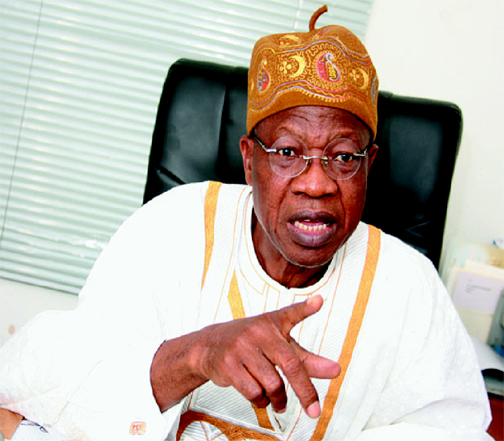
Alhaji Lai Mohammed, Minister of Information and Culture, says that reduced travel time through the use of digital map saves Nigerians nearly N200 billion a year.
Mohammed said this at the inauguration of the Economic Value of Geospatial Services by Google on Friday in Abuja.
The minister said that digital maps, popularly called Google map for location of street addresses, had also reduced travel time in the country by average of eight per cent.
Mohammed said that the ability to simply search for a location and get real time directions, using geospatial technology, had made lives much more convenient for people to move around.
He said, ‘’Many of us cannot imagine how we got by before the advent of the digital mapping services which we now use daily.
“It is incredible to think, for instance, from today’s launched research that digital maps reduce travel time in Nigeria by an average of eight per cent.
“This reduced travel time alone saves our people nearly N200 billion a year.
“If digital mapping services have made such a difference in the last five years, we can only imagine what the next five years will bring,” he said.
The minister stated that tourism as well as arts and culture, played pivotal role in the nation’s economic recovery and growth programme.
He also said that Nigeria’s tourism industry offered great potential for medium-term growth building on the country’s rich bio-diversity and ecosystem, traditional cultural diversity, historical cities and arts and crafts.
According to him, currently, tourism and hospitality account for 4.7 per cent of the Nigerian GDP ‘’and we know we have all the raw ingredients necessary to increase that percentage.’’
“It is now about bringing those ingredients together in a way that encourages people to experience all of Nigeria’s best features.
“As we look to make Nigeria a major tourism destination in Africa, technologies such as Google Maps, but more specifically StreetView put forward by Google, will become increasingly important on that front.
“We hope to see even more value as increasing number of people use tools like Google Street View to explore Lagos.”
Mohammed said the use of Google Street View tool could be incredibly powerful in drawing tourists to Nigerian cities, considering the impact it had had on destinations around Africa.
He disclosed that the Federal Government was looking forward to making use of Google street view tool in Nigeria to showcase its natural and cultural heritage.
The minister further said that government recognised the need to leverage on Science, Technology and Innovation (STI) to build a knowledge-based economy.
He said the use of digital maps would also help to promote and encourage patronage of agriculture, creative industry and manufactured products by operators in the tourism industry.
According to him, government is also working hard to ensure that the infrastructure is in place to promote tourism.
“We are also cutting back on bureaucracy to ensure that travellers to Nigeria can do so easily and with a minimum amount of stress.’’


Federal High Court in Abuja, on Tuesday adjourned the $150 million dollars suit filed by Chianugo Peter, a Nigerian, against Google LLC and GoDaddy.com LLC over shutdown of his YouTubeAudio.com domain name until April 22 for hearing.

The case, which was before Justice Obiora Egwuatu, could not proceed due to the absence of the judge in today’s proceedings.
Although Emmanuel Ekpenyong, Peter’s lawyer, and Mark Mordi, who is counsel to Google LLC, were in court, Justice Egwuatu was said to be in another official assignment.
The matter was consequently fixed for April 22 for hearing.
Peter had filed the suit over allegations bordering on the shutdown of his YouTubeAudio.com domain name after eight years of promotional and marketing efforts in breach of the contract.
Peter, through his lawyer, named GoDaddy.Com LLC and Google LLC as the 1st and 2nd defendants in the suit filed on April 14, 2023 and marked: FHC/ABJ/CS/238/2023.
In his earlier originating summons filed by Ekpenyong of the law firm of Fred-Young & Evans LP, the Nigerian sought a $150 million in compensation from Google LLC and GoDaddy.com LLC for the alleged cyberspace contract breach.
The plaintiff alleged that the defendants shut down his domain and business name: YouTubeAudio.com and transferred the rights over the name to Google LLC, an American multinational technology company.
Google LLC, in its initial statement of defence dated Nov. 9, 2023, and filed Nov. 10, 2023, by its lawyer, Mr Mordi, SAN, of the law firm of Aluko & Oyebode, urged the court to dismiss Peter’s suit as being unmeritorious and lacking in merits.
Justice Egwuatu had, in April 2024, gave Chianugo Peter the go-ahead to amend his originating processes after his lawyer moved the application for same and it was not opposed by the defence counsel.
In his amended statement of claim dated April 29, 2024, Peter sought ten reliefs.
He sought a declaration that GoDaddy.com was wrong to shut down the YouTubeAudio.com domain name on Dec. 7, 2022 and that Google was wrong to remove “YTAudio” with its website youtubeaudio.com from its Google PlayStore on Dec. 25, 2023 without adequate compensation to him.
He said this is notwithstanding that YouTubeAudio.com domain and business name is different and distinct from YouTube trademarks.
Chianugo Peter wants the court to declare that he is entitled to compensation from the defendants for the loss of the YouTubeAudio.com brand and goodwill which has accrued on the brand and domain name for eight years of promotional and marketing works from July 2, 2015 to Dec. 7, 2022.
He sought an order directing the defendants to pay the sum of $50 million to him for promotional and marketing works on the YouTube Audio business name and YouTube Audio.com domain name for eight years from July 2, 2015 to Dec. 7, 2022.
He sought a $100 million in damages for loss of anticipated profits associated with the brand equity and goodwill of YouTube Audio and YouTube Audio.com domain name.
Peter also sought from the defendants, the sum of 50 million naira to enable him to carry out fresh registrations of its new name and secure an alternative domain name to host its application to attract users.
The Nigerian sought an order directing the defendants to pay the sum of 10 million naira to him for prosecution of the suit.
Alternatively, Peter prayed the court for an order for GoDaddy.com to reinstate and hoist the YouTubeAudio.com domain name which was shut down on Dec. 7, 2022 and for Goggle to also reinstate YouTubeAudio.com on its Google PlayStore platform which was unilaterally removed on Dec. 25, 2023.
Chianugo Peter submitted that he acquired rights over YouTubeAudio.com domain name from Go Daddy.com LLC who conducted a search before confirming that he could make use of the name.
The plaintiff averred that he promoted the domain and business name from 2014 to 2022 and even wrote to Google to introduce YouTubeAudio’s services and to partner with it in 2014 and 2021 but received no response from it on both occasions.
He said in February 2021, he applied for and YouTubeAudio.com was registered on Google Adsense platform for displaying advertisement on the website.
Besides, Peter said in August 2021, the domain and business name was registered on Google Playstore.
According to him, the plaintiff consistently paid GoDaddy.com LLC for registration and use of the domain name from 2015 to 2022.
But Google LLC, in its amended statement of defence and counterclaim dated and filed May 31, 2024, averred that its registration of the YOUTUBE trademarks at the Trademarks Registry gives it the exclusive night to the use of the said trademarks.
It submitted that it has incurred expenses in the sum of 24,040 64 dollars in dealing with Peter’s “deliberate infringement of the counterclaimant’s YOUTUBE trademarks.”
The company, therefore, sought a declaration that Peter’s registration and use of the YouTubeAudio business name with BN 2395035 at the CAC is an infringement of its YOUTUBE registered trademarks.
It prayed the court for an order directing Peter to pay the company the total sum of $24,040.64 being the expenses incurred in dealing with his infringement of the YOUTUBE registered trademarks.
It equally sought an order directing the plaintiff to pay the company the cost of defending the suit.
In his amended reply to Google’s amended statement of defence dated 12th July 2024, Peter responded that it is not in doubt that Google LLC owns YouTube trademarks, however, YouTubeAudio is distinct and different from YouTube trademarks.
Chianugo Peter submitted that Google LLC, being a foremost search engine in the world, knew that he had earlier written to it, that he was making use of the YouTubeAudio domain name for the past eight years without any objection or caveat by either GoDaddy.com or Google.
“Hence, Google LLC is estopped from claiming any right over the YouTubeAudio domain name,” he said.
GoDaddy.com LLC had neither filed any process nor represented in court.

LG Electronics has announced the launch of a nationwide campaign aimed at celebrating decades of customer loyalty and technological heritage by searching for the oldest still-functioning LG television sets across the country.

The initiative, themed “The Oldest LG TV”, seeks to honour long-time customers whose LG screens have stood the test of time, while introducing them to the future of home entertainment through LG’s advanced AI QNED TVs.
For generations, LG televisions have been more than an electronic device in Nigerian homes, they have been silent witnesses to family milestones, cultural moments and shared memories.
This campaign bridges nostalgia with innovation, acknowledging the emotional connection Nigerians have built with the brand while showcasing LG’s leadership in AI-powered display technology.
The campaign features a storytelling -driven narrative that highlights community, heritage and the evolution of viewing experiences. Participants are invited to share the stories behind their long-serving LG TVs, transforming everyday screens into symbols of trust, resilience and innovation.

In creative twist, the campaign also introduces LG’s AI-enabled televisions as responsive companions that understand viewer preferences, recommend content and enhance picture quality in real time. This shift from nostalgia to futuristic interactivity underscores LG’s continued commitment to delivering smarter, more personalized entertainment solutions.
To participate, simply visit https://lgsearchcampaign.vercel.app/ upload a photo or video of your old LG TV and share the story behind it – how long you’ve had it and the memories it holds.
The winner walks away with a brand-new LG AI QNED TV, effectively trading legacy for luxury.
At its core, this campaign reminds us that technology is not only about pixels and processors, but about people. It’s about the laughter in the living rooms, the silence during tense match moments and the comfort of family routines.
By celebrating the oldest TVs still standing strong, LG is celebrating the people who kept the on, families who trusted the brand through changing times and evolving technologies. In doing so, LG isn’t just upgrading television, it’s upgrading memories into the future.
According to Mr. Choongbae Seok, General Manager, Media Entertainment Solutions, LG Electronics Nigeria, “The journey from our classic CRT Televisions to today’s AI QNED technology reflects how far both our customers and our innovation have come. Those early sets were built to last, and many are still functioning today, a testament to durability and consumer trust. This initiative allows us to honour that legacy while introducing a new era of intelligent viewing, where the screen does more than show content; it adapts, learns and enhances every moment”.
LG Display 2026 TV Models at InnoFest
LG Electronics (LG), a leader in AI-powered solutions for the home, outlined plans to accelerate growth in emerging markets at LG InnoFest 2026 MEA. The event, held in Abu Dhabi, provided a forum to share LG’s strategic direction and market outlook with regional partners. At the exhibition, LG displayed its premium 2026 AI TV lineup focusing heavily on advanced processing power, smarter picture and sound technologies. The flagship OLED evo G6 and 100-inch Micro RGB evo TVs are powered by the new Alpha 11 AI processor Gen 3 enabling faster and more intelligent performance. The OLED evo W6 Wallpaper TV, an ultra-slim television designed to sit flush against the wall like artwork uses true wireless connectivity, reducing cable clutter and creating a cleaner, minimal setup.

African leaders used the AU Summit in Addis Ababa over the weekend to sharpen the continent’s technology agenda, with Ethiopia positioning artificial intelligence (AI), digital infrastructure and connectivity as pillars of Africa’s economic future.

Opening the 39th African Union Summit, Ethiopian prime minister Abiy Ahmed outlined an ambitious vision to place Africa at the forefront of the global AI race, anchored by Ethiopia’s plan to launch what he described as Africa’s first AI-focused university.
“In 2020, Ethiopia established Africa’s first Artificial Intelligence Institute. Building on this foundation, we are preparing to launch an AI university anchored in the philosophy of Medemer, purposeful collaboration, to unite human values with machine intelligence and position Africa as a global leader in the age of intelligence,” Abiy told delegates. “
He framed AI not as a standalone sector, but as a cross-cutting enabler for governance, industry and social development. “Every river we manage, every city we design, and every digital platform we deploy must generate resilience, opportunity and dignity,” Abiy said. He further linked digital transformation to Agenda 2063’s long-term prosperity goals.
Beyond AI, the high-powered AU summit discussions highlighted digital identity, cross-border connectivity and telecom expansion as critical building blocks for an integrated African market. Ethiopia’s Digital Ethiopia 2030 roadmap, including its Faida digital ID ecosystem, was cited as a model for secure, interconnected public services.
Abiy pointed to aviation and telecom infrastructure as key accelerators for economic development across the continent. “Through Ethiopian Airlines, we connect people and markets. Ethio Telecom is expanding partnerships across Africa to bridge the digital divide,” he said.
The Ethiopian leader added that large-scale infrastructure projects are designed to anchor Africa deeper into global value chains.
The broader summit tech agenda also touched on regulatory harmonisation, digital trade and data governance, with leaders emphasizing that continental cooperation is essential to avoid fragmented digital markets.
UN Secretary-General António Guterres underscored the need for inclusive innovation, telling delegates that Africa’s digital rise must be “people-centered and opportunity-driven,” while African Union Commission Chair Mahmoud Ali Youssouf stressed coordinated policy frameworks to accelerate adoption.
“AI capability, digital infrastructure and unified regulation are no longer optional ambitions, but strategic imperatives shaping the continent’s competitiveness in the intelligence era,” he said.

Ecobank Nigeria Fully Repays $300m Eurobond Notes

Chams Carves Out Subsidiary to Support Africa’s Digital Transformation

BoI Secures CBN’s Approval for Non-interest Banking Operation

Nigeria, South Africa Drive Stablecoin Spending in Africa

Africa’s Active Data Centres’ Capacity on Back Foot, Despite Investment Push
Nigeria’s 9 Top FinTech Firms Valued at $10.6Bn in January 2026

Firm Detected a Fivefold Surge in QR Code Phishing Attacks in the Second Half of 2025

DG NCC Tasks University Dons on Research Commercialization, IP Management to Build Global Competitive Ecosystems

Kaspersky Launches OT Calculator to Align Cybersecurity Investments with Business Goals

Firm Detected a Scam Exploiting OpenAI’s Teamwork Features




 News2 days ago
African Leaders Highlight Africa’s AI Ambitions

 General News3 days ago
UBA Unveils Diaspora Platform to Connect Global Africans with Investment, Wealth Opportunities

 General News2 days ago
NDPC Orders Probe into Temu over Alleged Data Privacy Breaches

 Telecom2 days ago
MTN, BUA, Dangote & Other Industry Giants Triumph at NGX Made of Africa Awards

 Telecom2 days ago
X Suffers Global Outage, Millions Barred from Access

 Telecom2 days ago
MTN CIO Urges Africa to Lead Fourth Digital Revolution

 General News2 days ago
Leo Stan Ekeh Foundation, Zinox Group To Invest 10B on 1000 University Tech Scholarships for Indigent Nigeria Wiz-kids

 News2 days ago
LG Nigeria Begins Nationwide Search for Oldest Working TV, Rewards Loyalty with AI QNED Upgrade