

News
FG to Diversify Electricity Generation using Nuclear Energy

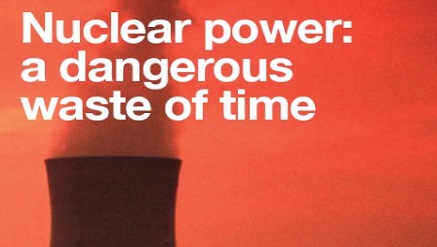
The Federal Government says it will diversify the nation’s electricity generation using nuclear energy. This is contained in a statement issued by Mr Timothy Oyedeji, director Press, Ministry of Power, Works and Housing in Abuja.
According to the statement, Mr Babatunde Fashola, minister of Power Works and Housing challenged experts to domesticate issues on Nuclear Energy in the industry.
The statement reiterated federal government’s commitment in diversifying its energy mix beyond traditional sources of gas, oil and Hydro to include nuclear and other renewable sources like solar, biomass and wind.
It stated that the minister said this when he received Mr Yukiya Amano, director-general of the International Atomic Energy Agency (IAEA), in his office.
It said that Fashola challenged Atomic Energy experts to do more in the area of public enlightenment as many Nigerians had limited knowledge about the use of nuclear technology for power.
“You must begin to break down the seeming complex issues around nuclear power into simple terms and language that our people can understand.
“We must try to demystify issues around nuclear power in Nigeria,” the statement quoted Fashola as saying.
It stated that Nigeria cannot afford to be left behind in the acquisition of appropriate nuclear technologies.
The statement also said the comprehensive nuclear law was with the parliament and would be enacted soon.
It assured that government would do all within its power to strengthen the capacity of the regulatory regime.
According to the statement, all procurement activities for the first nuclear power plant with generation capacity of 1,200MW of power to the National Grid by 2025 would be done as scheduled.
The statement listed Geregu in Ajaokuta local government area of Kogi, and Itu local government area of Akwa-Ibom as the two sites selected by the Nigeria Atomic Energy Commission (NAEC).
It added that these projects would be financed through Public-Private Participation (PPP) policy for infrastructural development in the country with target to increase it to 4,800MW by the year 2035.
It stated that Amano expressed satisfaction with NAEC and its team of experts for the research works and human capacity building efforts in this specialised field.
It added that Amano urged the NAEC to leave no stone unturned in letting Nigerians know that nuclear energy was for peace purposes.
The statement also quoted the IAEA director-general as saying that “Nigeria’s nuclear energy was for developmental purposes in areas such as engineering, medicine, environmental protection, security, agriculture and food security.”
The statement said that Amano informed the minister that the IAEA regarded Nigeria as an important partner.
It stated that IAEA wanted to transfer nuclear technology that would not be adverse to Nigeria.
It added that IAEA as a responsible international agency wanted Nigeria to use nuclear power for peace and development.
It said that Dr Erepamo Osaisai, director-general of NAEC, stated that Nigeria had made remarkable progress in development and strengthening of activities in diverse and specialised areas of nuclear energy.
The statement listed energy planning, peaceful use of nuclear for industrial, education, research works, medicine and power generation as areas Nigeria had made progress in.
According to the statement, the NAEC DG pledged that the commission will continue to drive efforts in areas of technical know-how, manpower and capacity building for overall development of nuclear technologies in Nigeria.


Lagos State Government has intensified efforts to strengthen its social protection framework with a fresh push to update the state’s Single Social Register.

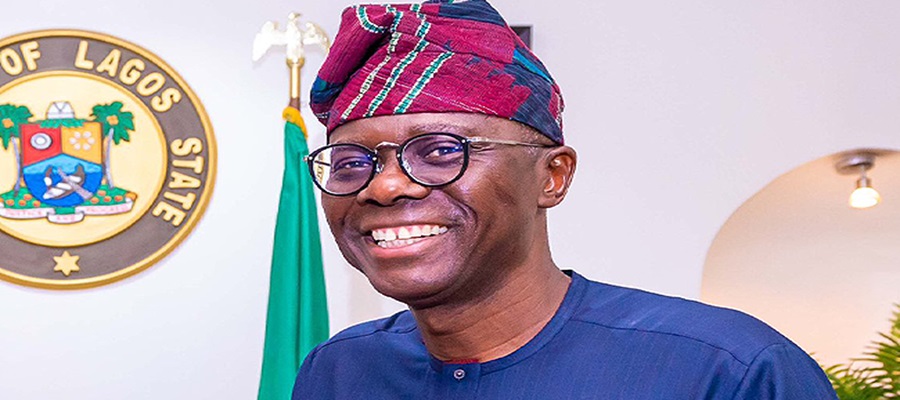
Babajide Sanwo-Olu, Governor, Lagos
This was contained in a press statement on the government’s Facebook page on Wednesday.
The initiative, led by the Lagos State Ministry of Economic Planning and Budget, formed the focus of a strategic engagement held on Monday with Community-Based Targeting teams, local government coordinators and field enumerators across the state’s 57 Local Government Areas and Local Council Development Areas.
The meeting, themed “Closing the Gap: Accelerating Lagos State Single Social Register Update,” took place at the Radio Lagos Multipurpose Hall in Agidingbi, Ikeja.
Officials said the exercise is aimed at improving the accuracy and reach of the register, which serves as a critical tool for planning and delivering targeted social interventions, including financial support, healthcare and education services.
Speaking at the session, Ope George, commissioner for Economic Planning and Budget, commended field workers for their commitment while urging them to scale up their efforts.
He called on participants to be “more intentional by intensifying their commitment,” reaffirming the government’s resolve to “continuously strengthen and refine the Register to reflect evolving realities.”
Also speaking, Olayinka Ojo, permanent secretary in the ministry, described the register as central to effective governance and service delivery.
She said “it remains a cornerstone for effective planning and delivery of social intervention programmes,” adding that the ongoing update is designed to “further enhance data reliability, coordination, and service delivery outcomes.”
Ojo noted that sensitisation efforts would be expanded across all councils to ensure wider inclusion of residents, stating that “the advocacy and sensitisation will scale throughout the 57 LGAs and LCDA to give more to Lagos residents.”
According to the government, the updated register is expected to expand access to social protection programmes and improve the targeting of interventions for the most vulnerable populations.
The engagement also provided a platform for stakeholders to strengthen collaboration, improve data quality and reinforce transparency in grassroots data collection.
The state government reiterated its commitment to leveraging accurate data and partnerships to drive inclusive development, reduce vulnerability and improve living standards across Lagos.


A new study by Bayero University, Kano, has found that 38 per cent of women in Northern Nigeria do not have access to financial services.

The study, carried out by the Aminu Kano Centre for Democratic Studies of the university, was supported by the Gates Foundation. It examined how social norms and behavioural factors influence financial inclusion across the 19 Northern states.
The report, titled “Understanding Influence and Behaviour in Northern Nigeria” and unveiled in Abuja on Wednesday, stated that while 52 per cent of women are financially served, only 45 per cent access formal financial services through deposit money banks, merchant banks, interest-free banks and microfinance institutions.
It stated that “38 per cent of women across the region lack access to financial services. “52 per cent of women are financially served, while 45 per cent access formal financial services through Deposit Money Banks, merchant banks, interest-free banks and microfinance institutions. An additional seven per cent utilise other formal non-bank financial products, including insurance services. ”
Speaking at the unveiling, the Director of Academic Planning at Bayero University, Prof. Yusuf Garba, who represented the Vice Chancellor, Prof. Haurna Musa said the research was designed to uncover why the region lags in financial access.
“This study, which started in 2024, aims to examine how social norms influence attitudes and behaviour of various groups across Northern Nigeria, particularly to find out why states in the region fall behind in access and use of financial services,” he said.
Garba explained that the research, conducted over 18 months, produced two volumes detailing how influence structures, trust hierarchies, gender norms, and religious considerations shape decisions around finance, health and education.
He added, “The report is structured into volumes to provide a unified explanation of how social norms, authority structure, and trust shape financial behaviour across Northern Nigeria.”
On the findings, the Principal Investigator, Prof. Ismael Zango, said the data aligns with figures from the National Bureau of Statistics, particularly on poverty and unemployment.
According to him, “unemployment in the region stands at about 37 per cent,” while “poverty levels average about 80 per cent across Northern Nigeria, with Sokoto State recording the highest rate at over 80 per cent.”
Zango stressed that addressing financial exclusion requires more than temporary interventions.
“Economic empowerment must go beyond token financial support,” he said, adding that “sustainable development requires equipping women and youths with relevant, market-driven skills.”
He cited women-led initiatives such as groundnut processing groups in Kebbi State and the Women in Agriculture programme in Kano State as practical models.
“These initiatives should be scaled up to bring more people into productive economic activities and reduce poverty,” he said.
In her remarks, the Chief Executive Officer of Enhancing Financial Inclusion and Advancement, Mrs. Foyinsolami Akinjayeju, described financial inclusion as both an ethical and economic imperative.
Akinjayeju called for stronger collaboration among stakeholders, including government, financial institutions and development partners, as well as policy reforms to address existing gaps.
“Everyone has a role to play, but commitment must come from the top,” she said.
The findings come amid growing concerns over low financial inclusion rates in Northern Nigeria, driven by poverty, unemployment, and entrenched social norms that limit women’s economic participation.

Citizens Initiative for Safety Awareness (CISA), advocacy group focused on security, data protection, and counter-terrorism, has urged the Nigeria Data Protection Commission (NDPC) to provide an update on a petition alleging a cybersecurity breach and unlawful access to private communications involving officials of the National Institute for Policy and Strategic Studies (NIPSS).

Mr Chidi Omeje, national coordinator, in a letter dated April 10, 2026, observed no response from the commission so far.
Filed on July 1, 2025, by Mr Yushau A. Shuaib, the petition claims unauthorised access, interception, and use of private digital correspondence belonging to him and PRNigeria, his company.
The complaint named Barrister Nima Salman Mann, Rear Admiral Abubakar Abdullahi Mustapha, and Professor Elias Wahab concerning the alleged breach. Such incidents are outlined in the Nigeria Data Protection Act (NDPA) 2023, regarding data privacy, cybersecurity safeguards, and the protection of sensitive information.
CISA said if confirmed, the alleged actions contravene Nigeria’s data protection framework, with implications for data governance, safety of confidential media sources, and public trust in institutions.
It requests the NDPC to clarify the status of the probe, disclose any interim findings, and cite measures to prevent similar breaches.
The organisation believes the matter has evolved beyond an individual complaint, describing it as a test of the government’s commitment to enforcing its data protection laws, especially within ministries, departments, and agencies.
CISA also appealed to Tunji Disu, inspector general of Police, to order an investigation into the alleged cybercrime.
In a statement, Omeje criticised the “prolonged delay” by the Force Criminal Investigation Department (FCID) in acting on a petition submitted since June 2025.
The group said, despite “credible evidence,” the police had yet to invite or question the individuals mentioned. Pointing out that two of the officials share membership in the National Institute (mni) with the former DIG at the FCID, CISA raised concerns about a possible conflict of interest.
Omeje clarified that the petition was different from the civil suit at the Federal High Court over Mr Shuaib’s withdrawal from the NIPSS programme.
“An elementary legal principle holds that a civil suit cannot be a bar to criminal investigation or prosecution,” he noted.
CISA called on the police to act in accordance with due process, advising the authorities to uphold the rule of law and restore public confidence.
It contends that failure to act decisively could erode trust in law enforcement and reinforce perceptions of a two-tier justice system.

Lagos Targets Vulnerable Residents in Expanded Social Register

CBN Proposes 30-Member Mediation Panel for Loan Disputes

CAC Urges Users to Secure Accounts after Cyberattack Scare

NCDC Predicts Cholera Outbreak in 10 States as Heavy Rains Loom

NDIC Seeks Court Nods to Liquidate 89 Failed Banks

Kuda MFB Increases Kuda for Her Business Grants to ₦10 Million

Canal+ to Cut Jobs as Part Sweeping Restructuring

Nigeria tops global rankings for USDT, USDC ownership

NBC Boss Urges Content Ceators to Participate in DSO

NITDA Takes Over National Digital Architecture System




 E-Financial3 days ago
Fidelity Surges Ahead in Recapitalisation Drive with ₦564bn Capital

 General News2 days ago
Guinness Nigeria Surpasses ₦1Trillion Market Capitalisation, Signalling Strong Investor Confidence and Sustained Value Creation

 Telecom3 days ago
AfDB Grants Project BRIDGE $200m Facility for Nationwide Internet Access

 Telecom3 days ago
Qualcomm Unveils Startup Selection for Qualcomm Make in Africa 2026

 E-Financial3 days ago
Digital “Pickpockets” Compromise Over a Million Banking Accounts – Kaspersky

 Telecom3 days ago
Nigeria Seeks Stronger Digital Sovereignty, National Software Infrastructure

 E-Financial3 days ago
EFCC Warns Banks against Loans without Credible Collateral

 E-Business3 days ago
Nigeria Needs Some 480,000 Local DPOs for Data Protection