

News
FG to Set up Aircraft Leasing Company to Support Local Airlines


The Federal Government has disclosed plans to establish an aircraft leasing company in Nigeria, aimed at providing a much-needed boost to local carriers. This strategic initiative is designed to empower Nigerian airlines by serving as an intermediary between them and international lessors, with the government providing a sovereign guarantee to facilitate transactions.

Festus Keyamo, minister of Aviation and Aerospace Development, disclosed this during the ceremonial arrival of Air Peace’s first dry lease aircraft, Boeing 737-700 at the Murtala Muhammed Airport Terminal 2 in Lagos.
According to Keyamo, the proposed aircraft leasing company will enable local airlines to access aircraft without having to navigate the complex global market alone. “We want to put an aircraft leasing company in place, so that Nigerian airlines will not be the ones negotiating with the world,” Keyamo stated.
“We don’t have to walk in silence again. The airlines don’t need to walk around the world looking for aircraft. Government must take care of that responsibility.” With the government’s sovereign guarantee, the project is expected to attract investors from around the world, creating a pool of resources that will support local airlines.
The minister emphasised that the leasing company will form a capital base, with local airlines given priority access to these resources. “This pool will form a capital base. No other person can be the off takers before the local airlines. This will make life easy for the airlines. We’ll be knocking on the doors of aircraft lessors and manufacturers very soon to talk business. We are here to support the local airlines.”
The establishment of the aircraft leasing company is expected to have a significant impact on the Nigerian aviation sector, enabling local carriers to compete more effectively with their international counterparts. With the government’s support, Nigerian airlines will be able to access modern, fuel-efficient aircraft, enhancing their operational efficiency and safety standards.
Keyamo described the arrival of the dry lease aircraft for Nigeria and aviation industry as a whole.
“This is a momentous occasion for Air Peace and the Nigerian aviation industry,” Keyamo stated. “It demonstrates the government’s commitment to supporting local carriers and promoting the growth of the aviation sector.”
Keyamo commended Air Peace for its discipline and financial prudence, which have enabled the airline to achieve this significant milestone. He also emphasised the need for local airlines to acquire more aircraft to compete effectively in the international market. “There is a need for the acquisition of more wide-body aircraft by local operators to compete in the international space,” Keyamo stated.
Allen Onyema, chairman, Air Peace said the journey of securing an aircraft through dry lease started at the minister’s office who saw the importance of having a vibrant aviation sector, and is always willing to partner with the local airlines, leasing companies and the Nigeria Civil Aviation Authority (NCAA) to ensure Nigeria has a chance to take its rightful place in commercial aviation in Africa.
Onyema said Air Peace has been very diligent in ensuring its aircraft are properly maintained, stressing that it would continue to represent Nigeria well at the international space.
“We make sure that our maintenance is top-notch. We are here on behalf of other Nigerian airlines. We are carrying the visions and aspirations of this country and if we fail, it will be a disgrace.
“Given the support we have received from all arms of government and the Nigerian public, I believe we won’t fail our country,” the Air Peace chairman said.
Onyema commended Festus Keyamo for his relentless efforts in supporting local airlines.
“We need wide-bodied aircraft. Like him or hate him, the minister has changed the face of the country’s aviation industry. In the eight years before he came, it was a struggle for Nigerian airlines. When the minister came on board, he noticed a gap and fixed it.
“Before now, the mantra was that Nigerian airlines lack capacity therefore let us invite foreign airlines to take over. He looked at what to do to support Nigerian airlines so that they can compete. The President also gave the marching order to make this happen,” Air Peace chairman said.
Onyeme said most big airlines don’t own some of the aircraft they use as most go to Boeing and Airbus to make orders and the lessors grant them.
“That is why you see one airline having about 400 planes. In Nigeria, every airline owner is expected to buy their own aircraft. When we brought up the issue of aircraft dry-leasing with the minister, he did the necessary things. Today, we have a dry-leased aircraft,” he said.
Moore Ibekwe, Junior sales director, Africa Region Boeing Commercial Airplanes said three years ago when he took up the job as a sales director for West Africa, East Africa, Southern Africa, and Morocco, only himself and one of his senior finance directors believed that this day could happen.
“However, I want to everyone because we continue to push. They were open to tell us what it would take for us to get here, how we can get aircraft into Nigeria, and I see this as the beginning. Yes, it’s one aircraft, but I can tell you this is the opening point for a better aviation sector,” Ibekwe said.
He said Nigeria needs to take its rightful place in aviation with Air Peace setting the pace.
“Air Peace plays a pivotal role in the Nigerian economy.This is about the region. This is about Africa. This is about us creating opportunities for the future.
“Air Peace hires or employs thousands of people, and their families depend on the airline for their livelihood. And it’s important that we have to support the industry here,” Ibekwe added.
Present at the event was Chris Najomo, Director General of the Nigeria Civil Aviation Authority; Bunmi Kuku, Managing Director Federal Airport Authority of Nigeria, Peter Ryan,
Irish Ambassador to Nigeria, and Kevin Ugwuoke, Financial partners- Executive Director Risk Management at Fidelity bank, who also represented by
Kenneth Opara, the Executive Director of the bank, among others.


Google and UpSkill Universe, Sub-Saharan Africa’s leading AI and business skills training partner, have announced a major redesign of the Google Hustle Academy programme.

For the first time, the free training initiative is open to everyone, not just business owners. The new curriculum is focused on equipping individuals and entrepreneurs with practical AI skills.
Small businesses are the engine of Africa’s economy, creating over 80% of jobs on the continent. To help them grow, the Hustle Academy was launched in 2022, providing bootcamp-style training on business strategy, digital skills, AI, and leadership. The program has since trained over 18,000 SMEs, with many reporting increased revenue and job creation.
Now, as AI reshapes the job market, the program is evolving. The 2026 edition is built for anyone in Sub-Saharan Africa, including employees, students, and jobseekers, who wants to use AI to advance their career.
To meet the needs of a diverse audience, the new format includes short, 60-minute webinars and more immersive, high-impact bootcamps. These sessions are laser-focused on putting AI to work immediately in areas like digital commerce, marketing, and growth strategy.
Speaking about the academy, Gori Yahaya, Founder & CEO UpSkill Universe said “The 2026 Hustle Academy is designed to close the AI Skills gap with hands-on training that is short, focused, and immediately useful. AI is reshaping how businesses win and how careers are built, right across this continent.
“We’re excited to renew our partnership, now in its fifth year with Google, combining their global AI leadership with our deep regional AI expertise. The next wave of AI leaders will come from this continent. We are making sure they are ready.”
The Hustle Academy initiative has strengthened digital competitiveness across emerging African economies by enabling SMEs to move beyond AI awareness to practical implementation, positioning them for sustained growth in an increasingly AI-driven business environment.
“We believe that the future of Africa’s digital economy lies in the hands of individuals and entrepreneurs alike. Our new strategy focuses on scaling reach by training individuals in the latest AI-centered tools and techniques,” said a Google representative.

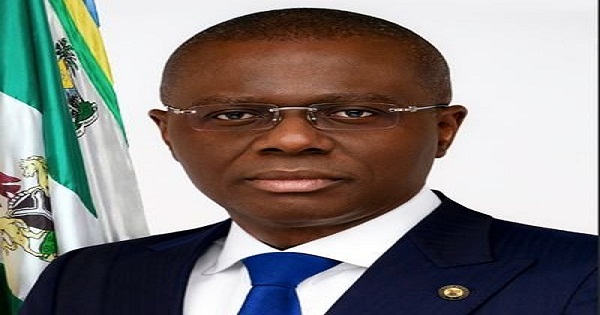
Lagos State has dragged 45 individuals and firms, including Bi-Courtney Aviation, DAAR Communications and Leaders & Company, to revenue court for tax debts running into billions of naira.

Lagos Govt
Bi-Courtney, operators of Murtala Muhammed Airport Terminal Two, faces N38.7 million claim; DAAR, behind Africa Independent Television, owes N22.4 million; ThisDay publishers Leaders & Company allegedly skip N67.1 million.
GMT Energy Resources tops corporates at N145.8 million, followed by Sheriff Deputies at N132.1 million; others like Heyden Petroleum, AA Rescue, BRT operator Primero also listed.
Individuals owe N13.5 million to N35 million each.
Attorney-General Lawal Pedro said suits followed ignored notices, aiming to enforce laws and fund infrastructure.
More defendants: IENG Nigeria, James Fisher, V Care Diagnostics, Venture Garden, Saro Africa, Barry Callebaut, Native Media, First Consulting, Eyowo Payments.
Compliant taxpayers post-notice escaped prosecution; defaulters risk penalties, interest, jail.
Pedro urged prompt filings and payments.


National Agency for Food and Drug Administration and Control (NAFDAC) has alerted Nigerians on counterfeit and unregistered Cerelac Mixed Fruits and Wheat products being sold in Lagos.

NAFDAC said Nestle Nigeria, the genuine Marketing Authorisation Holder of the product, received a complaint of suspected counterfeit purportedly manufactured by Nestlé Spain, bearing Batch Code 308002910.
It said that Nestle Nigeria reported that the complainant described that the counterfeit product emitted an odour suggestive of possible contact with fuel.
NAFDAC said that preliminary review of the product by Nestle Nigeria indicated that it had expired, in spite of the container displaying an expiry date of 10-2026, which suggested that the date coding had been tampered with (revalidated).
Nestle Cerelac Mixed Fruits and Wheat is a nutritious infant cereal, designed to be a delicious first food for infants.
NAFDAC said that its post-marketing surveillance’s directorate officers in Lagos conducted a surveillance visit to Maxland Shopping Centre, 193 Ago Palace, Okota, where the product was purchased by the complainant.
It added that the suspected counterfeit and unregistered Cerelac were found on sale at the premises and subsequently mopped up, while Nestle assisted in identifying the distinguishing features between registered and unregistered product.
According to the regulatory agency, Nestle revealed that the unregistered product used a hyphen (-) to separate the day from the year, while the registered product used a slash (/) to separate the day from the year.
“It is important to note that Nestle Nigeria is not aware of the channels through which the products are supplied into the country.
“Healthcare professionals and consumers are advised to report any suspicion of the sale of substandard and falsified regulated products to the nearest NAFDAC office, call 0800-162-3322, or send an email to [email protected],” NAFDAC said.
The agency warned that counterfeit formula often lacked essential nutrients, vitamins and minerals, leading to stunted growth or developmental issues.
It said that such formula might also contain contaminants that might lead to severe health consequences to infants or even death.
NAFDAC reiterated its commitment to safeguarding public health adding that it would continue surveillance activities to ensure the quality, safety, and efficacy of all NAFDAC-regulated products circulating in Nigeria.
It said that all zonal directors of the agency and state coordinators had been directed to carry out surveillance and mop up the revalidated product, if found within the zones and states.
The agency urged distributors, retailers, healthcare professionals, and caregivers to exercise caution and vigilance within the supply chain, to avoid the distribution, sale, and use of fake products.

See Key Changes in BVN Rule from May 1 by CBN

INEC Warns Broadcasters against Misinformation ahead of 2027 Polls

Paga Group Rejigs Leadership as Oviosu, Founder Becomes Group CEO

Reputation: The Real Currency Powering Fintechs

Jumia Expands Nationwide Footprint, Deepens Reach Across Underserved Nigerian Cities

Spotify’s Loud & Clear Report Reveals Over ₦60Bn Revenue for Nigerian Artists in 2025

China Threatens to Shut Nigeria’s Satellite Over $11.44m Unpaid Debt

Why JustMarkets Is a Strong Choice for Gold Trading

Kuda MFB Increases Kuda for Her Business Grants to ₦10 Million

Canal+ to Cut Jobs as Part Sweeping Restructuring




 E-Business2 days ago
Nigeria Cyberattacks: Stronger Collaboration as a Panacea

 Telecom2 days ago
Airtel Becomes World’s Second Largest Telco as Global Customer Base Surpasses 650 Million

 General News2 days ago
NIBSS Says 28 Percent of Nigerians have Registered for BVN

 Telecom2 days ago
From Import Dependency to Local Capacity: Nigeria’s Tech Manufacturing Journey

 E-Business2 days ago
CBN Slams Custodian Investment with N419m Fines over Rule Breaches

 General News2 days ago
NITDA DG Urges Stronger Collaboration to Drive Nigeria’s Digital Economy

 General News2 days ago
Ogun Set for Direct London Flights as Gateway Airport Gains Momentum

 News2 days ago
Lagos Govt Drags Top Firms to Court Over Billion-Naira Tax Debts