

Telecom
Forcepoint Unveils Digital Transformation Acceleration Strategy with New Converged Cybersecurity Solutions and Partner Ecosystem

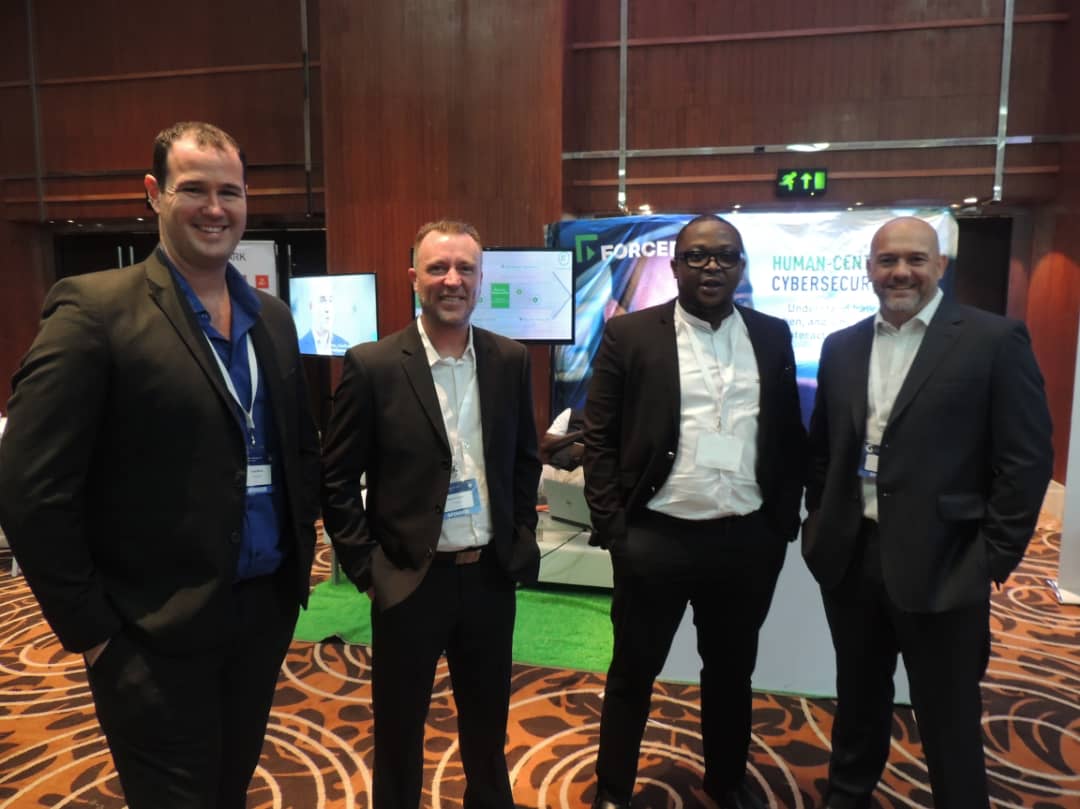
Forcepoint is strategically investing in the creation of a human-centric technology partner ecosystem that enables customers to achieve their digital transformation outcomes by enabling secure migration of data, applications, and business operations to the cloud.
Forcepoint’s global technology and strategic alliances span areas including public cloud, data classification, identity and access management. It ensures that customers have the ability to simplify collaboration between vendors and create an integrated security stack. Forcepoint ensures that all tools including identity-as-a-service tools, collaboration, HR, IT service management, workflows, incident response and other mission-critical business applications can deliver an understanding of the behavior of digital identities, and help extend the risk-adaptive protection to existing security infrastructure.
About Cloud Security
The widespread adoption of cloud solutions has been driven by the myriad of associated benefits offered, such as flexibility, scalability and remote access. At the same time, concerns have been raised regarding the security of these solutions when it comes to keeping sensitive data safe from malicious actors.
Fortunately, this can be avoided by demonstrating that both the organisation and the provider are committed to optimum cybersecurity, by investing in adequate prevention of cyber threats, good data security and data protection. Forcepoint Cloud Security Solution addresses these concerns
At the recent Bankers Summit in Lagos Nigeria, Forcepoint Regional Manager for Africa – Gregg Brans noted that “Forcepoint’ssecurity solutions help customers transition from on-premise to cloud mitigatingany cloud adoption fears.We integrate perfectly with public cloud service providers like AWS, Azure, G-Suite providing a secure risk-adaptive intelligent approach to security challenges.”

Our journey into a complex world of digital transformation is already happening . Our ecosystems are already beginning to look the one on the top right. Complexity and risk is already high, as we operate in a multi-dimensional world based, on user and data connections.
- 73% of enterprises will run almost entirely on SaaS by 2020
- 87% of companies rely on their employees using personal devices to access business apps
- 2.5 quintillion bytes of data are created each day
Organizations need to place users and data at the center of their design thinking.
If you take a look at how security is applied in an infrastructure-centric paradigm, policies are applied from the infrastructure to groups, or departments or to the whole company. The result is friction for genuine users, and an opportunity for malicious users that may find loop holes in the policy or the rights that are applied. Due to the generic nature of these policies, the noise of events and log files makes finding the bad amongst the good extremely difficult.
Human-centric cyber security from Forcepoint flips that paradigm on its head and changes everything. By making humans, and not events, the units of analysis, you can now use events as data input to understand what each individual is trying to do by their behavior.
Based on that understanding of each user’s behavior and intent, you can then apply different policies depending on the riskiness of that behavior. The result is one to one security which provides more user freedom and appropriate security enforcement based on a risk adaptive profile.
Human-centric cyber security flips that paradigm on its head and changes everything. By making humans, and not events, the units of analysis, you can now use events as data input to understand what each individual is trying to do by their behavior.
Based on that understanding of each user’s behavior and intent, you can then apply different policies depending on the riskiness of that behavior. You can now get aggressive with automation to stop threats without breaking the environment. The result is ONE to ONE security that provides more user freedom and appropriate security enforcement based on a risk adaptive profile

Forcepoint Human-centric Portfolio
Forcepoint is converging its capabilities to simplify deployment and management of your security stack and eliminate security gaps. Each capability is best-in-class; you can start anywhere and expand as your needs grow. Forcepoint`s unified policy and common analytics and orchestration streamline management.
Forcepoint’s solutions include:
Forcepoint DLP
Discovery and protection to meet regulatory and industry compliance.
Forcepoint Behavioral Analytics
User and entity behavior analytics for a zero-perimeter world. The leader in actionable insights based on risk-adaptive scoring.
Forcepoint Insider Threat
User visibility and incident context for sensitive data. The most comprehensive understanding of user intent, trusted on over 1 million endpoints.
Forcepoint CASB
Visibility and control over your complete cloud environment. The broadest cloud application support with unique customized risk assessment based
Forcepoint SD-WAN & Next Generation Firewall (NGFW)
Highly secure, efficient and available network security. Cuts network expenses by 50 percent, reduces cyberattacks by up to 86 percent and slashes incident response time by as much as 73 percent.
Forcepoint Data Guard
Secure collaboration and information sharing for government agencies. Eliminates costly and time-consuming manual data transfers of highly-regulated, sensitive data.
Forcepoint Web and Email Security
Unified protection from advanced threats at any location, on any device. Threat detection is 100 percent with zero false positives.

About Forcepoint
Forcepoint is the global human-centric cybersecurity company transforming the digital enterprise by continuously adapting security response to the dynamic risk posed by individual users and machines. The Forcepoint Human Point system delivers Risk-Adaptive Protection to continuously ensure trusted use of data and systems. Based in Austin, Texas, Forcepoint protects the human point for thousands of enterprise and government customers in more than 150 countries. www.forcepoint.com
“Behavior-based cybersecurity is tailor-made for the era of mobility and cloud because it enables enterprises to detect and respond faster to risk than legacy paradigms that focus only on protecting infrastructure,” said Matt Moynahan, CEO, Forcepoint.
“Forcepoint’s human-centric approach to security enables our customers to protect their people and critical data against the most sophisticated attackers, while freeing them to conduct their business or mission in the most efficient and agile way possible.”

PARTNER QUOTE (Infodata Professional Services Limited, Nigeria):
Infodata Professional Services Platinum Partnership level and investment in Forcepoint IP over the past two years is a deep sign of our commitment to the consolidated range of security products that has added immense value to our customers in Nigeria and West Africa. Forcepoint is the only vendor that has shown deep commitment to the security challenges within the West African Business Ecosystem. These set of solutions consolidate and secure customers Web, Email, DLP with integrated Advanced Malware Detection capabilities giving our customers the basic building block for Behavioural Analytics and ensuring Insider Threat metrics are captured in real time. In the words of Infodata CEO-Chuks Ulu Udensi: “Forcepoint gives a one stop shop for secure versatile and resilient enterprises as customers start and build on their risk-adaptive digital transformation Journey and a worthy security partner to drive the human centric risk-adaptive approach to cybersecurity”.
For more information visit Www.infodata.com.ng or Email: [email protected].



The Nigerian Communications Satellite Limited (NIGCOMSAT) has unveiled Accelerator Cohort 3.0 as part of efforts to strengthen Nigeria’s space technology ecosystem and support the growth of local startups.

The initiative will be a major highlight of the 2026 Nigerian Satellite Week scheduled to hold on March 30 and 31 in Abuja, where key players in the satellite and digital infrastructure sectors are expected to converge.
In a statement signed by Stephen Kwande, the Head of Corporate Communications, the company described the new accelerator as its most direct investment in building long-term competitiveness within Nigeria’s space economy.
According to NIGCOMSAT, the programme is designed to support early-stage ventures working across satellite applications, last-mile connectivity, agriculture, logistics and other areas where space-based technology can drive impact.
The company said previous cohorts of the accelerator had already contributed to developing innovative solutions and building the human capacity needed to position Nigeria for the next phase of the global space industry.
“With Cohort 3.0, we are making it clear that the accelerator is not a pilot project but a permanent feature of how Nigeria develops its space-tech companies,” the statement said.
NIGCOMSAT noted that the Nigerian Satellite Week has grown into a major platform for policy discussions, partnerships and investment in the sector.
The 2026 edition is expected to attract top government officials, defence leaders, development finance institutions and technology entrepreneurs from across Africa.
Jane Egerton-Idehen, managing director of NIGCOMSAT, said the event also marks two decades of Nigeria’s journey in the space economy.
“Twenty years ago, Nigeria took a bold step to secure its place in space. What we are seeing today is the result of consistent effort and vision,” she said.
She added that the company is focused on shaping the next phase of growth through innovation, partnerships and investment in local talent.
NIGCOMSAT also highlighted recent milestones, including a Low Earth Orbit connectivity partnership with Eutelsat, improved revenue performance and increased global recognition in satellite operations.
Other activities lined up for the event include a Startup Demo Day, where selected African startups will pitch their ideas to investors, and a stakeholders’ forum to discuss policies and infrastructure needed to scale Nigeria’s satellite economy.
The company said the initiative reflects the growing role of satellite technology in national development, particularly in areas such as communications, security and digital services.
NIGCOMSAT, established in 2006 and wholly owned by the Federal Government, provides satellite-based services including telecommunications, broadcasting and broadband across Nigeria and parts of Africa.

The Federal Government has unveiled a N12bn Digital Economy Research Fund aimed at strengthening evidence-based policymaking and supporting Nigeria’s long-term digital transformation agenda.

Dr. Bosun Tijani, the Minister of Communications, Innovation, and Digital Economy, disclosed this in a statement issued on Saturday, announcing the launch of an expression of interest for the National Digital Economy Research Clusters.
“Today my heart is filled with deep joy as we announce the Expression of Interest for the National Digital Economy Research Clusters, a N12bn research funding scheme designed to place ideas, evidence, and research at the centre of Nigeria’s digital transformation,” the minister said.
According to him, the programme is being funded under Project BRIDGE, a federal initiative to deploy 90,000 kilometres of fibre optic backbone infrastructure across Nigeria to expand connectivity and enable a modern digital economy.
“This programme is being funded under Project BRIDGE, our initiative to deploy 90,000km of fibre optic backbone infrastructure across Nigeria to expand connectivity and enable a modern digital economy,” he said.
The minister noted that as the government expands digital infrastructure nationwide, research-backed approaches are required to ensure inclusive benefits.
“As we deepen our digital infrastructure coverage, thoughtful, evidence-based approaches are required to be deployed in society to ensure everyone benefits from this significant investment,” he added.
He observed that digital policy decisions are often shaped by market forces and political cycles rather than rigorous research and long-term thinking. “Too often, the ideas shaping digital policy come predominantly from markets and political cycles rather than from research, evidence, and long-term thinking,” the statement said.
Under the initiative, six national research clusters will be established across key pillars of the digital economy, including connectivity and meaningful use; digital public infrastructure and government services; digital skills and human capital development; digital economy and jobs; online trust and consumer protection; as well as artificial intelligence and emerging technologies.
The clusters will be led by up to 36 professors drawn from Nigerian universities, working alongside international academic partners, with more than 200 researchers, including postdoctoral fellows and PhD candidates, expected to generate policy-relevant research.
“For me, the goal goes beyond research output. We are looking for better policies that lead to stronger institutions and a more prosperous society,” the minister said.
He described the initiative as one of the ministry’s most meaningful programmes, noting that it is intended to produce ideas that will outlast any single administration. “Because nations that lead the future are not simply those that deploy infrastructure; they are the ones that cultivate ideas,” he said.
The ministry invited academic and research institutions interested in participating to review the Terms of Reference released alongside the EOI and submit proposals to lead or collaborate within the national research clusters.
It added that a press conference would be held in the coming week to provide further details and engagement opportunities for vice-chancellors and research institutions across the country.

Nigerian Communications Commission (NCC) has directed Mobile Network Operators (MNOs) to compensate subscribers experiencing poor network service across the country.

The Commission said the directive was part of efforts to ensure that consumers are not made to bear the burden of service failures when operators fall short of required standards.
Under the new regulation, telecom operators will be required to provide compensation directly to affected subscribers for breaches of Quality of Service (QoS) Key Performance Indicators (KPIs).
According to the NCC, the compensation will be issued in the form of airtime credits, calculated based on subscribers’ average usage and their presence within specific Local Government Areas where service disruptions occur.
The Commission emphasised that telecommunications services remain critical to economic activities, social interactions, and access to digital opportunities, noting that poor service delivery negatively impacts productivity and public confidence.
It explained that while regulatory fines have traditionally been used to sanction operators, the new approach prioritises consumer protection and strengthens accountability within the telecommunications sector.
The NCC added that the measure would complement existing efforts to monitor service quality and enforce compliance with performance standards.
In addition, the Commission directed tower companies responsible for telecom infrastructure, such as network masts, to reinvest fines imposed on them into infrastructure upgrades with measurable outcomes.
The regulator reiterated its commitment to ensuring that operators invest in network resilience, expand capacity, and improve infrastructure to meet growing demand.
It also pledged to continue deploying regulatory mechanisms that promote fairness, transparency, and accountability across the industry, while ensuring that subscribers receive the quality of service they deserve.

ARN Rejects Medical Bill over Attempt to ‘Scrap’ Profession

Meningitis Kills a Quarter Million People a Year -Study

NIGCOMSAT Supports Startups Growth with the Launch of Accelerator 3.0

Stakeholder says AI is Crucial to Nigerian Data Centres Amid Persistent Grid Collapse

NFVCB Boss Urges Stronger Distribution Channels @ Coal City Film Festival 2026

Spotify’s Loud & Clear Report Reveals Over ₦60Bn Revenue for Nigerian Artists in 2025

Madonna University Taps Tech Guru Adote for Strategic Board Role

China Threatens to Shut Nigeria’s Satellite Over $11.44m Unpaid Debt

Jumia Tech Week 2026 Begins with Tech Deals on Smartphones, Electronics, and Everyday Technology

FCCPC Bans Lagos ‘No Refund’ Policy, Vows Fines and Shutdowns for Traders




 E-Financial3 days ago
Breaking…..Kuda Lays Off Many Employees in Broad Restructuring

 Telecom3 days ago
Google Rolls Out Search Live AI to 200+ Countries, Including Nigeria

 E-Financial3 days ago
CBN Bars Chronic Loan Defaulters from Accessing Loans

 E-Financial3 days ago
NDIC Insures 99 Percent of Bank Customers

 E-Business3 days ago
FG Shifting Focus to “Meaningful Connectivity” to Drive Inclusion – Minister

 General News2 days ago
Anti Graft Agencies Raise Alarm over Rising Crypto-Linked Financial Crimes

 E-Business2 days ago
NITDA Takes Over National Digital Architecture System

 E-Financial16 hours ago
CBN bars large‑ticket loan defaulters from banking services in tough new crackdown