

News
Fraud: Oando, Others Cough out N328.9Bn, EFCC Seals SPAR

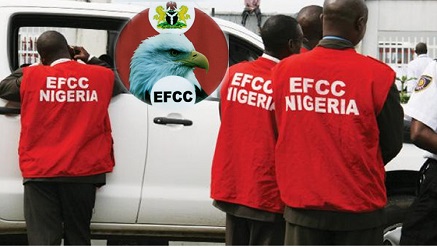
Economic and Financial Crimes Commission (EFCC) said it has recovered a total of N328.9 billion from nine major oil marketers after quizzing their chief executives.
This is coming as the agency also sealed the multi-billion naira Enugu Mall occupied by SPAR, a multinational retail outlet
On the oil marketers, Wilson Uwujaren, spokesman of the commission named NNPC Retails, Conoil Plc, Total Plc, OVH Energy Plc, Oando Plc, Forte Oil and Gas Plc, Mobil Plc, MRS Oil Plc, and NIPCO Oil Plc.
He said the recovery was made by the Kano office of the commission between July 2016 and July 2017.
According to him, the recovery followed a petition against the management of the Nigerian National Petroleum Corporation (NNPC) and its subsidiary, Pipelines and Product Marketing Company (PPMC).
He said the petition alleged that N40 billion had been diverted by the major oil marketers in connivance with the leadership of the NNPC and PPMC.
“The EFCC, in a swift reaction, referred the petition to a special task force which swung into action by conducting discrete investigation.
“Findings by the operatives of the EFCC revealed that the oil marketers were actually indebted to the Federal Government of Nigeria to the tune of N91.5 billion between 2010 and 2016.
“Further investigation into the allegation also revealed that the oil marketers had continued to obtain petroleum products from the government without proper payment, in violation of the NNPC/PPMC credit facility regulations.
“A probe of which further led to the discovery of N258.9 billion.”
Uwujaren explained that the total amount of debt stood at N349.8 billion following the latter discovery.
He further said that upon conclusion of the preliminary investigation, officials of NNPC/PPMC and all the managing directors of the companies concerned were invited to the Kano zonal office of the commission.
There, he added, their statements were recorded following which the recovery process began.
“So far, a sum of N328.9 billion has been recovered from the major oil marketers. The outstanding debt now stands at N20.7 billion,” he said.
Also the EFCC on Wednesday sealed the multi-billion naira Enugu Mall occupied by SPAR, a multinational retail outlet, two days to official opening.
EFCC officers stormed the building in the early hours of the day and dispersed all the workers.
Chris Oluka, of the Public Affairs of EFCC, confirmed the incident, saying that the managers of the building flouted the directive of EFCC on the construction of the building.
Oluka said that the officers from Abuja raided the mall and dispersed workers who were recently recruited preparatory to official opening of business on Friday.
“Yes, our men went there to disperse them because they flouted our instructions.
“We had sealed the premises and wrote ‘under EFCC investigation’, but they covered the write-up with paint,” he said.
It would be recalled that the commission had earlier in the year sealed the mall, located beside the Enugu State House of Assembly, by writing the inscription ‘Under EFCC Investigation’.
However, construction work continued at the site.
Johnson Babalola, the Zonal Head of Operations in EFCC, South East, had during an earlier interaction with newsmen, said it was not against any known law for the owners to go ahead with construction work.
Babalola said that since the property was not yet under permanent forfeiture to the government, “construction work can still go on while investigations continue”.
On the new development, Oluka, however, said that allowing the business to operate in the building could jeopardise investigations.
“I do not have much to say about this because the officers that dispersed the workers this morning came from Abuja,” Oluka said.
On the invitation of the manager of the mall to the zonal office of the commission after the workers were dispersed, Oluka said it should not be misconstrued as an arrest.
“They were invited to come and explain why they did what we told them not to do,” Oluka said.
Some workers at the mall, however, expressed displeasure over the incident, describing it as anti-labour.
Some of the newly recruited workers, who spoke on condition of anonymity, said they were worried because EFCC officials swooped on the mall just two days to the official opening.
One of the workers said, “We are surprised this can happen at a time the government is preaching job creation.
“Over 250 of us were employed by this company and we are not certain what will happen next.
“We are appealing to the authorities concerned to look into it urgently and save us from continued hardship.”
Efforts to reach the managers failed as they were all at the EFCC office for interrogation as at the time of this report.
Shareholders At War With Oando Over ConocoPhillips Assets
Meanwhile, shareholders of Oando Group are currently at daggers drawn with the energy integrated company over ConocoPhillips’ assets it bought with a whopping of $1.5billion five years ago.
There was no official reaction by the company over the embattled shareholders as at press time.
A report by Africa Energy Intelligence on Tuesday said financiers that lent money to the company to acquire the asset are displeased over how it is currently being run.
Some of these financiers include Gabriele Volpi, the founder of Intel and Orleans Invest, and Alhaji Dahiru Mangal, who is active in oil exploration, transport and distribution in Niger and Nigeria.
It was learnt that the company’s boss, Adewale Tinubu, has been muscling weight to boost Oando share price, but his effort is limited by servicing the debt created by the ConocoPhillips purchase, which is said to be handicapping its operations and worsened by continued lull in crude oil price.
African Intelligence report also said Oando fortune is also affected by the factthat a huge number of American firms’ assets are in gas, a resource harder to make profitable in Nigeria.


Entrepreneurs backed by the Tony Elumelu Foundation (TEF) have generated more than $4.2 billion in cumulative revenue since the organisation began its grant programme in 2015, according to Somachi Chris-Asoluka, chief executive officer of the foundation.

Chris-Asoluka, revealed this during a virtual media briefing, where she also stated that over $100 million has been distributed to nearly 24,000 young entrepreneurs across Africa.
She noted that the beneficiaries of the programme have gone on to create about 1.5 million jobs, both directly and indirectly, across various sectors of the continent’s economy.
The performance, she said, has strengthened the resolve of the foundation and its partners to scale up financial support for emerging businesses.
Chris-Asoluka emphasised that the foundation’s interventions are anchored on the conviction that entrepreneurship is central to reducing poverty and reshaping Africa’s economic future.
She explained that selected participants receive a $5,000 seed capital grant, in addition to structured business training and mentorship designed to help them either expand existing enterprises or establish new ones.
Highlighting operational challenges faced by entrepreneurs, she identified inadequate electricity supply as a major constraint.
According to her, many small businesses spend as much as 60 per cent of their earnings on alternative power solutions, including generators and inverters.
To mitigate this challenge, she disclosed that Tony Elumelu, TEF founder, alongside the foundation’s leadership, has been engaging governments across Africa on the urgent need to improve power infrastructure.
She further stated that investments by programme beneficiaries cut across critical sectors such as agriculture, artificial intelligence, manufacturing, and technology innovation.
Chris-Asoluka also announced that the foundation’s 2026 cohort of entrepreneurs will be formally unveiled by Elumelu in Abuja.


A new financial operations platform, Morney, has officially launched in Nigeria to help businesses face growing pressure to digitise their finance processes as the country’s shift towards electronic invoicing.

Developed by Morzoe Technologies Inc. and introduced locally through its partner, BuySimply Services Limited, the platform is designed to help organisations streamline and automate financial workflows.
Speaking at the launch, Head of Growth at BuySimply, ‘Mide Olubi, said many Nigerian organisations still depend on fragmented systems such as emails and spreadsheets to manage expenses, supplier invoices and payments.
According to him, this approach often results in inefficiencies, delayed processes, weak oversight and a higher risk of errors.
He noted that Nigeria’s increasing adoption of electronic invoicing and tax digitisation frameworks is accelerating the need for structured and transparent financial systems. Businesses, he said, must move away from manual processes and adopt platforms that provide clear visibility into financial operations.
Morney integrates payments, procurement, expenses and invoicing into a single system, enabling finance teams to automate approvals, monitor transactions in real time and maintain accurate records.
The platform also supports supplier onboarding and invoice processing, helping organisations better manage operational spending.
The company revealed that businesses across sectors such as FMCG, manufacturing, energy, banking and telecommunications are already adopting the solution to improve efficiency and strengthen financial control.
It added that the partnership with BuySimply reflects a broader trend of digital transformation, as organisations respond to evolving regulatory requirements and the demand for more efficient financial management systems.
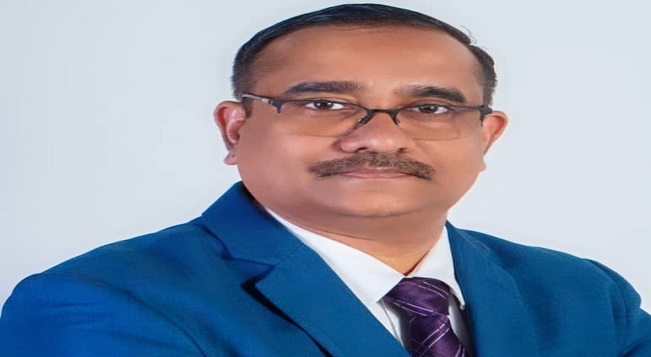
Dr Krishnan Ranganath (Krish) to Lead UniCloud Africa in Continental Digital Infrastructure Push
UniCloud Africa Limited, the premier pan-African cloud platform dedicated to advancing the continent’s digital sovereignty, has announced the appointment of Dr. Krishnan Ranganath as its Chief Executive Officer.

Dr. Krish, a seasoned industry leader known for building and scaling digital infrastructure while maintaining rigorous operational excellence, steps into the role as UniCloud Africa accelerates its mission to redefine the continent’s digital landscape.
The appointment coincides with the groundbreaking launch and immediate availability of UniCloud Africa’s enterprise-grade Sovereign Cloud and Artificial Intelligence (AI) infrastructure across six key markets: Nigeria, Ghana, South Africa, Zambia, Senegal, and Mozambique, even as it plans to launch in Kenya, Tanzania, DRC, Uganda, Ethiopia and Côte d’Ivoire as part of further continental expansion.
Operating under the mission of “One Cloud, One Africa,” UniCloud Africa provides governments and enterprises with a world-class, fully compliant sovereign cloud alternative to high-latency offshore providers,ensuring a robust, scalable foundation tailored to Africa’s unique environmental and economic needs.
“UniCloud sits at the epicentre of Africa’s cloud evolution. We are committed to deploying 100% sovereign infrastructure across the continent. My focus is on driving high-growth partnerships and scaling the next generation of resilient, sustainable cloud infrastructure to accelerate the evolution of the African digital ecosystem,” said Dr. Krish, CEO of UniCloud Africa Limited.
He disclosed that his focus at UniCloud Africa is on driving high-growth partnerships and scaling the next generation of resilient, sustainable cloud infrastructure, and will deploy GPUs in certain economies based on market potential and need.
While admitting that the challenges from AI integration to the green energy transition are immense, Dr Krish believes that the opportunities are greater. “I am eager to collaborate with our partners and customers to redefine the digital frontier and accelerate the evolution of the African digital ecosystem,” he added.
Ladi Okuneye, Co-founder and outgoing CEO (who remains as a director on the board) remarked: “As we enter this new chapter of growth, I am confident that Dr Krish’s extensive experience in the African digital landscape will add immense value. His technical depth and regional insight make him the ideal leader to drive UniCloud Africa forward.”
Before he was appointed CEO of UniCloud Africa, Dr. Krish was, until last month, the Regional Executive – West Africa at the Africa Data Centres (ADC).

Tech Firms Sack over 45,000 so Far in 2026

CBN Wins Central Bank of the Year Title @13th Global Awards

Jury Finds Elon Musk Liable for Misleading Twitter Investors

FG Taps Quest Merchant Bank for Advisory on 90,000km Fibre Project

TEF-Backed Entrepreneurs Generate $4.2Bn, Create 1.5m Jobs across Africa

Kaspersky Discovers New Phishing Campaign Exploiting Google Tasks Notifications to Steal Corporate Credentials

esentry 2025 Report Shows Healthcare, Financial Services and Telecoms as Staging Grounds for Increased Cyberattacks in Africa

AfDB, UNDP Launch $10Bn AI Initiative for Africa

MultiChoice Suspends Yearly DStv Price Hike as Canal+ Pushes Growth

MTN Nigeria Posts Record N1.70 Trillion Pre‑Tax Profit, Declares N20 Dividend for 2025




 News3 days ago
African Tech Start-ups to Receive $46m of Speedinvest Africa Fund

 Telecom3 days ago
Court Bans Kenyan Telcos from Recycling SIM Cards

 E-Financial3 days ago
Providus Bank Fully Meets CBN Capital Requirement, Sets Record Straight

 E-Financial3 days ago
UBA UK, BII Sign Letter of Intent to Slash Africa’s $80Bn Trade Finance Gap

 Telecom3 days ago
Binance Earn: Simple Way to Earn Rewards on Idle Crypto Holdings

 News3 days ago
UK, Nigeria Unveil Three-Year Plan to Combat Immigration Crime

 News3 days ago
U.S. Charges Three in $2.5 Billion Plot to Smuggle Nvidia AI Chips to China

 General News3 days ago
Court Jails ‘Colonel’, ‘Major’ of Global Money-Laundering Ring