

News
Glo Denies Terminating PSquare Contract


Globacom has denied media reports that it had terminated its brand endorsement deal with music duo, Peter and Paul Okoye, popularly known as PSquare.
The company confirmed in a statement it released in Lagos on Thursday that, contrary to such media speculations, the twins were still its brand ambassadors, stating that it was only in the process of reviewing contracts with its ambassadors, including the twins.
“We have not disengaged PSquare or any of our other ambassadors. We are currently in the process of reviewing our contracts with the brand ambassadors,” the statement said.
The next generation network stated that PSquare had since 2010 when they were first signed on been among the company’s most valued ambassadors, and that it had been a mutually rewarding relationship between the two parties.
“We are proud of the role Globacom has played in the rapid upward trajectory of the musical career of these incredibly talented twin brothers,” Globacom affirmed.
The company statement added: “Globacom has also played a similar role in the exposure and economic empowerment of all the Nigerian entertainers, and others from neighbouring countries, who worked with us as brand ambassadors”.
“Globacom holds its brand ambassadors in the highest esteem and has a dignified procedure of managing its relationships with its brand ambassadors. Whenever brand ambassadors are to be engaged or disengaged, we usually follow the due process and dignify them by holding constructive discussions with them,” concluded Globacom.
Since 2003 when the next generation network commenced operations, it been the biggest corporate promoter of the entertainment industry in the country. It also pioneered the signing of musicians and Nollywood stars as brand ambassadors.


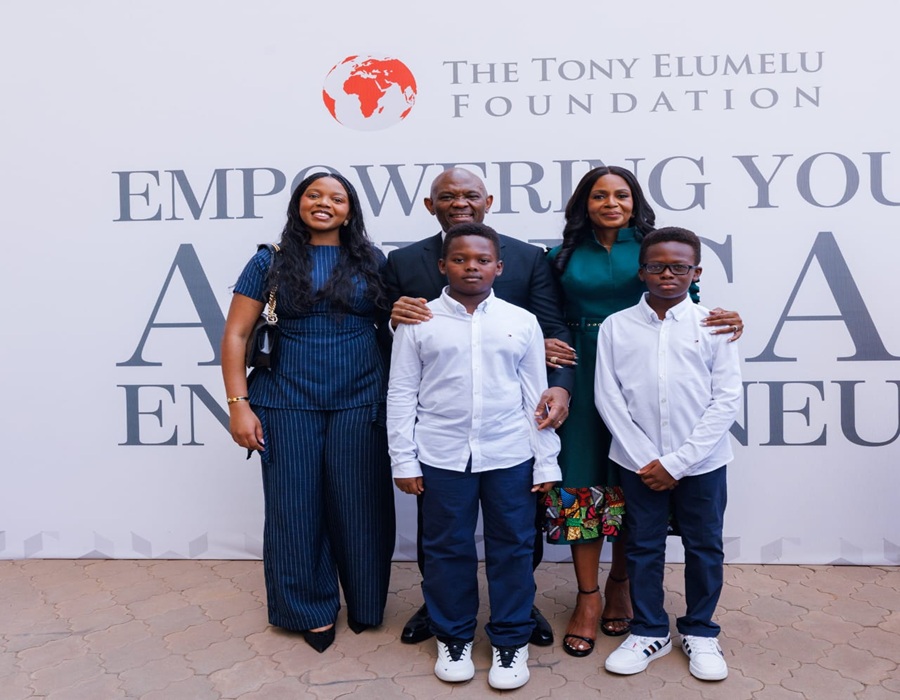
In a move to reaffirm his commitment to empowering African entrepreneurs, Chairman of Heirs Holdings, UBA Group and Founder of the Tony Elumelu Foundation (TEF), Tony O. Elumelu, CFR, has announced 3,200 beneficiaries for the 2026 TEF Entrepreneurship Programme.

Tony Elumelu
The announcement, made in Abuja, coincides with the philanthropist’s annual reflection on impact, purpose, and the transformative power of entrepreneurship across the African continent.
In his annual letter, Elumelu emphasised that opportunity and prosperity can be intentionally created and scaled, saying, “Hope is not just a feeling, it is a system we can build”. This underscores his long-standing belief in Africapitalism, the philosophy that Africa’s private sector must drive economic and social development.
This year’s cohort of 3,200 young entrepreneurs, selected from across all 54 African countries, will each receive $5,000 in non-refundable seed capital, alongside access to mentorship, business training, and TEF’s proprietary digital platform, TEFConnect.
Highlighting the programme’s growing impact, Elumelu noted that the Foundation has now disbursed over $100 million in funding to more than 24,000 African entrepreneurs since its inception. The programme continues to demonstrate strong outcomes, with 80 per cent of supported businesses scaling beyond the early stage, significantly outperforming global averages.
Collectively, TEF-supported entrepreneurs have generated over $4.2 billion in revenue, created 1.5 million jobs, and lifted more than 2.1 million Africans out of poverty, impacting over four million households across the continent.
A notable feature of this year’s selection is the strong representation of women, who account for 51 per cent of the cohort. According to Elumelu, this reflects merit-based selection and highlights the increasing leadership of African women in entrepreneurship. “When opportunity is accessible, African women do not simply participate, they lead.”
Reflecting on the Foundation’s journey since its launch in 2010, Elumelu reiterated the vision to democratise opportunity and scale impact across Africa by investing in its most valuable resource, which is its people. He also expressed gratitude to partners, mentors, and stakeholders who continue to support the Foundation’s mission of building a self-sustaining Africa.
The Tony Elumelu Foundation is the leading philanthropy empowering young African entrepreneurs from all 54 African countries. Through its flagship Entrepreneurship Programme, TEF provides training, mentorship, funding, and access to networks, driving inclusive economic growth and transforming Africa’s development narrative from aid to investment and partnership.


Entrepreneurs backed by the Tony Elumelu Foundation (TEF) have generated more than $4.2 billion in cumulative revenue since the organisation began its grant programme in 2015, according to Somachi Chris-Asoluka, chief executive officer of the foundation.

Chris-Asoluka, revealed this during a virtual media briefing, where she also stated that over $100 million has been distributed to nearly 24,000 young entrepreneurs across Africa.
She noted that the beneficiaries of the programme have gone on to create about 1.5 million jobs, both directly and indirectly, across various sectors of the continent’s economy.
The performance, she said, has strengthened the resolve of the foundation and its partners to scale up financial support for emerging businesses.
Chris-Asoluka emphasised that the foundation’s interventions are anchored on the conviction that entrepreneurship is central to reducing poverty and reshaping Africa’s economic future.
She explained that selected participants receive a $5,000 seed capital grant, in addition to structured business training and mentorship designed to help them either expand existing enterprises or establish new ones.
Highlighting operational challenges faced by entrepreneurs, she identified inadequate electricity supply as a major constraint.
According to her, many small businesses spend as much as 60 per cent of their earnings on alternative power solutions, including generators and inverters.
To mitigate this challenge, she disclosed that Tony Elumelu, TEF founder, alongside the foundation’s leadership, has been engaging governments across Africa on the urgent need to improve power infrastructure.
She further stated that investments by programme beneficiaries cut across critical sectors such as agriculture, artificial intelligence, manufacturing, and technology innovation.
Chris-Asoluka also announced that the foundation’s 2026 cohort of entrepreneurs will be formally unveiled by Elumelu in Abuja.


A new financial operations platform, Morney, has officially launched in Nigeria to help businesses face growing pressure to digitise their finance processes as the country’s shift towards electronic invoicing.

Developed by Morzoe Technologies Inc. and introduced locally through its partner, BuySimply Services Limited, the platform is designed to help organisations streamline and automate financial workflows.
Speaking at the launch, Head of Growth at BuySimply, ‘Mide Olubi, said many Nigerian organisations still depend on fragmented systems such as emails and spreadsheets to manage expenses, supplier invoices and payments.
According to him, this approach often results in inefficiencies, delayed processes, weak oversight and a higher risk of errors.
He noted that Nigeria’s increasing adoption of electronic invoicing and tax digitisation frameworks is accelerating the need for structured and transparent financial systems. Businesses, he said, must move away from manual processes and adopt platforms that provide clear visibility into financial operations.
Morney integrates payments, procurement, expenses and invoicing into a single system, enabling finance teams to automate approvals, monitor transactions in real time and maintain accurate records.
The platform also supports supplier onboarding and invoice processing, helping organisations better manage operational spending.
The company revealed that businesses across sectors such as FMCG, manufacturing, energy, banking and telecommunications are already adopting the solution to improve efficiency and strengthen financial control.
It added that the partnership with BuySimply reflects a broader trend of digital transformation, as organisations respond to evolving regulatory requirements and the demand for more efficient financial management systems.

Tony Elumelu Celebrates 63rd Birthday by Empowering 3,200 Entrepreneurs Across Africa

Tech Firms Sack over 45,000 so Far in 2026

CBN Wins Central Bank of the Year Title @13th Global Awards

Jury Finds Elon Musk Liable for Misleading Twitter Investors

FG Taps Quest Merchant Bank for Advisory on 90,000km Fibre Project

Kaspersky Discovers New Phishing Campaign Exploiting Google Tasks Notifications to Steal Corporate Credentials

esentry 2025 Report Shows Healthcare, Financial Services and Telecoms as Staging Grounds for Increased Cyberattacks in Africa

AfDB, UNDP Launch $10Bn AI Initiative for Africa

MultiChoice Suspends Yearly DStv Price Hike as Canal+ Pushes Growth

MTN Nigeria Posts Record N1.70 Trillion Pre‑Tax Profit, Declares N20 Dividend for 2025




 News3 days ago
African Tech Start-ups to Receive $46m of Speedinvest Africa Fund

 Telecom3 days ago
Court Bans Kenyan Telcos from Recycling SIM Cards

 E-Financial3 days ago
Providus Bank Fully Meets CBN Capital Requirement, Sets Record Straight

 E-Financial3 days ago
UBA UK, BII Sign Letter of Intent to Slash Africa’s $80Bn Trade Finance Gap

 Telecom3 days ago
Binance Earn: Simple Way to Earn Rewards on Idle Crypto Holdings

 News3 days ago
UK, Nigeria Unveil Three-Year Plan to Combat Immigration Crime

 News3 days ago
U.S. Charges Three in $2.5 Billion Plot to Smuggle Nvidia AI Chips to China

 General News3 days ago
Court Jails ‘Colonel’, ‘Major’ of Global Money-Laundering Ring