

News
Gov.Udom Receives Post COVID-19 Economic Committee Report

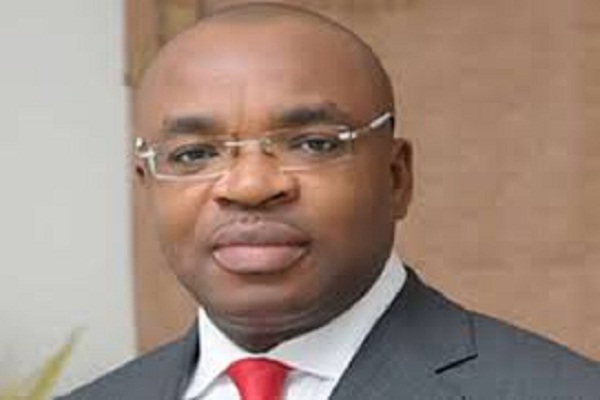
Governor Udom Emmanuel of Akwa Ibom State has received the report submitted by the 20-member committee put together by his administration to reposition the state for the post COVID-19 economy.
The report was submitted on Tuesday, June 9, 2020 at an event which had in attendance the governor and members of the State Executive Council.
The committee which had Prof. Akpan H. Ekpo, a former Director General of the West African Institute for Financial & Economic Management (WAIFEM) as Chairman and Prof Emmanuel Onwioduokit, HOD, Economic, University of Uyo as Secretary; also boasts a number of prominent entrepreneurs including Leo Stan Ekeh, Chairman, Zinox Group; Udom Inoyo former Executive Vice Chairman of ExxonMobil as well as other eggheads from the corporate and academic circles as well as seasoned administrators in its fold.
The 142-page report was divided into nine chapters, each of which addressed specific areas of interventions or terms of reference on what should be done in rejigging and restructuring Akwa Ibom state to navigate the post COVID-19 world.
Equally important, the report was classified into three different time frames, namely the immediate, short term and long term interventions.
They include mental orientation of the people, especially the youths; focus on agriculture, industry and service as potential mainstay of the Akwa Ibom economy in a post COVID-19 world without oil; massive efforts to continue the industrialization process in the state, increased participation of the youth in the economy and stamping out of cultism/other criminal activities in the state; completion of the Science Park to serve as a Silicon Valley of sorts for Akwa Ibom state as well as for job creation and improvement of Internally Generated Revenue (IGR); massive investment in infrastructure; re-visitation of the state’s waterways transportation; full autonomy for the state’s internal revenue board by disengaging it from the public service and the establishment of clear targets for it; recapitalization of state-owned financial institutions such as the Akwa Saving & Loans Ltd. and provision of credit facilities for low-income housing for residents; set-up of an independent data generation institution to aid the state’s planning purposes; inauguration of an Economic Advisory Council to assist in the conceptualization, formulation and implementation of government policies; establishment of a Reserve Fund to see the state through lean periods; recommendation of an exit plan for the state’s commercial ventures; identification of low-hanging fruits that the state can immediately take advantage of and the creation of a 30-year strategic development plan to be passed into law in the state.
Receiving the committee’s report, Governor Udom heaped praises on the members of the committee for completing its work within the one-month time frame outlined.
Specifically, he singled out two non-indigene members of the committee – the Zinox Chairman, Dr. Ekeh and Prof. Vincent Anigbogu, Director-General, Institute for National Transformation – for special praise.
‘‘On behalf of the good people of Akwa Ibom State and the Executive Council, I want to appreciate the members of this committee, beginning from the Chairman, Prof. Akpan Ekpo, the Secretary, Prof Emmanuel Onwioduokit and most especially those our brothers, Prof. Anigbogu, Leo Stan Ekeh and our sister Mary of the Securities and Exchange Commission, as busy as she’s been who still created time to serve her state irrespective of her busy schedule.
‘‘I really want to appreciate all of them specifically and convey the gratitude of our own people.
“I want to say we are grateful to Prof. Anigbogu, to Leo Stan Ekeh and all the Akwa Ibomites who have served on this committee.’’
Reacting to the recommendations of the committee, the Akwa Ibom Governor disclosed that his administration will implement every single one to the letter.
He also commended the innovative ideas for repositioning the state and empowering the youths through ICT, even as he welcomed the idea of mental re-orientation.
‘‘The only way forward and the fastest approach; I believe when I read your report, I will see as one of the low-hanging fruits, is to drive our youths through ICT.
“For this, we have to work with our brother, Leo Stan Ekeh, a friend of the state, who in fact, we must give a local government which he will adopt as the one he hails from in Akwa Ibom; so that he can help us drive the aspect of youths and ICT.’’
Referencing the growth of platforms such as Zoom, Microsoft Teams and Netflix, the governor affirmed that COVID-19 had created a number of business opportunities for people through ICT, noting that a lot more are coming.
‘‘I wouldn’t want Akwa Ibom to be left behind,’’ he declared.
On the 20-year strategic development plan for the state, Udom expressed excitement with the recommendation.
Also, he stated that the Executive Council was working on a similar proposal, noting that the proposal had undergone two reviews.
Subsequently, he assured of his commitment to conclude the economic plan as quickly as possible.
Equally important, he revealed the immediate set-up of a five-member implementation committee headed by the committee Chairman, Prof. Ekpo to see to the immediate execution of the report submitted by the committee.
Others include the Secretary, Prof. Emmanuel Onwioduokit; former Executive Vice Chairman, ExxonMobil, Mr. Udom Inoyo; Commissioner of Agriculture, Dr. Glory Edet and Hon. Eno Uwan.



EFCC


The African Development Bank Group last week approved an investment of €6.5 million in the Saviu II fund in order to support technology start-ups through their seed phase and first institutional fundraising, mainly in French-speaking Central and West Africa.

The Bank will invest €4.5 million as equity and €2 million as a first-loss hedging tranche on behalf of the European Commission, under the Boost Africa Programme.
This participation of the Bank Group will enable the Saviu II fund to give priority to companies with a strong technological or digital component.
Saviu II, the second investment vehicle of Saviu Partners, plans to invest between €500,000 and €3 million in about 20 technology or technology-oriented business-to-business start-ups in the seed phase or carrying out first institutional fundraising.
The Saviu II venture capital fund aims to make at least 60% of its commitments in the French-speaking countries of West and Central Africa: Côte d ‘Ivoire, Cameroon, Benin, Senegal, Togo, Burkina Faso and Mali.
The fund can also co-invest in promising technology companies in East Africa that have a strong team and business model, and whose strategy includes entering the market in French-speaking West African countries and establishing a strong presence there.
In addition, the fund will devote a dedicated envelope to pre-seed investments, focusing on minority equity investments, usually in co-investment with studios, incubators or other ecosystem partners.
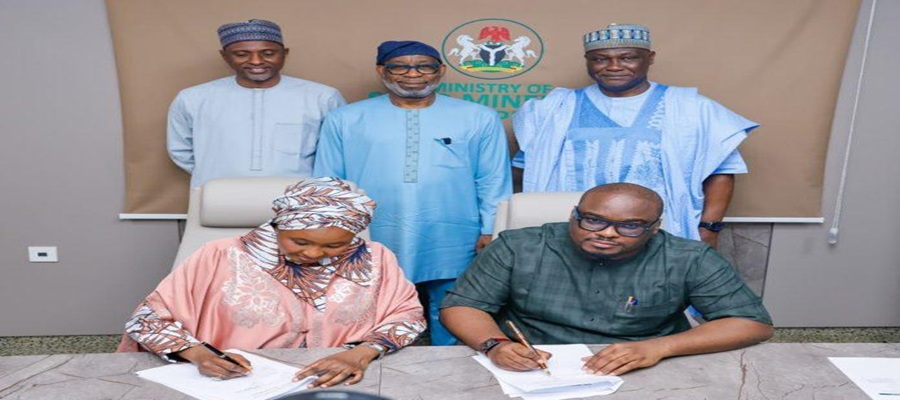
Nigerian Government has signed a $1.3 billion Memorandum of Understanding (MoU) with Africa Finance Corporation (AFC) via the Solid Minerals Development Fund (SMDF) to fund an alumina refinery, national geoscience mapping, and a strategic investment vehicle for mining growth.

Special Assistant to the Minister of Solid Minerals Development, Segun Tomori, said the refinery will process one million tonnes of bauxite yearly using a modern Bayer process, powered by an on-site gas-fired cogeneration plant.
Minister Dele Alake called it a transformative milestone boosting GDP, aligning with reforms that improve investment climate, regulations, and licensing to attract private capital. He directed agencies to fast-track permits.
The 20-year project at 95% utilization eyes 19 million tonnes total output, $1.2 billion annual GDP addition, $25 billion economic impact, and $8 billion forex earnings, per feasibility studies.
SMDF Executive Secretary Fatima Shinkafi termed it the agency’s biggest funding deal, supporting value-addition policy.
The partnership extends to geoscience mapping for mineral data, de-risking exploration, and a joint vehicle for mining assets.
Permanent Secretary Engr. Farouk Yabo praised the reforms. Shinkafi signed for government; AFC’s Franklin Edochie for the corporation, witnessed by AFC CEO Samaila Zubairu.
Tomori positioned it as Nigeria’s largest private mining investment and FDI magnet.

MultiChoice to Discontinue Showmax Streaming Platform

GCR Affirms Afreximbank’s International Scale Ratings of A, A2

SmartCash Launches ‘No Be Cho Cho Cho’ Campaign to Boost Digital Banking in Nigeria

MTN Nigeria Non-Executive Director Mazen Mroue Quits to Focus on Group Role

Google Adds Yorùbá, Hausa to AI Search, Boosting Access for Millions of Nigerians

Dr. Cairo Ojougboh Foundation Bolsters Nigeria’s Education Drive with ₦2.7m Student Support

Kaspersky Brings more Transparency to Threat Detection with New Hunt Hub

NDPC Commits to Balancing Data Privacy, Protection Information

PwC Reveals AI Scaling Gap Slows Africa’s Digital Transformation

Firm Reviews the Evolution of Phishing Threats in 2025




 E-Financial2 days ago
NRS Targets N40trillion in Tax, Royalty Revenue in 2026

 E-Financial2 days ago
SEC Revokes Registration of Kensington Agro Trading Limited

 General News2 days ago
Purple Woman 3.0 Is Back, to Empower Women in Tech this IWD 2026

 News2 days ago
EFCC Arraigns Two FSDH Bank Officials Over $307k, €50k Fraud

 Telecom2 days ago
Konga Launches ‘Berekete Sales’ with Up to 50% Discounts Across Major Categories
 E-Business2 days ago
NDPC, 60 DPAs Collaborate on Enforcing Privacy Rights in the Use of Al

 General News2 days ago
NCDC Raises Alarm over Lassa Fever Ravaging 18 States in Nigeria

 E-Financial2 days ago
Nigeria’s Net Reserves Surge 50% to $34.8bn in 2025 – CBN Governor