

E-Financial
Greenwich Merchant Bank Partners PSRG-Richardson on Sustainability for Inclusive Growth

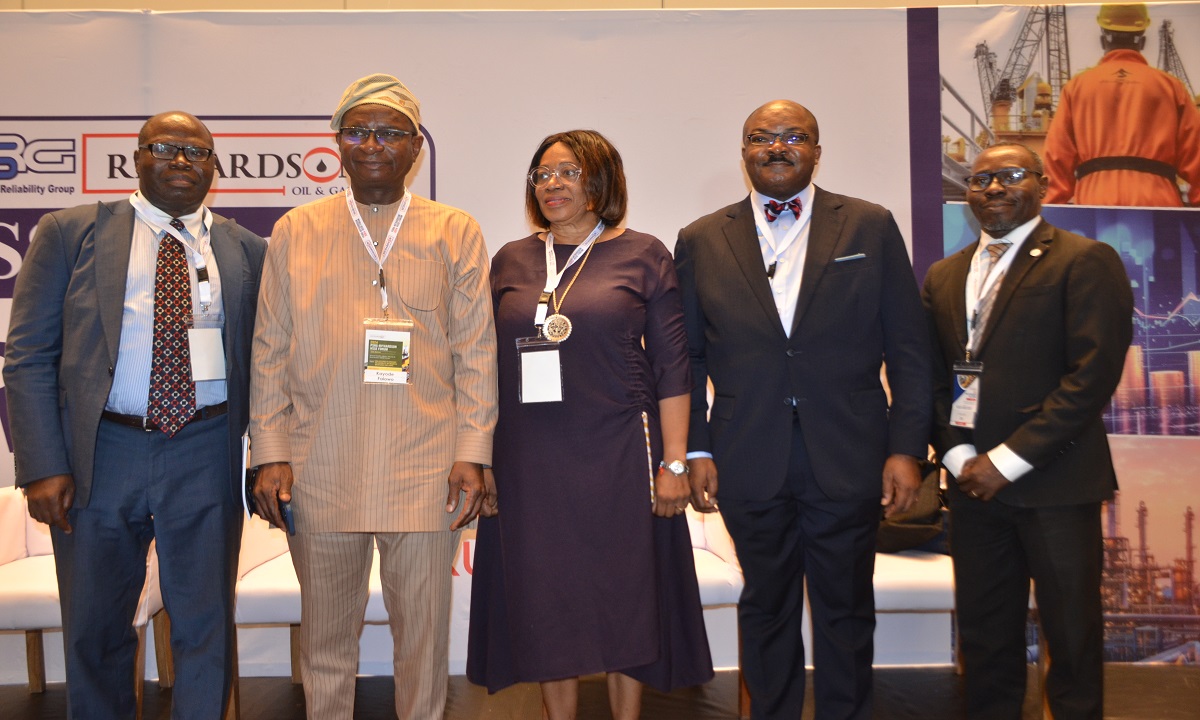
Greenwich Merchant Bank Ltd and PSRG-Richardson have partnered on the key strata of sustainability – health, safety, security and the environment to drive the nation’s economy towards robust and inclusive growth.

L-R: Dr. Okon Akiba, Medical Director/CEO Rabboni Hospitals Ltd; Mr. Kayode Falomo, Chairman of Greenwich Merchant Bank Ltd.; Dr. Dorothy Bassey, CEO/MD, Fortnum Consulting Hub/HSE Specialist; Akin Osuntoki, CEO of Richardson Oil and Gas Ltd and Adeola Ojo: Team Lead-Investment Banking at the two-day 16th edition 2024 PSRG-Richardson HSSE Forum, themed “Unlocking Economic Prosperity in Nigeria: Bridging the Gaps, held yesterday in Lagos.
This was disclosed in a press release signed and made available by the Head, Corporate Communications of the Institution, Ozena Utulu yesterday.
Speaking on the sidelines of the 2024 PSRG-Richardson HSSE Forum 16th Edition, in Lagos, the Chairman of Greenwich, Mr. Kayode Falomo explained that with the complex challenges in the nation, partnerships are important for the growth and development of the economy.
According to him, at Greenwich Merchant Bank, we value the collaboration and the benefits that our strategic partnerships bring to the Nigerian economy whilst we are conscious of the importance of health, safety, security and the environment to the overall socio-economic well-being and wealth of nations.
“At GMB, we understand that our business activities and operations impact on the environment and the society in which we operate. Hence, our sustainability approach has been tailored to proactively incorporate sustainability principles into our business dealings with our clients as well as our internal practices and operations. This approach has enabled us to effectively manage the environmental and social risks associated with our business interactions and internal operations.
“We have consequently made Healthcare a central part of our CSR focus. Through our Foundation, the Greenwich Foundation, we will continue to make critical investments in healthcare infrastructures, institutions, delivery systems etc. towards ensuring a healthy population and society,” Falomo stated.
He disclosed that the pre-eminent merchant institution collaborates with clients, alliance partners, NGOs, industry groups, suppliers, and others on sustainability initiatives.
To further explain this, the chairman says, “to achieve this goal, the Board has approved a plan to ensure collaboration with clients, alliance partners, NGOs, industry groups, suppliers, and others to: increase demand for responsible products and services, remove roadblocks that get in the way of enacting change and support efforts geared at creating innovative climate solutions at a systems and operations level.”
Addressing the theme for this year’s forum, titled, “Unlocking Economic Prosperity in Nigeria: Bridging the Gaps, the CEO of Richardson Oil and Gas Ltd, Akin Osuntoki said Nigeria’s path to prosperity was hindered by several key challenges like inadequate infrastructure which limits economic efficiency; security issues that disrupt business and deter investments; over dependence on oil, which makes the economy vulnerable to global market fluctuations; and the dysfunctional Educational system that has resulted to skills gap affecting workforce productivity.
According to Osuntoki, to unlock prosperity, Nigeria must undertake a multifaceted approach to address the challenges.
He hinted on the need to prioritize investment in infrastructure, economic diversification, reformation of the educational system, strengthening governance, concretize security issues and leveraging Nigeria’s strategic location to enhance regional trade and economic cooperation to further boost growth and development.


Central Bank of Nigeria (CBN) has debunked rumours suggesting that Polaris Bank is undergoing liquidation, assuring the public that the country’s banking system remains stable and secure.

Polaris Bank
The apex bank disclosed this in a post on X, where it shared a screenshot of a viral claim and flagged it as false.
It clarified that the claims, suggesting Polaris Bank had failed to meet recapitalisation requirements and was set for liquidation, are entirely false and do not reflect the current state of the Nigerian banking sector
“The Central Bank of Nigeria has noticed reports, in certain media outlets, about a recommendation for the Federal Government to take over some CBN-supervised financial institutions,” said Hakama Sidi-Ali, apex bank’s acting Director, Corporate Communications, in a statement.
“To avoid any doubt, Nigerian banks are still safe and sound. The CBN advises the public to go about their daily lives without getting disturbed by reports regarding the health of Nigerian banks that have not come from the CBN.
“The CBN is fully equipped to carry out its statutory duty of ensuring the stability of Nigeria’s financial system. “We assure the general public and depositors that their funds are safe in Nigerian financial institutions. “Bank customers are therefore advised to proceed with their banking transactions as u
The clarification was after a viral post, claiming that Polaris Bank was facing liquidation for failing to meet the Bank’s recapitalisation requirements, and could soon lose its operating licence, with the Nigeria Deposit Insurance Corporation set to take over the process.
It further alleged that founder of the Eleganza Group, Razaq Okoya, had made a bid to acquire and revive the bank, pending approval from regulators and shareholders.
Sharing a screenshot of the viral claim, however, the apex bank flagged it as “fake content.”
It clarified that the claims, suggesting Polaris Bank had failed to meet recapitalisation requirements and was set for liquidation did not reflect the current state of the Nigerian banking sector.
“This content is fake. Let the public be guided. The Nigerian Banking System is Safe and Secure,” the bank said.
On April 1, the CBN confirmed that 33 banks successfully met the revised minimum capital requirements under its recapitalisation programme, marking a significant milestone in strengthening the financial system.
African Development Bank Group (AfDB) has approved a $200 million loan to Nigeria to support a landmark digital infrastructure initiative aimed at expanding broadband access, developing digital skills and driving large‑scale job creation.

The financing will support the Digital Value Chain Infrastructure for Boosting Employment project, known as D‑VIBE or Project BRIDGE. The initiative seeks to deploy about 90 000 kilometres of new open‑access fibre optic cable across Nigeria, extending the national fibre backbone from roughly 30 000 km to about 120 000 km.
The expanded network will connect all 774 local government areas, including schools, hospitals, agro‑industrial zones, rural communities and commercial centres. It will also establish cross‑border digital links with Benin, Cameroon, Niger and Chad, strengthening regional integration.
Nigeria is Africa’s most populous country and West Africa’s largest economy, with the digital sector increasingly contributing to gross domestic product growth. The project is expected to close major connectivity gaps, raise productivity and unlock job opportunities for young people.
D‑VIBE is structured as a public‑private partnership through a special purpose vehicle, with public ownership capped at between 25% and 49% and private sector participation ranging from 51% to 75%.
This structure is intended to address high fibre rollout costs, including construction and right‑of‑way challenges.
The African Development Bank loan forms part of an $800 million sovereign financing package, alongside $500 million from the World Bank and $100 million from the European Bank for Reconstruction and Development.
Total project financing is estimated at $2 billion, including a $25.79 million European Union grant, a $2.6 million Multilateral Cooperation Centre for Development Finance preparation grant and at least $1.2 billion in private sector investment.
“Nigeria has the talent, the market and the ambition, but lacked the backbone infrastructure to connect opportunity with potential,” said Abdul Kamara, Director General of the African Development Bank Group’s Nigeria Office.
“This project will deliver high‑speed connectivity nationwide and equip young people to build digital careers.”
Beyond physical infrastructure, the project will support affordable devices, large‑scale digital skills training and digital platforms in priority sectors. It also includes cybersecurity, competition reforms and resilience measures, including greater use of renewable and hybrid power.
D‑VIBE is expected to help create up to 2.8 million jobs and raise broadband penetration from 45% to around 70% by 2030. The project aligns with Nigeria’s Vision 2050 and continental development priorities.
World Bank has warned that Nigeria faces a deepening early childhood development crisis in health, nutrition, and learning, threatening long-term productivity and economic growth amid persistent poverty.

World Bank
In its April 2026 Nigeria Development Update, “Nigeria’s Tomorrow Must Start Today: The Case for Early Childhood Development,” the bank noted moderate 2026 growth driven by services like ICT, financial services, and real estate, following 4.0 per cent GDP expansion in 2025. Inflation eased to double digits via tight policy, stable exchange rates, and better food supply, while reserves hit $45.5 billion gross by end-2025, covering 8.7 months of imports.
Fiscal deficit widened slightly as non-oil revenues rose to 8.5 per cent of GDP from improved tax administration, e-filing, and VAT e-invoicing, though wage growth lagged inflation, leaving real incomes strained and poverty unchanged.
The bank highlighted poor outcomes with 110 of 1,000 children dying before age five, 40 per cent stunted, and 52 per cent developmentally off-track at school entry—gaps three times wider in poor households and exceeding 40 points between rich and poor. It urged investment in the first 2,000 days for better education, earnings, health, and cohesion.
Regionally, Sub-Saharan Africa’s 2026 growth forecast dipped to 4.1 per cent from 4.4 per cent due to Middle East conflict inflating fuel and fertiliser costs.
Finance Minister Wale Edun countered with recovery signs: falling inflation, rising non-oil revenues, declining debt-to-GDP, and stabilising naira via digital tracking, audits, and PPP shifts. Budget Director Tanimu Yakubu described reforms as correcting imbalances from subsidies and multiple rates, boosting FAAC revenues 40 per cent and reserves over $40 billion, with debt under 30 per cent of GDP.
NACCIMA President Jani Ibrahim called for data-driven strategies amid tax changes, inflation, and global tensions, eyeing AfCFTA, digital economy, and green investments for growth.

FG to Gift Nigerians over 100 Free TV Channels from May 15

FG New Approves Biometric Passenger Verification System for Airports Security

STBMAN, NBC Bicker over Alleged Due Process Breaches

CBN Dismisses Polaris Bank Liquidation Claim

AfDB Okays $200m for Nigeria’s Digital Backbone, Others

Spotify’s Loud & Clear Report Reveals Over ₦60Bn Revenue for Nigerian Artists in 2025

Kuda MFB Increases Kuda for Her Business Grants to ₦10 Million

Why JustMarkets Is a Strong Choice for Gold Trading

Canal+ to Cut Jobs as Part Sweeping Restructuring

Nigeria tops global rankings for USDT, USDC ownership




 E-Business2 days ago
Nigeria Demands Cloud Sovereignty to Anchor Africa’s Digital Independence

 Telecom2 days ago
Digital Encode Sponsors PAFON 3.0 as CVO Prof. Adewale Set to Deliver Keynote on Cybersecurity and Trust

 Telecom2 days ago
NITDA Boss Warns of AI Threat Shift @ GITEX Africa

 E-Business2 days ago
As Nigerians Struggle to Save, Mutual Benefits Highlights Power of Structured Financial Planning

 E-Financial2 days ago
Polaris Bank Targets Youth with Financial Literacy Drive

 Broadcasting2 days ago
What Adekunle Gold’s Support Means for ‘The Gathering on 100
 Broadcasting1 day ago
FG to Gift Nigerians over 100 Free TV Channels from May 15
 E-Financial1 day ago
AfDB Okays $200m for Nigeria’s Digital Backbone, Others