

Telecom
GSM Service Nine Years After

Some 9 years ago Nigerians were looking forward to the dawn of a new era in view of the license granted to three operators then to render services at the 900MHz frequency spectrum with Global System for Mobile (GSM) communications technology.
This month of August marks Nine years since the country began the liberalization of telecommunications industry through adoption of this technology as a means of providing Nigerians communications tools.
The Nigerian telecommunications industry since then has experience significant growth, following the successful takeoff of the digital mobile telephone services, using GSM technology, from less than 500,000 active fixed telephone lines provided by Nigerian Telecommunications Limited (Nitel) and very few Private Telephone Operators (PTOs) as at mid 2001, to a population of over 120 million, the total number of connected fixed and mobile telephone lines increased to about 76 million both active and inactive lines early this year.
However the entrance of the GSM technology brought about such a revolutionary transformation that millions of Nigerians with no access to telecommunications now clutch mobile phones in their hands. It is common sight to see traders, fish sellers, hawkers, motorcycle riders among others using mobile phones. The staggering number of subscribers on three major GSM networks of MTN, Globacom, Zain and Etisalat as Nigeria celebrates nine years of operations of this technology, is a testimony to the hunger of Nigerians for communications.
It is clear that Nigeria cannot celebrate the growth recorded in the communications sphere without acknowledging the contributions of Engr. Ernest Ndukwe, immediate past executive vice chairman of the Nigerian Communications Commission (NCC). Ndukwe has over the years emerged as the face of GSM in Nigeria through his transparent handling of the regulatory affairs of the telecoms sector.
Since February of 2001 when he supervise the auctioning of GSM license in the country, he conducted the affairs of the regulatory functions of the commission in such a way that other countries in Africa now come to Nigeria to understudy the regulatory processes that has seen the sector emerge as the largest and fastest growing in Africa and the 3rd fastest growth in the world.
Several research firms across the globe have commended the Nigerian government and Ndukwe, as one of the most sought-after telecom resource persons in the industry in Africa for an effective transparent and foreign investment attracting regimes in the continent. In spite of the challenges in the quality service characterized by drop calls, Ndukwe’s startling qualities as a regulator of note is still intact.
However, NCC had taken several measures to tackle the issues of quality service. One of the ways the NCC has shown that it was serious in tackling issues of quality of service was in the area of enforcing its regulatory powers to stop operators from further promos that has been a major cause of network congestion witnessed few years ago. By that action, the NCC sent a massage that no operator is above the law and that they must conform to measures that will save the sector from further deterioration due to their poor service delivery. The commission had also procured equipment that enables it monitor congestion and service quality of the various networks in the country, and therefore periodically publishes network performance of operators.
It also ensured that operators paid their subscribe compensation for poor quality of service experience on the network.
Benefits
In the last nine years, since the GSM revolution started in the country, a lot of benefits have been enjoyed by the Nigerian subscriber who was hitherto at the mercy of the almost nonexistent but epileptic service rendered by the Nigerian Telecommunications (Nitel). Since then, the monopoly of non effective service rendered by Nitel has been broken and communication across regions enhanced by GSM thus encouraging the socio economic growth of the nation. It is an indubitable fact that effective communication is crucial and cannot be overemphasized in the socio economic development of a nation. With a teledensity presently below 65% and a subscriber base of 76 million as at the end of April, one could say that a feat has been achieved by the GSM revolution in connecting Nigerians to a critical service given the fact that before the advent of GSM, teledesity was less than 4% and only about five hundred thousand Nigerians had access to telephony service in a nation of over a hundred million people.
Then having a telephone was a class issue and only the rich could afford the luxury and the muscle to withstand the stress of Nitel technicians who used to hold subscribers to ransom at every little opportunity. Then it was common sight to see the technicians asking for ladder, cables and all sorts to fix a line anytime a problem arises, it was indeed a nightmare. One could easily recall the stress of keeping vigil at the office of Nitel in a bid to make calls and be confronted with the common problem of no tone come back tomorrow and so on. But thanks to president Obasanjo and the coming of GSM all that is now history.
The GSM revolution has indeed contributed over 80 percent of $18 billion foreign direct investment. It has also stimulated local investment and increased job opportunities. It is common scene in urban areas as well as rural areas where there is coverage for young men and women sitting under an umbrella provided for them by GSM operators making calls for people at a token. This umbrella call centre initiative is today providing food to greater percentage of unemployed Nigerians, aside this are others who are trading in recharge cards and other products of GSM operators.
The benefit of GSM technology is enormous and still increasing as it gets expanded, we may not easily forget that Nigerians are now turning to GSM engineers, and there are young countrymen and women who eke out their living through repair of mobile handsets.
The popular Otigba computer village is no longer computer village in its sense as the sales of mobile handset has almost taken over business at the market.
The revolution has also indirectly stimulated development and vibrancy of some sectors of the economy, such sectors are leveraging on the technology deployed by GSM operators to provide services to their customers.
A case in point is the banking sector which gives customers the opportunity to monitor and carry out transactions on the move through their mobile phones. Automated teller machines (ATM) deployed by banks are working with the help of GSM General package radio service (GPRS) deployed by operators.
There has been an increased turnover for advertising and marketing communication services basically because of the GSM operators that use the channel often times to reach their subscribers during campaign for more subscribers.
Challenges
In spite of the benefits, Nigerians are enjoying from the advert of GSM technology, the operators are not finding it a world of roses in rendering services. The much talked about poor quality of services is a function of weak infrastructure base; operators have been powering their equipment with generators which are not the case in most environments. This is attributed to inefficient public power system.
Nigeria CommunicationsWeek investigations revealed that the four major operators in this space, MTN, Glomobile, Zain and Etisalat are powering their over 22,000 base transceiver stations with 44,000 generators. They are also providing security for their equipment which has not deterred unscrupulous Nigerians from stealing these generators and diesel. Operators are losing an average of two generators daily and over a million litres of diesel to theft. This is indeed a huge lost to bear by operators.
There is also the problem of area boys. One of the operators has had to shut down one of its sites in Lagos due to incessant demand of huge settlement by area boys. In the Niger Delta area, one of the operators reported that over 30 of its sites have become inaccessible due to activities of militant youths, who have refused them to refuel or maintain the sites except they parted with huge sum of money. It is unfair on the GSM operators, who unlike the oil companies are not taking any natural resources but are building telecommunications infrastructure around the country.
Operators are also faced with multiple taxation imposed on their equipment by different tiers of government, Abuja Capital Development Authority had sometime imposed N3 million annual fee on each base station in the metropolis. More so Association of Licensed Telecommunications Operators of Nigerian (Alton), the umbrella body of the telecom operators, are in count with Lagos State government over the later imposition of N500,000 fee per base station in the state.
However, events in the recent past suggest that other federal government agencies as well as states are now making effort to usurp NCC’s function in the telecommunications industry which is unknown to the country’s law.
It has become a common practice for any government agency be it federal or state to solicits for one levy or the other from operators while some seek that operators secure approval from them which comes with a fee before they can build infrastructure.
The regulatory body also needs to ensure that competition is enshrined in all market segments of the sector as well as maintain favorable regulatory and investment climate, required for the protection of customers. This is necessary in view of anti competitive behavior of some GSM operators.
The next phase of telecommunications growth will come from expanding coverage to the rural areas. With a 60 percent of the country being covered with Telecommunication services, it is obvious that a huge gap needs to be tapped and already the focus for now by stakeholders and investors is on the rural communities.
Foreign investors are showing enthusiasm to come to Nigeria and do business mostly as a result of the fact that in spite of the infrastructural problems posed by lack of power, roads among others, Nigeria has a high return on investments rate. It is a fertile ground for any investor to recoup their investments in the short possible time; this is because of its population. The country has witnessed higher investments in the urban areas with lower investments in the rural areas by telecom operators. In other to bridge this gap, telecommunications and internet services need to deployed services to the rural areas which will solve the problem of rural to urban drift.
The NCC under Dr. Eugene Juwah, should not relent in its efforts of playing its regulatory functions in an effective manner. Nigeria has a lot to gain and cannot afford to lose sight of the fact that an effective regulatory environment has to a large extent helped in steering the ship of the nation’s telecoms revolution.
As Nigeria celebrates this nine year of Global System for Mobile communication (GSM), subscribers await the introduction of number portability which is believed will in no small measure help to address the quality of service issues.
NCC needs to be commended for rising up to the challenges of regulation, especially with SIM registration, call centre initiative, consumer parliament and its current effort at ensuring that physically challenged group in the society are fairly treated by operators.



With its meteoric rise in data centre development and it accounting for 20% of the global population, Africa still only has 0.6% of global data centre capacity.

This is based on the 2026 Economic Report: Data Centres in Africa, published by Africa Data Centres Association (ADCA), in partnership with Rising Advisory.
The US hosts about 45% of the world’s data centres, while Africa accounts for less than 1% of global capacity.
According to the report, Africa’s active capacity stands at 360MW, with 238MW under construction and 656MW in the pipeline.
By comparison, global active capacity is at 5.5GW, with 1.5GW under construction and a development pipeline of 13.5GW.
Even if all of Africa’s announced projects materialise, says the report, the continent is projected to maintain rather than increase its global share, as hyperscale expansion accelerates elsewhere.
“This is not a catch-up cycle; it is a race to avoid deeper structural marginalisation in global compute,” notes Faith Waithaka, chairperson of ADCA.
“Capacity development in Africa must be approached with a long-term perspective, recognising that infrastructure growth will precede full utilisation as digital ecosystems continue to evolve.
“Sustainability is now a central consideration for the sector. Improving energy-efficiency and integrating renewable energy sources are essential to the viability of data centre operations. Africa is uniquely positioned in this regard, with vast untapped potential across solar, wind, hydro and geothermal resources. Leveraging these assets can support greener data centres, while strengthening energy security and long-term competitiveness.”
Africa’s data centre market is projected by Mordor Intelligence to reach $4.36 billion by 2031, with the South African market considered a “sweet spot” due to its favourable position on the African continent.
South Africa is the largest data centre market on the continent, with55 data centres already built. The country’s geographical position also makes it a strategic hub for regional and international connectivity.
Firms such as Digital Realty-owned Teraco, Vantage Data Centres, Open Access Data Centres and Equinix have expanded their data centre footprint in SA, while hyperscalers Amazon Web Services (AWS), Google and Microsoft Azure have also built local data centre facilities.
The country’s data centre momentum has been highlighted by president Cyril Ramaphosa on several occasions, notably stating that more than R50 billion in investment is expected in the local data centre space over the next three years.
The data centre capacity buildout has also resulted in government calling for accelerated cloud migration, as the state’s digital transformation efforts require greater use of cloud.
Digital rush
The report notes that the global data centre industry is booming as demand for this “digital gold” accelerates.
Valued at $243 billion in 2025, the market is projected to double by 2032, according to the World Economic Forum.
Meanwhile, UN Trade and Development reports that data centre projects accounted for over one-fifth of all greenfield foreign direct investment in 2025.
“This surge reflects the growing need for artificial intelligence (AI) infrastructure, cloud services and digital networks, positioning data centres as indispensable assets driving global growth strategies,” states the report.
“Several converging trends are driving this expansion. Cloud adoption continues to shift workloads off-premises, while AI and big data are reshaping infrastructure needs.”
On the other hand, hyperscale facilities − operated by giants like AWS, Microsoft, Google and Alibaba − have doubled in number roughly every five years, with hyperscale capital expenditure rising nearly 58% year-on-year in 2024.
“Governments across Asia, the Middle East and Africa are offering incentives to attract greenfield projects, recognising data centres as foundations for innovation, skilled employment, and adjacent industries like fintech and AI. Yet Africa faces a stark challenge.
“The continent’s share is expected to expand only in line with global growth, rather than closing the gap. This opportunity has not stayed unnoticed, and investors, expecting high returns, have poured funds into increasing the sector’s capacity by approximately two-thirds.”
Legal steps
According to the report, the heightened activity in the data centre market has resulted in data sovereignty becoming policy reality.
It notes that as of early this year, over 40 African nations have enacted data protection legislation or established data protection authorities, while five additional countries are drafting laws.
Additionally, 15 countries have formalised national AI strategies.
As noted in the ADCA report, the frameworks aim to protect citizens’ rights, while providing legal certainty for investors and digital service providers.
“Governments are increasingly recognising data centres as critical national infrastructure, central to digital sovereignty, financial stability and AI competitiveness.
“As Africa’s digital economies expand, the rules governing ‘where’ and ‘how’ data is stored, processed and transferred are becoming central to economic competitiveness and state capacity.
“Data sovereignty – the principle that data generated within a country should be governed by that country’s laws – has evolved from a legal aspiration into a strategic policy lever, shaping investment patterns, infrastructure deployment and the localisation of digital value chains.”
Even with the frameworks, enforcement capacity often lags legislative ambition, states the report.
“World Bank and GSMA assessments highlight constraints linked to staffing, funding and technical expertise. Yet this enforcement gap also represents a growth opportunity: stronger, more predictable regulation is increasingly seen by investors as a prerequisite for scaling local digital infrastructure. And well-functioning regulation is increasingly functioning as a demand signal.
“Clear localisation and data-protection requirements create predictable demand for compliant, in-country infrastructure, improving bankability for data centre projects and attracting long-term capital.
“Data localisation policies are emerging as part of this broader regulatory maturation. When aligned with market realities, localisation can strengthen oversight, improve accountability and support the development of domestic data centre ecosystems.”

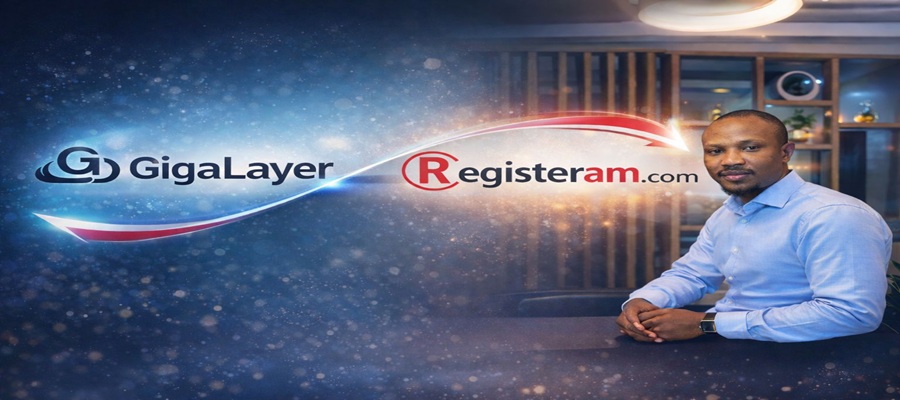
GigaLayer, a prominent player in Africa’s cloud infrastructure and domain services sector, has announced the acquisition of Registeram, a Nigerian domain registration and hosting firm.

GigaLayer
This move marks a significant consolidation in the local tech ecosystem, as GigaLayer continues its aggressive expansion strategy to dominate the digital infrastructure market in Nigeria and across the continent.
Consolidating the Digital Backbone
The acquisition of Registeram, which has been operational since 2008, is the latest in a series of strategic buyouts by GigaLayer.
The company has previously integrated brands such as Trudigits, Hub8, MainOne’s SMEinaBox, and LagosHost, effectively positioning itself as a primary consolidator in a fragmented hosting industry.
According to Ahmad Mukoshy, Founder and CEO of GigaLayer, the deal is less about increasing headcount and more about infrastructure resilience.
“This acquisition reinforces our commitment to building resilient, locally operated cloud and domain infrastructure for African businesses. We are not just acquiring customers; we are strengthening Africa’s digital backbone,” Mukoshy stated.
What this means for Registeram customers
GigaLayer has assured Registeram’s existing clientele of a seamless transition with no immediate service disruptions.
Key highlights of the integration include:
Infrastructure Upgrade: Services will be migrated to GigaLayer’s enterprise-grade platform to improve performance and redundancy.
Security & Support: Users will gain access to enhanced security standards and GigaLayer’s robust support system.
Product Expansion: Existing customers will now have access to broader cloud compute and high-availability hosting solutions.
Focus on Local Cloud Sovereignty
As Nigerian businesses face increasing pressure to comply with local data residency regulations, GigaLayer is doubling down on local cloud sovereignty.
The company currently operates infrastructure across two data centers in Lagos, focusing on bare-metal and cloud compute capabilities designed for enterprise workloads.
By reducing reliance on offshore providers, GigaLayer aims to provide high-performance solutions that are both compliance-ready and tailored for the Nigerian economic climate.
“We believe Africa’s digital future must be built on African infrastructure,” Mukoshy added.
Strategic Outlook
The founders of Registeram are expected to exit to pursue other ventures, while GigaLayer takes full operational control of the assets and client portfolio.
This acquisition signals a maturing market where local players are scaling up to compete with global giants by offering localized support, Naira-based pricing stability, and low-latency infrastructure.

Olugbenga Agboola, Flutterwave CEO has joined a $22 million funding extension for Nigerian defensetech start-up Terra Industries as Africa’s fast-growing drone and security technology sector begins to attract capital far beyond traditional venture circles.

The round was led by Lux Capital, with participation from Agboola through Resilience17 Capital and returning investors including 8VC and Nova Global.
It follows an $11.75 million raise just weeks earlier, bringing Terra’s total funding to $34 million as the company accelerates expansion into high-risk security markets.
Terra, founded in 2024 by 24-year-old chief engineer Maxwell Maduka and CEO Nathan Nwachuku, builds autonomous drones and surveillance systems designed to protect critical infrastructure such as energy facilities, logistics corridors and industrial sites. The startup says it is already safeguarding assets worth billions of dollars while securing early federal and commercial contracts.
Agboola’s involvement highlights a broader shift in African tech investment patterns. While fintech has long dominated venture flows, escalating infrastructure sabotage and terrorism threats have elevated demand for locally developed security hardware.
“Nigeria’s drone ecosystem is rapidly evolving from hobbyist and mapping use cases toward industrial monitoring, border surveillance and energy protection, areas increasingly seen as foundational to economic stability.
“This is about backing infrastructure security at scale. Africa’s growth depends on resilient systems that protect critical assets,” said Agboola.
Terra CEO Nwachuku is adamant that locally engineered systems are better suited to African operating conditions. “We are building tools designed for the realities on the ground. Security technology should not always be imported when local innovation can respond faster and more effectively,” he stated.
Lux Capital partner Brandon Reeves underlined that the investor appetite, which has drawn fintech heavyweight interest such as Agboola, reflects rising cross-sector confidence in African defense technology as a commercial category. “Security is a prerequisite for economic growth,” he said.
“As Terra ramps production and expands regionally, its funding milestone illustrates a wider transformation. Drone and autonomous security platforms are no longer peripheral experiments but emerging pillars in Africa’s technology landscape, where fintech leaders and venture capital converge around safeguarding the infrastructure powering the continent’s next growth phase,” said Reeves

Ecobank Nigeria Fully Repays $300m Eurobond Notes

Chams Carves Out Subsidiary to Support Africa’s Digital Transformation

BoI Secures CBN’s Approval for Non-interest Banking Operation

Nigeria, South Africa Drive Stablecoin Spending in Africa

Africa’s Active Data Centres’ Capacity on Back Foot, Despite Investment Push
Nigeria’s 9 Top FinTech Firms Valued at $10.6Bn in January 2026

Firm Detected a Fivefold Surge in QR Code Phishing Attacks in the Second Half of 2025

DG NCC Tasks University Dons on Research Commercialization, IP Management to Build Global Competitive Ecosystems

Kaspersky Launches OT Calculator to Align Cybersecurity Investments with Business Goals

Firm Detected a Scam Exploiting OpenAI’s Teamwork Features




 News2 days ago
African Leaders Highlight Africa’s AI Ambitions

 General News2 days ago
NDPC Orders Probe into Temu over Alleged Data Privacy Breaches

 Telecom2 days ago
MTN, BUA, Dangote & Other Industry Giants Triumph at NGX Made of Africa Awards

 Telecom2 days ago
X Suffers Global Outage, Millions Barred from Access

 News2 days ago
LG Nigeria Begins Nationwide Search for Oldest Working TV, Rewards Loyalty with AI QNED Upgrade

 Telecom2 days ago
MTN CIO Urges Africa to Lead Fourth Digital Revolution

 General News3 days ago
Leo Stan Ekeh Foundation, Zinox Group To Invest 10B on 1000 University Tech Scholarships for Indigent Nigeria Wiz-kids

 Telecom1 day ago
Terra Moves to Expand in African Drone Sector, Secures $22m Funding