

Broadcasting
Healthcare officials in Kaduna State laud Zipline Services

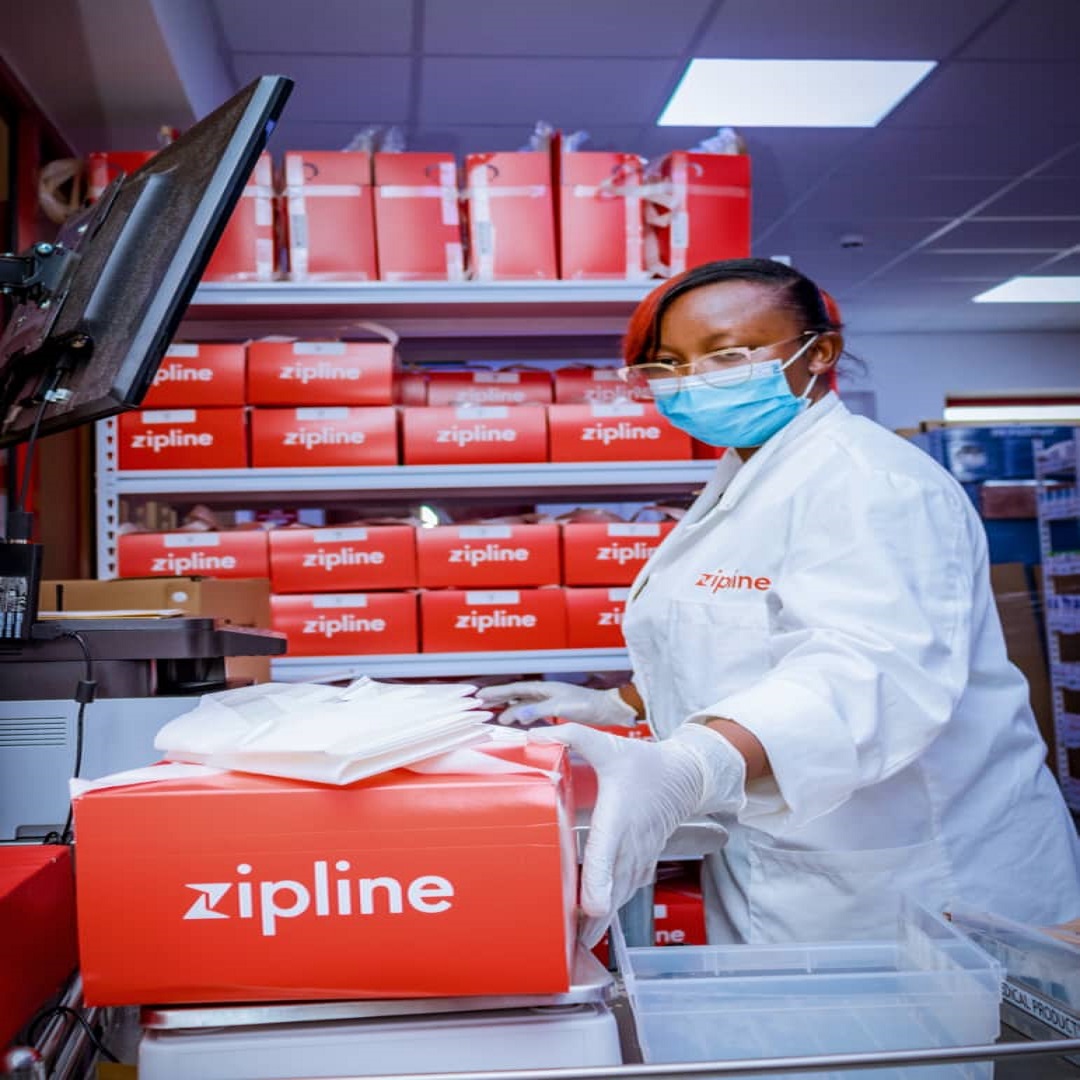
Healthcare officers in Kaduna and its environs have observed great improvements in medical services since Zipline commenced commercial flight delivery of medical supplies to health facilities in the state via drones.

Zipline made its first commercial delivery in Kaduna on August 15, 2022. Since then, the center has made more than 13,507 commercial deliveries containing more than 224,778 vaccine doses including 154,305 doses of COVID-19 vaccines, 1,159,176 units of medical products and 407,889 units of consumables to facilities in Gimi-Tasha, Crossing HC, Kargi, Gedage, Kaibi, Tumbau, Karre, Garun Kurama, Tashan Tsamiya, Kaware amongst others.
“Before Zipline, facilities providing basic healthcare programs had to travel far to get drugs for registered clients when there was a shortage,” says Idris Isa, the Director-In-Charge of the Karreh Primary Health Center.
“It was often a challenge to replenish deliveries, which always took longer than expected. But since we started working with Zipline,
“We can just place orders, and they deliver them in record time. The difference is clear, and the supply has been incredible to save more lives.”
Isa adds that Zipline deliveries have helped healthcare workers improve patient care. Since working with Zipline, he has noticed better outcomes for patients being treated for hypertension, pneumonia, measles, HIV, cholera, meningitis, yellow fever, malaria, tuberculosis and pregnancy complications.
Part of the reason Zipline improved outcomes, Isa says, is because instant access to medical supplies allowed staff to treat patients at the health center rather than referring them elsewhere.
He observed that the previous rate of referrals was a major deterrent for people to visit the health facility.
He also commended Zipline and the government for introducing the technology that has saved lives, especially in areas where healthcare access remains a challenge.
Health officials say essential drug delivery to various health facilities in the state has improved leading to increase in outpatient cases, shortened delay time in access to healthcare etc. This has transformed how medical supplies are delivered to health facilities within the state, impacting those in underserved communities.
Idris Isa is not alone in his assessment of the Zipline support. Wada Yunusa, the Director-In-Charge of Ibada Health Center praised Zipline for the timely delivery of critical medical interventions that has saved many lives, especially in cases of emergency.
According to him, “Zipline delivery to the health center has been fast and efficient. Their timely support is enabling us to deliver on our mandate with ease knowing that even when we need medication in times of emergencies, they will come to the rescue”.
Over the years, Zipline has demonstrated capacity to work with governments and health systems to enable health supply chains to become more efficient.
Commenting on the impact of the service, the Community Lead of Zipline in Kaduna State, Kwasu Kanchok, indicated that the drone delivery system has immensely contributed to the overall health delivery at the facilities we serve. .
“More than 300 health facilities within 80 -100 kilometers from the host local government Kubau to Galadimawa PHC, Kauru LGA to Lere LGA, and the other communities get their essential drugs through Zipline,” Kanchok said. “By the support of the State Government of Kaduna, we are removing most of the access barriers that inhibit health delivery in the area. Health centers do not need to wait days before getting medical supplies. Now, they can get the supplies they need within 30 minutes.”
Ms Catherine Odiase, General Manager of Zipline Nigeria, said, “We remain committed to ensuring that the people of Kaduna can access the care they need at health facilities. And in addition to creating immediate access to medical supplies and providing coherent data to the facilities, we are also contributing to driving down all forms of mortality rates within Kaduna. In addition to Zipline’s technology and team, we have the leadership of the Government of Kaduna State to thank for this successful partnership.
Zipline, the global leader in instant logistics deliveries, has become a household name for immediate transport of medical logistics, with over 500,000 deliveries of medical commodities, over 5-million products delivered and serving over 25 million customers across the globe.
The Kaduna State government believes this partnership is a tremendous opportunity to improve the overall health system and create employment opportunities for the citizens.


Federal Airports Authority of Nigeria (FAAN) says the country now ranks second in Africa for domestic passengers, hitting 10.5 million in 2025—a 10 percent jump.

FAAN
FAAN boss Olubunmi Kuku disclosed this at the Airports Council International Africa conference in Luanda, Angola.
Lagos’ Murtala Muhammed International Airport posted 11.8 percent growth in air traffic movements, one of Africa’s strongest.
Cargo surged 34.4 percent at Lagos, cementing its top-tier status.
Abuja’s Nnamdi Azikiwe and Lagos airports cracked Africa’s top 10 for domestic traffic.
Kuku stressed Nigeria’s push to host and shape African air links amid rising demand for modern, resilient airports.

Afro-pop star Joeboy takes centre stage this week as he features on the Easter edition of African Voices, the Globacom-sponsored magazine programme on CNN.

In this episode, the Nigeria-born singer sits down with show anchor, Larry Madowo, in Lagos, where he shares the story of his journey from a young university student with big dreams to becoming one of Afrobeats’ most recognised voices.
Long before global attention, Joeboy, born Joseph Akinwale Akinfenwa-Donus, started out experimenting with music and sharing covers online. His 2017 cover of Ed Sheeran’s “Shape of You” marked a turning point, helping him transition fully into singing and setting the stage for what was to come.
That moment soon opened new doors, including a connection with Mr. Eazi, who brought him into the emPawa Africa talent programme. This provided support and exposure for his music to reach a wider audience, laying the foundation for his professional career. The alliance also birth “Fààjí,” which featured Mr. Eazi in 2018, after which he was signed to Warner Music Africa.
Under this partnership, Joeboy released his hit single “Baby” in 2019, followed by “Beginning,” which has 23 million views on YouTube. He also released “Love & Light” the same year and featured Mayorkun in the tracks “Don’t Call Me” and “All for You”
Since then, the 29-year-old has gone on to release two albums, Somewhere Between Beauty & Magic in February 2021 and Body & Soul in 2023, while earning recognition across the continent, including awards for his contributions to African pop music. He won Best Artist in African Pop at the 2019 All Africa Music Awards and Best Pop at the 2020 Soundcity MVP Awards Festival.
The programme will air on Saturday at 7.30 a.m., with several repeat broadcasts scheduled across the weekend and into the following week. 11 a.m. on Saturday; on Sunday at 3.30 a.m. and 6 p.m. This continues on Monday at 3 a.m. and 5.45 p.m, and on Tuesday at 5.45 p.m. The schedule will be repeated next week until 3 a.m. on Monday.
The Court of Appeal sitting in Abuja has dismissed an appeal filed by the National Broadcasting Commission (NBC), seeking to overturn a Federal High Court judgement that restrained it from imposing fines on radio and television stations across the country.

NBC
Delivering the lead judgement, Justice Oyebiola Oyewumi, on behalf of a three-member panel, upheld the earlier ruling and set aside the fines imposed by the NBC on 45 broadcast stations on March 1, 2019, for alleged breaches of the Nigeria Broadcasting Code.
The panel was presided over by Justice Abba Mohammed, with Justice Donatus Okorowo as the third member.
According to a statement issued by Idowu Adewale, Communications Officer of Media Rights Agenda (MRA), the unanimous decision of the Court of Appeal stemmed from a suit filed by the non-governmental organisation in November 2021, challenging the NBC’s powers to impose fines on broadcasters.
The Federal High Court, in its judgement delivered on May 10, 2023, by Justice James Omotosho, ruled in favour of MRA after the NBC failed to defend the suit.
The court held that fines are sanctions imposed on persons found guilty of criminal offences and, under Nigerian law, only courts of law have the authority to impose such penalties.
Setting aside the fines of ₦500,000 each imposed on the affected stations, Justice Omotosho stated that the NBC “is neither a court nor a judicial tribunal to make pronouncements on the guilt of broadcast stations, notwithstanding what the NBC Code says.”
He added that the Commission’s actions violated the Constitution.
Dissatisfied with the ruling, the NBC filed a motion in July 2023, urging the same court to set aside the judgement on the grounds that it lacked jurisdiction and had reached its decision without considering relevant facts.
However, in November 2023, Justice Omotosho dismissed the application, describing it as futile and an afterthought, noting that available evidence showed the Commission had been duly served but failed to appear in court to defend the case.
The NBC subsequently approached the Court of Appeal in July 2024, seeking to overturn the judgement.
Advertisement
At the hearing on February 4, 2026, Mr Victor Ogude (SAN), leading Mr Kehinde Wilkey for the NBC, adopted his brief of argument and made additional submissions.
Counsel to MRA, Ezenwa Anumnu, also adopted his brief and responded accordingly.
In its ruling, the appellate court agreed with MRA’s position that the NBC, having failed to contest the suit at the Federal High Court, could not raise fresh challenges at the appellate level.
Justice Oyewumi held that the appeal lacked merit and accordingly dismissed it.
With this decision, MRA has secured victory in the first of two appeals involving the NBC over separate Federal High Court judgements barring the Commission from imposing fines on broadcast stations.
The second appeal, filed by the NBC against a similar judgement delivered on January 17, 2024 by Justice Rita Ofili-Ajumogobia of the Federal High Court, Abuja, is still pending. The Court of Appeal heard arguments in that matter on March 25, 2026 and has reserved judgement.
In that case, the NBC is challenging a ruling arising from a suit filed by MRA after the Commission imposed fines of ₦5 million each on a television station and three pay-TV platforms in 2022 for allegedly undermining national security through the broadcast of documentaries on banditry in Nigeria.

From Import Dependency to Local Capacity: Nigeria’s Tech Manufacturing Journey

NIBSS Says 28 Percent of Nigerians have Registered for BVN

NITDA DG Urges Stronger Collaboration to Drive Nigeria’s Digital Economy

Ogun Set for Direct London Flights as Gateway Airport Gains Momentum

Airtel Becomes World’s Second Largest Telco as Global Customer Base Surpasses 650 Million

Spotify’s Loud & Clear Report Reveals Over ₦60Bn Revenue for Nigerian Artists in 2025

Madonna University Taps Tech Guru Adote for Strategic Board Role

China Threatens to Shut Nigeria’s Satellite Over $11.44m Unpaid Debt

Healthcare Under Attack: Why Cybersecurity is Now Critical Care

Why JustMarkets Is a Strong Choice for Gold Trading




 General News3 days ago
Union Bank Looted: How Former Directors Gambled with Billions and Nearly Destroyed a National Bank

 E-Business2 days ago
FG to Strengthen Cybersecurity Coordination as NDPC Probes Alleged Data Breach

 Telecom2 days ago
Compensation for Poor Service Quality is Automatic- NCC

 E-Business2 days ago
Offset Communications Slams N50m Suit against Qore Technologies for Alleged Copyright Infringement

 General News2 days ago
Tinubu Approves N3.3 Trillion Payment Plan to Boost Power Supply

 Telecom2 days ago
FG Moves to Strengthen Cybersecurity Coordination as NDPC Probes Alleged Data Breach

 News2 days ago
Beware of Fake Cerelac Products – NAFDAC

 General News2 days ago
SERAP Sues CCB over Electoral Act, New Tax law