

News
Huawei Launches $1.5B Fund to Help Build Africa’s Smart City Ecosystem

Huawei has confirmed the introduction of a US$1.5 billion global financing program, with capital from IOT/ smart solutions focused funding company Smart City Solutions, to fuel the development of smart city infrastructure – with specific attention to increasing activity in Africa.
Lauren Fan, president of the public sector at Huawei, announced the safe city funding programme in Shenzhen, China and said it was established to help governments and smart city builders construct IOT, Command & Control for critical communications and Intelligent Video Surveillance.
Huawei executives believe safe city programmes are now a top priority for city authorities, including those based across Africa, but budget constraints remains a challenge and impacts on efforts to intensify safe city initiatives.
With the fund in place, it is envisaged that the conventional siloed approach to projects, where finance analyses budget and it takes time and further resources to move from one phase to another, all stakeholders determine the entire spectrum of the project simultaneously and link deliverables with finance options immediately.
Edwin Diender, VP – Government & Public Utility Sector, Huawei Enterprise Business Group said budget availability is one issue, but there are others including the impact of a largely traditional approach to digital projects and capital investment, and the growing need for flexibility.
“‘What can we do and when can we start’ is usually the beginning of a discussion (with government) … but the end of the discussion will be ‘what will be the budget?’ or ‘where are the budget constraints?’ or ‘we do not have any budget’. Especially if you look at how smart cities and digital transformation is being formalised and established, it is still very much in the old fashioned way.”
Diender explains that this way is based on projects with a clear beginning and ending, and clear outline.
In other words, there is a request for proposal, there is a public tender, there is a range of technical requirements that vendor/ responder must comply with and there is constraint in terms of what budget available.
“That would mean if you want to move forward to something that was very high up, either you would have to find a technology partner that, for the same budget, has a whole bunch of more functionality and features…. or if you want to be more cost effective, you could say that for the amount of functions and for the number of features that you are actually looking for, you can do that for less than your budget.”
These are really the only two options and both represent a challenge because they require effective savings, a review of dispositional income, taxes etc.
“On top of that there are other elements or other possibilities where you can move forward when you come to things like a loan, or lease / financial services – but also that would be limited to the parts that are described within a very closed inwards looking item or issue or component, like a public tender or a request for proposal… because again that is very siloed, it’s very ‘on its own’ – what it’s not doing by itself (because that is not what the principle is about) it doesn’t look at ‘what is this project for’ , is this a first step in a number of projects alongside each other or the one after each other that indeed is going to help pull the nation higher up a value chain, yes or no,” Diender continues.
This is why Huawei has taken a step away from political processes and a siloed approach on the road to digital transformation.
When it comes to budget plans, governments have to make provision for upgrades, migrations or acquisitions such as additional technology – and the global financing program represents an effective vehicle to help manage these processes.
Diender did acknowledge that some people may describe the announcement as merely a strategic means by which Huawei can secure projects/jobs going forward.
“It’s a fair statement, but it’s not necessarily the case that it will only run where a government does not have a budget. If a government has a budget, there are a number of ways how they can use the budget…”
And that includes investing in a PPI-driven ecosystem where there is value-add through collaboration and engagement to smart city development and digital transformation.
Diender says the PPI-model is certainly one engagement option and one that is highly successful. “Because it’s not a government-driven item alone, it is also not a private sector driven item alone… when you talk about smart cities, when they are working together as one, of course create a nation, because that is what cities by nature already do. ”


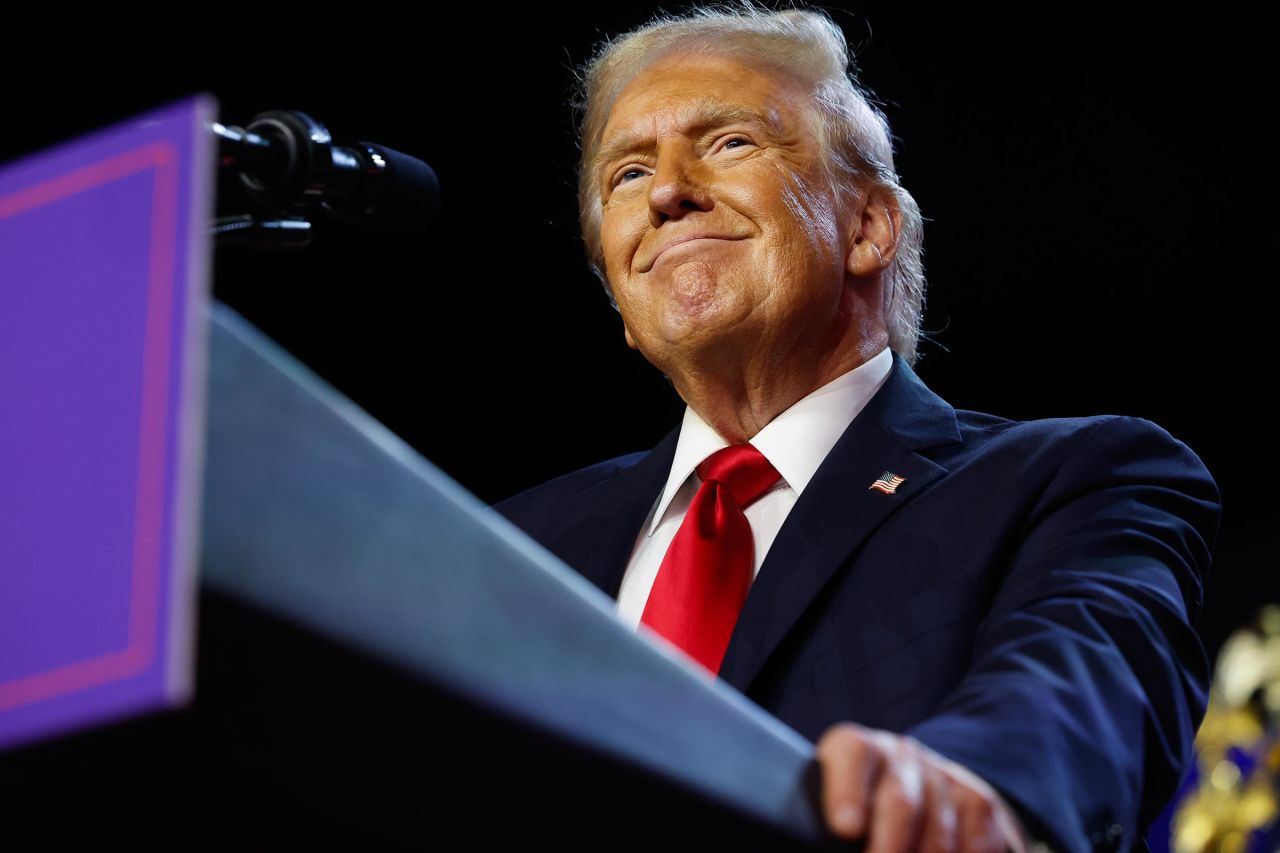
United States President Donald Trump has said he made no mistake for a video briefly shared on his official Truth Social account that depicted former President Barack Obama and former First Lady Michelle Obama as apes.

Former President Barack Obama
Speaking late Friday to reporters accompanying him aboard Air Force One, Trump insisted he made no mistake by sharing the video and does not need to apologise.
“I didn’t make a mistake,” he said.
Trump explained that he did not watch the entire clip before it was posted.
“I didn’t see the whole thing. I looked at the first part, and it was really about voter fraud in the machines, how crooked it is, how disgusting it is.
“Then I gave it to the people. Generally, they look at the whole thing. But I guess somebody didn’t,” he said.
When asked directly whether he condemned the video’s content, Trump replied, “Of course I do.”
The video, which was posted late Thursday, pushed a conspiracy theory about voting machines used during the 2020 election and included a racist depiction of the Obamas.
It remained on Trump’s Truth Social account for about 12 hours before being deleted on Friday morning, following widespread bipartisan calls for its removal.
The White House initially defended the post in an emailed statement to reporters on Friday morning by Karoline Leavitt, Press Secretary,.
She said, “This is from an internet meme video depicting President Trump as the King of the Jungle and Democrats as characters from The Lion King.”
Leavitt added, “Please stop the fake outrage and report on something today that actually matters to the American public.”
Hours after the statement was issued, the video was removed from Trump’s official Truth Social account.
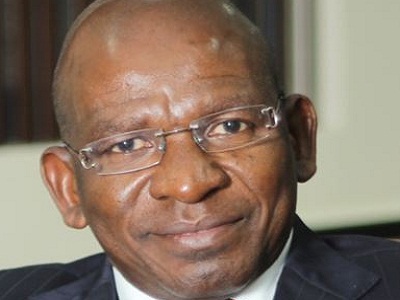
Robert Orya, former managing director, Nigerian Export-Import Bank, (NEXIM), has been sentenced to a cumulative 490 years’ imprisonment over a N2.4 billion fraud, following his conviction by a Federal Capital Territory (FCT) High Court in Abuja.

The conviction was secured by the Economic and Financial Crimes Commission (EFCC). Justice F. E. Messiri sentenced Orya to 10 years’ imprisonment on each of the 49 counts brought against him, with the sentences running cumulatively.
Orya, who headed NEXIM Bank between 2011 and 2016, was prosecuted by Samuel Ugwuegbulam, EFCC counsel.
The anti-graft agency accused him of fraudulently diverting funds belonging to the bank—charges the court held were proven beyond reasonable doubt.
Delivering judgment, Justice Messiri ruled that the prosecution successfully established its case, finding the former bank chief guilty on all 49 counts of fraud.
The conviction has been widely linked to the renewed momentum within the EFCC under Mr. Ola Olukoyede, its Chairman, whose leadership has seen a reinvigoration of the agency’s resolve to pursue high-profile corruption cases to their logical conclusion.
Since assuming office, Olukoyede has repeatedly vowed that no individual, regardless of status or past influence, would be shielded from accountability.
Under his stewardship, the EFCC has intensified the prosecution of complex financial crimes, particularly cases involving public institutions and large-scale diversion of funds.
Observers say the sentencing of a former chief executive of a government-owned bank underscores the EFCC’s determination to restore public confidence in the anti-corruption fight and sends a strong signal that financial misconduct will attract severe consequences.
The judgment is regarded as one of the most significant convictions secured against a former banking chief in recent years, reinforcing the agency’s resolve to clamp down on economic crimes within Nigeria’s financial sector.
During his tenure at NEXIM Bank, Orya was initially credited with efforts to reposition the institution to support non-oil exports and improve its financial standing after earlier setbacks.
However, his administration later became enmeshed in controversies, including allegations of loan disbursement irregularities and procedural abuses.
The case, which culminated in Thursday’s judgment, centred on findings that Orya diverted public funds estimated at N2.4 billion—offences that ultimately led to his conviction and lengthy prison sentence.
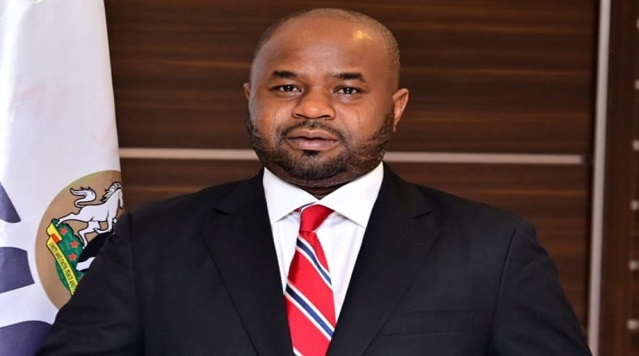
Zacch Adedeji, chairman of the Nigeria Revenue Service (NRS) has called for a paradigm shift in dependence on raw material exports to one that embrace ideas, innovation and the production of complex products as a pathway to sustainable economic growth and national prosperity.

Adedeji made the submission while delivering the maiden distinguished personality lecture of the Faculty of Administration, Obafemi Awolowo University (OAU), Ile-Ife, Osun State, on Thursday.
A statement by his Special Adviser on Media, Dare Adekanmbi, said Adedeji, in the lecture entitled, ‘From Potential to Prosperity: Export-led Economy’, stressed the need to rethink growth through the lens of complexity by not just producing more of the same stuff.
He lamented that Nigeria possesses a high-tech oil sector and low-productivity informal sector as well as lacking “the vibrant, labour-absorbing industrial base that serves as a bridge to higher complexity.”
The NRS boss stated that Nigeria witnessed stagnation in its exportation drive for three decades between 1998 to 2023, and only added six new products in its export basket list between 2008 and 2023.
“Because of our current position, the Harvard Atlas concluded that we are positioned to take advantage of very few opportunities to diversify using what we already know.”
Adedeji urged Nigeria to learn from the world by comparative study of success and failure like Vietnam, Bangladesh, Indonesia, South Africa and Brazil.
“We are not just looking at numbers in a vacuum; we are looking at the strategic choices made by nations like Vietnam, Indonesia, Bangladesh, Brazil, and South Africa over the same twenty-five-year period. While there are many ways to under perform, the path to success is remarkably consistent: it is defined by a clear strategy to build economic complexity.
“When we put these stories together, the divergence is clear. Vietnam used global trade to build a resilient, complex economy, while the others remained dependent on natural resources or a single low-tech niche.
“There are three big lessons here for us in Nigeria as we think about our roadmap. First, avoiding the resource curse is necessary, but it is not enough. You need a proactive strategy to build productive capabilities.
“Vietnam’s success came from integrating itself into Global Value Chains (GVCs). They positioned themselves as the assembly hub for the world’s electronics, importing high-tech parts and exporting finished products.
“This allowed them to “borrow” technology and management skills from abroad to build their own know-how.
“Nigeria, on the other hand, remains a supplier of raw materials to these chains, not an active participant within them. We must realise that productive capabilities are not permanent. The examples of South Africa and Brazil show us that you can actually lose your industrial edge if you are not careful. Over-reliance on the easy path of resource extraction creates economic and political incentives that crowd out the difficult, long-term work of building an industrial base.”
He added that for Nigeria, which is at an even earlier stage of development and even less diversified than these nations, the warning is stark.
“Relying solely on our natural endowments isn’t just a path to stagnation; it’s a path to regression. The global economy increasingly rewards knowledge and complexity, not just what you can dig out of the ground. If we want to move from potential to prosperity, we must stop being just a source of raw materials and start being a source of ideas, innovation, and complex products.
He added that President Bola Tinubu has already begun the difficult work of rebuilding the economy to ensure collective knowledge to innovate, produce and build a resilient economy.
“The journey from potential to prosperity is not a short one, but with the right map and the right resolve, it is a journey we can finally complete,’ he added.

Alawuba Advocates Security, Bankable Projects, Infrastructure Development to Promote South-East Vision

Ecobank Profit Jumps 29 Percent to N950Bn

Trump Says He Made no Mistake Sharing Video Depicting Obamas as Apes

Orya, Ex-NEXIM MD Jailed 490 Years for N2.4Bn Fraud

Airtel Nigeria Commits to Upgrade of its Network Infrastructure for Improved Quality of Service

19 Nigerian Banks Meet CBN Recapitalization Targets Ahead of March Deadline

Nigerian Terra Industries Secures $11.8m for Expansion

US invests $115m in counter-drone tech for World Cup security

Firm Detected a Fivefold Surge in QR Code Phishing Attacks in the Second Half of 2025

Firm Detected a Scam Exploiting OpenAI’s Teamwork Features




 Telecom2 days ago
MTN Guns for $2.76bn IHS Towers Buyout in African Telecom Power Grab

 General News1 day ago
Globacom Donates ₦1Bn to Lagos State Security Trust Fund

 E-Financial2 days ago
Incentives alone won’t win over Africa’s next billion fintech users — Kuda MFB MD

 Telecom2 days ago
Google Calls on Africa’s AI Trailblazers for 10th Startup Accelerator Cohort
 E-Business2 days ago
Firm Reviews the Evolution of Phishing Threats in 2025

 General News2 days ago
EdTech Platform Unveils over 5,000 Self-Paced Courses for Skills, Knowledge, and Literacy

 Telecom2 days ago
Optasia Drives Responsible AI Conversation at Nigeria’s Privacy Week 2026
 Telecom1 day ago
Airtel Nigeria Commits to Upgrade of its Network Infrastructure for Improved Quality of Service