

Broadcasting
HURIWA Seeks Probe of NBC DG, Claims Buhari Blackmailing Media

Human Rights Writers Association of Nigeria (HURIWA), a non-governmental organization, has accused the Alhaji Ishaq Modibbo Kawu, director general, National Broadcasting Commission (NBC) of being a ‘religious and fanatical enforcer of pro-Buhari’s sentiments’ in public and private broadcasting.
HURIWA, in a statement signed by Comrade Emmanuel Onwubiko, national coordinator and Miss Zainab Yusuf, media affairs director, lamented that the allegation that the minister of information Lai Mohammed wrote to the National Broadcasting Commission over a year ago to raise him a loan to travel to China has not been sufficiently investigated.
The group in the statement, said ”it was imperative that the head of that government agency is compelled to operate within the principle of rule of law and adherence to the constitutional provisions, just as it restated that compelling him to respect section 22 of the constitution would serve to achieve the betterment of Nigerians’ collective yearning for the expansion of the frontiers of media freedoms.”
The rights group further alleged that Channels TV and was fined N5 million in the month of July 2018 and other media houses for refusing to be the propaganda machine of the government against National Assembly and Senator Bukola Saraki.
It, therefore, called on the National Assembly to investigate the claims of nepotism, favoritism and religious sentiments in the exercise of functions and duties of the office of the Director-General by the holder of that office currently in NBC.
The statement added, “On good authority, we have been told of the unprecedented impunity and reign of nepotism, ethno-religious chauvinism that go on inside the inner recesses of the office of the director general. We were informed of how he has allegedly used his office to stand in the way of the promotions of officers who are not Hausa Fulani Moslems.

“There is an urgent need for the National Assembly to focus her attention on the NBC with the hope of compelling the head of that institution not to view his office as that of the enforcer of the APC code of broadcasting but as a non-partisan office holder. The NBC ACT should be amended to bring it into consonance with global best practices and ensure that the holder of the office of DG must be a person of good standing and a patriot who must carry out his official functions without prejudice to the Ethno Religious interests of the staff and management of that agency and must show demonstrable evidence of total non partisanship.
“We have been informed that Channels TV was fined N5 million in the month of July 2018 for refusing to be the propaganda machine of the government against National Assembly and Senator Bukola Saraki.

” We have also been informed that Kiss FM in Lagos is dying in silence. Cool FM is complaining. City FM along Ogba-Ikeja road in Lagos is about to die due to over FINE. A radio station in Ibadan was fined N500, 000 because a jingle critical of Fulani Herdsmen was aired therein. Star FM in Ogun State is currently in dilemma. Sweet FM in the gateway state is battling to retain its license. Wazobia FM must declare all guests to feature in their programmes to NBC or face FINE. The frequency of Rhythm FM has been suspended five times in 2018 for refusing to stop inviting some Public Analysts critical of President Buhari.”
HURIWA recalled that; “Ekiti TV and Radio are under lock and key because the state Governor, Ayo Fayose exposed how results were altered and rigged during the July 14th governorship elections in the state against the wishes of the people. As usual, Some, due to party sentiment, clapped when Ekiti TV and Radio were shut. Hope someone is getting something Nigeria”.
” Mr. Gbenga Aruleba of Fucus Nigeria AIT was reportedly suspended from his programme because of pressure from NBC even as Raypower political platform was fined 500,000 naira for running live commentary on national assembly imbroglio i.e. on the day of mass defection at the Senate”
”The exercise of these dictatorial tendencies by the DG who is running a one-man show in NBC contravene the powers and functions enshrined in the NBC ACT which ought to be seen as enabling provisions that should rather promote media freedoms rather than stifling media freedoms.
“The Powers of the Commission are as follows; ” (1) The Commission shall have responsibility of – (a) advising the Federal Government generally on the implementation of the National Mass Communication Policy with particular reference to broadcasting; (b) receiving, processing and considering applications for the establishment, ownership or operation of radio and television stations including- (i) cable television services, direct satellite broadcast and any other medium of broadcasting; (ii) radio and television stations owned, established or operated by the Federal, State or local government; (c) recommending applications through the Minister to the President, for the grant of radio and television licences; (d) regulating and controlling the broadcasting industry; (e) undertaking research and development in the broadcasting industry; (f) receiving, considering and investigating complaints from individuals and bodies corporate or incorporate regarding the contents of a broadcast and the conduct of a broadcasting station; (g) upholding the principles of equity and fairness in broadcasting; (h) establishing and disseminating a national broadcasting code and setting standards with regard to the contents and quality of materials for broadcast; (i) promoting Nigerian indigenous cultures, moral and community life through broadcasting; (j) promoting authenticated radio and television audience measurements and penetration; (k) initiating and harmonizing Government policies on trans-border direct transmission and reception in Nigeria; (l) regulating ethical standards and technical excellence in public, private and commercial broadcast stations in Nigeria; (m) monitoring broadcasting for harmful emission, interference and illegal broadcasting; (n) determining and applying sanctions including revocation of licences of defaulting stations which do not operate in accordance with the broadcast code and in the public interest; (o) approving the transmitter power, the location of stations, areas of coverage as well as regulate types of broadcast equipment to be used; (p) ensuring qualitative manpower development in the broadcasting industry by accrediting curricula and programmes for all tertiary training institutions that offer Mass Communication in relation to broadcasting; (q) intervening and arbitrating in conflicts in the broadcasting industry; (r) ensuring strict adherence to the national laws, rules and regulations relating to the participation of foreign capital in relation to local capital in broadcasting; (s) serving as national consultants on any legislative or regulatory issues on the broadcasting industry; [1999 No. 55.] (t) guaranteeing and ensuring the liberty and protection of the broadcasting industry with due respect to the law; and (u) carrying out such other activities as are necessary or expedient for the full discharge of all or any of the functions conferred on it under or pursuant to this Act.”
HURIWA added that the aforementioned allegations have not permitted the Director-General to convert his office to the one-sided job of a chief enforcer of the ideology and agenda of the party that produced the President.


Nigerian singer, songwriter and producer Pheelz (Phillips Kayode Moses) is set to feature this weekend on African Voices Changemakers, the flagship magazine programme on CNN International.

The 30-minute episode, sponsored by digital solutions company Globacom, premieres on Saturday, February 21, 2026. In a candid sit-down with host Larry Madowo, Pheelz opens up about his journey from church musician to global hitmaker, reflecting on the intersections of faith, fame and the expanding influence of Afrobeats on the world stage.
Now 31, Pheelz began his musical path as a multi-instrumentalist in church before earning widespread acclaim in 2012 as the producer behind the hit tracks “First of All” and “Fucking with the Devil” on Olamide’s YBNL album. His rapid rise saw him named among NotJustOk’s Top 10 Hottest Producers in Nigeria in 2013.
He further solidified his reputation by producing nearly every track on Olamide’s Baddest Guy Ever Liveth, earning nominations at The Headies 2013 and in the Producer of the Year category at both The Headies 2014 and the Nigeria Entertainment Awards. In 2020, he clinched The Headies Producer of the Year award, and in 2021 secured the Soundcity MVP Award for Best Collaboration for “Finesse,” his smash hit with Bnxn (formerly Buju).
On the programme, Pheelz reflects on the experiences that shaped his sound and creative philosophy, discusses landmark collaborations, shares his perspective on artificial intelligence and artistry, and explains why sound, storytelling and culture remain central to African music’s global resonance.
The show airs on DSTV Channel 401 at 8:30 a.m. (WAT) on Saturday, with repeat broadcasts at 12:00 noon the same day; Sunday at 4:30 a.m. and 7:00 p.m.; Monday at 4:00 a.m. and 6:45 p.m.; and Tuesday at 6:45 p.m. The broadcast schedule continues through Monday of the following week.
Broadcasting
Dr. Cairo Ojougboh Foundation Bolsters Nigeria’s Education Drive with ₦2.7m Student Support

Dr. Cairo Ojougboh Foundation has reinforced government’s educational development efforts in Nigeria through a targeted initiative honouring the late medical doctor and House of Representatives member, Dr. Cairo Ojougboh.

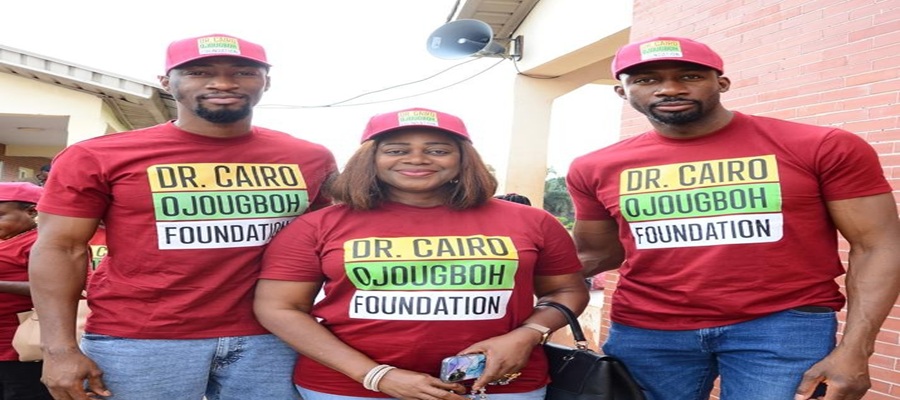
L-R: Son of the late Dr, Cairo Ojougboh, Mr. Nkem Ojougboh; Chairperson, Dr. Cairo Ojougboh Foundation, Mrs. Bose Ojougboh and another son, Mr. Orieka Ojougboh, during the event in Agbor, Delta State recently.
The foundation recently hosted a programme themed “Your Future, Your Choice” at St. Columba’s Grammar School in Agbor, headquarters of Ika South Local Government Area, Delta State.
It presented a cheque of ₦2,700,000 to cover examination fees for students preparing for West African Examinations Council (WAEC), National Examinations Council (NECO), and Junior Secondary School (JSS) 3 exams.
Academic excellence received further boosts with cash rewards for top students across the school’s nine academic arms, alongside distributions of notebooks and writing materials to enhance learning.
Chairperson Mrs. Bose Ojougboh, joined by her sons Mr. Nkem and Mr. Orieka Ojougboh, urged students to view challenges as stepping stones, embrace discipline, consistency, and focus, and make intentional choices shaping their futures.
“The school that moulded Dr. Cairo’s values deserves our support,” she said, highlighting the foundation’s commitment to inspiring hard work and personal growth.
Old Boys of St. Columba’s Grammar School, led by Elder Ndudi Agholor, attended in force, sharing nostalgic reflections and praising the school’s sustained high standards under current leadership.
School Principal Rev. Fr. Joseph Ugboh and Ika South LGA Chairman Engr. Jerry Ehiwarior lauded the initiative as “commendable and impactful,” calling for its continuation to preserve Dr. Ojougboh’s legacy of discipline, excellence, and service.
They noted the support had motivated students to pursue their goals with renewed determination, ending the event on a hopeful note.
In a landmark educational innovation, New Horizons Nigeria has become the first institution to integrate the Chinese (Mandarin) language into its ICT curricular as an elective, thereby positioning Nigerian students for relevance in the rapidly changing world order.

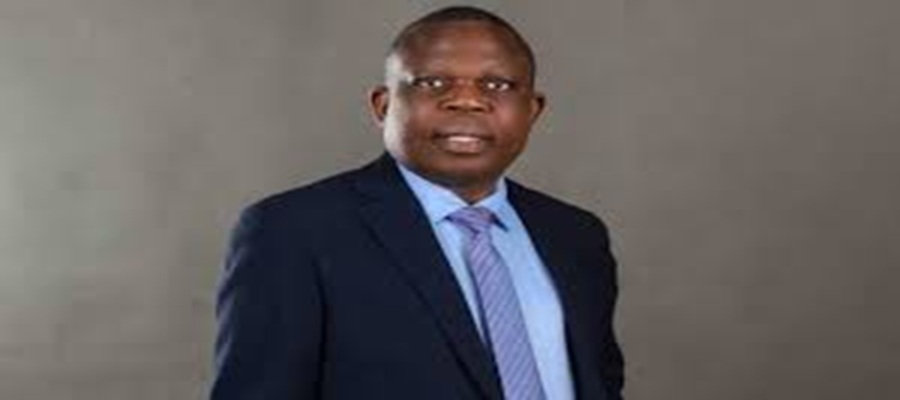
Mr. Tim Akano, Managing Director and CEO of New Horizons Systems Solutions Limited
New Horizons Nigeria is a leading ICT training and solutions provider committed to provide individuals and institutions with future-ready skills. Through innovative program, global partnerships, and strategic foresight, the organization continues to redefine education, workforce development, and global competitiveness.
With over 80% of global consumer products manufactured in China and China’s growing dominance in global supply chains and labour markets, New Horizons Nigeria recognizes the urgent need for the current generation to understand, speak, and engage with the Chinese language and culture. As global economic power dynamics evolve, the labour market is increasingly tilting towards China, making Mandarin proficiency a critical competitive advantage.
According to Mr. Tim Akano, Managing Director and CEO of New Horizons Systems Solutions Limited, Nigeria, the program represents far more than a language course.
He asserted that very soon, the global labour market is likely to increasingly reflect China’s influence rather than the predominantly western orientation it currently exhibits. Language will be a major differentiator and the first Chinese-speaking technology experts in Nigeria will have a significant advantage, especially in integration into Chinese companies operating locally and globally.
Therefore, New Horizons Nigeria has officially launched a Mandarin Scholarship Program with China Advancement Opportunity, selecting 100 outstanding students from five prominent Nigerian secondary schools. This initiative marks a major milestone in Nigeria–China educational cooperation and reflects a forward-thinking response to shifting global economic realities.
Furthermore, the scholarship program has commenced with an intensive three-month online Mandarin training and at the end of the program, the top-performing students will be selected strictly on merit. 20 outstanding students will receive an additional scholarship valued at $2,500 per students to participate in a one-year pre-degree Mandarin and cultural immersion program in China. From this group, the best candidates will progress to fully funded admission scholarships into top universities in China. This initiative is designed not only to build language proficiency but also to enhance global competence, international exposure, and cultural intelligence among Nigerian students.
Also, to maintain international academic standards, participating schools are required to comply with strict guidelines. They will be obligated to join the online classes ten minutes earlier, they must have a minimum of 85% attendance throughout the program, and must ensure they have a stable internet connectivity, reliable power supply and a conducive learning environment.
Therefore, School owners and administrators have been formally congratulated and strongly encouraged to nominate their most disciplined, and committed students, as advancement to the China program will be strictly merit-based.
However, apart from students, internation business men are equally encouraged to attend New Horizon’s Mandarin executive lessons which will equip them with basic Chinese language to enhance their business communications.
Additionally, while the pilot phase begins with selected secondary schools which includes Startrite School, Lightway School, British Nigerian Academy School, Honeyland Schools and Great Heights School, the Mandarin program will be available as an elective ICT course at all New Horizons retail centers.
This is done to extend access to students and learners beyond its partner schools and within one year, committed learners will be able to communicate effectively in Mandarin, which will open doors to global employment, trade, and cultural exchange.
In conclusion, a Mandarin Cultural Fiesta will be hosted, bringing together educators, students, institutional partners, and distinguished guests from China and Nigeria. The event will celebrate outstanding performance, cross-cultural exchange, and the strengthening of bilateral educational ties.
For enquiries and participation details, interested individuals are encouraged to contact New Horizons Nigeria via 08125541750

NITDA, Abia Partner on Enterprise Architecture Reform

Interswitch Partners Abia to Digitise Public Hospitals

Cyber Immunity Emerges as Shield for Nigerians Amid Rising Scams

WIEG 2026 Summit Shifts to April 22-23 for Maximum Impact

$214Bn Missing, Institutions Silent: Is Accountability Dead in Nigeria?
Nigeria’s 9 Top FinTech Firms Valued at $10.6Bn in January 2026

CBN Upgrades Licences of Opay, Moniepoint, Kuda, Palmpay, Paga to National Status

Kaspersky Launches OT Calculator to Align Cybersecurity Investments with Business Goals

NITDA, NBC Explore Strategic Collaboration on Digital Transformation, Media Regulation

Accidental Billionaire Opts for Jail Instead of Returning Money Credited Him by Mistake




 Telecom3 days ago
Group Condemns Gabon’s Social Media Shutdown Amid Protests

 Telecom3 days ago
IXPN Positions as the Regional Internet Exchange Hub for West Africa

 General News3 days ago
How JustMarkets Is Empowering African Traders with Global Market Access

 E-Business3 days ago
Mutual Benefits Assurance Settles ₦5.9bn Claims in January 2026

 Telecom3 days ago
Menxtt NG Emerges as Nigeria’s Virtual IT Hub for Premium Devices, Solutions

 Broadcasting3 days ago
Pheelz Shares His Journey on Glo-Sponsored African Voices

 E-Business3 days ago
NITDA DG Reaffirms FG Commitment to Responsible and Inclusive AI

 News3 days ago
AI-Driven Memory Chip Fuels Global Phone Price Surge