

Broadcasting
IHS Nigeria, NSCDC’s synergy on protection of critical national assets and infrastructure

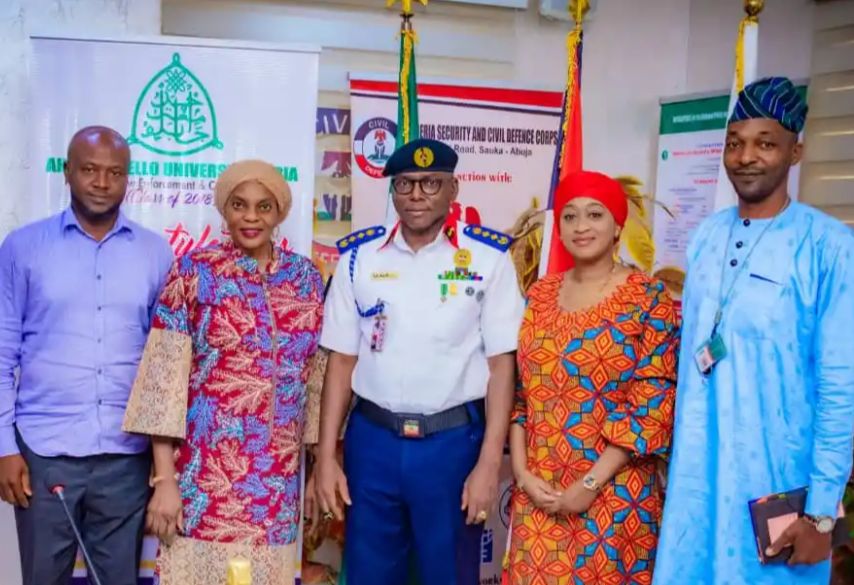
By Lere Ojedokun
A secure environment is essential for political, economic and social activities to flourish in every society. It enables the government to focus on formulation of policies that can stimulate economic growth, provision of basic amenities for the citizens, and building essential infrastructure that can drive national Gross Domestic Product (GDP) growth.

Businesses and investors (local and foreign) are more likely to invest in an economy where their operations, assets and operations are protected from crimes such as theft and vandalism, terrorism, and other security threats.
Reasons include the fact that an effective and efficient security system will reduce the cost burden on the government and businesses, allowing for more funds to be directed towards product research, development projects and economic growth initiatives.
With the rising global security threats occasioned in part by the advancement in technology and increasing activities of terrorists and other non-state actors, defence and security receive huge votes in annual government budgets in many countries, including Nigeria.
In Nigeria, the protection of essential physical and virtual Critical National Assets and Infrastructure (CNAI) consisting of systems, assets, and networks are prioritised by the federal, state and local governments because they have direct and indirect impact on our daily lives. These include roads, airports, seaports, railways, electricity grids, transformers, transmission cables, oil and gas pipelines, water supply facilities, schools, hospitals, government buildings, courts, national defence and security institutions, custodial facilities, and international travel passports, among others.
Equally pivotal for Nigeria’s security and socio-economic growth are the essential physical and virtual telecommunication infrastructure that drives our nation’s functioning communication, security, and general well-being of Nigerians and foreigners resident in the country. The physical infrastructure includes telecom towers, fibre optic cables, and power generators at cell sites. The virtual infrastructure such as digital networks, information systems, and data repositories underpin crucial operations such as telecommunications, financial transactions, emergency response coordination, and national defence, and internal security.
Theft, vandalism and destruction of telecom’s physical and virtual assets ranked among the nagging challenges faced by telecom operators and infrastructure companies in Nigeria. With Information and Communication Technology (ICT), of which telecom is a significant driver, contributing 16.66% to Nigeria’s real GDP in Q4 2023 according to the National Bureau of Statistics (NBS), the protection of telecom infrastructure and assets cannot be overemphasised.
The Nigeria Security and Civil Defence Corps (NSCDC) is the lead federal government security outfit with a mandate to protect and safeguard Critical National Assets and Infrastructure across the country. Commandant General of the NSCDC, Dr. Ahmed Abubakar Audi, recently reaffirmed that any act of destruction or vandalism of our CNAI would have debilitating effects on the national economy.
Thus, recently, IHS Towers, one of the largest independent owners, operators, and developers of shared communications infrastructure in the world by tower count, took a bold step by donating ICT equipment to NSCDC during a visit to the agency’s headquarters in Abuja.
The gesture, according to IHS Nigeria’s Associate Director, Government Relations, Fatima Ibrahim-Haruna, was to enable the security agency to scale-up effectiveness and efficiency in its operations by leveraging technology to adequately tackle insecurity challenges and threats in the country. While commending NSCDC for its efforts at protecting the nation’s CNAI, she added that the donation of the ICT equipment underscored the commitment of IHS Towers to promoting the wellbeing of people and communities, in line with the core pillars of the company’s Corporate Social Responsibility (CSR).
Ibrahim-Haruna noted that IHS Towers owns over 16,000 towers across Nigeria and pledged the company’s continued collaboration and partnership with NSCDC, as well as other strategic institutions to foster a sustainable future for Nigeria. She added that IHS Nigeria would further support the agency by upgrading its ICT Centre.
“Telecom infrastructure is integral to national security by supporting communication for defence operations and intelligence activities, financial institutions, healthcare, education, aviation, commerce and many other sectors that rely heavily on telecommunications for their daily operations. Disruptions in telecom operations can lead to significant economic losses, affecting productivity and growth. Ensuring security and protection of telecom infrastructure helps prevent espionage, cyber-attacks, and other security threats that can undermine national security and economic stability,’’ she stated.
The NSCDC Commandant General, Dr. Audi, commended IHS Nigeria for the ICT equipment and reiterated the unwavering commitment of the security outfit to ensuring adequate safety of lives and protection of critical national assets and infrastructure in the country.
“Maintaining law and order, and most importantly safeguarding all critical national assets and infrastructure in the nation is a core mandate to which NSCDC is irrevocably committed, as the lead agency in this regard,’’ he affirmed, while restating that critical assets and infrastructure were pivotal for national security, economic growth and social order.
Audi added: “It is against this backdrop that NSCDC has mapped out different strategies to nip in the bud all activities of economic saboteurs vandalising government properties and critical national assets and infrastructure. As a lead agency in the protection of CNAI as contained in the National Security Document, we remain resolute, and call on other critical stakeholders and security agencies to collaborate with NSCDC for maximum protection of CNAI.’’
The Commandant General assured the delegation from HIS Nigeria of the agency’s continued partnership with IHS Towers by ensuring there is no obstruction to its operations.
Telecom infrastructure is essential for fostering innovation and technological advancements. Telecom infrastructure provides the backbone for emerging technologies like IoT, AI and 5G, which drive economic development through creating new opportunities for individuals, businesses and countries. Critical services such as national security and intelligence, law enforcement, emergency response, healthcare, education, financial transactions, among others depend on reliable telecommunications. Therefore, protecting telecom infrastructure like other critical national assets and infrastructure will ensure these services are made available without disruptions and the economy will be the best beneficiary if this can happen.
Ojedokun, a brand strategist and development expert writes from Lagos.



Globally recognized South African actress Nomzamo Mbatha will feature on this week’s edition of African Voices Changemakers, the 30 minute show on Cable News Network International (CNN).

In this episode of the Glo-sponsored programme, Mbatha sits down with CNN’s Larry Madowo for an exclusive conversation while filming the final season of the hit television series Shaka iLembe. The interview was recorded at the historic Cradle of Humankind outside Johannesburg, where she reflects on her career and the legacy she hopes to build beyond the screen.
As her international profile continues to rise, Mbatha has appeared in two Hollywood productions and was named to the prestigious TIME100 Next list in 2025, which celebrates emerging global leaders shaping the future. She is also making strides in the beauty industry as the first South African woman to secure endorsement deals with global skincare brand Neutrogena and haircare brand Cream of Nature.
Mbatha also shares the cultural importance of Shaka iLembe, her journey from South Africa to the global stage, and why giving back remains central to the enduring contribution she aims to leave behind.
The programme will air on Saturday at 8.30 a.m., with additional broadcasts at 12.00 p.m. the same day; Sunday at 4.30 a.m. and 6.00 p.m.; Monday at 3.00 a.m. and 5.45 p.m.; and Tuesday at 5.45 p.m. It will also air again on Saturday, March 14 at 7.30 a.m. and 11.00 a.m.; Sunday, March 15 at 3.30 a.m. and 6.00 a.m.; and Monday, March 16 at 3.00 a.m.

Nigerian Civil Aviation Authority (NCAA) has directed Overland Airways to refund Value Added Tax (VAT) wrongly charged to passengers on flight tickets purchased in 2025.

NCAA
The directive follows a social media complaint that highlighted the airline’s application of new tax policies to older bookings, prompting NCAA intervention.
Michael Achimugu, NCAA Director of Public Affairs and Consumer Protection, confirmed Friday that Overland Airways agreed to process refunds after receiving clarification from the Nigeria Revenue Service (NRS).
The issue emerged in late January 2026 when a passenger alleged on X (formerly Twitter) that her grandmother faced an extra N11,286 VAT charge at the airport for a 2025 ticket. On January 28, NCAA summoned the airline to justify the additional payments for pre-2026 tickets.
The regulator sought NRS guidance on retroactive VAT application. NRS ruled that updated VAT rules, effective January 1, 2026, exclude tickets issued before that date.
Achimugu updated on X: “This means passengers who paid VAT at check-in in 2026 for 2025 tickets were not supposed to be charged.”
Overland Airways accepted the clarification and pledged refunds, earning NCAA commendation for cooperation. Achimugu noted the airline initially viewed charges as valid under the new framework, but NRS interpretation prevailed.
“The issue has reached a satisfactory conclusion,” he stated, reaffirming NCAA’s commitment to passenger rights and fair policy enforcement.
Affected passengers who paid extra VAT on 2025-issued Overland tickets qualify for full refunds.


MultiChoice has said that it will not implement its customary yearly price increase on DStv and GOtv subscriptions.

This is the first time the Pay-TV company will not be adjusting its price in April, as it has in previous years, signalling a clear shift in direction under its new owner, Canal+.
The decision, confirmed by David Mignot, group chief executive,MultiChoice in an interview with TechCentral, comes as the pay television operator grapples with steep subscriber losses across its markets.
For many households accustomed to annual April tariff adjustments, the announcement will be a welcome break.
Responding to questions about whether DStv prices would rise in April as they have in previous years, Mignot gave a firm response: there will be no increase.
He explained that the company’s immediate focus is on rebuilding its subscriber base, making this an unsuitable period to adjust prices upward.
He added that while there are no current plans for a price hike, the company has not completely ruled out adjustments later in the year, especially if economic conditions demand it, such as significant currency movements.
MultiChoice has historically reviewed and raised DStv subscription fees in April, often citing inflationary pressures and rising content costs. As recently as April 2025, bouquet prices were adjusted upwards by between 2.1 per cent and 7.9 per cent.
The DStv Premium package rose from R929 to R979 per month, while DStv Access, the entry-level satellite package, recorded one of the steepest increases.
This year’s pause represents a break from that pattern and forms part of a broader reset following Canal+’s acquisition of MultiChoice in September 2025.
Mignot, who brings three decades of experience in the pay television industry, summed up his mission in simple terms: halt subscriber losses and return the business to growth.
The urgency behind the move is evident in MultiChoice’s recent performance.
The group has lost 2.8 million linear broadcasting subscribers in the two years ended 31 March 2025, with roughly half of those losses occurring in South Africa.
In the financial year to end-March 2025 alone, MultiChoice shed 1.2 million subscribers, representing an eight per cent year-on-year decline and leaving the group with 14.5 million active customers.
The previous year saw an even steeper drop of 1.6 million subscribers. By June 2025, Canal+ indicated that the pace of decline had intensified further.
The financial impact has been significant. Revenue for the year ended 31 March 2025 declined by R4 billion to R52 billion, while trading profit fell sharply by 49 per cent to R4 billion.
According to Mignot, the company’s difficulties stem less from its programming slate and more from weaknesses in its commercial execution.
He argued that in subscription businesses, a churn rate of between 12 and 15 per cent annually is inevitable as customers relocate, experience job losses, adjust household budgets, or change priorities. Without attracting a comparable number of new subscribers each year, losses accumulate.
Mignot maintained that the content offering remains strong, particularly in sport and general entertainment. He cited flagship brands such as SuperSport, M-Net and Africa Magic as evidence of sustained investment in programming. However, he stressed that content strength alone cannot offset a weakening subscriber acquisition engine.
He noted that MultiChoice’s commercial machinery had performed robustly across Africa until around 2022, describing the current challenges as relatively recent.
Drawing on Canal+’s experience in French-speaking African markets, Mignot pointed out that pricing there has remained largely unchanged for close to 14 years, supported by a volume-driven approach. He described his strategy as one focused on growing subscriber numbers while maintaining profitability.
While he did not dismiss the possibility of reviewing prices downward in future, he indicated that no such decision has been taken.

Police Says Victims Enable Cyber Attacks Out of Ignorance

Bank Accuses Magistrate, Lawyer of Using Fake Order to Steal N3.5m from Account

FG Launches NERD to Combat Certificate Fraud

NCDC Issues Public Advisory on Cerebrospinal Meningitis

Goodnews Naija Launches ‘Building in Nigeria’ Series on Entrepreneurs, Real Sector Builders

Dr. Cairo Ojougboh Foundation Bolsters Nigeria’s Education Drive with ₦2.7m Student Support

Kaspersky Brings more Transparency to Threat Detection with New Hunt Hub

PwC Reveals AI Scaling Gap Slows Africa’s Digital Transformation

Kaspersky Discovers New Phishing Campaign Exploiting Google Tasks Notifications to Steal Corporate Credentials

esentry 2025 Report Shows Healthcare, Financial Services and Telecoms as Staging Grounds for Increased Cyberattacks in Africa




 E-Financial2 days ago
Nigeria’s VAT Jumps 34%, CIT Soars 48% to ₦14trn in 9M’25 – NBS

 Telecom2 days ago
FG Approves GIS-enabled Digital Postcode to Tackle Logistics Gaps, Boost E-commerce
 E-Business2 days ago
Firm Enhances its Security Awareness Platform with SCORM and PDF Support

 E-Financial2 days ago
Binance Cuts Illicit Activity Exposure by 96%, Leads Global Crypto Compliance Push

 E-Financial2 days ago
NAICOM Signs MoU with BPP to Deepen Insurance Compliance in Public Procurement

 E-Financial1 day ago
Senate Targets Fintech Overreach, Vows Ponzi Crackdown After ₦1.3trn CBEX Scam

 Telecom2 days ago
GSMA, African Operators, Others to Launch Low-cost 4G Devices

 General News2 days ago
NERC Orders DisCos to Refund ₦20.33Bn Meter Costs to Customers