

E-Business
Ilara Health Secures $4.2M Pre-series A to Digitise Fragmented Primary Healthcare in Africa


Ilara Health, the healthtech company digitising and consolidating highly fragmented primary care in Kenya, has announced the close of a $4.2M pre-series A round of equity and debt. Led by DOB Equity, the round also sees follow-on equity investment from AAIC INVESTMENT, Angaza Capital, Black Pearl Investments, Perivoli Innovations, as well as debt investment from Alphamundi and Kiva Capital.

New to the round are Philips Foundation and Boehringer Ingelheim. The new partners are strategic healthcare investors that bring their deep experience working with and investing in companies in the global healthcare industry.
Ilara Health will use the latest capital injection to scale its tech-enabled primary care model across Kenya before expanding to other regions. With this latest funding, the company’s total investment to date reaches $11.7M, encompassing various funding rounds, such as a $3.75M seed round in 2020, along with multiple grants, including two grants totaling $1.6M from the Bill & Melinda Gates Foundation.
Founded in 2019 by Emilian Popa, Maximilian Mancini and Sameer Afzal Farooqi, Ilara Health launched to deliver affordable and accessible quality healthcare in the peri-urban areas of Kenya.
The company began by addressing the gap in diagnostics impacting primary healthcare centres in the region due to significant disparities in availability and quality testing. Ilara Health’s initial model offered revenue-generating diagnostic assets, which enabled clinics to instantly scale their businesses, whilst also providing flexible repayment plans, and also the training required to test patients.
The company has since expanded to digitising the entire end-to-end operations, leveraging data to enhance its infrastructural business model. This includes helping clinics electronically manage their patient base and becoming their one-stop shop for diagnostic tools, consumables, and pharmaceuticals.
The investment will facilitate Ilara Health’s focus for the next 12 months which is to achieve significant topline growth, keep growing the already large partner clinics network, and incorporate the next phase of growth into its model, which includes the launch of the employee health services through B2B health & occupational services, initially in select locations and later throughout the country.
This is to further strengthen the Ilara Health branded clinics and achieve revenue growth, proving the path to profitability as the operating base remains broadly consistent.
The healthtech company also intends to drive internal efficiencies in operations and embark on a fundraising round of both equity and debt, to support the working capital investments fueling the growth goals.
There will also be a meaningful investment in technology and the proprietary Practice Management Software (PMS) to prove the longer-term data-driven potential of our business model.
Live data from the PMS will enable the start-up to analyse the performance of primary care providers to provide follow-on asset lending and working capital of between $10,000 to $15,000 for: clinic rejuvenations, staff training, provision of diagnostic equipment and a ‘powered by Ilara Health’ co-branding opportunity.
The company presently has 8 clinics covered by these follow-on investments and co-branding, with plans to expand to 50 by the end of the year.
Speaking on the round, Emilian Popa, CEO and Co-founder of Ilara Health says “Ilara Health came about by one common goal; to improve the quality of healthcare for Africans. We passionately believe healthcare should be affordable and accessible to all and I’m therefore proud of the measurable impact we have achieved in such a short space of time.
“There’s still so much more to be done, which is why we are thrilled to be joined by prominent global investors who share our core vision for Kenya and ultimately all of Africa. This fundraise will build on our continued growth and we look forward to driving standardised quality healthcare on the continent.”
Kenya has ~10,000 privately owned primary care facilities and a further ~7,000 that are publicly owned. Ilara Health’s growth momentum has so far seen it partner with over 3,000 of these clinics to deliver better healthcare across 42 Kenyan counties, which in turn serve over 5 million patients each year.
Margot Cooijmans, Director of Philips Foundation Impact Investments said, “Supporting Ilara Health reflects Philips Foundation’s effort to improve healthcare access through innovation, aligning with our goal to make quality healthcare available for all. This investment is a practical step towards bridging the healthcare gap, focusing on solutions that can be implemented in communities that need them the most.”
Bahaa Eddine Sarroukh, Impact Investment Lead at Philips Foundation said, “Ilara Health represents a significant stride forward in healthcare innovation, blending technology and finance in a manner that is both pioneering and profoundly impactful.
“Their approach goes beyond mere access; it’s about empowering the healthcare providers at the grassroots level with the tools and financial models they need to thrive. This blend is not just unique—it’s a critical enabler for expanding quality healthcare to those who need it most, setting a new standard for what’s possible in healthcare delivery across Africa.”
Hayo Afman, Managing Director at DOB Equity said, “Having supported Ilara Health and its founders since the beginning, we are enthusiastic about the progress and the notable improvement of patient outcomes thus far. We look forward to collaborating with our new partners to support the team in redefining the standard of medical care in Africa.”
Christian Bausch, at Boehringer Ingelheim said, “Ilara Health’s plan to decentralise financing for primary care clinics captured our hearts. We value companies and entrepreneurs that create innovative solutions that push the envelope and are proud to support Ilara Health as they address an unmet demand of clinics in Kenya and Sub Saharan Africa.”
Hiroki Ishida, Director at AAIC Partners Africa said, “Primary care represents one of the most challenging areas for business model development. Nevertheless, it serves as the foundation of the healthcare sector. As a healthcare-focused fund in Africa, I have confidence in the team’s capabilities, and I anticipate their role as innovators on this continent.”
Ilara Health intends to use its innovative tech infrastructure to bridge the estimated $66 billion financing gap and outdated processes affecting healthcare delivery across the African continent as a whole.


Nigeria has taken a major step toward strengthening its digital governance framework as the National Information Technology Development Agency (NITDA) officially assumes control of the Nigeria Government Enterprise Architecture (NGEA) infrastructure.

The handover ceremony held in Abuja, marks the culmination of a high-level partnership with the Korea International Cooperation Agency (KOICA).
This transition signals a shift from fragmented IT projects to a unified, disciplined approach to national digital investment.
The NGEA initiative forms a core part of the e-Government Masterplan 2.0 (Ne-GMP 2.0), aimed at establishing a unified and structured approach to managing government IT investments and digital resources.
The framework is designed to ensure that technology deployment across public institutions aligns with national priorities while improving efficiency and accountability.
With the system now operational, government agencies are expected to adopt more integrated digital processes, allowing seamless data sharing and interoperability.
This is anticipated to reduce duplication, strengthen risk management, and translate policy objectives into measurable digital outcomes.
Over the past two and a half years, Nigerian technical experts worked closely with their Korean counterparts to develop the architecture framework, create reference models, and execute pilot programmes in key institutions.
These include the National Identity Management Commission, Nigeria Customs Service, Nigeria Immigration Service, and NITDA.
Officials say the NGEA represents a shift from fragmented digital efforts to a more coordinated, citizen-focused system.
The infrastructure is hosted by Galaxy Backbone Limited, providing a secure and reliable platform for nationwide deployment.
Looking ahead, NITDA is expected to work with government stakeholders to expand and sustain the system, while the Federal Ministry of Communications, Innovation and Digital Economy will provide policy guidance to ensure its adoption across the country.
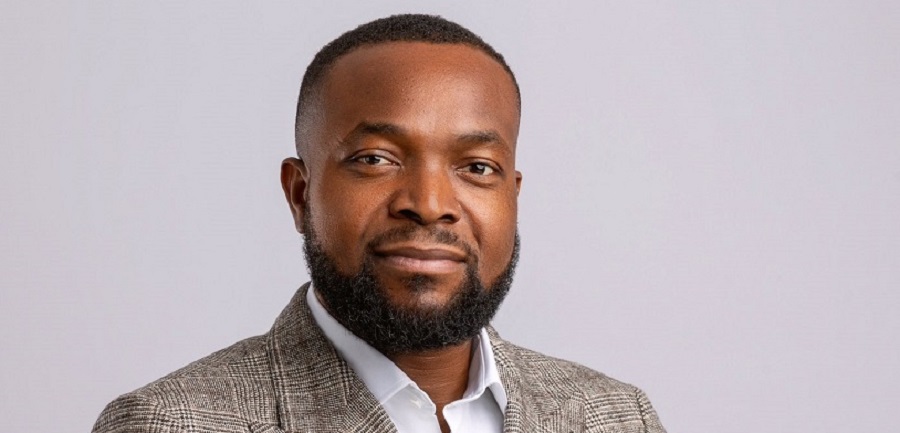
Bosun Tijani, minister of Communications, Innovation and Digital Economy, has said the government is shifting focus from expanding access to ensuring “meaningful connectivity” that drives economic growth and inclusion.

Bosun Tijani, minister of Communications, Innovation and Digital Economy
The minister made the statement on Friday while addressing stakeholders at the inauguration of board members of the Universal Service Provision Fund (USPF) in Abuja.
He said that although Nigeria had made significant progress since the introduction of GSM services, millions of people, particularly in rural and underserved communities, remain either unconnected or unable to fully benefit from digital services.
Dr Tijani highlighted ongoing investments in digital infrastructure, including plans to deploy 90,000 kilometres of fibre optic network and nearly 4,000 telecom towers nationwide.
He said initiatives under the USPF had improved access through projects such as rural connectivity and digital facilities in schools but stressed that the next phase must prioritise effective usage.
“It is not enough to connect a community. We must ensure that schools can teach with digital tools and that small businesses can access market opportunities,” he said, citing a pilot project in the Kura community where connectivity has enhanced access to communication, education and healthcare.
Aminu Maida, executive vice chairman, Nigerian Communications Commission (NCC) also called for a shift towards meaningful connectivity, noting that while data usage had grown significantly, it remained concentrated in urban areas.
According to him, recent data shows that telecom usage has increased by about 160% over the past two years, largely driven by urban demand.
“When we drill down, we see that a lot of that growth is actually in urban centres. So, the gap between those who are not connected or not meaningfully connected is growing,” he said.
Dr Maida added that the trend underscored the need for the USPF board to intensify efforts to bridge both access and usage gaps across the country.
Both officials emphasised the importance of collaboration, sustainable investment models and improved digital literacy to ensure that connectivity translates into real economic benefits for Nigerians.

A jury in Los Angeles has found technology companies, Meta and Google liable for contributing to a young woman’s social media addiction, in a case being described as a landmark ruling.

The 20-year-old woman, identified only as Kaley, argued that she became addicted to Google’s YouTube and Meta’s Instagram from an early age due to their attention-driven design features.
According to her testimony, she began using YouTube at the age of six after downloading the app on her iPod Touch to watch videos about lip gloss and online games.
Kaley told the court that she joined Instagram at nine, bypassing parental restrictions put in place by her mother, and spent extended periods on social media.
The trial, which lasted about a month, with arguments and evidence from both sides.
Jurors also heard testimony from Mark Zuckerberg, chief executive, Meta and Adam Mosseri, Instagram head.
However, Neal Mohan, YouTube chief executive, did not testify.
The jury found that the companies were negligent in the design of their platforms and failed to adequately warn users about potential harms. Meta and Google were ordered to pay the woman $3 million in damages.
Jurors also recommended additional punitive damages, including $900,000 against YouTube and $2.1 million against Meta, according to company spokespersons.
The jury apportioned 70 per cent of the responsibility to Meta and 30 per cent to YouTube.
Kaley was present in the courtroom when the verdict was delivered, alongside parents of other teenagers who say they were harmed by social media use. Both companies said they plan to appeal the decision.
“We respectfully disagree with the verdict and will appeal. Teen mental health is profoundly complex and cannot be linked to a single app. We will continue to defend ourselves vigorously as every case is different, and we remain confident in our record of protecting teens online”, a Meta spokesperson said.
José Castañeda, Google spokesperson, said the case misunderstands YouTube, which is a responsibly built streaming platform, not a social media site.

Anti Graft Agencies Raise Alarm over Rising Crypto-Linked Financial Crimes

NITDA Takes Over National Digital Architecture System

NDIC Insures 99 Percent of Bank Customers

FG Shifting Focus to “Meaningful Connectivity” to Drive Inclusion – Minister

CBN Bars Chronic Loan Defaulters from Accessing Loans

Kaspersky Discovers New Phishing Campaign Exploiting Google Tasks Notifications to Steal Corporate Credentials

Spotify’s Loud & Clear Report Reveals Over ₦60Bn Revenue for Nigerian Artists in 2025

Madonna University Taps Tech Guru Adote for Strategic Board Role

China Threatens to Shut Nigeria’s Satellite Over $11.44m Unpaid Debt

MTN Nigeria Posts Record N1.70 Trillion Pre‑Tax Profit, Declares N20 Dividend for 2025




 General News2 days ago
NCC to Curb SIM Fraud, Strengthen Digital Security with New Platform

 Telecom3 days ago
US Jury Finds Meta, Google Liable in Landmark Social Media Addiction Case

 News3 days ago
EU Pumps €290m into Nigeria’s Digital, Health, Agri Sectors

 News3 days ago
Firm Shares Tips for Updating Your Digital Habits for an AI-driven World

 E-Business3 days ago
5 Wealth-Building Strategies for Nigerian Women-led Businesses

 Telecom3 days ago
Mobile Money Transactions Accounted for $2 trillion in 2025

 General News2 days ago
Kidnappers Now Use Banks to Collect Ransoms — Expert

 Broadcasting2 days ago
NBC Boss Urges Content Ceators to Participate in DSO