

Telecom
Infinix Note 2 Makes Entry to Nigeria


Infinix Mobility the number online smartphone brand in Africa has announced its latest Note series product- Infinix Note 2.
The most advanced Note series product ever, during the biggest sales event of the year, Black Friday.
“Customers, response toward Infinix Hot Note had been so positive, with Infinix Note 2 we want to raise the bar and offer better product. Infinix Mobility is offering new dimensions and new features that will simplify your daily use”, said Benjamin Jiang Infinix Mobility’s CEO.
High Performances
The Infinix Note 2 offers a bright and large 6.0 inch screen with slim bezels that maximize the space of the display.
Its stunning HD 720 X1280 resolution display reproduces natural colors with deep contrast.
The 6.0 inch screen enhances productivity tasks such as email, writing down notes or even business Visio-conferences had never been that easy.
Note 2 is equipped with an advanced 13 Mega pixel rear camera and an optimized 3P lens 2 Mega pixel front camera f/2.0 aperture.
The rear camera features a Samsung S5K3M2 ISOCELL CMOS sensor and 5P lens with an f/2.0 sensor aperture offering a 78 degree shooting angle.
Smartphones have been part of our lives and became more than a means to call.
Talking about battery; Note 2 is built with a 4000 mAh Li-polymer battery.
The large battery is made to last for 2 days. What a 4000 mAh battery allows? It is 80% more daily tasks and productivity.
Up to 30 hours talk time, 12 hours of video viewing, 45 hours of music listening and 10 hours of Internet experience.
Practical, smart and fun smart gestures feature allow controlling display by designing letters as short cut to access your smartphone functions.
Double tap to lock/unlock your screen, design a “C” to access camera and an “M” to access your playlist.
Speed as Watch Word
Infinix Mobility chooses MT6753 Mediatek chipset to empower NOTE 2.
The electronic component is based on ARM® Cortex®-A53 64-bit octa-core processor 1.3 GHz. The MT6753 support high performance wireless networks including 4G LTE.
Note 2’s predecessor was firstly released with 1GB RAM while Infinix NOTE 2 is featuring a 2GB RAM.
The large RAM facilitates multi tasking experience; it is up to 30 Apps that can be opened and smoothly used without any system crash.
With fast charging technology, Infinix Note 2 will definitely simplify and improve users’ life.
While Infinix Hot Note provides a 20 min charging time for 7 hours performance, NOTE 2 improved fast charging feature by 50% offering a 15 min fast charge for 8 hours with a 4.5A current.
Software Revolution is Engaged
Software speaking, NOTE 2 comes with a fresh and redesigned User Interface named XUI.
XUI offers a better design, faster screen responsiveness and is energy efficient.
The interface comes with a series of new features and Apps.
Users can access to a variety of pre-installed themes and fonts to customize their Infinix NOTE 2.
In addition, XUI will receive updates every 2 weeks, users will be able to enjoy free updates and support from Infinix team and Finet which is Nigeria largest experience center store.
“At Infinix Mobility, Our Research and Development department works hard to get users feedbacks to deliver tailored smart phones. Our goal is to bring customizable services and features to our loyal users.” Said Bruno Li Infinix Mobility’s country manager.
NOTE 2 users can directly leave their suggestions through “User feedback” application.
In addition, Infinix Mobility has developed a cloud service called “X Contacts”.
It is now possible to back up your personal contact to the cloud and always stay in touch with your family, friends and network whatever happens to your device. It is safe, friendly and free.
Infinix Note 2 Specifications
Network: 2G GSM: 850/900/1800/1900 – 3G WCDMA: 900/2100 – Dual sim
Processor: CPU; 1.3GHz Octa-core, 64bit, MT6753 – GPU; ARM Mali-T720 MP3 450MHz builds in CPU
Display: 6 inch HD (720 X1280)
OS: Android 5.1 (Lollipop)
Camera: rear facing; 13 Mega pixel 5P lens f/2.0 with Flash LED – front facing; 2 Mega pixel 3P lens f/2.2
Memory: 16 GB ROM + 2 GB RAM and 16GB ROM +
1,5GB RAM– support SD card up to 32GB
Dimension: 159.5 X 82.5 X 9.3 mm– 194g
Battery: 4000 mAh Li-polymer built-in – fast charging
Additional features: smart gestures – ultra power saving mode


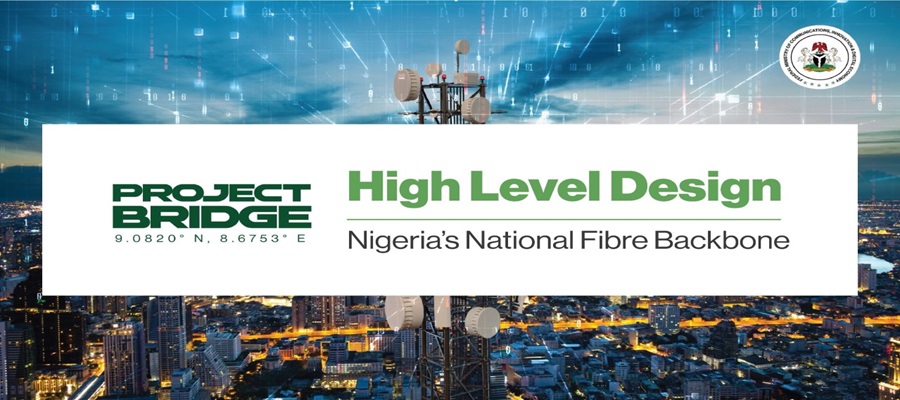
Quest Merchant Bank has been appointed as Transaction Advisor for Project BRIDGE, a broadband infrastructure initiative of the Federal Ministry of Communications, Innovation and Digital Economy (FMCIDE), led by Bosun Tijani, the minister.

Project BRIDGE, short for Broadband Infrastructure Development for Digital Economy, is designed to deepen Nigeria’s digital backbone through the deployment of about 90,000 kilometres of open-access fibre-optic cables nationwide.
The initiative is expected to boost broadband penetration, strengthen connectivity and drive inclusive economic growth.
Under the mandate, Quest Merchant Bank will work with the ministry and the Project Implementation Unit to structure the project’s financial and commercial framework.
This includes developing bankable investment models, engaging investors and designing a public-private partnership structure to ensure efficient execution and sustainability.
Afolabi Olorode, acting managing director, described the project as a critical intervention for Nigeria’s digital economy.
“Project BRIDGE represents a critical step in strengthening Nigeria’s digital backbone and unlocking the immense opportunities within the country’s digital economy. We are honoured to partner with the FMCIDE under the leadership of Honourable Minister, Dr Bosun Tijani on this important initiative,” he said.
He added that the bank would leverage its expertise in infrastructure finance to develop “a robust and investable framework that will attract private capital and support long-term national development.”
Also speaking, Yetunde Falore, head of Investment Banking at Quest Merchant Bank, said the project comes at a defining moment for Nigeria’s digital economy.
“Nigeria’s digital economy is entering a defining phase, and infrastructure initiatives such as Project BRIDGE will play a central role in expanding connectivity, deepening digital inclusion, and supporting sustainable economic growth,” she stated.
Falore noted that the bank would focus on ensuring the timely and efficient delivery of the project in its advisory role.
The initiative aligns with the Renewed Hope agenda of President Bola Ahmed Tinubu, which prioritises digital infrastructure expansion and private sector participation in critical national assets.

Kenya’s High Court has ruled that mobile phone numbers are not disposable assets, but constitutionally protected digital identifiers, striking at the core of a long-standing industry practice of arbitrarily reassigning inactive SIM cards without the owners’ consent.

In a landmark decision that could reshape telecom regulation and digital identity frameworks across Africa, sitting at Milimani Law Courts in Nairobi, Justice Lawrence Mugambi declared that reassigning a phone number without the original owner’s consent violates the right to privacy.
The ruling effectively elevates a SIM card into the same legal category as personal data tied to an individual’s private life.
At the heart of the ruling is Article 31 of the Constitution, which safeguards citizens from unnecessary disclosure of private information and interference with communications.
The court found that in today’s digital economy, a registered mobile number functions as a critical gateway to sensitive personal data, linking users to mobile money platforms like M-PESA, banking systems, email accounts, and social media profiles.
“When mobile digital identity is lost through reallocation or recycling without interrogating the reasons behind inactivity, it creates an avenue for unauthorised disclosure of delicate information,” the judgment stated.
The case, brought by Erastus Ngura Odhiambo, petitioner and former prisoner, challenged the routine telecoms practice of deactivating SIM cards after prolonged inactivity and reassigning them to new users.
Odhiambo lost access to his mobile phone number due to inactivity while serving his lengthy sentence.
He argued that the practice exposes individuals to serious risks, including misdirected financial transactions, intercepted one-time passwords, and unintended access to private communications.
The court agreed, highlighting how recycled numbers can result in strangers receiving confidential messages, authentication codes, and even being added to private messaging groups, effectively inheriting fragments of another person’s digital life.
Justice Mugambi also criticised the rigidity of SIM deactivation policies, calling them “arbitrary” for failing to consider legitimate reasons for inactivity such as incarceration, studying in restricted environments, or living abroad.
“Incarceration does not strip an individual of their constitutional rights to privacy and identity,” he noted.
For telecom operators, including Safaricom, the ruling introduces a significant compliance burden. The court outlined three strict conditions before any number can be reassigned.
Telcos must obtain informed and verifiable consent from the original owner, issue a public notice and conduct traceability efforts over a reasonable period.
More importantly, the court further directed that telecoms firms must implement technical safeguards to prevent data exposure to the new user.
The Office of the Attorney General has been given six months to translate these directives into enforceable regulations.

Binance Earn offers cryptocurrency users an accessible way to generate rewards on idle digital assets without active trading or constant market monitoring.

Binance Earn
As the crypto market matures, more holders seek productive uses for their assets rather than leaving them dormant in wallets. Binance addresses this through Binance Earn, where users allocate supported cryptocurrencies to various reward products for automatic yield generation.
The platform emphasises simplicity with a “set-and-forget” model: users select assets, pick a product, and rewards accrue passively in the background. This appeals especially to long-term holders aiming to enhance portfolio value over time without day-to-day involvement.
Binance Earn provides flexible options for instant liquidity access alongside fixed-term products for defined commitments, catering to diverse strategies and risk appetites.
“We’re seeing growing interest across Africa in ways to make crypto holdings more productive without active trading,” said Larry Cooke, Africa Head of Legal at Binance. “Simple, ‘set-and-forget’ solutions are becoming increasingly relevant as more users take a longer-term approach to digital assets.”
The feature reflects shifting user behaviour towards holding and gradual growth amid volatile markets, where reward rates fluctuate based on conditions, liquidity, and structures.
Users must assess risks and alignment with personal goals, as crypto remains volatile. Binance Earn positions itself as a key tool in Africa’s rising digital asset adoption, enabling hands-off participation in the ecosystem.

Tony Elumelu Celebrates 63rd Birthday by Empowering 3,200 Entrepreneurs Across Africa

Tech Firms Sack over 45,000 so Far in 2026

CBN Wins Central Bank of the Year Title @13th Global Awards

Jury Finds Elon Musk Liable for Misleading Twitter Investors

FG Taps Quest Merchant Bank for Advisory on 90,000km Fibre Project

Kaspersky Discovers New Phishing Campaign Exploiting Google Tasks Notifications to Steal Corporate Credentials

esentry 2025 Report Shows Healthcare, Financial Services and Telecoms as Staging Grounds for Increased Cyberattacks in Africa

AfDB, UNDP Launch $10Bn AI Initiative for Africa

MultiChoice Suspends Yearly DStv Price Hike as Canal+ Pushes Growth

MTN Nigeria Posts Record N1.70 Trillion Pre‑Tax Profit, Declares N20 Dividend for 2025




 News3 days ago
African Tech Start-ups to Receive $46m of Speedinvest Africa Fund

 Telecom3 days ago
Court Bans Kenyan Telcos from Recycling SIM Cards

 E-Financial3 days ago
Providus Bank Fully Meets CBN Capital Requirement, Sets Record Straight

 E-Financial3 days ago
UBA UK, BII Sign Letter of Intent to Slash Africa’s $80Bn Trade Finance Gap

 Telecom3 days ago
Binance Earn: Simple Way to Earn Rewards on Idle Crypto Holdings

 News3 days ago
UK, Nigeria Unveil Three-Year Plan to Combat Immigration Crime

 News3 days ago
U.S. Charges Three in $2.5 Billion Plot to Smuggle Nvidia AI Chips to China

 General News3 days ago
Court Jails ‘Colonel’, ‘Major’ of Global Money-Laundering Ring