

News
Intel, Genius Illumina Advocate State Science Fairs

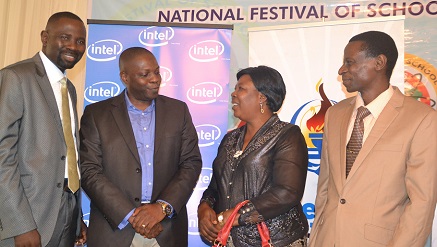
Intel Corporation in collaboration with Genius Illumina is calling on State government to institutionalize science and technology fairs that will further enhance technological advancement of the Nation.
Speaking at this year’s National Festival of School Science, Babatunde Akinola, Corporate Affairs Manager, said: “Intel believes that young people are the key to solving global challenges. A solid math and science foundation coupled with skills such as critical thinking, collaboration, and problem solving are crucial for their success. That is why we promote education programs, ambitious policies, and technology access to enable tomorrow’s innovators”.
Akinola explained further, “Intel has invested over $1 billion, and its employees have volunteered over 3 million hours to improve education around the world over the last decade. In Nigeria, we firmly believe that maintaining the country’s competitiveness in today’s global economy will in large part depend on the success of our nation’s students. Intel’s education programs span across basic technology and science skills and reach students in all 50 states”
Akinola bemoaned that students’ interest in education is waning, saying any nation that would have a breakthrough economically would have to place premium on Science and Technology right from secondary school.
“This Catch-Them-Young Programme remains the best way to redirect the country to the path of Science and Technology called STEM. If a nation wants to be competitive in the global economy, then it has to focus essentially on this sector, because it is the pivot of any economy” He added
He said: “With this programme, we tend to give relevance to these kids and creating a veritable platform for them to realize their potentials.
The organizer of the fair, Genius, Dr. Jerry Orhue, executive director experiencing his deep concerns about academic situation said “it is regrettably to note that many of the young and promising Nigerians were dropping out of schools for lack of requisite information, but I am of the opinion that poor funding of education has become a global phenomenon that needed to be tackled, particularly in a developing nation like Nigeria.
Dr Irhue posited that it is impossible for the government to adequately fund education in a vastly populated nation like Nigeria, saying the Corporate organizations would have to complement the efforts at putting Science and Technology in the fore-front for the country to hit its vision 20: 2020.
Of particular reference, Dr Irhue called on other private organizations operating in Nigeria to take a cue from Intel Corporation that took interest in the promotion of Science and Technology for Nigeria to get better advanced in this sector.
Dr. Kolapo Olubunmi, Deputy Governor, who was present at the award presentation, said “the State has continued to place premium priority on education to revive the old glory, when Ekiti was favourably leading in education in Nigeria.
He said the State Government had established three specialized Science Government Schools in Emure, Ayede and Iyin Ekiti, saying the schools are adequately funded by the government to promote Science and Technology.
Doregos Private Academy, Lagos emerged as the first and second winner while Government College School Kastina emerged as the third winner of the 2015 fair. Winners went home with Laptops, 50 different science/technology books, medals, plaques and all-expense paid to attend Intel International Science and Engineering Fair (INTEL-ISEF) in the United.
Apart from Intel’s focus on education, Science competitions are at the heart of Intel’s education programs. By sponsoring the competitions, it is possible to help identify and celebrate talented young scientists, while inspiring younger students to follow in their footsteps and communities/governments to invest in high-quality science education.



Nigeria has emerged as the largest investor in artificial intelligence-driven surveillance systems on the continent, committing over $470 million to advanced monitoring technologies, according to a new report.

Pic credit…bokysee.com
The study found that Nigeria, alongside 10 other African countries, has collectively spent no less than $2.1 billion on AI-powered surveillance infrastructure.
AI-powered surveillance devices represent a significant shift from passive recording to active, real-time monitoring and threat detection
The study, described as the most comprehensive account of smart city surveillance in Africa, examined deployments in Algeria, Egypt, Kenya, Mauritius, Mozambique, Nigeria, Rwanda, Senegal, Uganda, Zambia and Zimbabwe.
These investments include facial recognition systems and automatic number plate recognition tools aimed at strengthening security and urban monitoring.
The report, titled “Smart City Surveillance in Africa: Mapping Chinese AI Surveillance Across 11 Countries,” was produced by the Institute of Development Studies and released in March 2026.
It highlights Nigeria’s position at the forefront of adopting smart surveillance technologies, reflecting a broader trend across Africa where governments are increasingly turning to AI solutions to address security challenges and improve urban management.
“This level of expenditure translates into an average spend in the region of $240m per country.
“Nigeria alone has documented public expenditure of $470m AI-enabled facial recognition and ANPR, making it the continent’s largest buyer of smart city surveillance technologies,” the report stated.
“In all cases, we know that the real total is significantly higher because surveillance spending is often secret; no figures were available for two of the 11 countries studied; the public accounts for the other nine countries were incomplete; and this study included only 11 of Africa’s 55 countries,” the researchers noted.
The report said most of the surveillance infrastructure deployed across the countries was supplied by Chinese firms and financed through soft loans from Chinese banks.
“The Chinese safe city surveillance package is typically financed by soft loans from Chinese banks.
“A typical package involves a loan of $250m from Eximbank tied to the purchase of surveillance cameras from Hikvision and a command and control centre built and serviced by Huawei or ZTE,” it said.
The report explained that the packages usually include thousands of smart closed-circuit television cameras capable of transmitting geo-located facial recognition and vehicle number plate data in real time.
“The Chinese safe city package typically includes installing thousands of smart CCTV surveillance cameras, which transmit geo-located facial recognition and car number plate data in real time for analysis using artificial intelligence at dedicated data centres that serve as command and control facilities for police and security operatives,” the report added.
The study further revealed that China supplied smart city surveillance technologies to all 11 countries reviewed, while South Korea and Russia supplied three countries each, and the United Arab Emirates supplied two.
It added that the actual spending across the region could be significantly higher due to secrecy around surveillance budgets and incomplete public financial records.

The metaverse, championed by Meta (formerly Facebook) in 2021, has largely collapsed due to low user adoption, technical limitations, and massive financial losses exceeding $80 billion.

Mark Zuckerberg
Meta is shutting down its flagship VR platform, Horizon Worlds, in June 2026, marking a major shift toward AI and mobile-first strategies.
The app will be removed from the Quest store on March 31 and discontinued in VR by June 15, continuing only as a mobile service.
Horizon Worlds, launched in 2021, was central to Meta’s rebranding from Facebook and its vision of a fully immersive virtual environment.
Despite billions in investment and high-profile partnerships, the platform failed to attract a large user base and struggled with design limitations and weak engagement.
Reality Labs, the division behind the metaverse push, has accumulated nearly$80 billion in losses since 2020, including more than$6 billion in a single quarter.
Recent layoffs affecting around 10 percent of the VR workforce, along with the shutdown of related projects, underscore a broader pullback.
Competition and shifting priorities have accelerated the decline.
Rival platforms such as VRChat maintained stronger communities, while Meta increasingly redirected resources toward AI and hardware, including its Ray-Ban smart glasses.
Although Meta says it remains committed to VR, the closure of Horizon Worlds signals a strategic reset.
The company is repositioning its future around AI-driven products, marking a decisive shift away from its earlier metaverse vision.

Federal government has commenced is to roll out a new long-acting HIV prevention drug, Lenacapavir, in selected states as part of efforts to reduce new infections and end AIDS as a public health threat by 2030.

Dr Iziaq Salako, minister of State for Health and Social Welfare, who disclosed this during a media briefing in Abuja, on Monday said the injectable drug will be deployed in eight states and the FCT.
The states are Anambra, Ebonyi, Gombe, Kwara, Akwa Ibom, Cross River and Benue.
Lenacapavir, a twice-yearly injectable pre-exposure prophylaxis (PrEP), is designed for HIV-negative individuals at substantial risk of infection.
Dr Salako said its introduction marks a significant shift from daily oral prevention options, particularly for individuals who struggle with adherence.
The Minister explained that Nigeria’s adoption of the drug followed its selection by the Global Fund as one of nine early adopter countries, after expressing interest in 2025.
He further said about 52,000 doses have already been secured to support the initial phase, with the first batch delivered and preparations underway for facility-level deployment.
He, however, stressed that the drug is strictly preventive and not a treatment for people living with HIV, warning against misconceptions that could encourage risky behaviour.
“This is not a cure or a licence for unsafe practices. It is an additional layer of protection for those at higher risk,” he said.
The minister explained that the rollout would begin on a controlled scale to allow close monitoring of safety outcomes and effectiveness before expanding nationwide.
He noted that implementation would be guided by the National Pre-Exposure Prophylaxis Implementation Plan covering 2025 to 2028, with focus on service delivery, supply chain management, financing and community engagement.
Adebobola Bashorun, national coordinator of the National AIDS, Viral Hepatitis and Sexually Transmitted Infections Control Programme, said the rollout strategy was informed by data and stakeholder collaboration.
He added that the injectable would complement, not replace, existing prevention methods such as oral PrEP and other long-acting options.
According to him, early observations show minimal side effects, mostly mild pain at the injection site.
Dr Temitope Ilori, director-general, National Agency for the Control of AIDS, described the development as a major boost to HIV prevention strategy, especially among high-risk populations.
She cautioned that the drug does not protect against other sexually transmitted infections or unintended pregnancies and is not recommended for pregnant women.
Similarly, Charles Nzelu, director of Public Health, said the innovation could significantly improve adherence to prevention programmes, given its twice-yearly dosage, but emphasised the need to sustain other preventive measures.
International partners also expressed support for the initiative while Josephine Aseme, chairperson of the Nigeria Key Population Health and Rights Network, described the injectable as long-awaited and potentially transformative for vulnerable groups.

Nigeria Spends $470m on AI-powered Surveillance Devices- Report

Metaverse Collapses, Horizon Worlds Shuts Down on Quest

FG Plans New HIV Prevention Injection in 8 States, FCT

SEC Issues Six-Week Ultimatum to Market Operators to Submit Recapitalisation Plan

NIMC Disowns Fake NIN Portal

Kaspersky Discovers New Phishing Campaign Exploiting Google Tasks Notifications to Steal Corporate Credentials

esentry 2025 Report Shows Healthcare, Financial Services and Telecoms as Staging Grounds for Increased Cyberattacks in Africa

AfDB, UNDP Launch $10Bn AI Initiative for Africa

MultiChoice Suspends Yearly DStv Price Hike as Canal+ Pushes Growth

MTN Nigeria Posts Record N1.70 Trillion Pre‑Tax Profit, Declares N20 Dividend for 2025




 E-Financial2 days ago
CBN Wins Central Bank of the Year Title @13th Global Awards

 General News2 days ago
Tech Firms Sack over 45,000 so Far in 2026

 General News2 days ago
Rockefeller, Global Energy Alliance Cross $100 million Mark in Africa Electrification Push

 Telecom2 days ago
FG Taps Quest Merchant Bank for Advisory on 90,000km Fibre Project

 General News2 days ago
Jury Finds Elon Musk Liable for Misleading Twitter Investors

 News2 days ago
Morney Launches in Nigeria as E-invoicing Drives Finance Digitisation

 News2 days ago
Dr Krishnan Ranganath to Lead UniCloud Africa in Continental Digital Infrastructure Push

 General News2 days ago
SEC, NYSC Partner to Combat Ponzi Schemes