

E-Business
International Women’s Day: How Coca-Cola is Championing Women Empowerment

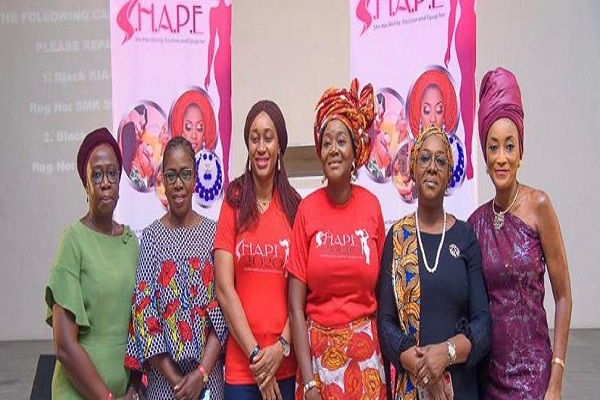
The economic empowerment of women remains a burning issue in countries across the world. On International Women’s Day, a day set aside to celebrate the social, cultural, political and economic achievements of women, issues around women empowerment generally come to the fore.

In many parts of the world, women still face discrimination in areas of remuneration, education and governance. As a result, women are often labelled vulnerable with their lack of power, influence and access to economic resources.
Due to the harsh economic climate and unemployment rate in many parts of the world, it has become more desirable for households to have gainfully employed couples to contribute to the larger economy than to have homes with unemployed, full-time housewives.
Also, there has been an increase in single parenthood as many cultures are beginning to embrace the decision of women to raise their families single-handedly either by choice or circumstances. Whether they are breadwinners or not, women are entitled to their economic autonomy just as their male counterparts in order to care for their health, fend for their children and other dependents.
With the global awareness on women economic rights, Coca-Cola Nigeria Limited recognizes the potential in women to make significant contributions to the economy. This conviction led to the birth of the “5by20” initiative, a Coca-Cola program designed to help uplift and empower five million female entrepreneurs – from fruit farmers and artisans, to recyclers and retailers – to become part of its value chain by 2020.
The initiative, which began in 2010 and ended in 2020, saw numerous projects funded by Coca-Cola Nigeria Limited along with its bottling partner, Nigerian Bottling Company for the economic inclusion of over 450,000 women across the country. The women were equipped to overcome social and economic barriers through the provision of basic business skills, access to financial services and assets, connections with peers and mentors, along with the confidence that comes with building a thriving business. The 5by20 initiative targeted women in six segments of Coca Cola’s value chain: producers, suppliers, distributors, retailers, recyclers and artisans. As of 2019, over 4.6 million women in over 90 countries had started businesses as part of the 5by20 program.
Consistently, Coca-Cola Nigeria Limited and its bottling partner, Nigerian Bottling Company has leveraged diverse platforms to implement the 5by20 initiative to better fit local needs as well as make a greater impact using various platforms.

These include the IDP Women Value Chain Integration Programme which is a two-day micro-business empowerment scheme for over 50 internally displaced women.In addition, Coca-Cola Nigeria Limited and the United Kingdom Department for International Development of Girls Education launched the Educating Nigerian Girls in Nigeria Enterprise (ENGINE) Value Program aimed at strengthening the educational and economic opportunities of the Nigerian girl-child. Through the programme, Coca-Cola improved the learning outcomes and economic status of over 21,000 marginalised adolescent girls in Kano, Kaduna, Abuja and Lagos.
Another interesting intervention by Coca-Cola Nigeria Limited is The Lady Mechanic initiative which empowered about 100 girls in Benin through auto-mechanic skills capability development. Today, the initiative has broken the glass ceiling or gender barrier that is largely associated with the automobile profession which had been deemed by some as off-limits for women. The reality is that the empowered women under this initiative are all now employers of labour.
The SHAPE 2020 programme is yet another women empowerment program implemented by Whitefield Foundation, sponsored by The Coca-Cola Foundation and endorsed by Lagos State Ministry of Wealth Creation. With a $66,000 grant, the women-focused intervention trained and equipped “at-risk” and “underserved” women in local communities with transferable skills such as catering, cosmetics, fashion designing, soap-making, amongst others.
According to the World Health Organization in 2020, the maternal mortality ratio in Nigeria is 814 per 100,000 live births, accounting for 20% of global maternal deaths. One of the contributing factors for this sad reality is the lack of access to quality and affordable health care facilities. In response to this dire situation, Coca-Cola Nigeria Limited launched its Safe Birth Initiative to impact the lives of expectant mothers and their babies.
The Safe Birth Initiative is a social investment from Coca-Cola Nigeria Limited in partnership with Medshare International, the Federal Government through the office of the Senior Special Assistant to the President on Sustainable Development Goals, and the Federal Ministry of Health. The initiative seeks to support the realisation of the Sustainable Development Goals (SDGs) on maternal and neonatal mortality; with a key focus on improving the capacity of selected public hospitals through the procurement of vital maternal and neonatal medical equipment and training personnel in biomedical engineering to improve equipment maintenance and uptime, while reactivating a large stock of abandoned medical equipment wasting away in public hospitals.
For this project, Coca-Cola will donate a total of thirty-six 40ft containers of medical equipment, kits and supplies worth over N3.8b to tertiary hospitals like the Federal Medical Center Ebute Metta Lagos, Abuja National Hospital, Alimosho General Hospital, University Teaching Hospital Ilorin, Federal Medical Center Owerri, Port Harcourt Teaching Hospital, Aminu Kano Teaching Hospital and many others. The initiative, through its partners, Medshare International has also trained over 150 technical staff in these health centres; with many others scheduled to be trained in 2021/2022.
The Coca-Cola Foundation, through the New World Program (NWP), has also awarded a grant worth $100,000 to the Mental and Environmental Development Initiative for Children (MEDIC) towards implementing a Recycling Scheme for Women and Youth Empowerment (RESWAYE).In the same vein, the Lagos State Employment Trust Fund, Coca-Cola Nigeria Limited and its bottling partner, the Nigerian Bottling Company, have announced a collaboration aimed at empowering 1,000 women in Lagos State. The selected women received training in financial literacy and business skills as well as start-up capital to integrate them into the Coca-Cola value chain as retailers of the company’s beverage products.
While reflecting on these initiatives, the Managing Director, Coca-Cola Nigeria Limited, Alfred Olajide, reaffirms the importance of creating an economic model that empowers women and hinges on sustainability.

“Women constitute a significant part of the world’s shared success because we recognize their roles not just as homemakers and influencers but as drivers of economic growth and pillars of their communities and business systems.
“At Coca-Cola, we have initiated these numerous projects through partnerships with non-governmental organisations, women leaders and the government to improve the lives of women who participate in the 5by20 projects.
“The entrepreneurial spirit of these women has made a positive impact on the larger economy through our value chain whether as retailers, suppliers, producers, artisans and mentors”.
Women constitute a major pillar as part of Coca-Cola’s sustainability agenda, this is evident in the numerous initiatives highlighted. Through scalable models and powerful partnerships, Coca-Cola continues to facilitate the development of women while creating shared value for their host communities. With the results proving the efficacy of their programmes, there is no doubt that the company continues to live its purpose of refreshing the world and making a difference in the lives of many.



Mr Uche Ifeanyi, commissioner of Police in charge of the Nigeria Police Force National Cyber Crime Centre (NPF-NCCC), said on Friday that most cyber attacks occur because victims act out of ignorance.

He spoke in Abuja at the opening of an online cybercrime awareness campaign themed “Odogwu No Dey Hide Him Face,” organised to educate and empower communities about online safety and cyber hygiene.
“Studies reveal that the majority of cyber attacks are initiated or enabled by victims due to lack of knowledge.
“Personal information is invaluable and must be protected at all times.
“Just as we maintain physical health, we must also maintain a healthy digital lifestyle,” he added, stressing that simple cyber hygiene practices could greatly reduce the risk of becoming a victim.
He urged the public not to disclose confidential information to unauthorised persons and to use strong, unique passwords, enable multi-factor authentication, and apply security safeguards on digital devices.
“Keep personal information private, avoid suspicious links, and regularly update software or system patches,” he said, adding that antivirus programmes and firewalls were essential for online safety.
Ifeanyi warned against falling for “free gifts” online.
“If it sounds too good to be true, it most likely is fraud,” he said, advising caution with urgent or suspicious messages.
He also urged internet users to verify information before sharing to avoid spreading fake news, emphasising that cybercriminals could exploit everyone regardless of age, occupation, or social class.
Vincent Olatunji, director-general, National Data Protection Commission (NDPC), commended NPF-NCCC for its efforts and said the campaign theme was commendable.
He noted the importance of educating people on legitimate wealth and safe internet use.
Olatunji said that the fight against cybercrime required collective effort, warning that the risks were increasing daily as more people connected to the internet across Nigeria.


Kaspersky has introduced an update to its Automated Security Awareness Platform, adding full support for PDF and SCORM (Sharable Content Object Reference Model) – the industry-standard protocol for deploying and managing e-learning content.

The enhancement enables organisations to build fully customised cybersecurity training programmes that reflect their infrastructure, risk profile, and internal policies, while continuing to benefit from Kaspersky’s expert-driven security content and phishing simulations.
According to the Kaspersky report titled “Redefining the Human Factor in Cybersecurity”, employees responding to phishing attacks was one of the main causes of cyber incidents in companies worldwide, accounting for 21% of cases among other reasons.
At the same time, additional Kaspersky research reveals that social engineering attacks are predicted to increase more than any other type in the nearest future, with 87% of respondents believing that social engineering attacks will become even more effective due to the use of AI tools.
The new Kaspersky Automated Security Awareness Platform (Kaspersky ASAP) update directly addresses several persistent challenges such as reducing the number of human-related incidents, cutting time spent on managing training programmes, decreasing regulatory and compliance risks, and minimising potential legal or reputational damage stemming from cybersecurity breaches.
With the new SCORM support, the platform becomes even more flexible: companies can now upload, track, and manage their own SCORM-based learning materials directly within the system. In addition, companies can accelerate their programmes by using easier-to-create PDF-formats.
This allows organisations to tailor training to their specific technology stacks and emerging threats targeting their industry or region. Businesses that have already invested in third-party SCORM courses or internal learning development can now seamlessly reuse their existing modules, protecting their prior investments while strengthening their cybersecurity posture.
The combination of Kaspersky’s embedded content built on real cases uncovered by the company’s world-class experts with customers’ PDF materials or SCORM modules enables a true best-of-breed approach to human risk management.
Organisations can supplement Kaspersky’s up-to-date cyberattack scenarios with internal policies, unique workflows, and industry-specific lessons, ensuring training resonates with employees and reflects real operational challenges.
“Human behaviour remains one of the most unpredictable elements in cybersecurity and also one of the easiest for attackers to exploit. By adding SCORM support to Kaspersky Automated Security Awareness Platform, we’re giving organisations the flexibility to build training programmes that truly match their internal realities.
“Combined with Kaspersky’s expert-driven content and real-world attack data, this update empowers companies to create more adaptive, relevant, and impactful awareness programmes than ever before,” comments Svetlana Kalashnikova, Security Awareness expert at Kaspersky.
Nigeria Data Protection Commission (NDPC) has joined sixty (60) other Data Protection Authorities (DPAs) in endorsing the “Joint Statement on Al-Generated Imagery and the Protection of Privacy.”

NDPC
The Joint Statement was coordinated by the International Enforcement Cooperation Working Group (IEWG) of the Global Privacy Assembly.
This underscores the growing concerns regarding the privacy risks posed by Artificial Intelligence tools capable of generating realistic images and videos of identifiable individuals.
The Joint Statement highlights concerns over the misuse of Al-powered tools to create non-consensual imagery, defamatory content, and other harmful materials, particularly affecting children and vulnerable groups.
It calls on organisations to implement strong safeguards, ensure transparency, provide effective content removal mechanisms, and comply fully with applicable data protection laws.
The current effort forms part of a continuum of steps being taken by Nigeria to ensure the responsible use of Al. It will be recalled that the Honourable Minister of Communications, Innovation and Digital Economy, Dr ‘Bosun Tijani, led the initiative for the development of the National Al Strategy.
The NDPC also issued the General Application and Implementation Directive (GAID), which, amongst others, mandates privacy by design and privacy by default in the development and deployment of Al tools.
The National Commissioner/CEO of the NDPC, Dr Vincent Olatunji, has directed that the Nigeria Data Protection Act (NDP Act) Compliance Audit Returns (CAR) by data controllers and processors of major importance will serve as a yardstick for monitoring and evaluating responsible use of Al for data processing in Nigeria.

Police Says Victims Enable Cyber Attacks Out of Ignorance

Bank Accuses Magistrate, Lawyer of Using Fake Order to Steal N3.5m from Account

FG Launches NERD to Combat Certificate Fraud

NCDC Issues Public Advisory on Cerebrospinal Meningitis

Goodnews Naija Launches ‘Building in Nigeria’ Series on Entrepreneurs, Real Sector Builders

Dr. Cairo Ojougboh Foundation Bolsters Nigeria’s Education Drive with ₦2.7m Student Support

Kaspersky Brings more Transparency to Threat Detection with New Hunt Hub

PwC Reveals AI Scaling Gap Slows Africa’s Digital Transformation

Kaspersky Discovers New Phishing Campaign Exploiting Google Tasks Notifications to Steal Corporate Credentials

esentry 2025 Report Shows Healthcare, Financial Services and Telecoms as Staging Grounds for Increased Cyberattacks in Africa




 E-Financial2 days ago
Senate Targets Fintech Overreach, Vows Ponzi Crackdown After ₦1.3trn CBEX Scam

 General News2 days ago
FCCPC Bans Lagos ‘No Refund’ Policy, Vows Fines and Shutdowns for Traders

 Telecom2 days ago
Google Adds Yorùbá, Hausa to AI Search, Boosting Access for Millions of Nigerians

 E-Financial2 days ago
SmartCash Launches ‘No Be Cho Cho Cho’ Campaign to Boost Digital Banking in Nigeria

 Telecom2 days ago
MTN Nigeria Non-Executive Director Mazen Mroue Quits to Focus on Group Role
 E-Business1 day ago
Police Says Victims Enable Cyber Attacks Out of Ignorance

 Telecom2 days ago
NativeID Launches Free Digital Identity Platform to Shield Nigerian SMEs from Scammers

 E-Financial1 day ago
Quest Merchant Bank Achieves CBN Regulatory Recapitalisation Milestone