

Telecom
Kia Rio for Grab in Lenovo Nationwide Consumer Promo

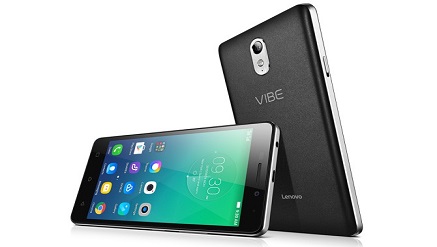
Lenovo Technologies has announced the commencement of a loyalty promotion towards making this holiday season more exciting for Nigerians. Tagged “Lenovo National Promo,” the campaign offers individuals that purchase selected Lenovo smartphones from accredited dealers nationwide the chance to win star prizes including a brand new Kia Rio and 10 education grants worth N200,000 each.
Instant gifts of recharge cards, movie tickets, Bluetooth headsets and much more are also on offer to consumers at each point of sale.
To qualify for the promo, consumers are expected to send a text message containing their name, device IMEI number and model number alongside the name of the store from which their device was purchased to 33811.
According to Lenovo, the winner of the Kia Rio star prize will be selected from among participants that purchase their Lenovo smartphones from any SLOT store nationwide while winners of the 10 education grants will be selected from those who buy from other participating dealer stores.
Winners of the star prizes will be announced on local radio stations, national newspapers and social media channels after selection via a bi-weekly lucky dip process.
Numerous customers will also go away with consolation prizes of refrigerators, microwave ovens, gas cookers, blenders as well as Lenovo smartphones and tablets at each draw. The promotion will run between November 23 and December 31, 2015.
In addition to giving its customers the chance to win fantastic prizes, the tech giant will be holding a number of retail activations across the country to deepen consumer engagement as well as provide customers with the opportunity to experience the features and performance of Lenovo smartphones before making their purchase.
Shashank Sharma, executive director, Mobile Business Group at Lenovo, Middle East and Africa (MEA) said the promotion will help Lenovo drive significant engagement with its Nigerian consumers while allowing the company to thank them by giving away lots of valuable prizes.
“The Lenovo National Promo is the latest in a string of consumer-focused promotions that we are offering to reward our valued customers. It demonstrates our commitment to providing them with additional value for each smartphone purchase. It also provides us with a platform for showing our gratitude for their loyalty and support all through the year. We look forward to having more activities of this kind in the year ahead,” he said.
Smartphones that are eligible for the promotion include the 5-inch Lenovo Vibe S1, the company’s first dual-selfie camera smartphone and the Lenovo Vibe P1m which boasts a long-lasting 4000mAh battery, a Quick Charge feature and energy saving software alongside a splash-proof Nano coating that protects the device from rain and spills.
Others are the Lenovo P70 with an epic 4000mAh battery which can last up to three days; the Lenovo A2010, an affordable smartphone that bridges the gap between the latest mobile technology and the masses with its innovative, future-proof features and the ergonomically designed Lenovo S60 that showcases users’ fun and social sides.
Customers that purchase Lenovo’s revolutionary dual-SIM A5000 and A6000 smartphones, the first budget devices in the market to support 4G LTE networks for the fastest data connectivity and the Lenovo A7000, the world’s first smartphone to feature Dolby Atmos technology for more consistent playback volume across all types of content, will also be eligible to participate in the promotion.



Mazen Mroue, a non-executive director at MTN Nigeria Communications Plc, has resigned effective February 27, 2026, to prioritise other responsibilities within the MTN Group, the company announced in a Nigerian Exchange Limited (NGX) filing.

MTN Nigeria
The notice, signed by company secretary Uto Ukpanah, stated: “This is to enable Mr. Mroue to focus on other priorities within MTN Group Limited. The Board wishes to express its appreciation to Mr. Mroue for his immense service to MTN Nigeria and wishes him success in his future endeavours.”
Mroue joined MTN Nigeria’s board on June 1, 2022, bringing over 28 years of telecom experience. A veteran MTN executive, he previously served as CEO of MTN Uganda and MTN Liberia, non-executive director at MTN Cyprus, and held leadership roles at MTN Ghana.
Since February 2022, he has been MTN Group’s Chief Technology and Information Officer, overseeing technology strategy and governance. Earlier, as MTN Nigeria’s COO from August 2018 to January 2022, he also sat on the MTN Nigeria Foundation board.
The exit follows MTN Nigeria’s stellar 2025 results, posting a ₦1.70 trillion profit before tax—reversing a ₦550.3 billion loss in 2024 driven by forex woes—marking one of the telco’s strongest rebounds.

Google has rolled out support for Yorùbá and Hausa languages in its AI-powered Search features—AI Overviews and AI Mode—enabling millions of Nigerians to get quick answers, summaries, and conversational web exploration in their mother tongues.

The update forms part of Google’s push to cover 13 African languages, including Afrikaans, Akan, Amharic, Kinyarwanda, Afaan Oromoo, Somali, Sesotho, Kiswahili, Setswana, Wolof, and isiZulu, selected based on high search activity across the continent.
Now, a Kano student can ask complex questions in Hausa, while an Ibadan trader seeks business tips in Yorùbá—both receiving culturally nuanced AI responses via text or voice on Android, iOS, or web.
Taiwo Kola-Ogunlade, Google’s West Africa Communications Manager, said: “Building truly global Search requires nuanced local understanding. With Gemini-powered AI, we’ve made advanced capabilities relevant in Yorùbá and Hausa, so Nigerians converse naturally with Search in their mother tongues.”
To use: Open the Google app, tap AI Mode, and query in Hausa or Yorùbá for personalised guidance—breaking language barriers and making technology reflect Nigeria’s diverse identity.
MultiChoice is closing its continental streaming platform Showmax after 11 years, notifying subscribers Thursday of the board’s decision to discontinue the service in the near future to refocus on sustainable digital offerings.

MultiChoice
The email assured no immediate disruption: “You can continue streaming as usual, and no action is required from you at this time.” Showmax, launched in South Africa in 2015 and expanded across Africa, offered movies, series, documentaries, and sports to rival Netflix and others amid rising online entertainment demand.
The shutdown follows Canal+’s approved takeover of MultiChoice last year, with the French giant offering ZAR 125 per share for remaining stakes.
The deal mandates HDP ownership boosts, local content investment, and splitting MultiChoice’s SA broadcasting arm into an independent entity to meet regulations.
MultiChoice prioritised subscribers during the transition, promising advance notice on timelines.
Showmax’s exit signals consolidation pressures in Africa’s cut-throat streaming market, where global players dominate despite local content strengths.

MultiChoice to Discontinue Showmax Streaming Platform

GCR Affirms Afreximbank’s International Scale Ratings of A, A2

SmartCash Launches ‘No Be Cho Cho Cho’ Campaign to Boost Digital Banking in Nigeria

MTN Nigeria Non-Executive Director Mazen Mroue Quits to Focus on Group Role

Google Adds Yorùbá, Hausa to AI Search, Boosting Access for Millions of Nigerians

Dr. Cairo Ojougboh Foundation Bolsters Nigeria’s Education Drive with ₦2.7m Student Support

Kaspersky Brings more Transparency to Threat Detection with New Hunt Hub

NDPC Commits to Balancing Data Privacy, Protection Information

PwC Reveals AI Scaling Gap Slows Africa’s Digital Transformation

Firm Reviews the Evolution of Phishing Threats in 2025




 E-Financial2 days ago
NRS Targets N40trillion in Tax, Royalty Revenue in 2026

 E-Financial2 days ago
SEC Revokes Registration of Kensington Agro Trading Limited

 General News2 days ago
Purple Woman 3.0 Is Back, to Empower Women in Tech this IWD 2026

 News2 days ago
EFCC Arraigns Two FSDH Bank Officials Over $307k, €50k Fraud

 Telecom2 days ago
Konga Launches ‘Berekete Sales’ with Up to 50% Discounts Across Major Categories
 E-Business2 days ago
NDPC, 60 DPAs Collaborate on Enforcing Privacy Rights in the Use of Al

 General News2 days ago
NCDC Raises Alarm over Lassa Fever Ravaging 18 States in Nigeria

 E-Financial2 days ago
Nigeria’s Net Reserves Surge 50% to $34.8bn in 2025 – CBN Governor