

Broadcasting
Konga, Access Bank Partner to Feed Thousands, Offer 10% Discount to Card-holder Donors, Shoppers

Konga, Nigeria’s leading e-commerce giant and Access Bank Plc, foremost financial institution, have announced plans to support the free delivery of discounted, high quality essential food items to millions of Nigerians in a move targeted at putting smiles on their faces this festive season.

The project, a humanitarian initiative will be executed under the auspices of Konga Kares, the Corporate Social Responsibility (CSR) arm of the Konga Group, through which it has identified with and empowered critical segments of the population in need of a helping hand.
Through this partnership, interested and public-spirited Nigerians at home and in the Diaspora can donate to friends, families, the less privileged and communities of their choice across Nigeria. Access Bank Plc., sole partners on this project, will subsidize the cost of free delivery of these food items to the last mile beneficiaries across Nigeria.
The food items have gone live for purchase in dedicated gift bundles on the Konga website – www.konga.com/content/kongakares – effective Thursday, November 11, 2021, coinciding with the commencement of this year’s annual Konga Yakata, widely regarded as the biggest sale event in the annual shopping calendar.
Konga will oversee the logistics and deliveries of the food items to the nominated beneficiaries of the donors. Donations end on Sunday, December 12, with Konga committing to ensure delivery to all beneficiaries on or before Saturday, December 20, 2021.
Specifically, the food items are available in four categories on the Konga website. They include small bundle (10kg bag of rice and 2 litres cooking oil for N7,949); medium bundle (25kg bag of rice and 3 litres cooking oil at N16,699); large bundle (50kg bag of rice and 5 litres cooking oil for N30,349) and mega bundle (two units of 50kg bag of rice and two units of 5 litres cooking oil at N59,999).
Equally important, Access Bank is offering an additional 10 per cent discount to donors who pay for purchases with their debit card. This offer cuts across donors who wish to purchase and donate gift bundles as well as purchases made by card holders who shop on Konga Yakata.
Furthermore, interested donors can also make cash donations to the needy via KongaPay, a Central Bank of Nigeria (CBN)-licensed mobile wallet through their existing accounts or by signing up at www.kongapay.com.
‘‘We are fast approaching the festive season, a period of merriment for many. But we understand that the reality may be different for some of our brothers and sisters across the country, many of whom may not even have food to eat,’’ disclosed Gideon Ayogu, Head, Corporate Communications, Konga Group in a chat with newsmen.
‘‘As a result, we have partnered with Access Bank Plc. under the Konga Kares programme to support the free delivery of food items to needy beneficiaries across Nigeria. Interested Nigerians at home and in the Diaspora can take advantage of this initiative to purchase these food items as gift bundles at www.konga.com/content/kongakares and donate to beneficiaries of their choice. You can donate to as many as you wish simply by adding their delivery addresses or locations while making payments online.
‘‘This is our own little way of giving back and putting smiles on the faces of many around us, while also ensuring that they share in the joys of a memorable festive season,’’ he added.
Also addressing newsmen during the media briefing, Chioma Afe, Group Head, Retail Marketing & Analytics, Access Bank Plc., revealed that the additional 10 per cent discount for Access Bank card holders represents a unique opportunity for interested participants to make huge savings.
‘‘For Access Bank card holders, it is also a useful opportunity to make great savings through the additional 10% discount offer we are extending exclusively to them.
“This discount can be enjoyed when you purchase a gift bundle or bundles to donate or when you shop on Konga Yakata.
‘‘It is important, however, to mention that the offer is valid, subject to the availability of the lump sum dedicated to the discounts. Non-card holders are advised to hurry and get their Access Bank cards now in order not to miss out on this mouthwatering offer,’’ she stated.
Purchase and donation of the gift bundles for the Konga Kares CSR partnership commenced on the Konga website on Thursday, November 11 and expected to end on Sunday, December 12, 2021, with all donations billed to reach their beneficiaries latest by Monday, December 20, 2021.
Meanwhile, Konga and Access Bank will equally collaborate in supporting the donation and free delivery of used but decent clothing items to the needy – in an offshoot of the current CSR initiative – in January 2022.


Mr. Charles Ebuebu, director General of the National Broadcasting Commission (NBC), has called on Nigerian content creators to actively participate in the country’s Digital Switchover (DSO), describing the transition as a major opportunity for visibility, revenue growth, and industry collaboration.

Mr. Charles Ebuebu, DG, NBC
Speaking as Special Guest of Honour at the induction ceremony of the Electronic Media Content Owners Association of Nigeria (EMCOAN) in Lagos, Ebuebu stressed that the success of the DSO depends on engaging content to populate the nation’s new digital channels.
“Without content, the DSO’s success would be incomplete. We are urging content owners to collaborate with the Commission to ensure Nigeria’s digital future is rich, diverse, and sustainable,” he said.
The NBC boss highlighted that the upcoming FreeTV Direct-to-Home (DTH) platform, along with its mobile applications, would provide content creators with nationwide reach, advanced analytics, and brand partnership opportunities.
Nigeria’s DSO, which marks the shift from analogue to digital broadcasting, is being implemented by the NBC using the Nigcomsat satellite infrastructure. The programme aims to deliver over 100 nationwide channels and expand access to Nigerians in remote areas via hybrid decoders, addressing long-standing infrastructure and funding challenges. The project, which has experienced delays since 2012, now has strong government backing and is scheduled for launch in April 2026.
Ebuebu commended EMCOAN members for their contributions to strengthening Nigeria’s creative economy and encouraged them to leverage the opportunities offered by the DSO to promote local stories, culture, and creativity on both national and global stages.
During the ceremony, EMCOAN honoured its distinguished members, naming Wale Adenuga, MFR, as Grand Patron and Mr. Yinka Adebayo as Patron.
Prominent figures in the broadcasting content industry, including Wale Adenuga, Opa Williams, Agatha Amata, Jibe Ologeh, High Chief Emeka Ossai, Debbie Odetayo, Amina Mohammed, and Frank Elaboya, attended the event.
Representing the NBC at the event was Mr. Ralph Akpan, director of the Lagos Zone, while EMCOAN president, Mr. Adeniji Omirin, MD of ADNOM Media, urged members to fully engage in the digital switchover.
Canal+ is to cut jobs at MultiChoice as part of a sweeping restructuring plan aimed at stabilising the African pay-TV operator, following years of operational and financial pressure.

The move comes alongside a planned $115 million capital injection, underscoring the urgency of efforts to revive the business after the French media group took control.
The planned layoffs are expected to form a core element of a broader cost-cutting and efficiency drive, as Canal+ seeks to streamline MultiChoice’s operations and improve profitability.
The restructuring signals a shift toward leaner operations, with a focus on eliminating redundancies and optimising the company’s cost base.
MultiChoice has struggled in recent years with declining subscriber numbers across key African markets, weighed down by macroeconomic pressures, currency volatility, and changing consumer behaviour.
The rise of global streaming platforms has intensified competition, chipping away at the company’s traditional pay-TV dominance.
Canal+’s intervention marks a pivotal moment for MultiChoice, reflecting a more aggressive approach to repositioning the business.
By combining fresh capital with structural reforms, the new owners are aiming to both stabilise short-term performance and lay the groundwork for longer-term growth.
The $115 million injection is expected to provide immediate financial relief, supporting operations and potential strategic initiatives.
However, the accompanying job cuts highlight the depth of the challenges facing the company and the scale of transformation required to restore competitiveness.
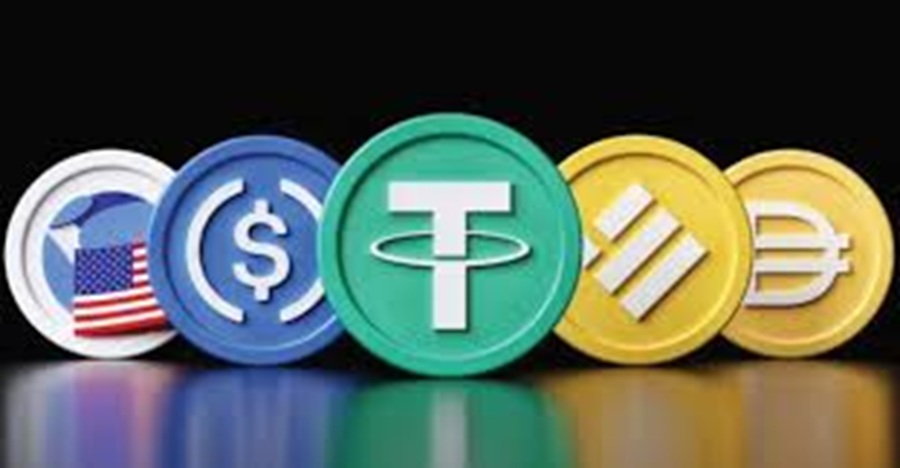
Nigeria has ranked first globally in the ownership of the two largest stablecoins, Tether (USDT) and USD Coin (USDC), reflecting the country’s growing reliance on dollar-linked digital assets.

USDT, USDC
Stablecoins such as USDT and USDC are designed to maintain a fixed value against the U.S. dollar, allowing users to store money digitally while avoiding the price volatility associated with cryptocurrencies like Bitcoin.
According to the 2026 Stablecoin Utility Report released by BVNK, about 59 percent of Nigerian crypto users hold USDT, while 48 percent own USDC, giving the country the highest combined ownership rate among all nations surveyed.
The report placed Nigeria ahead of several major economies, including Australia and India, highlighting the country’s strong adoption of dollar-denominated digital assets. Australia ranked second with 34 percent USDT ownership and 29 percent USDC, while India placed third with 30 percent USDT and 27 percent USDC holdings.
The study also examined adoption levels across other regions. Countries such as Colombia and Singapore showed strong usage of both stablecoins, while adoption levels were also notable in South Africa and the United States.
Other markets included in the analysis were Philippines, Thailand and Argentina, where stablecoin ownership has also increased significantly. Among European economies, the report said France and Germany showed moderate levels of adoption, while Latin American markets such as Mexico and Brazil recorded smaller but growing usage rates.
The United Kingdom also appeared in the ranking with modest levels of stablecoin ownership. The report noted that USDT ownership exceeds USDC in many countries, including Nigeria, Australia, India, Singapore, the Philippines, Thailand, Argentina and France.
However, USDC is often viewed as a more compliance-focused stablecoin because of its stronger transparency and regulatory alignment. In some markets, including South Africa, Colombia, Germany and Brazil, the report found that USDC adoption slightly exceeds USDT.
More broadly, the data suggests that stablecoin adoption is being driven largely by emerging economies rather than advanced financial markets. According to the report, countries such as Nigeria, Argentina and the Philippines are among the biggest users of stablecoins, where people increasingly rely on dollar-pegged digital assets to protect savings from currency volatility and facilitate cross-border payments.

Breaking…..Kuda Lays Off Many Employees in Broad Restructuring

NCC to Curb SIM Fraud, Strengthen Digital Security with New Platform

NBC Boss Urges Content Ceators to Participate in DSO

Kidnappers Now Use Banks to Collect Ransoms — Expert

CBN Says Bank Customers Won’t Lose Deposits because of Recapitalisation

Kaspersky Discovers New Phishing Campaign Exploiting Google Tasks Notifications to Steal Corporate Credentials

esentry 2025 Report Shows Healthcare, Financial Services and Telecoms as Staging Grounds for Increased Cyberattacks in Africa

Spotify’s Loud & Clear Report Reveals Over ₦60Bn Revenue for Nigerian Artists in 2025

MTN Nigeria Posts Record N1.70 Trillion Pre‑Tax Profit, Declares N20 Dividend for 2025

China Threatens to Shut Nigeria’s Satellite Over $11.44m Unpaid Debt




 E-Financial3 days ago
CBN Directs IMTOs to Open Naira Settlement Accounts

 Telecom3 days ago
Nigerians Lose N12.5Bn to AI-Driven Scams- PwC

 General News3 days ago
Court Remands Hacker for Allegedly Stealing N3.09Bn from FCMB

 Telecom3 days ago
Airtel Africa, Starlink Mobile Data and Messaging Testing Take off in Kenya

 E-Financial3 days ago
DLM Capital Group’s AAA-Rated Sovereign Bond-Backed Composite Notes (“SBCNS”) Strengthens Investor Confidence with Successful First Principal & Interest Payment

 E-Business3 days ago
AU Sees AI Adoption Evolving to Boost Economic Growth in Africa

 Telecom3 days ago
GATEWAY Programme Opens Doors for 340,000 Nigerian Youths to Tap into $1.85trn Global Gig Economy

 News3 days ago
Kaspersky, AFRIPOL Conduct Joint Cybersecurity Training for African law Enforcement