

/home/kenneth/web/nigeriacommunicationsweek.com.ng/public_html/wp-content/themes/zox-news/parts/post-single.php on line 153
">
Warning: Undefined array key 0 in /home/kenneth/web/nigeriacommunicationsweek.com.ng/public_html/wp-content/themes/zox-news/parts/post-single.php on line 153
Warning: Attempt to read property "cat_name" on null in /home/kenneth/web/nigeriacommunicationsweek.com.ng/public_html/wp-content/themes/zox-news/parts/post-single.php on line 153
Let Free Market Work in Mobile Money -Oviosu

Tayo Oviosu, founder and CEO, Paga (Pagatech, has over 12 years experience in a variety of technical and business roles in High-tech and Private Equity.
Oviosu, had held position as vice president at Travant Capital Partners where he was responsible for executing the firm’s investment strategy in West Africa.
Prior to joining Travant, Tayo was a manager, Corporate Development, at Cisco Systems in San Jose California, responsible for strategy, acquisitions, and private equity investments in four technology sectors – Virtual Computing, Application Networking, Security, and Network Management. Tayo also helped lead Cisco’s investment expansion in Africa.
He spoke to Chike Onwuegbuchi on issues around mobile money growth in the country.
Nigerian Mobile Payment Sub-Sector
I think it has been successful. It has been growing faster than people know. I think we are not actually telling the stories well enough.
For instance, in 2013, which was the second full year of our operations in Nigeria as Paga, we processed over 5 million transactions worth N50 billion.
In the first two months of 2014, we have already done 26% of that. So, the system is actually growing faster than people know.
We process about 15 transactions per minute. Currently, 33% of our users are active; out of 1.3 million users on the platform. And this is just Paga alone.
If we carry out a desktop research on mobile payment around the world, you will come up with M-Pesa, Globe and Smart in the Philippines.
Smart and Globe have been around for 10 years with 400,000 active users, while we, just after 2 years we have almost 300,030 active subscribers.
If you compare it very well to any scheme at this stage of its development, not too many people are doing transactions that sell 15 transactions every minute.
A lot of things are going on with the paying merchants and others.
We currently have about 1300 businesses using Paga; 4, 000 agents in 25 States and 150 towns and cities across Nigeria. When they say the proof is in the pudding; the pudding is quite good.
Telecos Exclusion and the System
To me, this is one of the best decisions the Central Bank of Nigeria has made in a long time. When you look at it from a risk management perspective, if you had told me 10 years ago that Lehman Brothers will not be around, I would say you are lying.
They have been around for 200 years. As one of the strongest banks in the United States, and globally recognized.
So, how do you mean Lehman Brothers will go bankrupt?
But, the truth is that they are not around now. I think it is very unsafe for any developing economy to set up monopoly that can not avail.
If you look at Kenya, the government of that country would never let the Safaricom fail, because it has become a monopoly.
Safaricom is there, not only in the voice services, but in the financial services; the two sectors that are very important to the economy.
What we have seen around the world is that telecos being in the mobile payment does not actually achieve financial inclusion, which is the goal of the CBN.
Therefore, CBN took the right decision. On the other hand, going into the financial services, while you control the telecommunication that is important to the country, is a way of building monopoly that will be too much for the country to bear.
It will create chaotic situation, because there will be two regulators. The situation would give a particular regulator upper-hand, which affected Nigeria’s financial services few years back based on regulatory charges involving CBN and other regulators.
It is not the kind of ‘war’ we want to go into. Actually, CBN took such a smart decision to leave us in hands of third parties and banks and to ride on our networks. Also, I think we give too much attention to telecom operators.
I can operate Paga (online) from my office. At the end of the day, we are talking about how you connect to the internet, whether through telecom operator or not.
These are services that ride on any provider of the internet services.
Collaborations with Telecos to Ride on their Customer Care Centres
How many customer care centres do they have? Etisalat has 50 branches. That is great, but it cannot serve us.
We have 4,000 agents. And we need to get to 30,000 agents in a couple of years.
So, 50 branches will not help us get to the target of 30,000. We may be thinking they can provide such services; the truth is that the existing networks of the telecos are not the kinds that can easily scale to mobile payments.
The reason is that no teleco in Nigeria controls the last mile. Thus, this is something, often; people lead out in conversation about Safaricom in Kenya.
Safaricom has direct conversation with its last mile. MTN, Glo, Airtel and Etisalat have direct relationship with their dealers.
And they are about 150 (dealers). The dealers on the other hand have built networks under then; and there are other networks.
MTN, for instance, does not have direct relationship with the people selling its recharge cards. So, if any of them is going to do this business, they have to build their own (fresh) agent network. That is different from what we are doing; we are fixed on the ground, have more than 100 people out there building Agent Networks.
We have super agents as well; where some people are building their networks in their domains. And that will scale the process.
So, could there be room for collaboration? Sure, but not the silver bullet. I will never approach the conversation from the silver bullet angle.
In fact, that is part of the problem we have.
When you enter into the conversations, the telecos may think they have a lot to bring into it. We are having conversations with other people who have wider reach than the telecos.
What are the Challenges? Some Banks Attempted to Pull out from the Process
I do not know what the challenges are for individual schemes. Fundamentally, we do not see any structural challenges to operating.
The framework makes sense. The rule is there for anyone that wants to participate and make it happen. What people are realizing is, it is a top business to be in. and they are realizing that it takes a lot of money to be executed.
Some are finding it difficult to find the right team to drive theirs. Therefore, it is not an easy business to move into. So, anyone who sought for a licence from the CBN is now realizing that this is a top business.
When you look at the banking sector around the world, there are very few banks that are in this business successfully.
The reason is that it is out of the core competencies of the banks. But, if a bank gives a focus and map out fund for it, surly there is an opportunity.
That is why we approach banks to work with them. We announced in December, 2013 that any bank or MFI (microfinance institution) or MFP can come and use our agents for cash in and cash out and account opening.
We will do this for a fee, but you will leverage on our networks. We have worked hard in building the agent network. We are hopeful they will come on. It is a win-win situation for all the parties.
The ecosystem is big enough for us to work together. In the same way, we expect the like of First Bank to open its ATM network; GTBank has already done that, FCMB and Diamond Banks are thinking along that way.
These are places we can work together for mutual good. Same thing goes with the Point of Sales (PoS); there is no reason you cannot pay with Paga when you transact business.
I think it is a matter of time; we will get over these things. So, there are about 24 licencees; I do not know about everybody, but I know it is an ideal business that keeps us awake a lot.
Constraints Based on the Cost of USSD Platform
I fundamentally believe that no regulator should have price controls in the market. I am a strong believer in a free market. Let the free market work.
There should be no regulating of the USSD pricing to telecos; there should be no regulating of our pricing to our customers.
Let the market do that itself. So, when I hear our competitors ask for a reduction in USSD price, I usually ask why? If you were MTN, why would you want someone putting a price on your USSD price?
You would want it to be commercially viable. We have gone to MTN, Airtel and Etisalat, negotiated USSD rate. And we are fine with what we negotiated.
Everyone should go and negotiate rates.
We should not force the telecos into setting the price, because if you do, why would they want to provide their services to you.
They have to deal with quality of service on their network, additional traffics, and they have to become economically viable. Of course, could the prices the telecos are coming up with be lower? Yes, who would not want to pay less?
But I do not think it is the price that kills the service. You try what you have and when the volume grows, you can go and re-negotiate.
You can ask for a discount. You cannot just be asking for discount when you have not shown the volume.
That is one of the reasons some find it difficult doing business in Nigeria; a lot of times, people ask for things that are unreasonable.
They know very well that if they were in the shoes of the telcos they would not do that.
Opportunities in the Industry
I got a phone call while coming to work that I needed to pay for a certain service. The person sent me an SMS with the account number.
Right there from my phone I went to Paga and sent the money to the bank account. There was no worry about writing a cheque, withdrawing from a particular bank to pay to the other bank. From Paga, I can send money from one bank account to another, instantly.
You must be a Paga customer to leverage on that, hence with a phone number I can send money to you. You carry out your DSTV transaction.
You can conduct e-commerce transactions using Paga. Life is simply better with Paga. It reduces the risks of carrying money around, queuing up at one place or the other.
I am in business, I have to pay a lot of people I can do that with Paga. We provide services for both businesses and individuals to benefit. Like I said there are over 130,000 businesses using Paga and with the account you can send money to anybody.
How Long Does it Take to Receive Money Sent through Paga?
It takes less than two minutes to receive money in the receiving bank account. There is no issue of 24hours clearance or what have you.
Recently I was in Abuja, and was trying to educate the cab driver on mobile money, I mentioned Paga, and he confirmed he had heard about it in Kaduna.
As we were driving to the airport, I transferred the fare to his account. Instantly (within two minutes), he received the alert from First Bank via Paga and he was shocked. He was a kind of ‘crazy’ about it.
He was interested to hear that he needs not to carry money when he wants to go shopping. He can even pay in advance.
This is the story we are not telling. The media have been focusing on ‘should the telecos be in?’ regulations here and there.
The real story is the value to the customer. Has it simplified our lives, adding value to the economy? Those are the real stories.
How True Is The Report That Banks Control The Greater Percentage Of The Market?
That is not true. We are confident, based on what we hear from the CBN, although it does not reveal the numbers publicly, we are the largest player in the market.
Now, we have to be careful on the bank side to know what is their mobile payment business and mobile banking business.
The two are different. In mobile banking business for instant, I use UBA’s U-Mobile. That is different from what we are doing on mobile payment.
When you look at the transactions in mobile payment volumes-money transfer, airtime recharge, etc, we are the largest.
Paga’s Achievement with Western Union, What Does It Mean to Your Customers?
We are very excited about the relationship with the Western Union. This is just the beginning of many things we are going to do with the Banks and similar companies.
Essentially, what we have done is: if you want to send money to Nigeria, from anywhere in the world, through Western Union, the recipient can pick it up from Paga.
They can either pick it up in their own Paga Account and go cash it out in an ATM, send it to any bank, or go cash it out through one of the Paga Agents.
Alternatively, they can go to any of our agents, open an account, operate and get the money. What this implies is that we have democratized the process.
Before this, the only way to receive your money through the Western Union is to go to the bank. All we need to do is to get the message to Nigerians in Diaspora, and to all recipients here that you can receive money through Western Union now on Paga.


Warning: Undefined array key 0 in /home/kenneth/web/nigeriacommunicationsweek.com.ng/public_html/wp-content/themes/zox-news/parts/post-single.php on line 493
Warning: Attempt to read property "cat_ID" on null in /home/kenneth/web/nigeriacommunicationsweek.com.ng/public_html/wp-content/themes/zox-news/parts/post-single.php on line 493

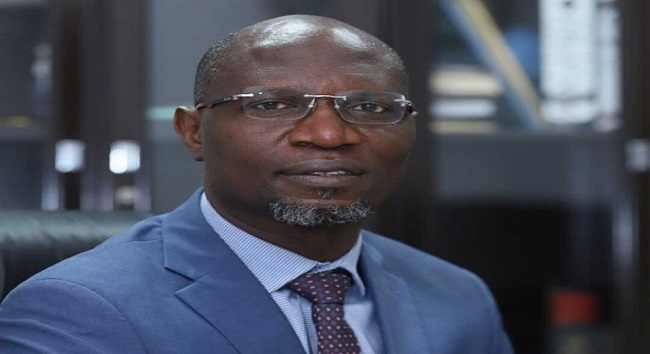
The Securities and Exchange Commission (SEC) has revised the minimum capital applicable to all categories of regulated capital market entities after 10 years.

The minimum capital review, according to the SEC, is informed by the need to strengthen market resilience, enhance investor protection, align capital adequacy with the evolving risk profile of market activities, and ensure that regulated entities possess sufficient financial capacity to discharge their obligations in a sustainable manner.
“The revised Minimum Capital framework seeks to: enhance the financial soundness and operational resilience of market operators; align capital requirements with the scope, complexity, and risk exposure of regulated activities; promote market stability and systemic risk mitigation; and support innovation and orderly development of new market segments, including digital assets and commodities markets,” SEC said in a January 16 circular to market operators.
The SEC circular was sent to all entities regulated by the Commission, including but not limited to core and non-core capital market operators; market infrastructure institutions; capital market consultants; financial technology (FinTech) operators; Virtual Asset Service Providers (VASPs); and Commodity market intermediaries.
All affected entities are required to comply with the revised Minimum Capital Requirements on or before June 30, 2027, the circular said.
“Entities that fail to meet the prescribed requirements within the stipulated timeline shall be subject to appropriate regulatory sanctions, including suspension or withdrawal of registration, as may be determined by the Commission,” SEC said.
Tier-1 Portfolio Managers (Full Scope) involved in the management of Collective Investment Schemes (CIS) and Alternative Investment Funds (Private Equity, Venture Capital, Infrastructure Funds etc) above N20 billion Net Asset Value (NAV), or discretionary and Non-Discretionary Private Portfolio Management Services above N20 billion Assets under Management (AuM), or exposure to foreign instruments up to 40 percent of the NAV are now required to have a minimum capital of N5 billion as against N150 million.
“Any Fund and Portfolio Manager with NAV/AuM of more than N100billion should have a minimum of 10 percent of the NAV/AuM as capital,” SEC added.
For the Tier-2 fund/portfolio managers (Limited Scope) who are in the business of management of Collective Investment Schemes with limited pooled fund creation of not more than 10 times the required capital (N20 billion) on Net Asset Value (NAV), or discretionary and non-discretionary private portfolio management services of not more than N20 billion, or those exposure to foreign instruments of not more than 20 percent of the NAV, now require N2 billion as minimum capital as against low of N150 million.
Likewise, broker-dealers whose services include: client execution, proprietary trading, margin/securities lending and advisory services no longer require N300 million minimum capital to operate but N2 billion.
The SEC said the minimum capital review from 2015 low is in line with its mandate under the Investments and Securities Act 2025 to regulate and develop the Nigerian capital market.
Also, Tier 1 issuing houses who do non-interest finance services, advisory & arrangement services but no underwriting now require N2 billion as against N200 million; while Tier 2 –issuing houses with underwriting and offers a ‘one-stop-shop’ for issuers, provides underwriting services, and renders advisory and product development services require N7 billion minimum capital for this business as against N200 million.
Also, the minimum capital requirement for brokers (client execution only) has been jacked up from N200 million to N600 million, while that of dealers (proprietary trading only) has been moved from N100 million to N1 billion.
Broker-Dealers’ (client execution, proprietary trading, margin/securities lending and advisory services) has been raised from N300 million to N2 billion, while Sub-Brokers’ (Digital) from N10million to N100million; Sub-Broker (Corporate) has been increased from N10million to N50 million. Also, sub-brokers’ (Individual) now need N10 million minimum capital for the business as against N2 million while inter-dealer brokers require N2 billion as against N50 million.
Modern messengers, such as WhatsApp, Telegram, Signal and others, are often used for illicit purposes. Kaspersky Digital Footprint Intelligence has conducted an in-depth monitoring of over 800 blocked cybercriminal Telegram channels between 2021 and 2024.

While a range of illegal activities continues to be hosted on the platform, its environment has become noticeably more challenging for sustained underground operations.
Telegram’s bot framework and other built-in features make for a low-effort ecosystem for the underworld.
A single bot can simultaneously manage queries, process cryptocurrency payments, and instantly deliver stolen bank cards, info-stealer logs, phishing kits, or DDoS attacks to hundreds of buyers per day, often without operator involvement.
Unlimited, non-expiring file storage eliminates the need for external hosting when distributing multi-gigabyte database dumps or stolen corporate documents. This frictionless automation naturally favours high-volume, low-price, low-skill offerings, such as leaked bank cards or other data, hosting malware, etc.
High-value, trust-dependent deals (for instance, zero-day vulnerability information) still remain on reputation-gated dark-web forums.
Kaspersky researchers found two clear trends related to illegal activities on Telegram. The average lifespan of shadow channels has increased, with the proportion of channels surviving over nine months more than tripling in 2023-2024 compared to 2021–2022. At the same time, Telegram’s blocking activity has risen significantly.
Monthly takedown figures recorded since October 2024 – even at their lowest – are comparable to the peak levels seen throughout 2023, and the overall pace continued to accelerate in 2025. This impedes malicious activities.
Other disadvantages of Telegram for cybercriminals include the lack of default end-to-end (E2E) encryption for chats, the inability to use their own servers for communication (due to the messenger’s centralised infrastructure), and closed server-side code, which makes it impossible to verify its functionality.
As a result, several established underground communities, including the nearly 9,000-member BFRepo group and the Angel Drainer malware-as-a-service operation, have already begun shifting primary activity to other platforms or proprietary messengers, citing repeated disruptions of their activities on Telegram.
“Fraudsters find Telegram a convenient tool for many malicious activities, but the risk-reward balance is clearly shifting. Channels are managing to stay online longer than a couple of years ago, yet the dramatically higher volume of blocks means operators can no longer count on long-term stability.
“When a storefront or service disappears overnight – and sometimes reappears only to be removed again weeks later – building a reliable business becomes much harder. We’re starting to see the early stages of migration as a direct consequence,” comments Vladislav Belousov, Digital Footprint Analyst at Kaspersky.
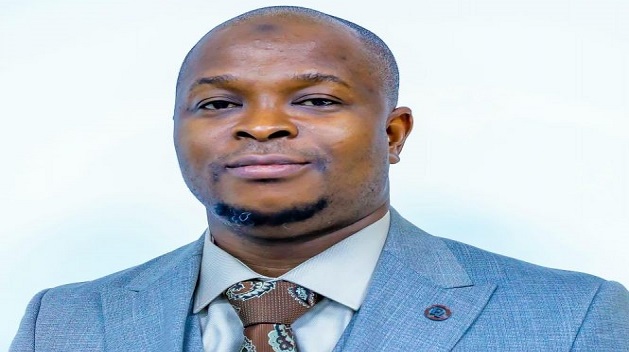
Galaxy Backbone Limited (GBB), the Federal Government’s leading ICT infrastructure and shared services provider, will mark its 20th anniversary in June 2026 with a grand celebration that reflects two decades of innovation, resilience, and national impact.

Since its inception in 2006, Galaxy Backbone has been at the heart of Nigeria’s digital transformation journey; building the technological foundation that supports modern government operations and public service delivery. What began as a bold vision to connect government has grown into a critical national platform that drives efficiency, transparency, collaboration and innovation across the public sector.
Over the last 20 years, GBB has helped redefine how government works. By providing secure connectivity, enterprise-grade data centre services, cloud platforms, and digital collaboration tools, Galaxy Backbone has enabled Ministries, Departments and Agencies (MDAs) to move from fragmented, paper-based processes to more integrated, technology-driven systems.
This transformation has improved government-to-government coordination, strengthened engagement with businesses, and enhanced the delivery of services to citizens. Today, the digital infrastructure powered by Galaxy Backbone supports thousands of government users, hundreds of institutions, and critical national platforms that Nigerians rely on daily.
A key part of this journey has been the Federal Government of Nigeria’s investment, managed by GBB in robust national infrastructure, high-capacity and world class data centres, fibre-optic connectivity across multiple states, secure hosting services, and shared platforms that have helped government operate more efficiently and responsively. These contributions have played a pivotal role in Nigeria’s progress toward a more digital, agile and citizen-centered public service.
Galaxy Backbone’s impact has earned both national and global recognition. In 2025, the organisation was ranked first overall in the Federal Government Website Performance Scorecard, reflecting its commitment to excellence in digital service delivery. Internationally, GBB, a couple of years ago, received the prestigious United Nations Public Service Award, a testament to its leadership in promoting a whole-of-government approach to digital transformation.
As GBB celebrates two decades of service, this milestone is more than an organisational anniversary; it is a celebration of Nigeria’s digital evolution. It is an opportunity to appreciate how collaboration between government, industry partners, technology providers, and dedicated public servants has helped build a stronger, more connected nation.
The June 2026 anniversary celebration will bring together stakeholders from across the public and private sectors to reflect on the journey so far, acknowledge the partnerships that have shaped this success, and chart an ambitious course for the future. It will highlight how collective effort, shared vision, and innovation have positioned Galaxy Backbone as a strategic national asset.
Looking ahead, Galaxy Backbone remains committed to deepening digital transformation across the country; expanding infrastructure, strengthening cybersecurity, enhancing service delivery, and supporting the Federal Government’s drive for a smarter, more efficient and digitally empowered Nigeria.
At 20 years, Galaxy Backbone stands proud of its past, confident in its present, and inspired by the limitless possibilities ahead.

SEC Hikes Minimum Capital Requirements for Market Operators After a Decade

Study Shows Blocks in Telegram are Pushing the Underground Out

Galaxy Backbone Marks Two Decades of Powering Nigeria’s Digital Evolution

NGX Unveils Net-Zero Plan for Greener Capital Market

Galaxy Backbone Marks 20 Years, Tops FG Website Scorecard

Banks quietly move to enforce new ₦50 transfer levy from Jan. 1

FIRS says NIN, CAC Numbers to Serve as Tax IDs from 2026

Nigeria Police Arrest Okitipi, Nigerian Allegedly Linked to Microsoft 365 Hack

FIRS Declares NIN, CAC Numbers as Tax IDs from 2026

US Begins Partial Visa Ban on Nigerians January 1




 E-Financial2 days ago
Angst as FG Demands 7.5 Percent VAT on Mobile Bank Transfers, USSD

 News2 days ago
Moniepoint Launches Second Cohort of DreamDevs Initiative to Double Down on Africa’s Tech Talent Pipeline

 E-Financial2 days ago
NGX lists 3.156bn UBA shares, boosting capital to N513Bn

 Telecom2 days ago
Glo Unveils Immersive Gaming Experience, Travel Saga

 E-Financial2 days ago
The Missing Pieces in Nigeria’s Banking Recapitalisation

 E-Business2 days ago
Half of Global Companies Build SOCs to Enhance Cybersecurity, with a Focus on Human Expertise

 General News2 days ago
NITDA DG Reaffirms Nigeria–U.S. Partnership on Data Privacy, AI and Cybersecurity

 General News2 days ago
Paradigm Initiative Condemns the Internet Shutdown and Media Restrictions in Uganda Ahead of the 2026 General Election