

General News
Local Operators Need Protection-Banjo

Engr. Bayo Banjo, managing director and chief executive officer of Disc Communications Limited is one of Nigeria’s pioneer cable and satellite television stations in Nigeria.
He is passionate about the communications industry which also helped nurture from the cradle. Banjo spoke to hilary okeke on a wide range of issues.
Regulatory Environment, QoS and Competition
We cannot deny that the quality of service in the country is very low. If what we are experiencing in Lagos is considered bad, I can assure you that what is experienced outside Lagos is worse. I do not think the NCC understands their role as regards corrections and Quality of Service. If the regulator imposes adequate sanctions on service providers, you will see; Quality of Service will improve. Which is the way out? I think number portability is it. The kind of penalties attached to ensure that this is enforced must be draconian. The idea of number portability implies that one can move from one network to another with the same phone number. Most people do not like to change their phone numbers; they like people to know them with a particular number. Now, not only will that make the GSM companies gear up, it will also open the door for what we call localized GSM companies. For instance, if I felt Sokoto state was not covered properly, I can apply for license to do GSM operations there alone and provide excellent service to such a degree that people coming into the state can switch over to my network without changing their numbers. That is real competition. It means people can concentrate on a particular area and focus their efforts there. Why would it not work? It is because the big networks will sabotage other smaller ones. Quality of Service is bad, we all know that. I mean, we even have cases where operators tell you that they cannot give you details of your calls because you are a prepaid subscriber. Can you imagine that? Look at how criminal it is. You are taking my money and you cannot tell me how I spent it because I paid in advance? The person paying in advance should be the most valued customer because you are getting his money in advance. All these atrocities are going on and the regulators seem not to be doing anything. There are certain things you see wrong that should be addressed without anybody complaining. The profits that some of these cellular companies declare are so large that they can remedy all these issues. The only issues that are at par with quality of Service issue are probably sabotage and theft and those are reaching epidemic proportions. A lot of wire companies are closing down because of this menace; they cannot stem the tides of cable vandalism. And most of the time, this crime is perpetrated by this poor people who steal this copper cables and sell as scrap. The cities have better security records than the rural areas and to get better security, one needs to install his equipment within someone else’s premises.
Dominance of Satellite TV
It is not healthy in the sense that with such an organization that is actually controlled by another country and of course, they have the support that the local companies here do not have because in that country, the government recognizes the importance of the media; they recognize that the media can be used to topple government, control the views and feelings of the public. The local operators need more protection. The NBC has tried in this regards, I think they also need help at the legislative level. Let us look at the supposedly freest country in the world in terms of business, which is America. You cannot be in broadcasting business if you are not an American citizen. During the indigenization exercise way back in the 70s, people would establish a company in their houseboy’s name without his knowledge and still run the company as it is. If a foreigner wants to cause damage, he can do that and go back to his own country but if a Nigerian causes damage, he stays here, his family is here. Even the land that claims it is the land of the free has limits to that freedom. On the other hand, Multichoice has shown professionalism; you can see how they operate and many have even tried to copy their model, some with great success. The only thing I have an issue with, luckily Multichoice is trying to correct that, is the focus on foreign materials. As we can see, that company has made great strides to enhance its local content. From what I understand, even though they are our competitor, they are now engaging in covering our local league. I think they were airing the Glo league and they have brought equipment to cover more leagues. To me, it is a very good development.
Merger of NCC and NBC
I am confused at the concept of that merger, particularly in an African country where control of the media and broadcast is more important; it is second only to defense. The most important thing in most countries is defense; I mean, if you do not have defense, your country is nowhere. The next weapon in any country is the media, broadcast, I have always argued. The Soviet Union was toppled using the media propaganda. It was toppled without firing a shot. Now here, you want them to merge based on the fact that both platforms would be able to carry telecommunications and broadcasting? I think you must separate the people who monitor content because the focus of the NCC is on the money that they make; the 2.5% charges, etc. But in broadcasting, you have to focus on the content of programmes, how does it influence our youth. When you look at the council that set up the concept of the merger, I think the NBC had only one or two representatives. We got those priorities wrong. It is like somebody telling you that how you bring up a child is not important and you are busy chasing money up and down. So, that is one thing I do expect from Government, to realize that the NBC is in fact, a very important organization; far more important than the NCC in function and duty – you cannot even compare their functions; they do not even come close. The one is dealing with our sociology, our livelihood our culture and the other is just dealing with collecting money. I am confused with the merger – are we trying to copy some other countries? The only countries that merge the two are cultureless countries. Countries that are growing in leaps and bounds, such as China and the U.A.E are very careful about what they introduce into their societies. Even the average U.S citizen – is he aware of what is going on? Luckily, we Nigerians are used to looking at things our own way and it is difficult to fool us. Broadcasting is all about propaganda, it affects the mind, the way you think, your attitude; it should not be taken lightly. The most powerful Union in the world was toppled using the media. Communication does not come anywhere near broadcasting. I hope there will be a good response to the merger. If it is about the issue of frequency, we have a frequency management board, which is independent of both bodies. Why do you need to merge them? I would have thought that in a third world country, you should be able to monitor your broadcast with better sense of purpose. That should be the focus. But in a merger, people will move to where there is money, the telecoms.
Fringe Players in the Converging Arena
In broadcasting, yes they stand a chance. You see, the NBC as it is presently constituted, has always encouraged small operators. Two groups can merge, if the composition at the top and the ideology given to them is right, then you would have a good organization. Wherever you find government bodies, they are usually separated so that they can pressurize and focus on what they are set up to do. The tendency that the merged bodies would be able monitor and give the relevance and importance that is deserving of broadcasting is very low. That is the way I look at it because it is natural to focus on the one that brings in more money. Secondly, in broadcasting, there is the responsibility to do screening; you are applying philosophy, sociology and whatever to what is there; in communications, you just have your rules and regulations; you just follow them strictly, as much as you can. For example, you may have a 24-hour Christian programme broadcast in Imo state. There might be no objection, but that same programme broadcasting in Zamfara state would be seen as an attempt to undermine the people there. However, the telecoms are above board, it does not involve these feelings; it has to do with a specific service. It has nothing to do with the sentiments and beliefs of the people. In the South, you can make jokes but in the North, it may not be possible. So, what kinds of people make these judgments? It is really professionals who have been in that field, properly trained broadcast professionals. In telecoms, any good engineer who has managerial skills can take over the reins. But in broadcasting, you need to have flair or feel for it.
Local Content, Educative and Entertaining
Well as for entertaining, that has to do with your revenue. You have to do a programme that is entertaining or else nobody will buy your product. In the case of local content, the government has done very well. In the past 50 years, the NBC has increased its local content requirements and you can see the results immediately. In the telecoms, the Nitel monopoly was broken. In the past, we use to have about 400, 000 lines in the whole country but today, it is well over 30 million. In broadcasting, everybody was doing foreign programmes and they insisted on local content, look at what is happening with our Nollywood – there is an explosion now, broadcasters are now bringing out Nollywood channels. Government is meant to act like a father and not leave people to their own devices; they should realize what they are there to do and enhance it.


Economic and Financial Crimes Commission (EFCC) has warned of rising cryptocurrency-related crimes, revealing that illicit digital currency transactions exceeded $160 billion globally in 2025.

Ola Olukoyede, chairman, raised the concern during the inauguration of the United Nations Office on Drugs and Crime Country Programme for Nigeria (2026–2030) in Abuja.
Olukoyede, warned that digital currencies such as Bitcoin are increasingly being exploited by criminal networks to move funds across borders undetected.
According to him, advances in technology, weak regulatory frameworks, and gaps in global financial systems have created fertile ground for cyber-enabled financial crimes.
The anti-graft agency boss stressed that tackling cryptocurrency crime required coordinated national strategies, stronger institutions, and intelligence-driven enforcement.
According to him, the new UNODC programme comes at a critical time when Nigeria and the global community are facing growing threats from organised crime, cybercrime, and illicit financial flows.
Olukoyede described the initiative as a strategic platform to strengthen the rule of law, improve the criminal justice system, and protect citizens from financial and violent crimes.
Musa Aliyu, chairman of the Independent Corrupt Practices and Other Related Offences Commission (ICPC), in his comments, called for stronger inter-agency cooperation.
Aliyu said Nigeria faced interconnected threats, including violent extremism, smuggling, organised crime, and illicit financial flows, warning that no single agency could address them alone.
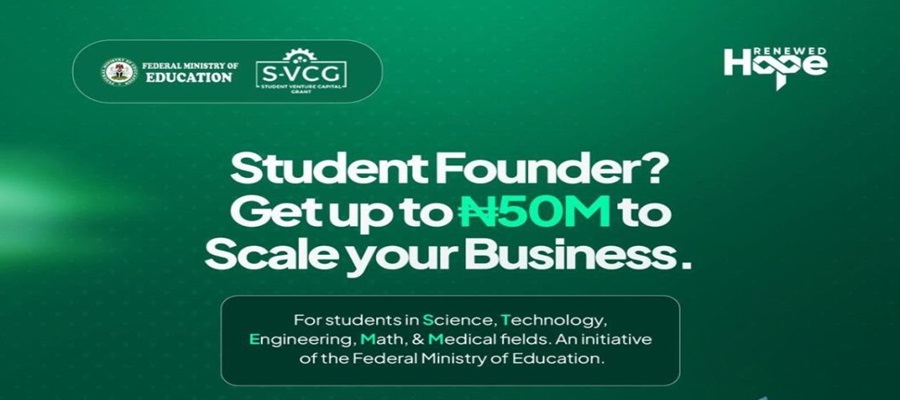
Federal government has awarded N50 million each to 45 students selected from 65 finalists drawn from public and private tertiary institutions nationwide under the Student Venture Capital Grant (S-VCG).

Tunji Alausa, minister of Education, unveiled the initiative at the weekend at the United Nations Development Programme Innovation Hub in Ikoyi, Lagos, describing it as a bold step toward positioning Nigerian youth as drivers of global innovation.
Alausa said the programme marked a significant shift in education policy, aimed at empowering students through innovation, entrepreneurship, and skills development. He noted that the grant offers equity-free funding, mentorship, incubation, and access to digital tools.
He explained that the beneficiaries emerged after a rigorous selection process involving over 30,000 applicants from more than 400 tertiary institutions across the country, culminating in a three-day bootcamp and pitch session before industry experts.
According to the minister, the initiative is designed to transform tertiary institutions into hubs of innovation and economic development, enabling students to move from ideation to commercialisation and become job creators.
“Today is not just another programme event. We are activating a new future for Nigerian students where great ideas are nurtured into impactful solutions,” he said.
Also speaking, Suwaiba Ahmad, minister of State for Education, described student entrepreneurship as a critical national strategy for job creation and economic growth. She emphasised the need for institutions to move beyond theory and support students in translating ideas into viable enterprises.
Similarly, Bosun Tijani, minister of Communications and Digital Economy, commended the initiative, urging beneficiaries to focus on building sustainable and impactful solutions rather than pursuing short-term gains.
He advised students to adopt consistency and long-term thinking, noting that small, sustained efforts could lead to meaningful innovation and societal impact.
In her goodwill message, Elsie Attafuah reaffirmed the commitment of the United Nations to supporting Nigeria’s innovation ecosystem.
She encouraged beneficiaries to refine their ideas, respond to market needs, and contribute meaningfully to national development through innovative solutions.
The minister acknowledged key partners, including the UNDP, Google, and the Bank of Industry, for their support in implementing the initiative and expanding opportunities for young innovators across Nigeria.

The Federal Government has launched the ‘Cross-Border Digital Payments and Identity in Nigeria under the AfCFTA’ report, urging stakeholders to unlock trade opportunities for Micro, Small and Medium Enterprises (MSMEs) to access the $3.5 trillion African Continental Free Trade Area (AfCFTA) market.

The high-level report, hosted by the Office of the Vice-President in collaboration with ODI Global under the Supporting Investment and Trade in Africa (SITA) programme, was unveiled on Monday by the Deputy Chief of Staff to the President, Ibrahim Hassan Hadejia, in Abuja.
Hadejia described the research as both timely and strategic, noting the strong coordination by the Office of the Vice-President and the leadership of the Federal Ministry of Industry, Trade and Investment.
He revealed that the cross-border payments report followed earlier milestones, including the development and launch of Nigeria’s Digital Trade Strategy and a capacity-building programme for subnational leaders.
According to him, Nigeria is increasingly assuming a leading role in shaping the digital trade agenda across the African continent, necessitating that the country remains at the forefront of AfCFTA implementation.
He noted that deepening engagement with AfCFTA and enabling businesses, particularly SMEs, to conduct seamless cross-border transactions will be critical to unlocking trade, fostering growth, and creating jobs.
He further stated that efficient cross-border payments, supported by trusted digital identity systems as recommended in the report, will be key to realising President Bola Ahmed Tinubu’s Renewed Hope vision for Nigerian MSMEs.
Hadejia also observed that while the report identifies the Pan-African Payment and Settlement System as a critical platform for cross-border digital payments, Nigerian fintech firms such as PalmPay and Moniepoint, which have some of the largest and most active user bases, will play a pivotal role in driving adoption.
He assured the audience that the Federal Government remains committed to strengthening critical infrastructure, regulatory frameworks, and partnerships to ensure Nigeria is not only ready for digital trade but continues to lead.
“I appreciate the efforts of all stakeholders and urge us to move AfCFTA beyond a continental agreement to a $3.5 trillion trade juggernaut that will reinvigorate our industries, unlock intra-African trade, and domesticate African prosperity,” he added.
Hadejia stated that intra-African trade will be driven not only by large corporations but by small businesses empowered through digital trade and e-commerce, while noting that issues of trust, identity and logistics, as highlighted in the report, must be addressed.
Commenting on the report, the Special Adviser to the President on Job Creation and MSMEs, Temitola Adekunle-Johnson, said the report – developed under the purview of the Office of the Vice-President – would significantly strengthen the MSME ecosystem.
He explained that cross-border payments in Nigeria and across Africa have historically been largely informal and inefficient but noted that the emergence of the Bank Verification Number (BVN) and National Identification Number (NIN) systems is changing the landscape.
Adekunle-Johnson expressed optimism that the report’s findings and recommendations would enable Nigerian SMEs to achieve seamless access to continental markets.
Earlier, the Special Assistant to the President on ICT Policy, Office of the Vice-President, Salihu Dasuki, disclosed that the office, in partnership with development partners, has developed a framework to fast-track seamless cross-border payments for MSMEs.
He added that a key pillar of President Tinubu’s Renewed Hope Agenda is enabling Nigerians to access digital trade, which informed the capacity-building programme conducted for subnational governments last year.
Also speaking, Special Assistant to the President on Project Support, Office of the Vice-President, Shuda Ahmed, commended ODI Global for leading the research underpinning the report.
She noted that without seamless and affordable cross-border payment systems, MSMEs across the continent would be unable to scale beyond their domestic markets.
The event was attended by officials of ODI Global, representatives of AfCFTA, the National Information Technology Development Agency (NITDA), National Identity Management Commission (NIMC), Nigerian Petroleum Development Company (NPDC), Federal Competition and Consumer Protection Commission (FCCPC), and MSMEs, among other key stakeholders.

EFCC Waxes Worriedly over $160Bn Crypto Crime Losses

Dangote Refinery Debunks Speculations on IPO

FG Awards N50m Each to 45 Students under S-VCG

NGX REGCO Fines 5 Firms N291m for Market Manipulation

FG Launches Cross-Border Digital Payments Report

Spotify’s Loud & Clear Report Reveals Over ₦60Bn Revenue for Nigerian Artists in 2025

Madonna University Taps Tech Guru Adote for Strategic Board Role

China Threatens to Shut Nigeria’s Satellite Over $11.44m Unpaid Debt

Jumia Tech Week 2026 Begins with Tech Deals on Smartphones, Electronics, and Everyday Technology

FCCPC Bans Lagos ‘No Refund’ Policy, Vows Fines and Shutdowns for Traders



 General News3 days ago
Anti Graft Agencies Raise Alarm over Rising Crypto-Linked Financial Crimes

 E-Business3 days ago
NITDA Takes Over National Digital Architecture System

 E-Financial1 day ago
CBN bars large‑ticket loan defaulters from banking services in tough new crackdown

 General News1 day ago
ARN Rejects Medical Bill over Attempt to ‘Scrap’ Profession

 Telecom1 day ago
NIGCOMSAT Supports Startups Growth with the Launch of Accelerator 3.0

 Telecom1 day ago
FG Unveils Digital Economy Research Fund Scheme

 News1 day ago
Meningitis Kills a Quarter Million People a Year -Study

 News1 day ago
Stakeholder says AI is Crucial to Nigerian Data Centres Amid Persistent Grid Collapse