

News
Mandela, anti-Apartheid Icon is Dead

Nelson Mandela, whose successful struggle against South Africa’s apartheid system of racial segregation and discrimination made him a global symbol for the cause of human rights and earned him the Nobel Prize, died Thursday. He was 95.
There are many thousands of political prisoners but in the last 50 years only one of them, Mandela, turned his imprisonment into a tool to create political change and national liberty.
The South Africa’s first black president and anti-apartheid icon, led South Africa’s transition from white-minority rule in the 1990s, after 27 years in prison.
The BBC reported that Mandela had been receiving intense home-based medical care for a lung infection after three months in hospital.
In a statement on South African national TV, Jacob Zuma, South Africa’s president, said Mandela had “departed” and was at peace.
“Our nation has lost its greatest son,” Zuma said.
He said Mandela would receive a full state funeral, and flags would be flown at half-mast.
BBC correspondents said Mandela’s body will be moved to a mortuary in Pretoria, and the funeral is likely to take place next Saturday.
The Nobel Peace Prize laureate was one of the world’s most revered statesmen after preaching reconciliation despite being imprisoned for 27 years.
He had rarely been seen in public since officially retiring in 2004. He made his last public appearance in 2010, at the football World Cup in South Africa.
“What made Nelson Mandela great was precisely what made him human. We saw in him what we seek in ourselves,” Zuma said.
“Fellow South Africans, Nelson Mandela brought us together and it is together that we will bid him farewell.”
US President Barack Obama said Mandela achieved more than could be expected of any man.
The greatest father there ever was: this is how South Africans will remember the man who brought an end to apartheid and delivered the nation from the brink of civil war.
Social networking sites are abuzz with messages of condolences and messages of gratitude to the late statesman. He had been in and out of hospital in recent years and had become increasingly frail but many South Africans had continued to express their unreadiness to lose him.
As he did in life, his passing has brought unity amongst South Africans as black and white speak of their love for him. Many here will be drawing on that same spirit for strength, that “Madiba magic” over the next few days and weeks as the nation left with the great burden of honouring Mandela’s legacy, mourns his passing but also celebrates his life.
“He no longer belongs to us – he belongs to the ages,” Obama said, saying Mandela “took history in his hands and bent the arc of the moral universe towards justice”.
Obama, the first black president of the United States, said he was one of the millions who drew inspiration from Mr Mandela’s life.
FW de Klerk, who as South Africa’s last white president ordered Mr Mandela’s release, paid tribute to the man he called a friend.
“He made a unique contribution not only to the establishment of our constitutional democracy but also to the cause of national reconciliation and nation-building,” he said in a statement.
He said Mandela’s example would live on.
UK Prime Minister David Cameron also paid tribute, saying “a great light has gone out in the world”.
Earlier this year, Mandela spent nearly three months in hospital with a recurring lung infection.
He was moved to his home in the Houghton suburb of Johannesburg in September, where he continued to receive intensive care.
Born in 1918, Mandela joined the African National Congress (ANC) in 1943, as a law student.
He and other ANC leaders campaigned against apartheid. Initially he campaigned peacefully but in the 1960s the ANC began to advocate violence, and Mr Mandela was made the commander of its armed wing.
He was arrested for sabotage and sentenced to life imprisonment in 1964, serving most of his sentence on Robben Island.
It was forbidden to quote him or publish his photo, but he and other ANC leaders were able to smuggle out messages of guidance to the anti-apartheid movement.
He was released in 1990 as South Africa began to move away from strict racial segregation – a process completed by the first multi-racial elections in 1994.
Mandela, who had been awarded the Nobel Prize in 1993 jointly with white President FW de Klerk, was elected South Africa’s first black president. He served a single term, stepping down in 1999.
After leaving office, he became South Africa’s highest-profile ambassador, campaigning against HIV/Aids and helping to secure his country’s right to host the 2010 football World Cup.
He was also involved in peace negotiations in the Democratic Republic of Congo, Burundi and other countries in Africa and elsewhere.
A look back at the life of Nelson Mandela
What is your reaction to Nelson Mandela’s death? Did you meet him? What are your memories of him? You can share your views with us using the form below.



Nigeria Centre for Disease Control and Prevention (NCDC) has issued a Public Health advisory on the spread of Cerebrospinal Meningitis (CSM).

It said that the caution is particularly for states within the African Meningitis belt.
In a statement by the Corporate Communications Division of NCDC urged all Nigerians to remain vigilant and adopt preventive measures.
The statement said: “As Nigeria continues through the peak dry season months, the Nigeria Centre for Disease Control and Prevention (NCDC) alerts the public to the ongoing risk of Cerebrospinal Meningitis (CSM), particularly in states within the African meningitis belt.
“Cerebrospinal meningitis occurs more frequently between December and April, when dry, dusty conditions, overcrowding, and poor ventilation increase the risk of transmission.
“The NCDC urges all Nigerians to remain vigilant and adopt preventive measures. Surveillance and response activities remain ongoing nationwide, and laboratory testing is being conducted at the state level while national laboratory capacity is being strengthened.
It explained that Cerebrospinal meningitis is a serious infection of the protective membranes covering the brain and spinal cord.
According to NCDC the affliction is most commonly caused by bacteria, particularly Neisseria meningitidis.
“Bacterial meningitis can progress rapidly and may be fatal within hours if untreated.
“However, early diagnosis and prompt antibiotic treatment significantly improve survival and reduce complications. CSM spreads through respiratory droplets during close contact, especially in overcrowded or poorly ventilated environments.”
It said that symptoms to watch out for include sudden high fever, severe headache, and neck stiffness.
It said other symptoms may include: nausea or vomiting, sensitivity to light, confusion or altered consciousness and seizures.
For In infants and young children, NCDC said the symptoms could bulging soft spot on the head.
The Centre said that early recognition and treatment can save lives.

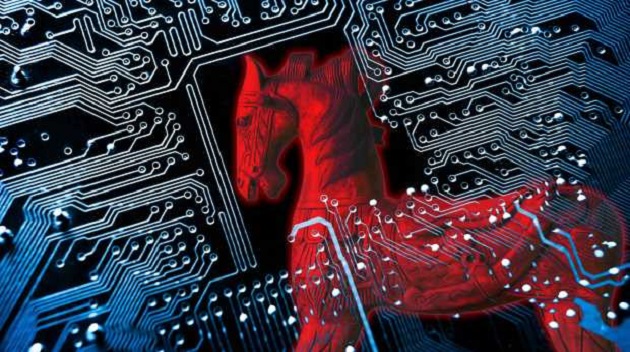
According to a Kaspersky report “Mobile malware evolution,” the number of Trojan banker attacks on Android smartphones increased by 56% in 2025 compared to the previous year*.

This type of malware is designed to steal user credentials for online banking, e-payment services and credit card systems. Cybercriminals commonly distribute Trojan bankers through messaging apps, as well as through malicious webpages.
The number of new Trojan banker installation packages for Android (unique APK files) also increased sharply, reaching 255,090 packages – a 271% increase over 2024. This may indicate that these tools generate substantial profit for cybercriminals.
Kaspersky experts believe threat actors will continue both to expand delivery channels and develop new Trojan variants trying to evade detection by security solutions. Among all detected Trojan bankers, the leading families were Mamont and Creduz.
“Although Trojan bankers for smartphones are the fastest-growing type of malware, we also observed another important trend: preinstalled backdoors such as Triada and Keenadu appeared more frequently compared to previous years. People purchase completely new, but infected, Android devices and may be unaware of the threat.
Once integrated into the firmware fully functional preinstalled backdoors provide attackers with unlimited control over the victims’ smartphones and tablets. As a result, all information on infected devices can be compromised.
It’s quite difficult to remove such malware. If the device is infected, we recommend users check for firmware updates. After the update, run a scan of the device with a security solution again to make sure newly installed firmware is not infected,” comments Anton Kivva, malware analyst team lead at Kaspersky.

Federal Government has said it now has the capacity to identify and apprehend foreigners who overstay their visas in the country.

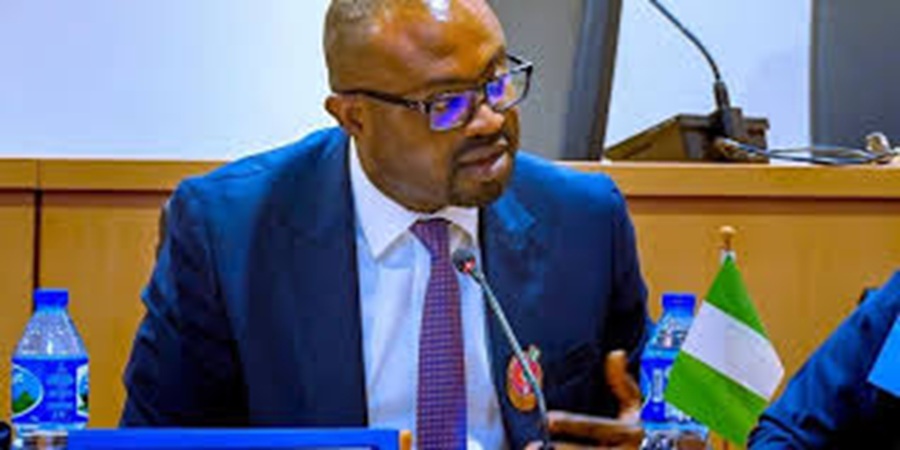
Minister of Interior, Olubunmi Tunji-Ojo
The Minister of Interior, Olubunmi Tunji-Ojo, disclosed this on Thursday in Abuja during the 2026 Sectoral Performance Review Retreat of the Federal Ministry of Interior.
Tunji-Ojo said the government now possesses comprehensive data that enables authorities to track individuals who have entered the country over the past decade and determine those who have failed to comply with their visa conditions.
According to him, the development followed the establishment of an Integrated Operations Centre and a Network Operations Centre by the Nigeria Immigration Service.
The minister, however, said the FG will go after foreigners who have overstayed their visas, adding that outside of the country, Nigerians are not being spared.
He said, “In NIS, I know we are doing a lot already. As of today, we have been able to build our Integrated Operations Centre and the Network Operations Centre, which we never had before.
“With that, we can access, in the last 10 years, everybody who has entered, where you came from, everything, we have all your records, we have everything, we know the exact people who have overstayed in our country, and we will go after them, with due respect, because, outside of Nigeria, they go after the irregular immigrants and we think we have to protect the sanctity of our borders,” the minister stated.”
The minister also stressed the need for reforms across agencies under the ministry, including the Nigeria Security and Civil Defence Corps, to ensure services are delivered transparently and without corruption.
Tunji-Ojo said the goal of government institutions should be to protect citizens, particularly the most vulnerable in society.
NSCDC provides protection in an organised and corruption-free manner, where the son of a nobody will have the same opportunity as the son of anybody in government.
“If you are a businessman or there is a genuine threat to your life, you should be able to access protection without going through the minister, the Commandant General, or anyone else. It is only then that we can truly say we have a service that works for Nigerians.
“Nigeria should not be about selective service delivery. The essence of government is to protect everyone, with greater emphasis on protecting the weakest in society, ” he said.
Speaking on correctional reforms, he argued that a system where individuals repeatedly return to custody reflects a failure of rehabilitation.
“Anybody who goes in there must be reformed and transformed,” he said, adding that the objective was to reduce cases of repeat offences to the barest minimum.
In her remarks, the Permanent Secretary of the ministry, Magdalene Ajani, emphasised the importance of accountability in leadership.
She said leadership was about “devotion, promises, performance, and impact,” noting that the ministry’s agencies play critical roles that affect the daily lives of Nigerians and therefore require transparency and effective service delivery.
The move to go after foreigners who overstay their visas comes amid renewed efforts by the Federal Government to strengthen border management and enforce immigration regulations across the country.
This definitely would allow immigration authorities to track the movement of travellers and identify individuals who remain in Nigeria beyond the duration permitted by their visas.

Police Says Victims Enable Cyber Attacks Out of Ignorance

Bank Accuses Magistrate, Lawyer of Using Fake Order to Steal N3.5m from Account

FG Launches NERD to Combat Certificate Fraud

NCDC Issues Public Advisory on Cerebrospinal Meningitis

Goodnews Naija Launches ‘Building in Nigeria’ Series on Entrepreneurs, Real Sector Builders

Dr. Cairo Ojougboh Foundation Bolsters Nigeria’s Education Drive with ₦2.7m Student Support

Kaspersky Brings more Transparency to Threat Detection with New Hunt Hub

PwC Reveals AI Scaling Gap Slows Africa’s Digital Transformation

Kaspersky Discovers New Phishing Campaign Exploiting Google Tasks Notifications to Steal Corporate Credentials

esentry 2025 Report Shows Healthcare, Financial Services and Telecoms as Staging Grounds for Increased Cyberattacks in Africa




 E-Financial2 days ago
Senate Targets Fintech Overreach, Vows Ponzi Crackdown After ₦1.3trn CBEX Scam

 General News2 days ago
FCCPC Bans Lagos ‘No Refund’ Policy, Vows Fines and Shutdowns for Traders

 Telecom2 days ago
Google Adds Yorùbá, Hausa to AI Search, Boosting Access for Millions of Nigerians

 E-Financial2 days ago
SmartCash Launches ‘No Be Cho Cho Cho’ Campaign to Boost Digital Banking in Nigeria

 Telecom2 days ago
MTN Nigeria Non-Executive Director Mazen Mroue Quits to Focus on Group Role

 Telecom2 days ago
NativeID Launches Free Digital Identity Platform to Shield Nigerian SMEs from Scammers
 E-Business1 day ago
Police Says Victims Enable Cyber Attacks Out of Ignorance

 E-Financial1 day ago
Quest Merchant Bank Achieves CBN Regulatory Recapitalisation Milestone